The spread of the deadly stony coral tissue loss disease around the entire coast of Little Cayman is “inevitable”, but efforts should continue to slow it down, says the Department of Environment.
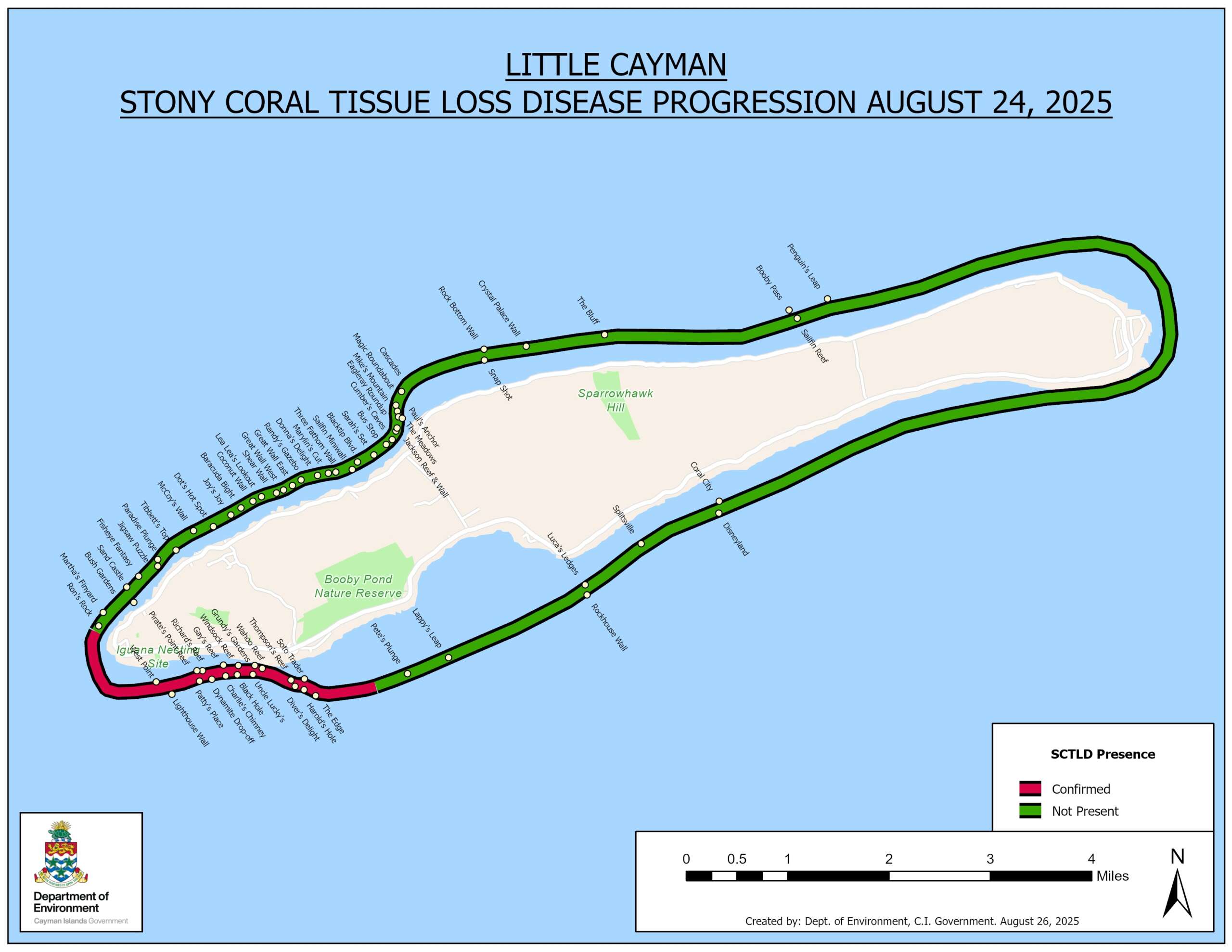
The presence of the disease, known as SCTLD, along a one-mile stretch of the island was confirmed recently by the department, which is asking divers and boaters to continue to disinfect their equipment and vessels in a bid to decelerate the typically fast-moving infection.
Croy McCoy, manager of the department’s Marine Resource Unit, in an interview with Compass Media on Monday, says such efforts had kept the “highly virulent and infectious” disease away from the island for five years and needed to continue.
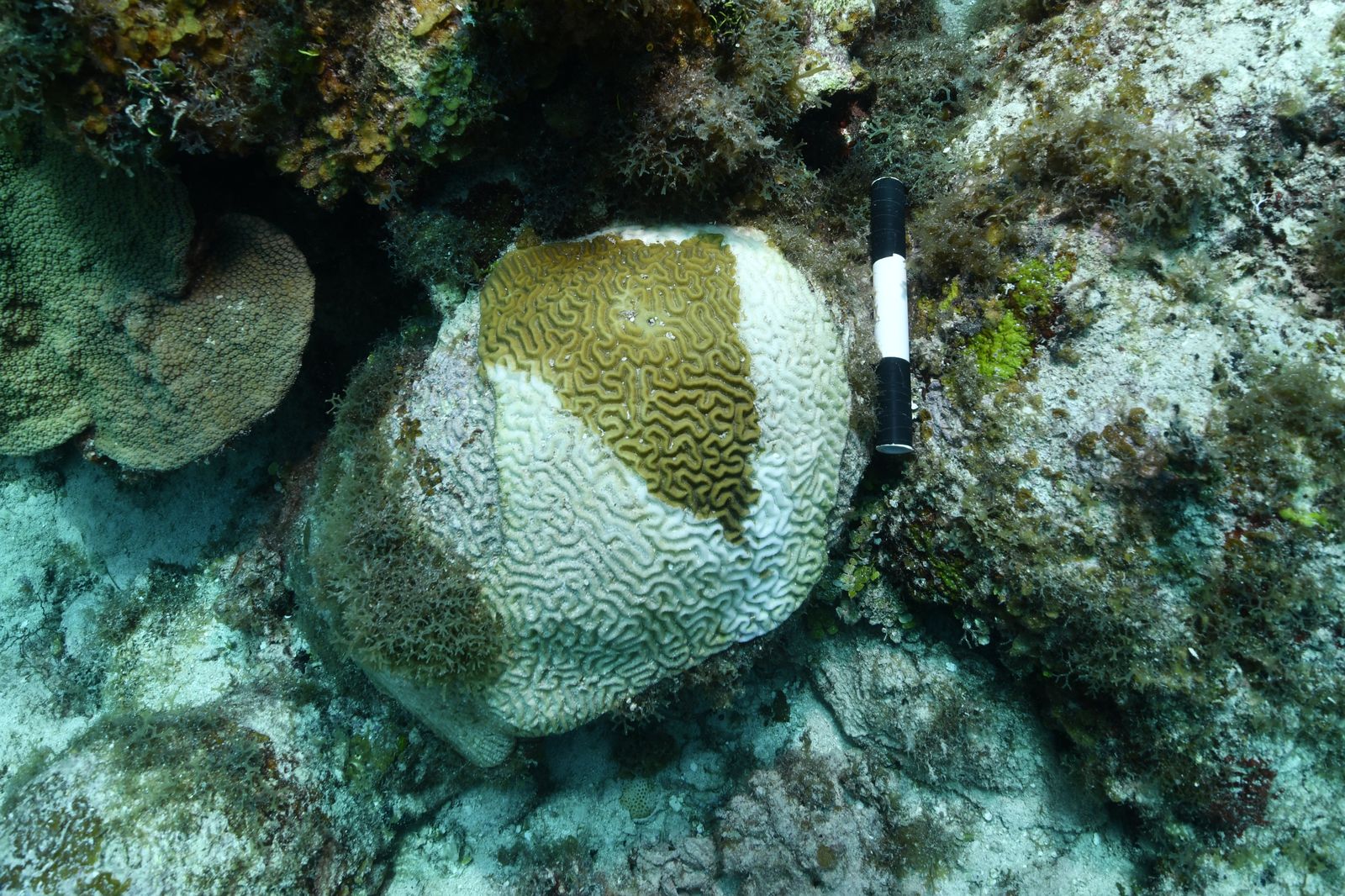
He described how a Department of Environment team, which had been on Little Cayman carrying out an annual reef-health survey, had spotted SCTLD-like lesions on corals along the southern side of the island, and that local dive operators had reported that their staff had also observed them at different sites.
Soto Trader epicentre of Little Cayman outbreak
McCoy said the epicentre of the outbreak on Little Cayman appears to be at the Soto Trader site, a popular spot for diving as it is the only wreck dive site on the island. The site, located off the shore in front of the Hungry Iguana restaurant, is 40-50 feet deep, and is in one of the areas the DoE team had been surveying.
After confirming the presence of the disease at Soto Trader, the team moved further along the coastline to the site where dive instructors had reported seeing it – at Windsock Reef and Black Hole – and also found it had reached there.
The sites at which SCTLD has been confirmed are along a one-mile stretch of coastline, so, based on data about the speed of the spread of the disease on Grand Cayman after it was first found there in 2020, the Department of Environment researchers have estimated the infection arrived on Little Cayman in July.
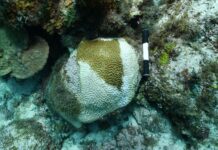
McCoy said at the Soto Trader reef, the team determined that 64% of the hard corals that are susceptible to the disease at that site had been affected. The other sites have been impacted at a slower rate, he noted, but added, “The prevalence will pick up because the disease travels along.”
Learning from Grand Cayman outbreak
The knowledge garnered from the disease’s spread on Grand Cayman, where it was first found in a 30×30-foot area off Rum Point, means the DoE has “terabytes on its movement and behaviour”, said McCoy, who holds a doctorate in ocean sciences.
Apart from human intervention, such as the application of antibiotic paste and preventative measures such as disinfecting dive gear and bilge water, other elements that naturally slow its progression somewhat are the currents and the distance between coral populations.
“It is highly virulent and infectious,” McCoy said, “and it seems that when you have high-density corals, it might move faster because of the close proximity. Within a given population, even in the human race, if you live within close quarters, you’re going to get infected quicker, but if you’re further apart, it usually takes longer.”
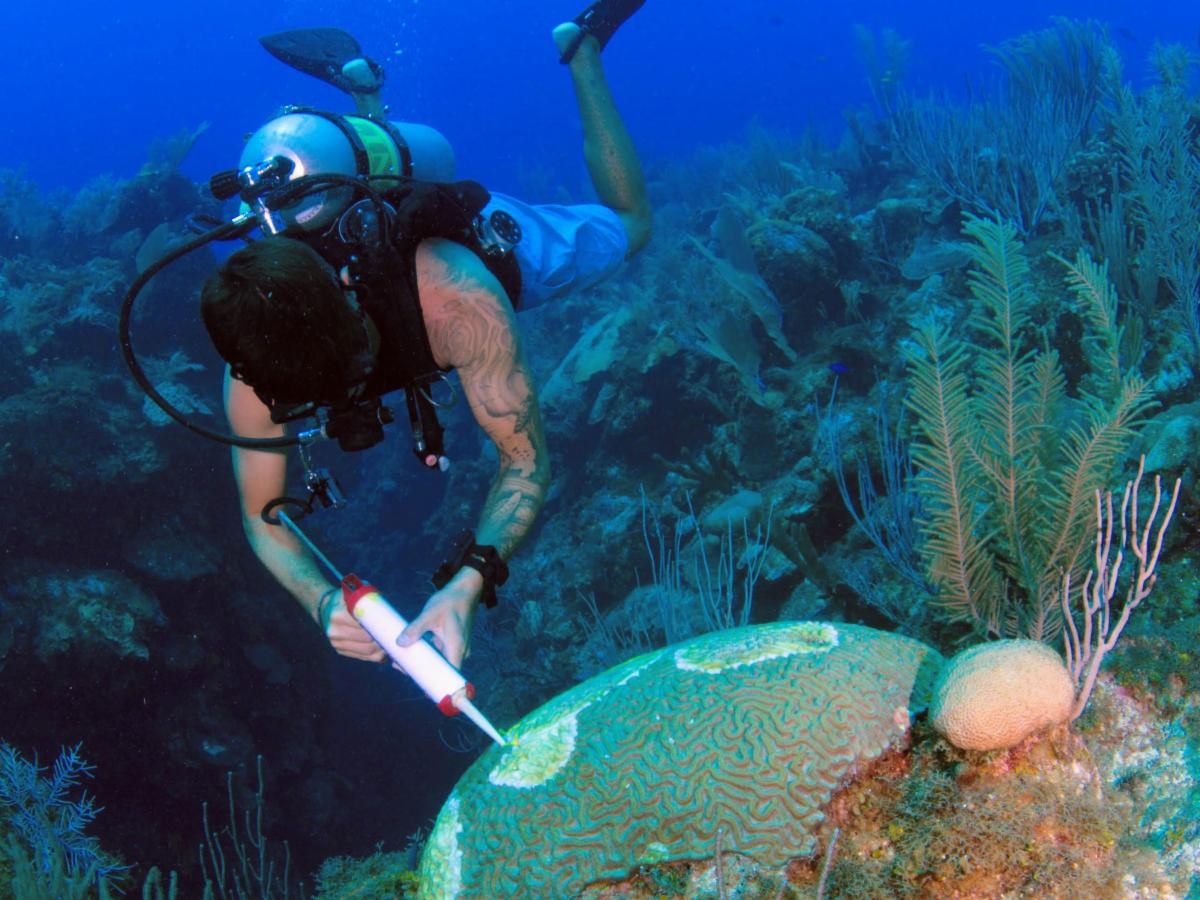
Regarding whether there were plans to use antibiotic paste to slow down the spread, like had been done in Grand Cayman, McCoy did not discount it, but said, “It is not a solution, it’s basically a Band-Aid.”
He noted that it was used in Cayman at sites that were of “high value” in terms of economic importance, as they were popular among tourists and local divers, and ecological significance, such as sites with large reproductive colonies prior to spawning season.
But he pointed out that the use of the antibiotics on this “ocean pandemic” just “delays the inevitable”, adding that they found after five years of using it in Grand Cayman, “the end result is going to be the same”.
“If you stop using it, the coral is going to succumb to [the disease],” he said.
He is urging divers and boaters to help slow down the spread and to keep unaffected sites disease-free for as long as possible.
“We managed to keep it out of Little Cayman for five years with the efforts of the resorts over there and even Cayman Airways pilots letting people know they should disinfect their gear. We need to actually be even more prudent in doing that now if we want to slow the spread.
“It’s going to burn through the reefs over there no matter what we do,” McCoy said.
He advises those diving or snorkelling in infected areas to not move to uninfected areas immediately after and to disinfect their equipment in between. He also urges anyone visiting Little Cayman from areas where SCTLD is present, like Grand Cayman, to ensure their gear is disinfected, or to rent or borrow equipment when they get to the island.
McCoy said these preventative actions are necessary as there is a hypothesis that the main vector in the introduction of the disease is humans, as both in Grand and Little, SCTLD was first found at dive sites.
Growing coral in a lab
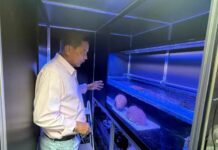
To help reef survival, the Department of Environment has been taking pieces of the hard-hit coral species, such as pillar coral, which is only found in the Caribbean, and growing them in a nursery in its lab.
Corals that have survived the onslaught of SCTLD and widespread bleaching are considered especially resilient, and are also being grown in the laboratory. Once they’re considered big enough to survive back on the reef, they’ll be planted there, with the hopes that they’ll help repopulate impacted sites.
“We’ll be putting out offspring of corals that are survivors of all the challenges coral reefs are facing,” he said.
What is stony coral tissue loss disease?
Stony coral tissue loss disease was first documented in 2014 near Miami harbour in Florida. It impacts at least 25 species of hard coral, such as pillar, mountain and star.
While its devastating effects have been seen in Florida, Grand Cayman and many other islands across the Caribbean, its cause remains unknown. In fact, scientists have still not determined with certainty whether it is caused by a virus or a bacteria.
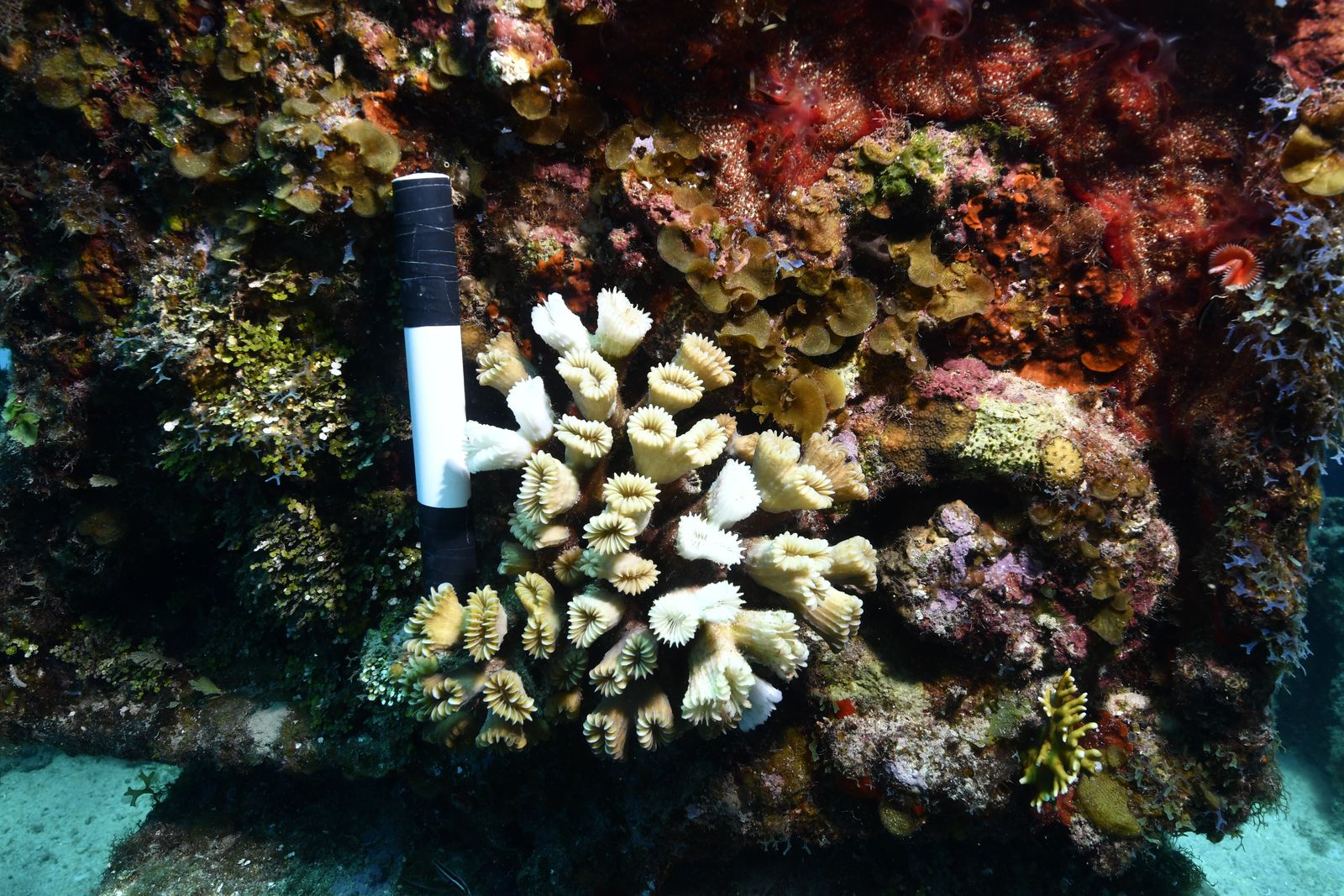
What is known is that the SCTLD first affects the zooxanthellae, the single-cell, microscopic algae which has a symbiotic relationship with the corals and gives them their colour. Nearby coral tissue then begins to rupture and die, and the distinctive white lesions, the first visible sign of the disease, spreads in just days over the coral structure, leaving behind a stark-white skeleton.
- Additional reporting by Compass TV journalist Mark Westin
Related Videos