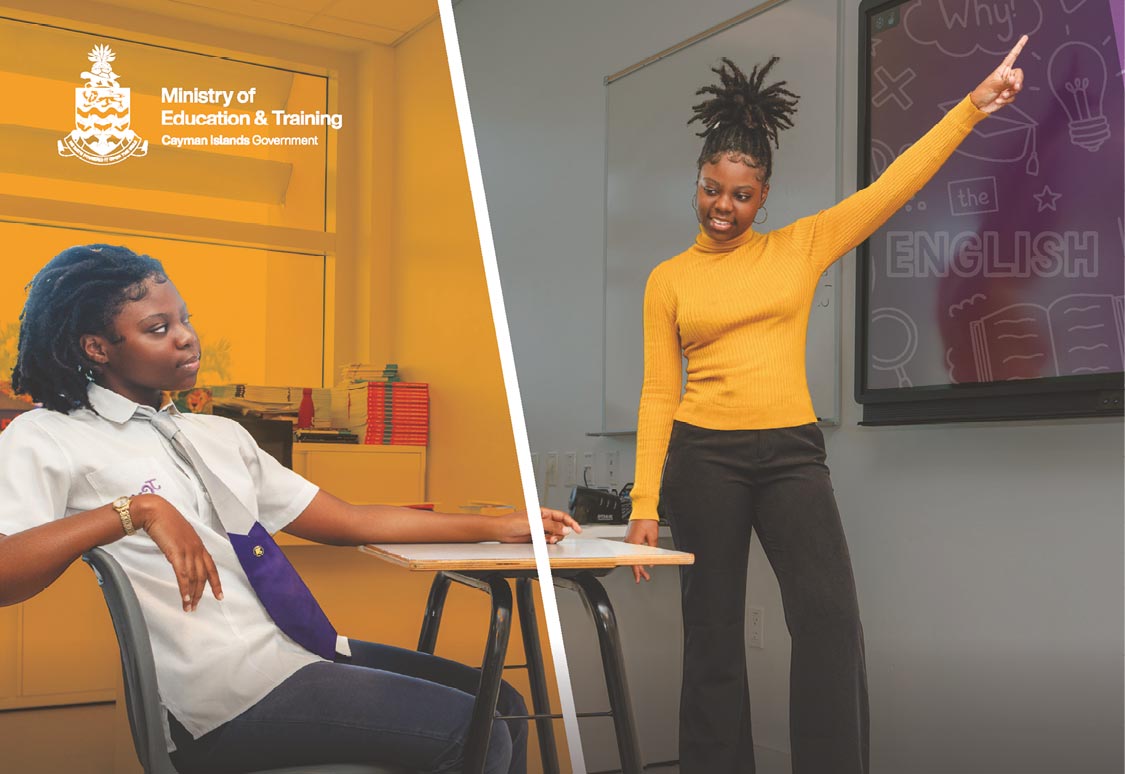
While many may think of careers in education as pursuing a life as a teacher, there are other roles that offer equally rewarding positions.
The Ministry of Education and Training has been running a campaign to promote education as a career of choice for Caymanians.
And Rolston Anglin, Minister for Education and Training, says there is a broader need for more Caymanians to see education not only as a viable profession but as a pathway to leadership, nation-building and long-term impact.
“If you want your child to have one of the most rewarding careers they could have, it’s going to be in education,” he says. “For us, it’s about getting more Caymanians into the system and keeping them there.”
Chief Officer Cetonya Cacho also reinforced the value of education careers.
“The ministry is deeply committed to ensuring that Caymanians are not only present in classrooms but are fully supported and empowered to pursue careers in education,” she says.
“Teaching offers a stable and rewarding path, with opportunities to grow into leadership, counselling, or specialist roles. By investing in local talent, we’re building a stronger, more sustainable education system for the future.”
Here, Compass Media’s Careers Guide highlights three specialist education roles:
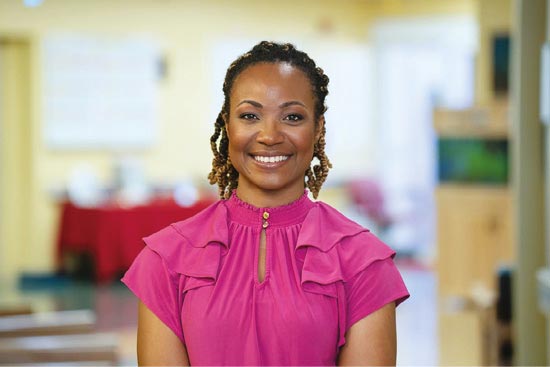
GEORGI-ANN MORGAN
Music therapist
Department of Education Services – multiple schools
Georgi-Ann Morgan views music therapy as a career in which you can use your passion to give support, connection and hope to children.
“Music has a power that reaches places words sometimes cannot, and you get to use this medium every day to make a difference,” she says. “Music therapy allows you to blend creativity with compassion, a career that allows you to use your musical gifts in the service of others.”
The job includes developing safe spaces, and nurturing relationships built on trust, where therapy can be administered within a structured setting.
Supporting goals
The purpose is to support specific goals such as emotional regulation, communication, social skills, motor skills, memory, self-expression and confidence.
“This may include, but is not limited to, singing and playing instruments for expression, listening to and discussing music to explore emotions, writing songs or creating sounds to build confidence and communication skills,” Georgi-Ann explains.
Sessions may be individual or group, and therapy is always tailored to age, ability, interests and therapeutic needs.
“Music therapists work collaboratively with other professionals, depending on the setting within which they work; for example, in education with educators, psychologists, counsellors, speech therapists, occupational therapists and social workers,” adds Georgi-Ann.
It was her own love of music that inspired Georgi-Ann to become a therapist in this field.
“I engaged in music throughout my school life, from singing to steel pan, flute and other instruments,” she says. “Through this, I recognised the power that music has to move us emotionally and otherwise.”
Georgi-Ann, who has been in her current role for 11 years, was an undergraduate in psychology in the Caribbean before pursuing her postgraduate in music therapy in the UK. As mental health is an important issue in the Cayman Islands and the wider region, she feels it is a good career choice for other Caymanians to follow.
Understanding Caymanian culture
“It is beneficial to have other modalities for therapy, such as the creative arts therapies, available,” she says. “Caymanians have an in-depth understanding of their own culture and people, which is invaluable within the therapeutic space.”
If you are someone who loves music and genuinely cares about helping others, then music therapy is a meaningful path to take, Georgi-Ann points out.
“There are other creative arts therapies such as drama, art, and dance and movement therapy, in addition to music therapy,” she says. ‘So, if music is not your thing and you are a creative, these are other options to explore.”
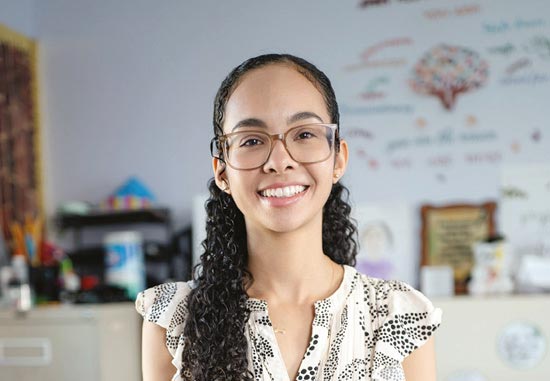
KATHERINE RUSSELL
School counsellor
Student Services Department within the Department of Education, currently assigned to support East End Primary and Nursery School and Edna M. Moyle Primary School.
Katherine Russell’s job as a school counsellor primarily focuses on caring for the social and emotional well-being of students.
It involves delivering programmes at interventive, preventive, and supportive levels. These programmes include whole-school initiatives and awareness campaigns, as well as individual and group counselling sessions.
“My job also entails responding to crises, safeguarding children, connecting students and their families to additional resources, and collaborating with various specialists and stakeholders to ensure holistic care is provided to the student in need,” she explains.
Katherine feels it is important for other Caymanians to follow in her career-path footsteps.
“It is important for Caymanians to train to become counsellors, as we bring our shared culture and experiences to the table,” she says.
“These aspects can be helpful when trying to make a family, individual, or student, feel comfortable with accessing counselling. It also helps with positively progressing our community’s perspective on the importance of mental health and the evident value of careers in this field.”
Being seen and heard
Katherine has always believed in the power of being seen and heard, and this belief led to her career as a school counsellor.
“Have you ever had someone who just really listened to you, and it changed everything for you in that moment?” she says. “That feeling of safety, support and understanding is what I strive to nurture in every counselling session.
“If you have felt drawn to supporting loved ones on their journey to wellness (whether that has been through being a listening ear, a shoulder to lean on, or sharing thoughtful advice), consider counselling as a career. Your empathy is needed in so many others’ lives as well.”
As a former John Gray High School and CIFEC student, Katherine became interested in her career path when taking part in a psychology class.
After graduating in 2011, she completed her associate degree in literary studies at the University College of the Cayman Islands, but continued to feel passionately about mental health.
“So, I went on to complete my bachelor of arts degree in psychology at Georgia State University in Atlanta, Georgia,” she says. “Following this, I worked part-time
at the YMCA while pursuing my master’s degree online through Yorkville University (based in Canada), obtaining my master of arts in counselling psychology degree.”
After voluntary work experience and internship roles, Katherine was delighted to be successful in applying for her current job, which she has now been in for five years.
“I truly enjoy the face-to-face time I spend with students and their families,” she says. “The relationships and trust that is nurtured over time is amazing to experience,
and seeing students make progress is just wonderful – especially students who once struggled with anxiety, depression or low self-esteem and have now walked away with new confidence and knowledge about appropriate coping skills.”
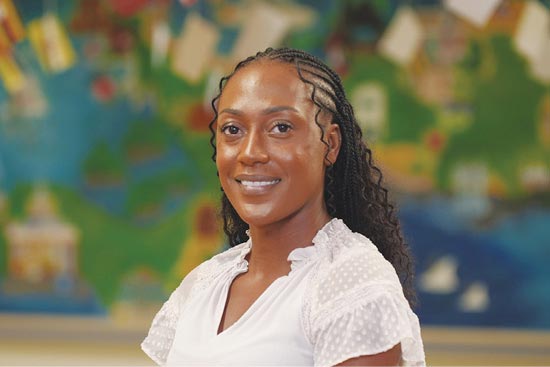
RENECE WILLIS
Educational psychologist
Department of Education Services
As an educational psychologist, Renece Willis’ role focuses on understanding how children and young people learn, behave and develop within educational settings.
However, it was not her first choice of career, as, sadly, it was the loss of a close friend to suicide that ignited her realisation of such a role being vital in the Cayman Islands.
“That loss sparked a need to understand people more in terms of how they think, how they feel, and how mental health challenges can affect someone long before it’s visible to others,” she says.
“I wanted to learn how to recognise those signs, and to be someone who could offer support when it truly matters. As an educational psychologist, I now have the privilege of helping young people feel seen, supported and understood.”
Supporting young people
Renece works closely with schools, families and professionals to identify the factors that support or hinder a student’s learning and well-being.
This involves conducting assessments, observing classroom dynamics, and using psychological theories and tests to understand each learner’s strengths
and needs.
She also supports students with additional learning needs, helping to design intervention plans, and contributing to broader school policies that promote positive mental health and academic achievement.
“Ultimately, my role is to help every learner access the education and support they need to thrive,” she says.
Renece, who has been in her present role for eight years, studied psychology at bachelor and master level, and is also currently undertaking a doctoral degree in clinical psychology.
During her studies, she spent six weeks volunteering in Sri Lanka, working in a psychiatric facility, observing mental healthcare from a non-Western perspective, broadening her appreciation for cultural influences on well-being.
Cultural importance
This experience helped shape Renece’s view on the cultural importance of education and healthcare in Cayman.
“I believe it is incredibly important to have Caymanians in the field of educational psychology, and psychology on a whole, because culture plays a significant role in how we understand, interpret, and respond to psychological needs,” she says.
“While the theories and frameworks we use as psychologists provide valuable guidance, we cannot ignore the fact that the presentation of behaviour, mental health, and learning differences varies across cultures.
“Caymanian students grow up within a very specific social, cultural, and community context, and having professionals who share that background allows
for a deeper, more intuitive understanding of their experiences.”
These factors are integral to the reasons Renece encourages other Caymanians to consider a career in the same sector.
“When Caymanians work in this field, we bring not only professional expertise but also shared cultural knowledge, lived experience, and a sense of connection that helps build trust with families and schools,” she says.
“It means interventions can be more culturally responsive, communication is often more natural, and our support can reflect the values and realities of our own community.”
She adds: “It’s a career that stretches you, teaches you, and allows you to keep learning. Most importantly, it gives you the opportunity to be someone who helps young people feel understood, supported, and capable of thriving.”
For further information on careers in education, visit gov.ky/web/moet/teach.
This article originally appeared in Compass Media’s 2026 Careers Guide.
Related Videos