

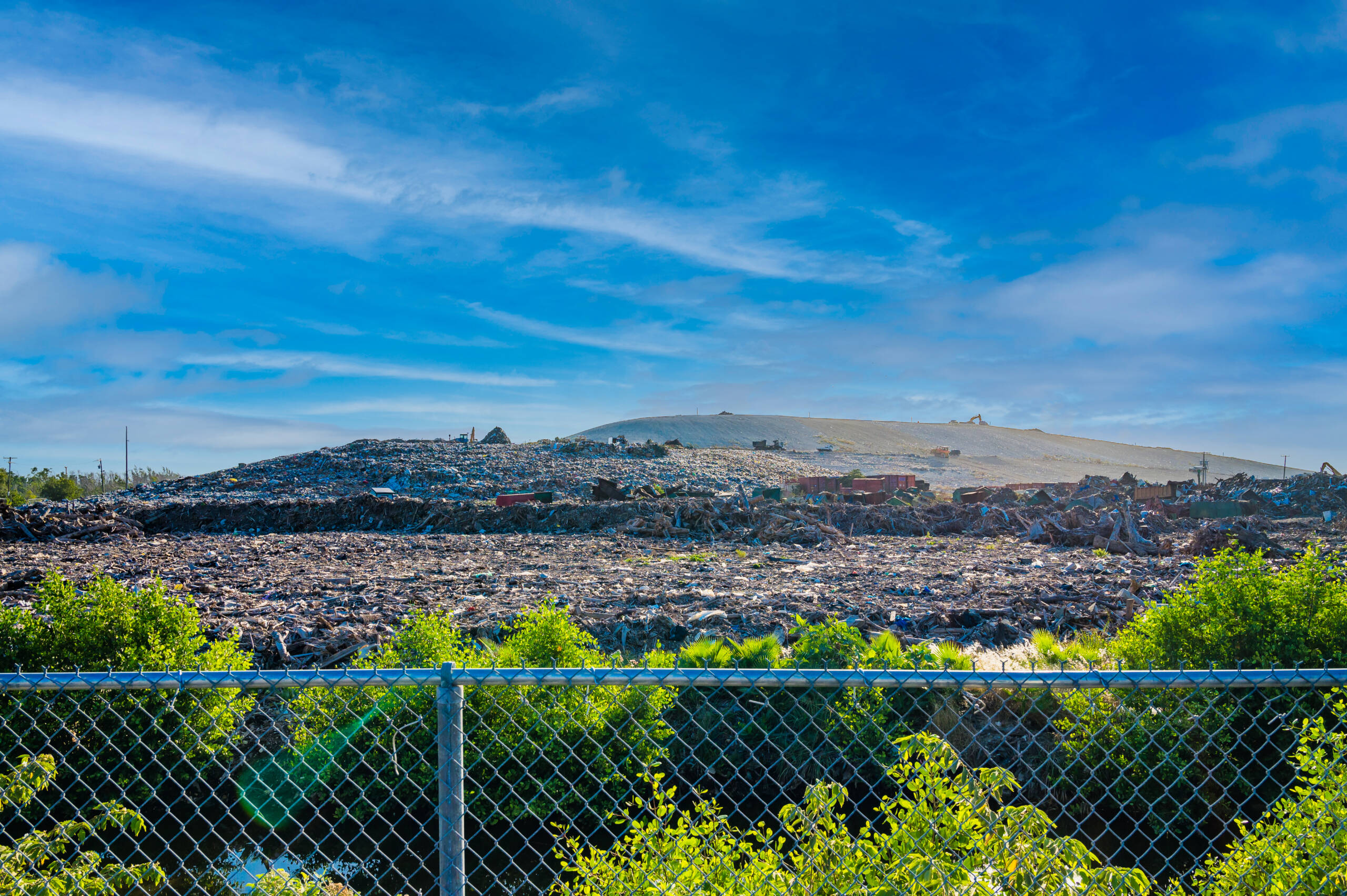
George Town’s overflowing landfill suffered another fire this week, prompting air-quality warnings for nearby schoolchildren and reigniting calls for action over the Islands’ decades-long waste-management problem.
The blaze, believed to have been caused by a battery improperly discarded in household waste, broke out in the early hours of Thursday morning on the waste-disposal side facing the Esterley Tibbetts Highway.
Although the site still experiences a fire every couple of months, waste-management officials say they are less deep seated and less hazardous, thanks to new compacting methods and equipment.
For residents and neighbours at the site, now including the Health City Camana Bay hospital as well as the expanded Cayman International School, any fire is a warning signal of a long-unresolved problem.
“It is a stark reminder of the issue we are facing with the landfill,” said Joey Hew, MP for George Town North and leader of the opposition.
The George Town landfill has been operational since the 1970s. It is unlined, uncapped in its active section and has no confirmed replacement.
The ReGen project, a deal between government and a Dart-led consortium to build a waste-to-energy facility, recycling centre and smaller lined landfill to replace it, was cancelled in July 2024 after seven years of negotiations.
The independent coalition government led at the time by Juliana O’Connor-Connolly decided it had become too expensive amid reports that costs had escalated from around US$670 million to as much as US$2 billion over the 25-year life cycle of the project.
Hew, whose PPM government was the primary political sponsor of that project, questions those figures and believes it was short-sighted to pull the plug without an alternative plan. He criticised the new National Coalition for Caymanians government for dragging its feet on a new solution.
Official data from the Economics and Statistics Office show that around 130,000 tons of waste goes into the site every year.
Government estimated in July 2024 that five to six years of viable landfill life remained.
No solution in sight
“There is absolutely zero in the budget for anything to be done about the landfill over the next two years,” Hew said.
What funds do appear are understood to relate to winding down the now-cancelled ReGen project rather than any new initiative.
Government has pointed to recycling as a means of reducing pressure on the site but Hew noted there is nothing in the budget for kerbside recycling collection either, which is considered essential to making meaningful inroads in the amount of waste diverted from landfill.
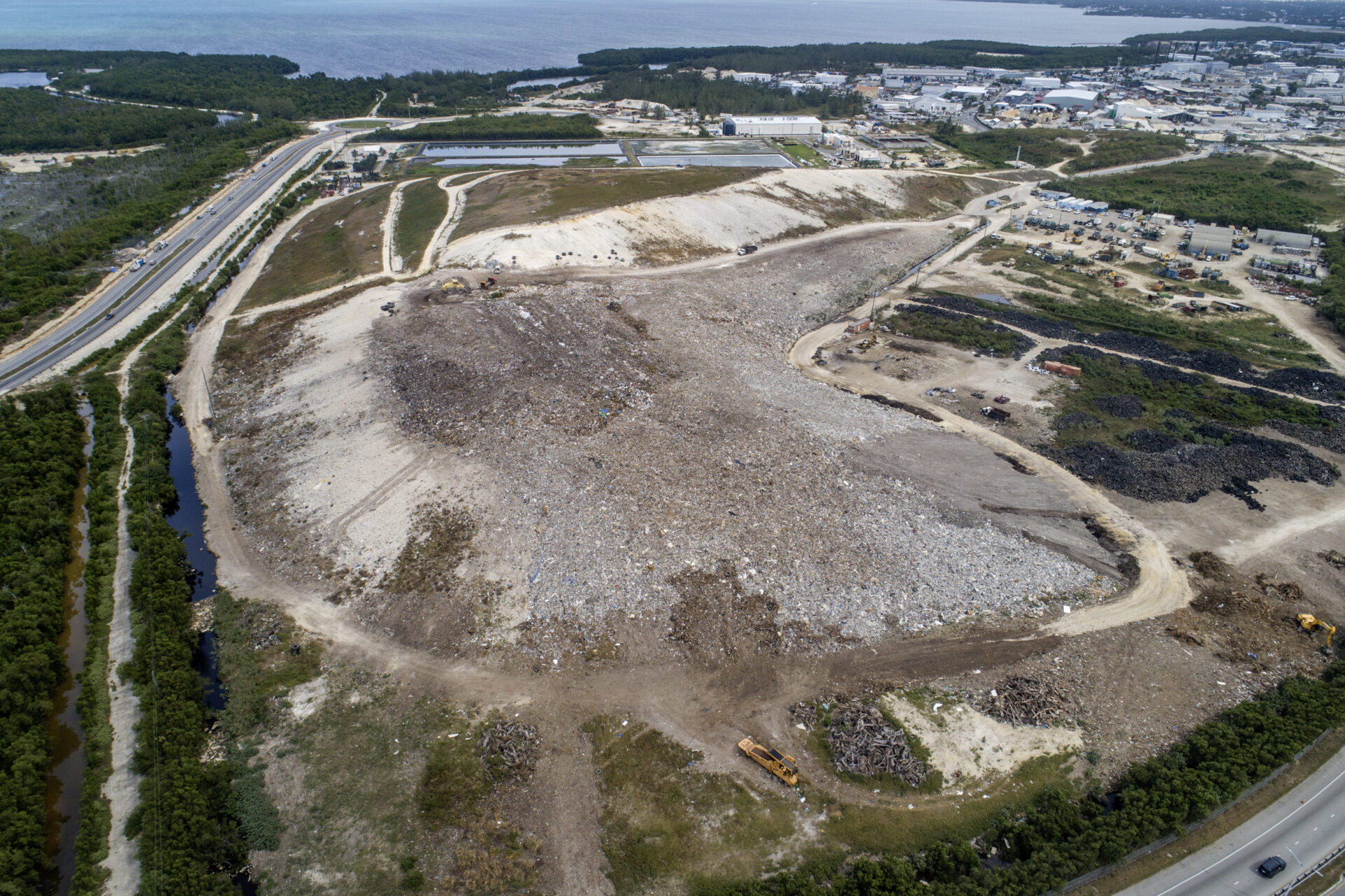
The newest active fill area at the site sits much closer to the Esterley Tibbetts Highway, Hew said, bringing additional risk to neighbouring homes, the new Health City hospital campus and the school directly adjacent to the site.
The landfill’s fire record has long been a source of alarm. Between 2018 and 2022, there were 52 fires at the site, with firefighters spending more than 170 hours on nine separate blazes in 2022 alone. Sources at the time described it as “a powder keg waiting to go off.”
The picture has since improved. The capping and remediation of the old fill sites as part of the ReGen Project was a factor.
The Department of Environmental Health says fires still occur at a similar frequency at the newer fill site, but their character has changed significantly since a new compactor, finally procured in 2023, came online. By compacting waste and reducing air space, the conditions for deep-seated fires burning at depths of 10 to 15 feet have been eliminated, officials said.
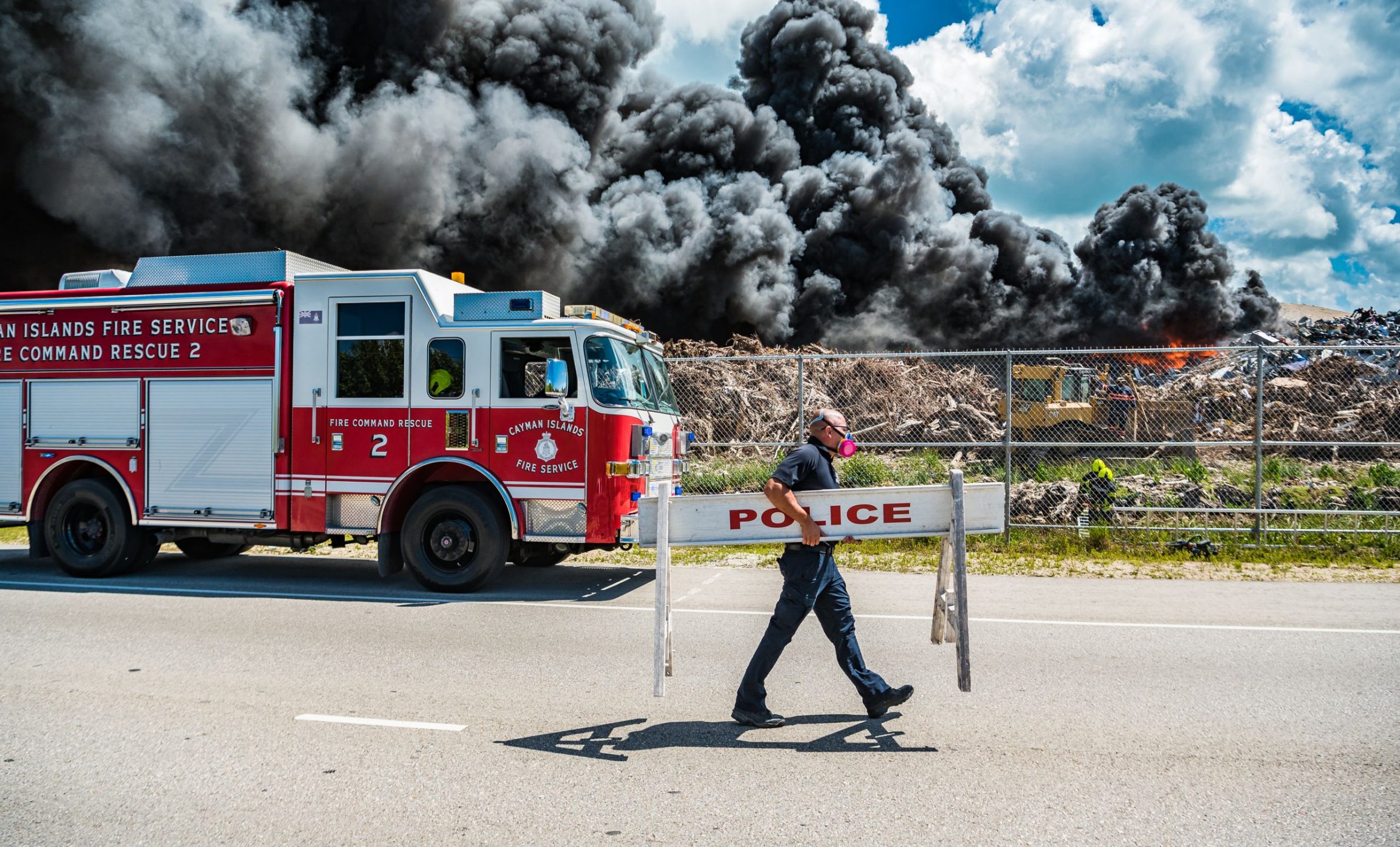
“The fires we see now are brought to us by customers and the public, either as ‘hot loads’ such as barbecue coals or, more typically, batteries discarded in the general waste,” a spokesperson told the Compass.
“Given the surface nature of the fires, they are generally dealt with at the time and the impact is minimal.”
Impact on school
Cayman International School installed air-quality monitors in 2022 amid frequent fires that had impacted the school over the previous 15 years.
Those monitors showed readings in the moderate range after the fire, returning to normal by 9am.
Principal Jim Urquhart said the fire risk from the landfill has decreased in recent years and air quality is “consistently in the good range”.
He added that an alert sent to parents on Thursday was the first landfill-related communication since 2023.
The site is a constant source of attention for parents and students, he said, but the school was managing and using its proximity to the eyesore as a learning opportunity.
“The landfill is a fixture on island that people are familiar with and sometimes frustrated with, and at the same time provides a very real talking point about sustainability…
“This presents opportunities for our students to further understand the impact of over consumption, costs related to waste management, regional and global waste challenges, and the concept of NIMBYism (not in my back yard).”
The DEH said it continues to manage disposal “in accordance with clear phasing plans to ensure sufficient void space for years to come”.
The Compass reached out to Minister for Health, Environment and Sustainability, which has oversight of the landfill, but did not get a response as of press time.
The Compass will take a thorough look at the situation with the George Town landfill in an Issues article in the coming weeks.
Related Videos












I hope my concerns are taken into consideration and the comment is published.
Because too many lives are at stake, the school’s current air quality monitors should be regarded with deep concern, UNLESS HIGH-ACCURACY, REGULATORY-GRADE MONITORING EQUIPMENT is employed to ensure data accuracy.
MONITORS.
I assume the school is using consumer air quality sensors that are MORE SOPHISTICATED THAN those purchased on Amazon for $50-200.
Indoor Air quality monitors only measures specific pollutants: air monitoring systems are designed to detect A LIMITED RANGE of pollutants, usually focusing on PM2.5 (fine particulate matter), but they often MISS the complex, toxic “cocktail” of dioxins, heavy metals, and VOCs (volatile organic compounds) generated by burning plastics and household refuse.
Outdoor air quality monitors often miss precise, regulated measurements of specific gases like nitrogen dioxide, sulfur dioxide, and ozone.
Landfill fires are unpredictable, and pollution is localized; a sensor at one school/location or home may not represent the exposure levels just a block away, or how the pollutant profile changes throughout the day.
Indoor monitoring CANNOT account for soot deposited on roofs, windows, and outdoor surfaces, which can be re-suspended into the air and brought inside by wind, pets, or foot traffic.
Low-cost sensors provide general trends but lack the precision of regulatory monitors, while environmental factors and lack of, or improper, maintenance lead to data inaccuracies.
THE SOOT.
Schools, hospitals, residences, and offices located near the dump fires face another unique air quality challenge—the highly toxic soot.
Measuring indoor air quality in schools, hospitals, and homes near the Dump fires is often inadequate because it fails to capture the full spectrum of pollutants, and misses the hazardous, long-term exposure risks from settled soot. Outdoor structures, soil, and ground surface coverings act as massive collection surfaces for toxic soot, which can re-enter the air, yet they are rarely monitored.
When the wind blows this settled soot becomes airborne again. Soot can be brought inside by wind, pets, or foot traffic. It can settle on outdoor furniture, soil, and play areas, allowing for skin absorption or ingestion (especially in children). This means people are breathing in contaminated dust long after the official air quality report says “good” or “moderate.”
Soot from landfill fires contains carcinogens, such as arsenic, cadmium, chromium, and PCBs (Polychlorinated Biphenyls are synthetic, highly toxic chlorinated aromatic hydrocarbon chemicals).
Unlike gases that dissipate, soot and ash are persistent and can continue to release toxic substances into the surrounding air over weeks following the fire.
Yet, the focus is almost always only on immediate inhalation hazards during the fire, ignoring the long-term, chronic health impacts of residing, working, studying in an area covered in hazardous ash, dust, and soot.
Rain often fails to effectively wash away soot accumulation on outdoor structures, often spreading or embedding the fine, greasy particles rather than removing them.
Cleaning requires mechanical intervention, such as power washing or scrubbing using specialized cleaning solutions.
Lastly, outdoor surface cleaning after landfill fires is typically handled by specialized environmental remediation contractors or emergency response teams. Cleaning is heavily regulated in the US and in other developed countries.
When it comes to children’s health, there should be absolutely no oversights or shortcuts. Soil and surfaces and play equipment on school grounds should be tested and likely remediated—including replacing topsoil. Site-specific testing by LICENSED ENVIRONMENTAL PROFESSIONALS is crucial to assess the extent of the damage and determine the appropriate corrective actions.
It’s crazy they built a hospital on top of the dump. Is that to treat the future people who get cancer from the leaky ground pollution of the dump and carcinogens from the air?
Government is doing nothing to address the issue.
Come on Ben.
They are very diligent about preventing people from riding ebikes and escooters.
Landfill, not so much.
Nor loss of Seven Mile Beach.
Decent public transport.