

At a glance:
- CIA Director John Ratcliffe visited Havana on 14 May for talks with senior Cuban officials.
- The visit came amid escalating US sanctions and pressure on Cuba.
- Cubans in Cayman and Cuba reacted with a mix of cautious optimism, hope for political change and scepticism over Washington’s intentions.
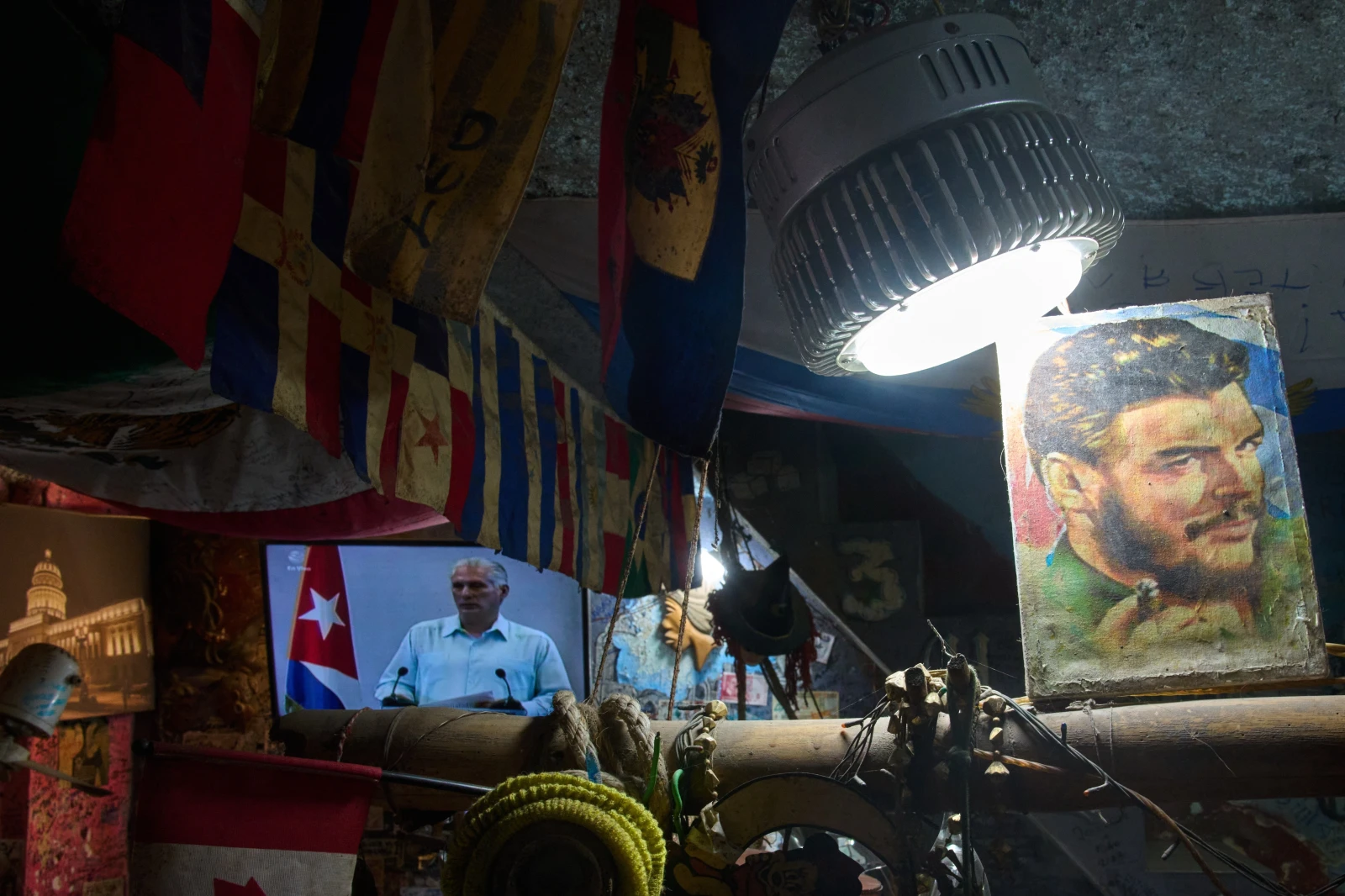
A rare development unfolded on 14 May when CIA Director John Ratcliffe traveled to Havana, Cuba for meetings with senior Cuban officials.
The visit, confirmed by Cuban authorities and a CIA official, fueled speculation that Washington and Havana may be cautiously testing a new phase in their long-frozen relationship.
A CIA official told the Associated Press that Ratcliffe’s mission was to convey President Donald Trump’s position that Washington is willing to engage seriously with Cuba on economic and security matters, but only if Havana agrees to major reforms.
At the same time, Cuban President Miguel Díaz-Canel has blamed the island’s worsening electricity crisis on what he described as a “genocidal energy blockade” imposed by US sanctions.
Yet despite the increasingly hostile rhetoric and the wide range of political views within the Cuban community – from strong supporters of Cuba’s communist system to outspoken critics of the government, alongside many with moderate positions – Ratcliffe’s visit appears to have generated cautious optimism among some Cubans both in Cayman and in Cuba itself.
For many, the renewed contact between Washington and Havana is being viewed as a possible sign that dialogue, however fragile, may still be possible.
Voices of Cubans living in Cayman and Cuba
Marlon Alejandro Riera Tabares has spent the past few months trying to help Cubans access basic medical supplies as shortages have deepened under one of the country’s most severe economic and energy crises.
Living in Cayman for the past eight years, he said the surprise visit by CIA Director John Ratcliffe to Havana reflects both mounting pressure on the Cuban government and a recognition in Washington that decades of confrontation have failed to produce meaningful political change.
“I believe the CIA director’s visit to Cuba can be seen as an important signal,” Riera Tabares said.
“On one hand, the US has long used the argument of foreign military presence on the island, and meetings like this may also serve to directly assess the reality of that issue.”
He also suggested that the visit also appeared to demonstrate that communication channels remain open despite more than 67 years of hostility between the two countries.
“It shows the Cuban government’s willingness to engage in dialogue on matters of mutual interest, despite political differences,” he said.
Riera Tabares added that the visit may signal a reassessment of decades-long US policy toward Cuba.
“It could suggest that Washington is reevaluating its strategy toward Cuba, since decades of economic pressure have failed to achieve their political goals, even though they have significantly affected the Cuban people’s economic well-being.”
For others, the developments have stirred cautious hope that change could finally emerge after years of economic hardship, migration and political stagnation.
Rosa García, a Cuban national who has lived in Cayman for more than a decade with her Caymanian husband, said many people within the Cuban community are watching the developments closely and hoping they could eventually lead to political reform.
“As someone who has lived both under a communist dictatorship and the freedoms of democracy, I am thrilled that the CIA and the US government visited Cuba,” García said.
“There is hope that someday it may be democratic and free. I speak to people still in Cuba every day and they are all ready for change.”
Others, however, remain deeply sceptical of Washington’s intentions.
Javier Martos, a lawyer and legal assistant living in Havana, said the current moment feels emotionally and politically complicated for many Cubans, particularly following the US-led operation in Venezuela earlier this year that resulted in the capture of former Venezuelan President Nicolás Maduro and the deaths of 32 Cubans.
“I am not optimistic,” he said, adding that he suspected the operation in Venezuela may have involved CIA participation.
“Everything that comes from the US to our country must be viewed with the suspicion and expertise of a grandfather,” he said.
At the same time, Martos acknowledged that the very fact Cuba agreed to sit down with the CIA reflected a pragmatic recognition that dialogue may now be unavoidable.
“That we sit at the same table with the agency responsible for the deaths of our best sons and daughters and other atrocities around the world, however painful it may be to our pride, demonstrates, once again, that there is a clear willingness to reach an agreement to contribute to the longed-for thaw.”
Kendra Ador-Agramonte, an artist and architect who grew up in central Cuba and has lived intermittently in Cayman since 2006, said she believes meaningful change is more likely to come from within Cuban society than through external pressure or military intervention.
“It’s intriguing. There are ongoing negotiations, which hopefully will result in changes for the better,” she said.
“I don’t believe the US is ready to risk yet another disastrous intervention, and bloodshed is not good for anyone. I think the change will come from within.”
Ador-Agramonte said many younger Cubans are increasingly focused on rebuilding relationships fractured by decades of migration, political division, and economic hardship.
“It’s time for the younger generations to decide what kind of society they want to build,” she said. “I hope it’s one that unites families across borders and restores faith in the future.”
Related Videos









Mr. Martos’s comments reflect his Cuban Communist Bourgeoisie attitude. He subtly defends Communism while dscrediting capitalism and opposing political systems. His manipulation of facts is classic propaganda tactics, specifically, the 32 Cubans killed were Military and Intelligence personnel acting as Maduro’s personsl security and advisorory detail. Dr. Joseph Finley