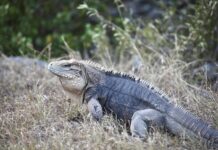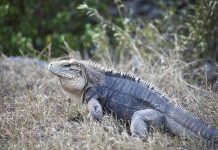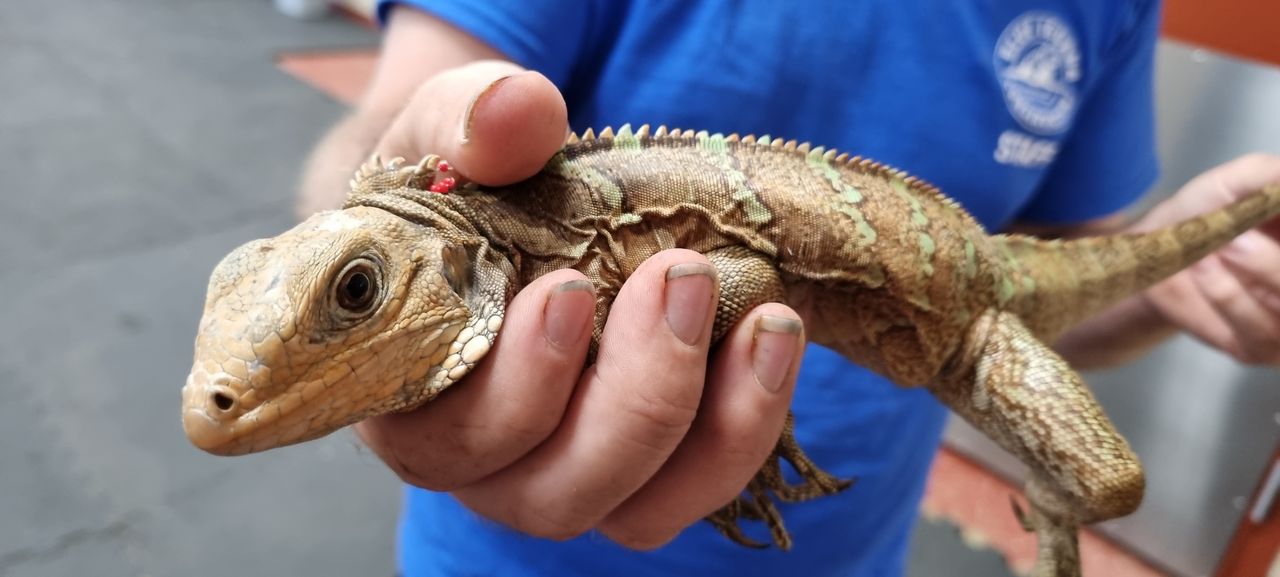
The critically endangered Sister Islands rock iguana is showing signs of recovery on Little Cayman, but a growing genetic threat could undermine years of work to save one of Cayman’s rarest native animals.
The iguana is found only on Little Cayman and Cayman Brac. Adults are typically grey or brown, with reddish eyes, and can grow into large, powerful reptiles. They are protected by law and remain among the islands’ most important endemic species.
But the arrival of the invasive green iguana in the Sister Islands has created a serious concern.
“We are seeing an alarming amount of hybridisation,” Department of Environment Deputy Director Tim Austin said, explaining that Sister Islands rock iguanas are breeding with invasive green iguanas to produce “its own version, the hybrid iguana”.
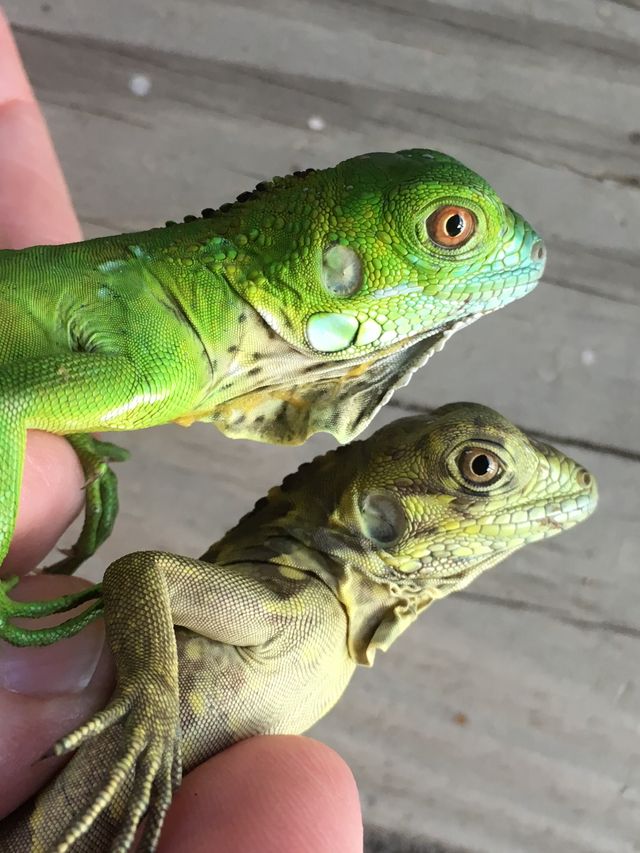
A clutch of green iguana and Sister Islands rock iguana hybrids was first confirmed in 2016, raising fears that continued interbreeding could genetically dilute the native population or interfere with future reproduction.
“The concern,” Austin said, “is that the new hybrid iguanas may have an impact on the future of the endemic rock iguanas if the interbreeding continues.”
Green iguanas are native to Central and South America, but have become one of Cayman’s most damaging invasive species. On Grand Cayman, the government-backed culling programme has removed around 1.7 million green iguanas, at a cost of roughly $10 million to $12 million.
Austin said the Grand Cayman programme remains active, with close to 30,000 iguanas removed in the first half of 2026.
“We are well on target to remove 80,000, hopefully 100,000 iguanas, for the year, which is helping to suppress the population,” he said.

The Sister Islands programme operates differently from Grand Cayman’s bounty system, but Austin said teams are working to reduce green iguana numbers, particularly on Little Cayman.
“We have culling teams that go over there, although the cull does not operate quite like it does in Grand Cayman with the bounty approach,” he said. “We do have teams that go over there that try to get a handle on the greens, particularly on Little Cayman.”
The goal, he said, is to bring down the invasive population before it becomes unmanageable.
“Contact the Department of the Environment or the iguana culling station and get registered and help with the cause to remove the invasive iguanas,” Austin said.
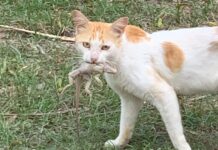
The threat comes at a delicate moment. A 2025 Department of Environment survey found the Little Cayman rock iguana population had more than tripled in three years, from about 1,000 individuals in 2022 to roughly 3,500, following feral cat control efforts.
That rebound showed the species can recover when pressure from predators is reduced. But the population remains vulnerable.
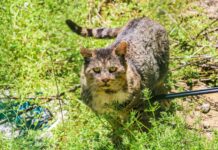
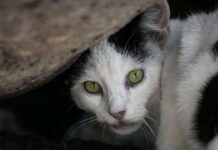
On Cayman Brac, numbers are still extremely low. Across both Sister Islands, rock iguanas face threats from habitat loss, road traffic, free-roaming dogs, feral cats and feeding by humans, which draws them into developed areas.
Road deaths have become a particular concern during mating and hatchling seasons, when iguanas are more active and more likely to cross roads. The DoE has urged drivers to slow down, look ahead, check under vehicles before driving away, and give iguanas the right of way.
Hatchling season is now under way, adding urgency to the warnings.
The National Trust has also advised residents not to feed rock iguanas and to keep pets under control. Cats prey on young iguanas before they reach maturity, while dogs can kill breeding adults.
Related Videos