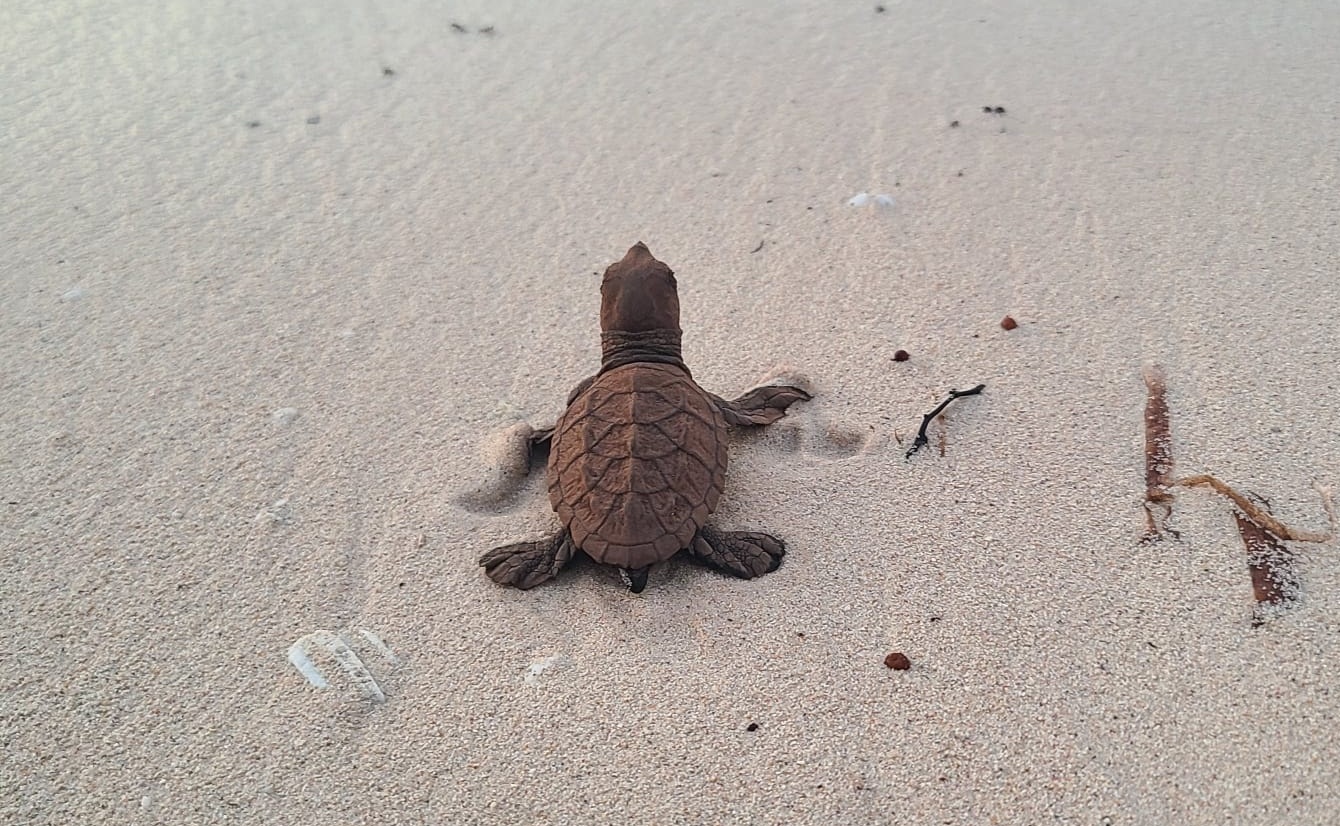
More than 50 baby turtles emerged from a nest on Little Cayman in late June, marking the first recorded hawksbill hatchlings of the 2026 nesting season.
The nest was first reported in May, shortly after the eggs were laid, the Department of Environment’s Janice Blumenthal said.
But, it was only after the hatchlings emerged about seven weeks later, and volunteers and members of the public sent photos to the department that Blumenthal was able to confirm that, based on the “pattern of scale-like plates, called scutes, on the hatchlings’ shells and heads,” they were indeed hawksbill.
“This is an important record because hawksbill nests are recorded much less frequently in the Cayman Islands than green or loggerhead nests,” Blumenthal said.
Hawksbills are considered critically endangered, with their population in Cayman far lower than that of the loggerheads or green sea turtles.
Joy Mulholland, one of the turtle patrol volunteers on Little Cayman, said she came across the hatchlings at the beach in the early morning as they started to emerge last week.
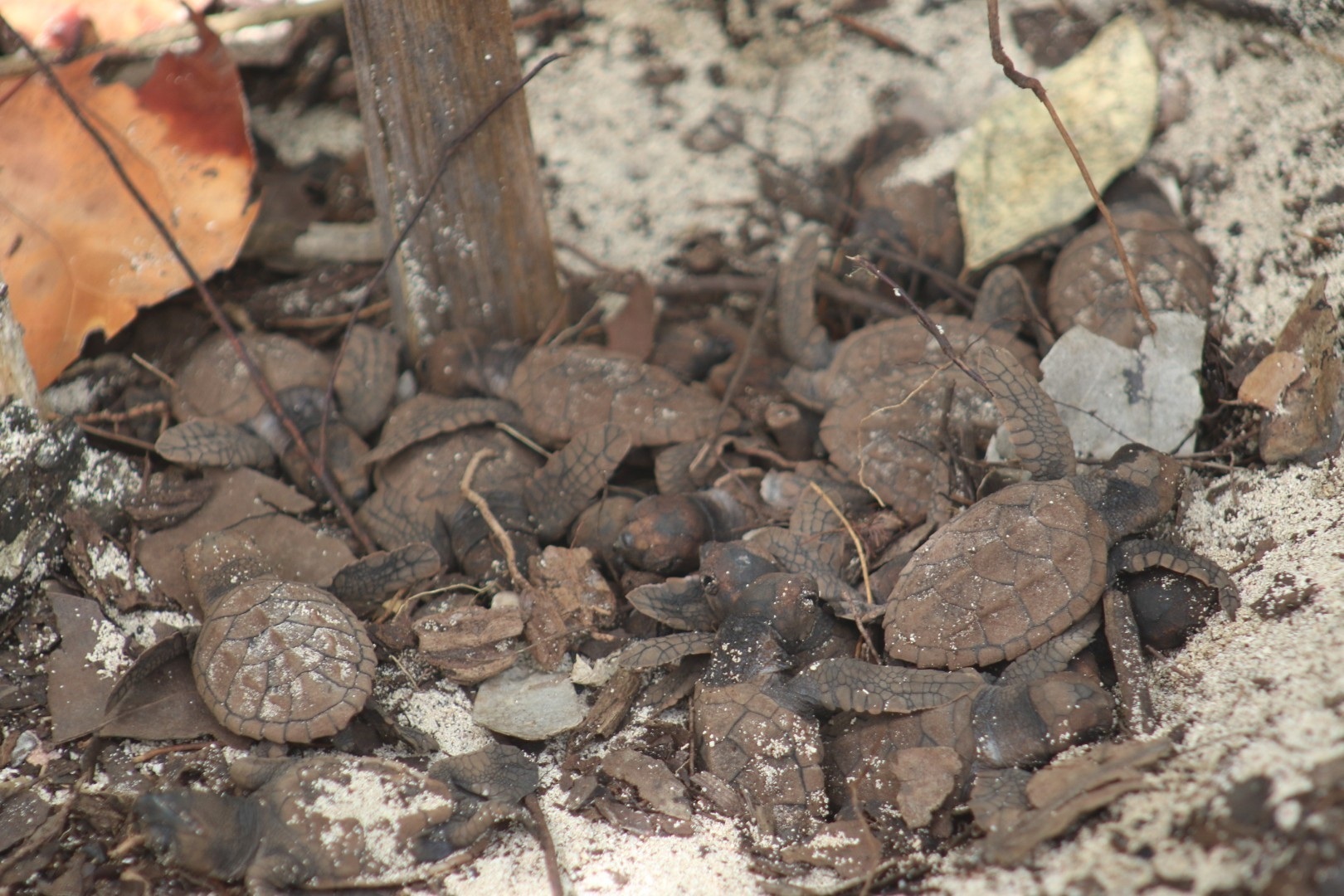
She said instead of running to the sea, as hatchlings usually do, “they all piled up on top of each other after crawling out of the nest”.
Baby turtles that hatch at night are drawn to the sea, often by the reflection of the moon on the water. But if they emerge during the daylight hours, or near artificial lighting at night, they can become disoriented.
Mulholland called the DoE’s turtle hotline and the National Trust’s biosecurity officer Tamara Doyle, who helped arrange for the baby turtles to be collected and released into the sea that evening.
Police officers to the rescue
Doyle said she contacted Patricia Sevik, a police officer and turtle patrol volunteer on the island, who placed the baby turtles in a bucket to keep them safe and out of the hot sun until cooler temperatures in the evening. “Thankfully, they didn’t find any that had died,” Doyle said. “They were definitely quite hot and tired though.”
She said when they returned to the site that evening, they found more hatchlings emerging from the nest.
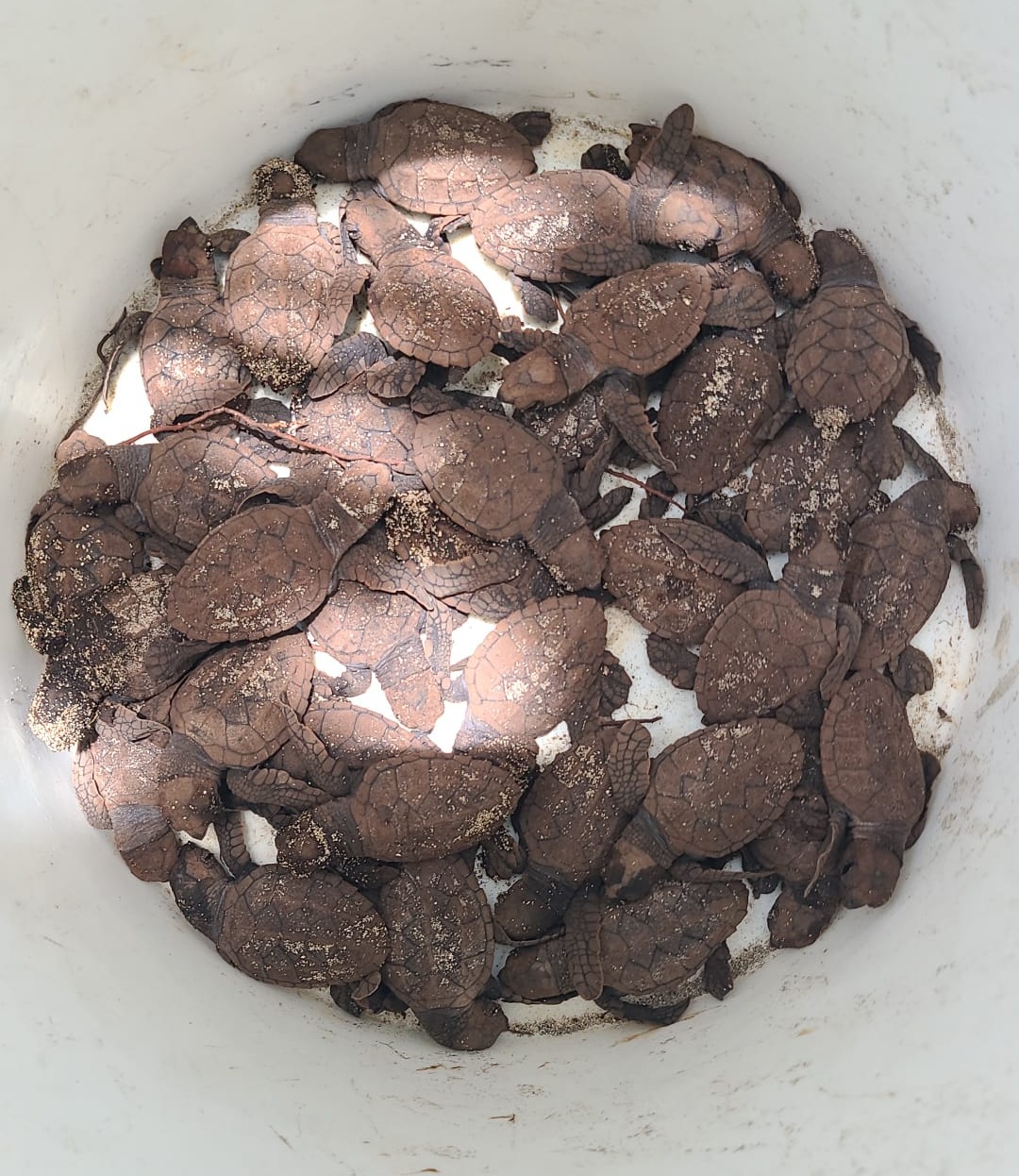
Sevik and fellow police officer Marvin Hinds attended the scene to see how they could assist.
“We originally collected 45 in a bucket,” said Sevik, who has volunteered on turtle patrols for about a year. “I took them home with me for about three hours until the sun had gone down. Then we released them into the sea. The sea was rough that day, so we had to ensure that any that washed back up was placed back in the sea.
“The other seven were coming out of the nest but hadn’t fully emerge as yet. We went back the next day and they had left the nest to go the sea.”
Early nesting
Mulholland said she was surprised by how early the hawksbill turtle nest had appeared. “Normally, the hawksbills nest in the fall,” she said. “I have been recording turtle nests on this particular beach for 10 years and have never seen a hawksbill nest before October.”
She noted that her records showed hawksbills had nested in or near this same site in 2019 and 2023 in October.
Blumenthal told the Compass that records show that loggerhead turtles usually nest from May to August, while green turtles usually nest from June to November, although the DoE’s long-term monitoring data is showing that those species of turtles are starting to nest earlier, a pattern linked with warming sea temperatures.
However, “hawksbill records are much fewer, so we are not yet sure whether hawksbill nesting timing is also shifting,” Blumenthal said.
She noted that hawksbill nesting appears to occur across a broad part of the year, with some being recorded within the loggerhead and green turtle nesting seasons, while others occur later in the year “outside the period our existing nesting beach monitoring programme was designed to cover”.
Blumenthal added that, last year, hawksbill nesting was recorded in Little Cayman in October and November, though since monitoring began, nesting by that species has been recorded there from June through November.
On Grand Cayman last year, hawksbill nesting was recorded in January, August, September, and October, and since monitoring began, it has been recorded there from May through January.
“We comprehensively monitor nesting beaches during the green and loggerhead nesting season, which runs from May through November,” Blumenthal said. “Hawksbills in the Caribbean can nest outside this summer season, leaving a November-to-April winter monitoring gap in Cayman. We are looking to expand our monitoring to better document hawksbill nesting activity during this period.”
’Conservation in action’
The successful mission of rescuing and releasing the baby turtles is one Sevik says she will cherish.
“The joy of releasing hawksbills in Little Cayman is an amazing once-in-a-lifetime experience,” she said. “You don’t just learn about critically endangered species, you hold one in your hand. You crouch at the tide line, tip the bucket, and watch critically endangered hatchlings race for the water. That moment is conservation in action.
“On a small island, you see the link clearly. Protect one nest, and you protect a reef, a fishery, a future.
“You don’t get a medal for it. You get sand on your knees and the knowledge that you helped. And that feeling lasts longer than the release.”
For more information on the Department of Environment’s turtle monitoring programme, which relies heavily on volunteers, visit doe.ky/marine/turtles/volunteer-program.
Related Videos