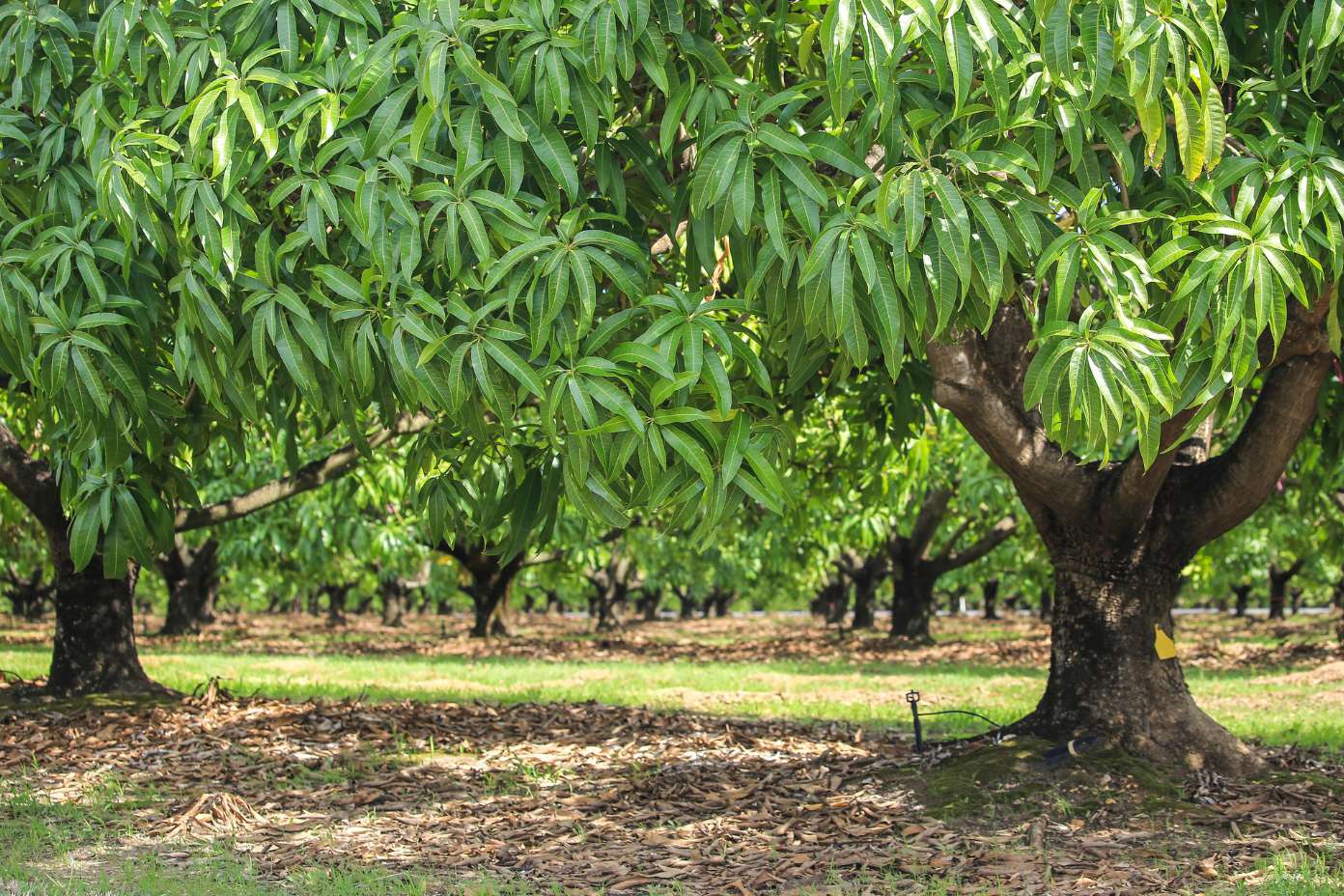
The Cayman Islands has experienced a disappointing mango season this year, with the Department of Agriculture reporting its harvest is running at less than one-third of last year’s levels and farmers across the islands describing one of the poorest crops in recent memory.
While mango trees naturally alternate between heavy and light harvests, Department of Agriculture Agronomy Manager Claudette McKenzie-Bowen said this year’s crop has been poorer than would normally be expected, with extreme heat, drought and the trees’ natural fruiting cycle all possible contributing factors.
June and July are typically the peak of Cayman’s mango season, but many trees produced little fruit after flowering heavily, while others are only now beginning to set fruit, potentially extending the harvest for some varieties, McKenzie-Bowen said.
Since harvesting began on 15 May at the Department of Agriculture’s germplasm collection, which contains more than 70 mango varieties, the department has harvested about 1,100 pounds of mangoes. During the same period last year, it harvested 3,794 pounds from the same orchards.
“For us at the department, this is even less than a typical low season,” she said.
McKenzie-Bowen said the department has received similar reports from growers across Cayman. “When I have been speaking to the farmers at the market, they said it was a bad season,” she said.
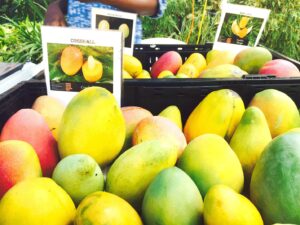
The decline has not affected every variety equally. Some East Indian and Nelson mango trees have produced good crops, while others have barely fruited. In several orchards, trees are only now producing young fruit.
What’s behind the poor season?
McKenzie-Bowen said there is unlikely to be a single explanation for this year’s disappointing mango harvest. Instead, the lower yields appear to reflect a combination of the trees’ natural fruiting cycle and challenging weather conditions.
She said many trees flowered heavily this year but failed to produce fruit, something she believes was likely linked to the prolonged period of extreme heat.
“They had a lot of blossoms, but because of the extreme high temperatures they haven’t had a lot of fruit,” she said, adding that the drought also resulted in many mangoes being smaller than usual.
Another reason for the poor harvest is a phenomenon known as biennial bearing, where mango trees produce a bumper crop one year followed by a much lighter one the next. “Last year was a big season, but this year not,” McKenzie-Bowen said.
Scientists say the cycle occurs because a heavy crop can deplete a tree’s energy reserves, reducing flowering the following season. However, McKenzie-Bowen said this year’s harvest appears to have fallen below what would normally be expected during an ‘off’ year.
McKenzie-Bowen said it was too early to attribute this year’s harvest directly to climate change but acknowledged it may be playing a role.
“It could be climate change,” she said. “The reality is that climate change is a factor in agriculture. The days are hotter and we are going to see more of this.”
Her observations are consistent with international research, which has found that mango production is highly sensitive to temperature and rainfall. Studies show that unusually high temperatures during flowering can reduce fruit set, while prolonged drought and changing rainfall patterns can disrupt flowering and lower yields.
Farmers report disappointing harvests
Farmer Clarence McLaughlin, who grows around 250 mango trees, said the season had been disappointing.
“It hasn’t been a great season,” he said, attributing the poor crop to an extended drought and climate change.
“We as the farmers notice any imbalance in the environment because we are the ones who grow the food,” he said. “I’ve seen dramatic changes in weather patterns. I think what is happening is the change in the climate. It is a struggle here in Cayman.”
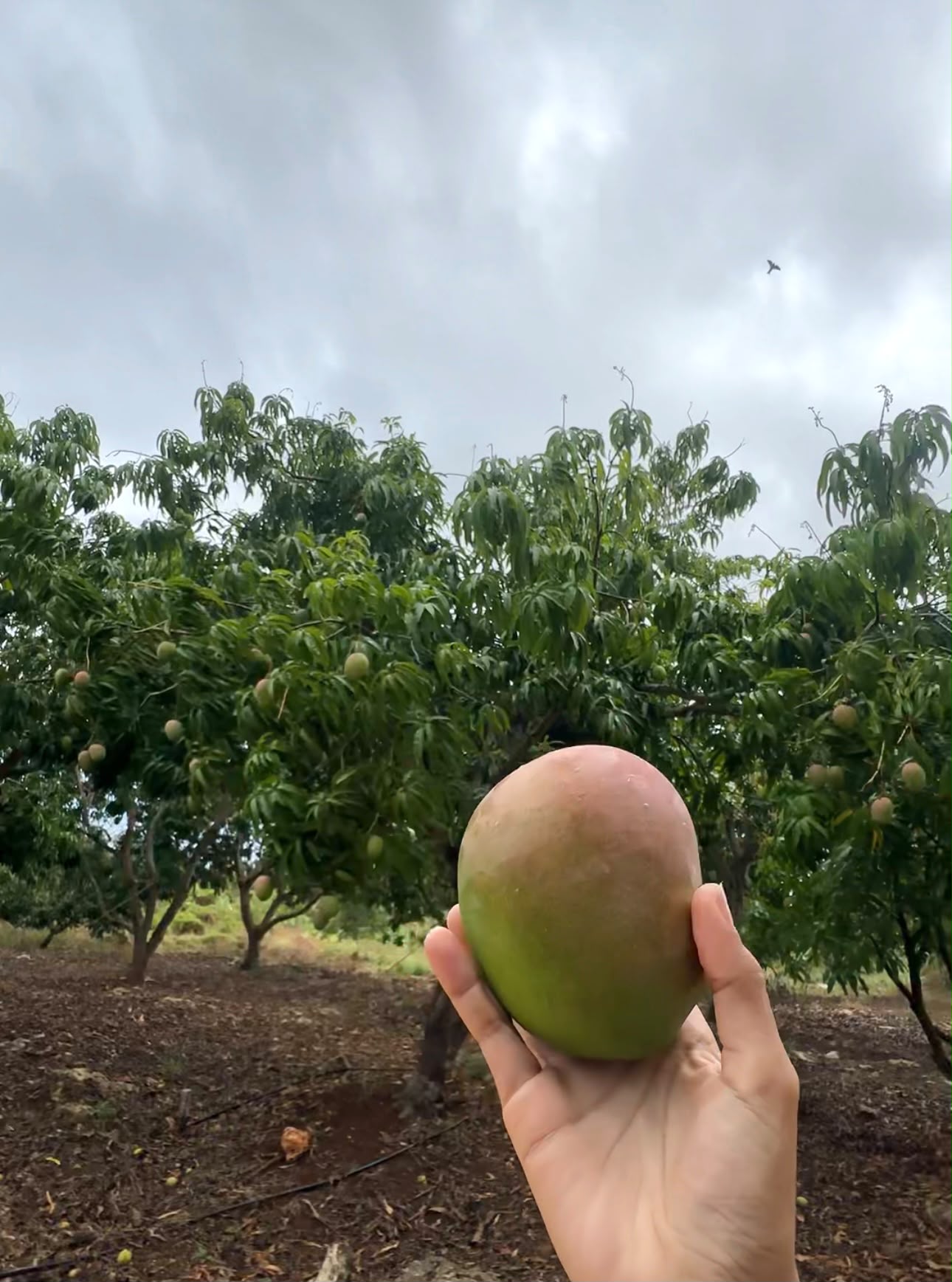
Former premier Sir Alden McLaughlin, who has more than 200 mango trees, also experienced a weaker crop after noticing poor flowering late last year. “I realised from December that it would be a below-average yield this season. The trees simply did not blossom as robustly as they usually do,” he said.
Jakarta and Julie varieties performed relatively well on his property, while Graham, Valencia Pride and Nam Doc yields were below average.
“The mangoes that we do have are excellent,” he said of the well-performing varieties. “They are of good size and wonderfully sweet.”
Farmer Marilyn Nasirun also described a much lighter harvest than last year.
“Last year this time I was still peeling and freezing to get a full freezer. This year I have not peeled one bag,” she said. She noted, however, that many traditional local round mango trees appeared to have produced heavily.
Despite the overall trend, experiences among backyard growers were mixed.
Alric Lindsay said the East Indian mango tree at his mother’s home produced an abundant crop that “caught me by surprise, but I certainly wasn’t disappointed”. Courtney Platt said his trees flowered about a month early but yielded only about half of what they produce in their best years. Meanwhile, Melanie Carmichael said trees in her area were “laden with mangoes” and produced particularly sweet fruit, but the season ended much earlier than usual.
Related Videos