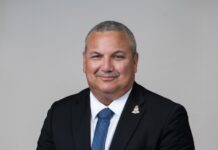
Deputy Governor Franz Manderson recently spoke about two situations that exemplified the old way of running the Cayman Islands public sector.
First, he addressed the case of two top-ranking civil servants who have been paid (quite handsomely) not to work for more than four years — saying, “It won’t happen again.”
Second, he discussed the political pressures that face civil servants who may or may not agree with the party in power — saying it’s something they’re still working on.
That’s what Deputy Governor Manderson said. Here’s what we heard: Cayman’s civil service is a body of entrenched, practically unfireable individuals, who are susceptible to supporting or blocking official policies depending on their personal opinion of who’s giving the orders.
That sort of approach may have passed muster in Cayman in the past couple of decades — but no more. Given mounting pressures from the U.K. and foreign governments, plus the largely self-inflicted injuries to the public treasury, as well as ever-growing competition in international finance, Cayman can no longer afford the old ways of governance.
In recent times, Cayman’s elected and appointed leaders have liberally strewn buzzwords such as “good governance,” “transparency” and “value for money” throughout their public utterances and statements — reflecting the language of the U.K.’s Framework for Fiscal Responsibility that has now been enshrined in Cayman law.
Yet, for all the electronically amplified catchphrases and U.K.-imposed restrictions on borrowing, not one Cayman official — elected or appointed, Caymanian or British — has presented a concrete plan to address the preeminent structural defect of Cayman’s public sector: The overpaid, overstaffed civil service.
Rather than a real plan for real change, officials have given us assurances of incremental change, so-called austerity measures and squishy long-term strategies for managing growing liabilities.
What Cayman needs is cuts — the sooner and deeper, the better — to government spending, with much of the savings coming from layoffs, retirements and role changes.
And while our elected lawmakers should be shouting encouragement from the sidelines, they cannot be expected to lead on this issue because politicians are not constitutionally authorized to hire or fire civil servants.
There is only one person in Cayman who is free from personal ties to civil servants, who is immune to local politics, and who possesses, according to the Cayman Islands Constitution, “the power to employ all civil servants”: That is Governor Helen Kilpatrick.
According to the law, civil servants cannot be dismissed, even by the governor, without good cause.
That’s as it should be. The necessary reductions to the public payroll will be painful to many employees and their families. An individual’s livelihood should never be treated cavalierly, and the deal civil servants signed up for should be the deal that’s honored today.
Though extremely favorable to the civil service, existing law does provide for the dismissal of civil servants — not only for misconduct or poor performance but also to “improve the efficiency of the civil service entity” or “if the duties and functions assigned to the staff member are no longer required.”
Cutting Cayman’s civil service to a level consistent with providing necessary public services efficiently and professionally will be an arduous undertaking that will require significant government outlays in order to part ways with public employees on just terms.
However, it is an undertaking that is imperative to Cayman’s future. If Governor Kilpatrick takes her constitutional responsibilities for “good governance” as seriously as we believe she does, it is a challenge that she will pursue with managerial courage and determination.
Related Videos