

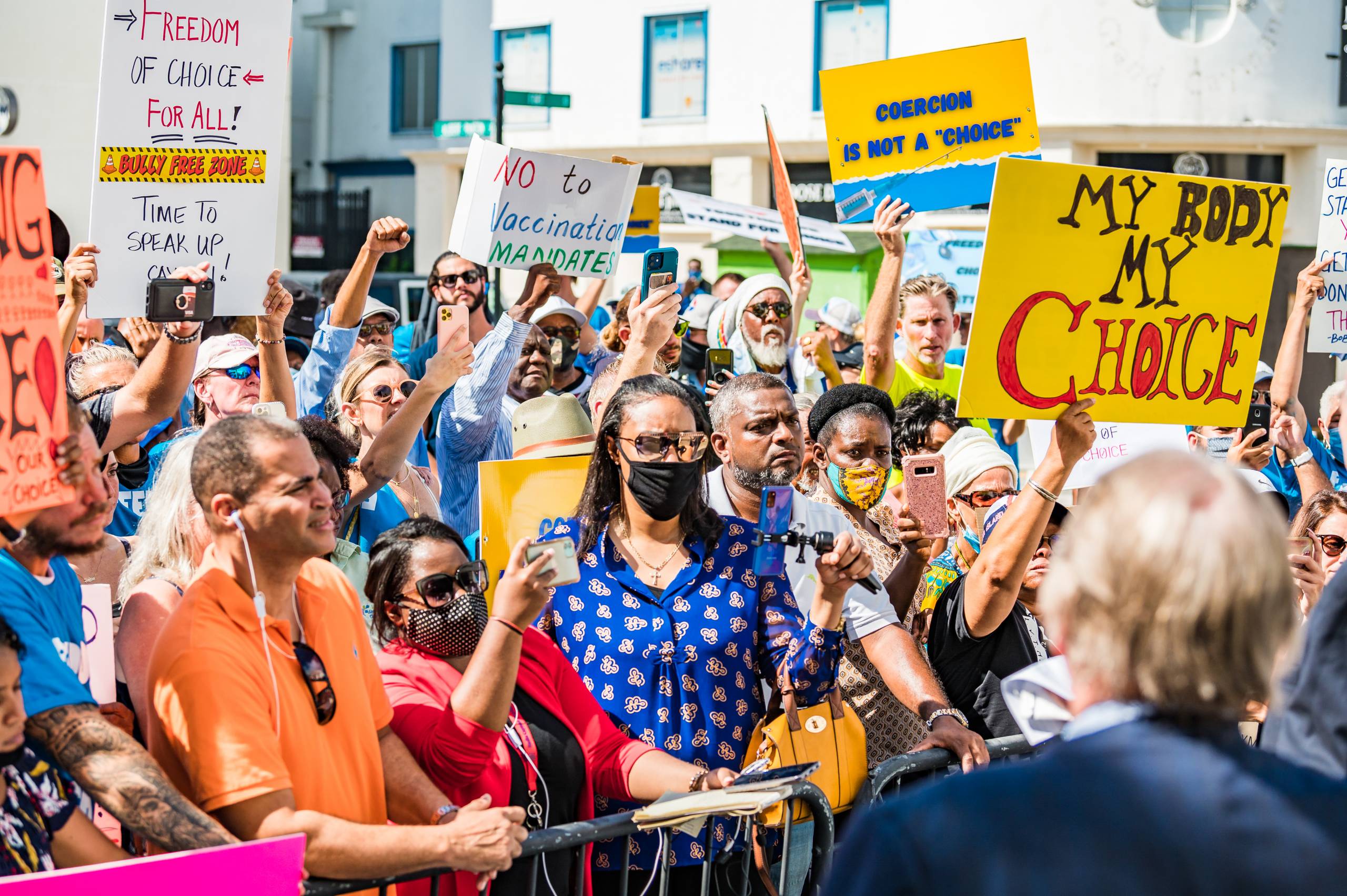
Since the outbreak of COVID-19 began in March 2020, many of the freedoms we previously took for granted have been substantially impacted.
Inalienable rights have begun to look a little less inalienable.
People across the globe have quickly become used to the fact that governments can tightly control where you travel, how close you can stand to your neighbour, and if and when you may leave your house.
While many have chafed against these restrictions, there has been a general acceptance of the principle that emergency scenarios require emergency measures.
But what’s the legal basis for curtailing these long-established personal freedoms? And does this change as the initial state of emergency begins to morph into a more manageable new reality?

James Austin-Smith, counsel at Campbells in Cayman and former chairman of the Human Rights Commission, and Chris Buttler, QC, a barrister from Matrix Chambers in the UK who has been involved in several Bill of Rights cases in Cayman, helped us analyse the legal issues around life, liberty and lockdown as the pandemic goes into its third year.
Here’s what they had to say on the key points of contention…
Human rights are conditional
The first principle to understand is that, with the exception of a handful of ‘absolute rights’ – such as freedom from torture – most of the protections guaranteed by Cayman’s Constitution are limited.
The Bill of Rights guarantees personal liberty, freedom of movement, freedom of association and freedom of conscience and religion.
But the document includes a number of specific exemptions.
The important one here is that the rights do not apply to government action, prescribed by law, for the purposes of “preventing the spread of an infectious or contagious disease”.
The constitutions of most western countries include similar clauses, and this has been the basis for government lockdowns, quarantine requirements and other state action that would otherwise not be permitted in a modern society.
That doesn’t mean government can do anything
This is not a ‘get out of jail free card’ that allows government to impose whatever rules it sees fit. Any restrictions must be set down in law and are open to be challenged on human rights grounds.
The onus, says Buttler, would be on government to prove that the measures were reasonable, proportionate and justified on the basis of a sufficiently serious threat to public health.
Something like a national lockdown at the start of the pandemic could comfortably be justified under this provision, he believes.
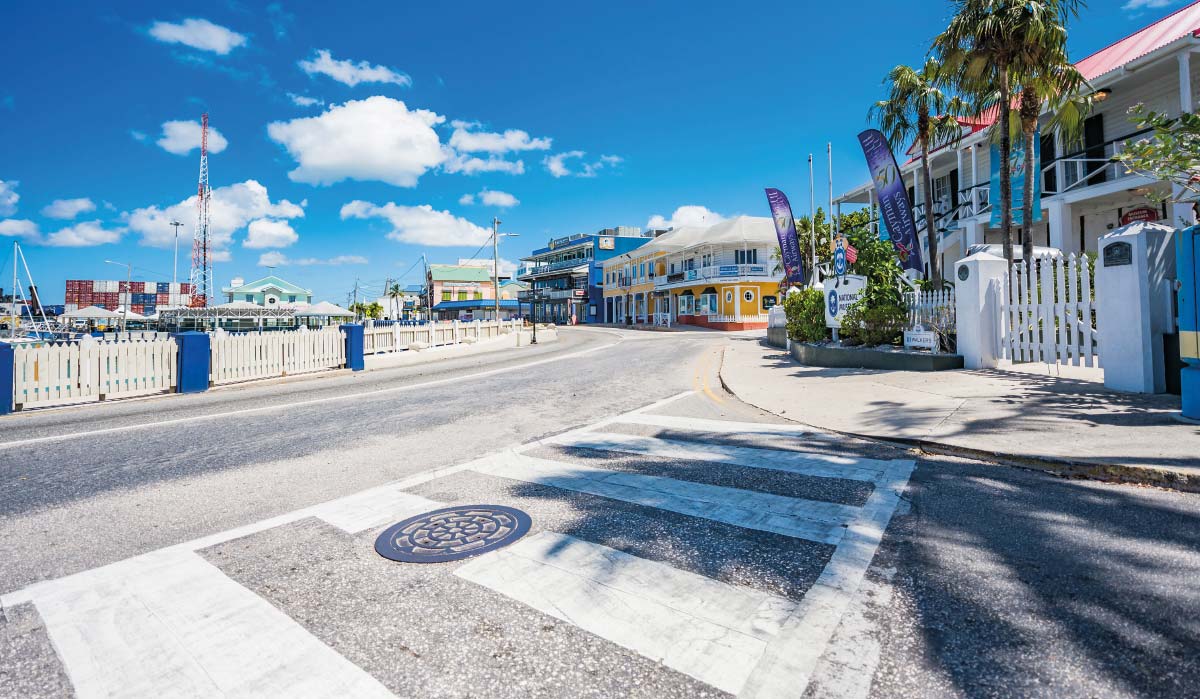
Austin-Smith agrees that government has wide powers when it comes to public health, but he emphasises that these are not absolute. Government must be able to show a link to the goal of suppressing the virus.
He previously questioned whether the ban on beach and marine activity, imposed in the early days of the outbreak in 2020, would pass the ‘reasonableness test’, suggesting there was no obvious connection between this restriction and the goal of limiting the spread of COVID.
Context changes everything
As the pandemic progresses, vaccinations increase and the threat to the public changes, the question of the reasonableness of COVID regulations becomes more complex.
It is a difficult challenge, Austin-Smith acknowledges, for governments to calibrate their arsenal of suppression measures appropriately to the precise threat level at any given moment.
Courts have tended to give a “wide margin of appreciation” to government when such measures have been challenged, says Buttler.
Despite that cushion, there are areas of Cayman’s existing law that both men feel could be open to challenge.
Austin-Smith says it is vital that regulations that impact basic human rights are constantly reviewed.
He says restrictions that may have been appropriate in the spring of 2020 are clearly not sustainable in January of 2022.
Government has obviously recognised that and adapted its regulations. A question for the courts – if a challenge were brought – might be whether those adaptations go far enough.
Buttler says courts will consider context when they assess if a government action is reasonable and proportionate to the goal of limiting a public health threat.
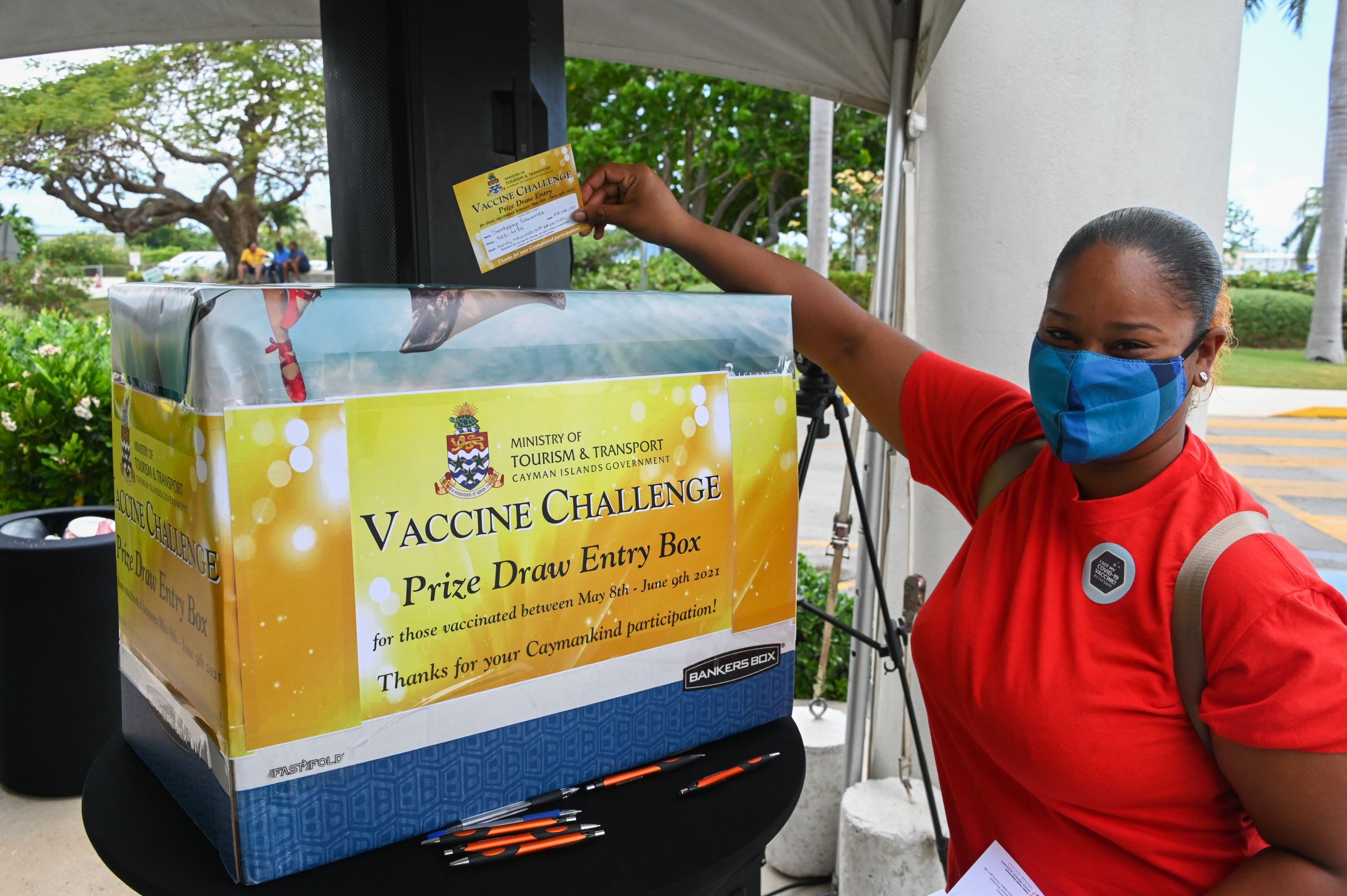
Measures such as vaccinations and treatment options, and the extent that COVID exists already in the community, are all relevant to assessing whether a regulation can be justified.
What areas of Cayman’s current regulations are of concern?
Given the success of the vaccine rollout, the extent to which the virus is now endemic within Cayman’s borders and the relatively reduced risk of serious illness from COVID compared with March 2020, Austin-Smith argues that many of the current restrictions are past their sell-by date.
He says several of the regulations are illogical and are likely to be legally unsustainable.
He points to inconsistencies in the treatment of parents with children – who are not or cannot be vaccinated – as one example.
A vaccinated adult travelling with an unvaccinated child is required to isolate for 14 days after entering Cayman, as a precaution against the possibility that the child may have COVID – even when both child and parent have had negative tests.
If the same child actually caught COVID on island outside the context of travel, the parent would not be required to isolate, as long as they produced negative lateral flow tests. That kind of inconsistency is legally unjustifiable, says Austin-Smith.
Other potential issues highlighted by both men include the length of time people are being held in quarantine in Cayman, the scope of vaccine mandates, and potential for inconsistent application of the rules. Let’s examine those one by one.
Quarantine is essentially house arrest
Quarantine in Cayman
- Extended ‘house arrest’ for COVID cases could breach human rights
- Quarantine period reduced for COVID
- Cayman’s isolation woes: In their own words
- Calls to axe exit test amid lengthy quarantine nightmares
- No requirement for employers to pay quarantined workers
- One mum’s story: Surviving quarantine with a toddler
- $1 million set aside for stipends for quarantining families
While we have established that many of our rights are restricted, Buttler suggests the ‘right to liberty’ is treated with greater importance by courts in human rights cases.
The UK appeals court shot down an argument against lockdown in that country because it decided that the curfew measures were liberal enough that they did not constitute a deprivation of liberty.
While it interfered with other rights, such as freedom of movement and freedom of association, the court decided that doing so was justifiable in the face of the pandemic.
Buttler does not believe the same would apply to quarantine as it is enforced in Cayman. He says the threat of being charged with a criminal offence if you leave your home is legally equivalent to being locked up. Whether that constitutes a legitimate and proportionate measure for public health reasons is a separate question.
Anything over 14 days of isolation is questionable
The concept of isolating COVID cases to prevent the spread of the virus is not in question. But Cayman’s measures are substantially more severe than other jurisdictions.
Many countries, including the UK and the US, have capped quarantine at 14 days throughout the pandemic and are now reducing that further as the virus becomes endemic in those countries.

Cayman still requires a negative PCR test for anyone who has had COVID as a condition of release from quarantine. That has meant some people have been isolated for 30 days or more.
In the current landscape, where there is already significant community spread of COVID, both Austin-Smith and Buttler believe this would not survive a legal challenge.
“My fairly strong view is that this is likely to constitute an unjustified deprivation of liberty,” says Buttler.
If the research, accepted by many other jurisdictions, indicates that 10-14 days is the period after which you are considered unlikely to be contagious, it would be difficult for government to prove that continued detention was justifiable – even with a positive PCR test.
Locally and internationally, doctors have indicated that a PCR test can show up as positive from fairly low levels of the virus for up to 90 days – long after a person would be likely to pass it on. In fact Public Health England recommends that anyone who tests positive for COVID does not take another PCR test for three months unless new symptoms emerge.
“The challenge for the executive would be to prove that anything beyond 14 days is really necessary,” says Buttler.
He added that, as there seems now to be an international consensus on the appropriate isolation period for COVID-positive individuals, he struggles to see how the Cayman Islands authorities can continue to consider a period of longer than 14 days as necessary.
Public health officials announced this week that they are cutting the quarantine period to 7 days for people who have been vaccinated and 10 days for unvaccinated cases. But the requirement for a PCR exit test remains in place leaving the possibility open that some people could still be trapped in quarantine for much longer periods.
Cayman’s high COVID rate is relevant
In the context of widespread community transmission of COVID-19, the bar for government to prove that quarantine is justified gets even higher, says Austin-Smith.
For several months, around one in every 20 people has had COVID at any given time in Cayman.
Between 15% and 25% of all tests are coming up positive on any given day. If Cayman had zero cases – which was the situation up to September – it would be much easier to justify the need for quarantine.
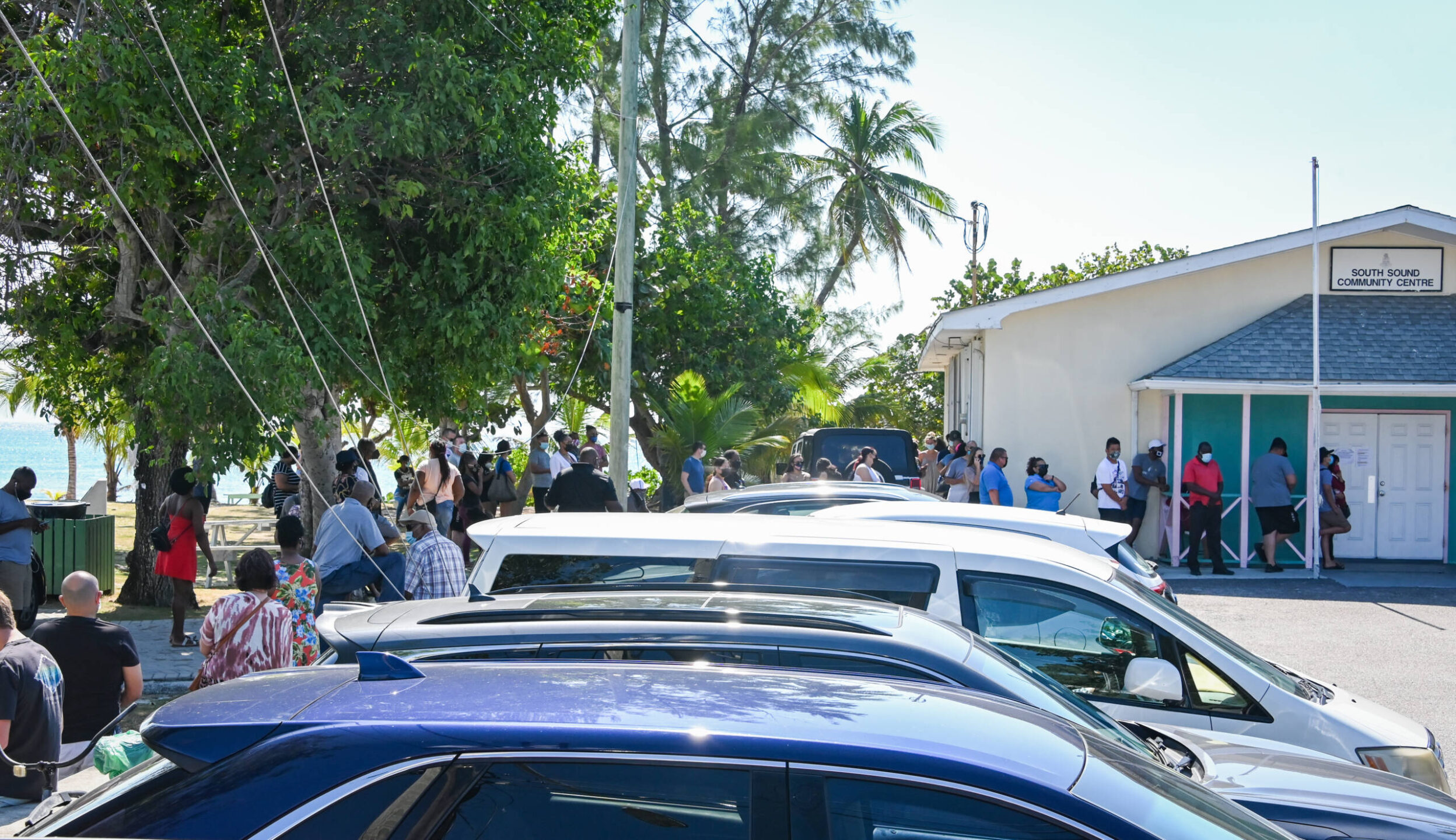
But against the current backdrop, Austin-Smith argues that it would be almost impossible for government to argue that someone who had been in quarantine for two weeks represented a serious enough threat to public health to warrant their continued detention.
“You have to question what purpose does it serve when there are almost certainly a lot of people out there who have COVID and are walking around freely,” he says.
He believes that even 14 days is questionable in the current climate but argues that holding people in their homes for 30 or 40 days constitutes a serious breach of liberty that can no longer be justified at a time when widespread vaccination has reduced the risk of serious illness from COVID for most people.
“The symptoms are so mild for vaccinated people that the risk is not the same,” he added.
A test case would help establish the scope of government powers
A pandemic is new territory for governments everywhere and there are grey areas around the legitimacy of state sanctions that could take a legal test case to clear up.
To challenge the issue, someone who had been in isolation would need to bring a case to the Grand Court seeking a declaration that the COVID regulations on quarantine were incompatible with the Bill of Rights.
While the Compass is aware of several incidences where people have sought legal advice following extended detention, those have not got as far as bringing a writ. Prathna Bodden, an attorney with Samson Law, says she has received multiple calls on the issue, but so far no one has chosen to proceed once released.
Buttler says it would take a person who was sufficiently annoyed and sufficiently wealthy to bring a challenge.
He says damages for unlawful detention in the UK start at around $1,000 an hour but do not increase proportionately. In previous cases, three days of unlawful detention has attracted around $10,000 compensation. Anyone bringing a challenge would have to be motivated by principle rather than the expectation of a large payout, he says.
Consistency of enforcement is also a concern
Among the human rights guaranteed by Cayman’s Constitution is the requirement that ‘All decisions and acts of public officials must be lawful, rational, proportionate and procedurally fair.’ This means that decision-making cannot be arbitrary.
While that sounds quite obscure, it is important, says Austin-Smith. Any law or regulation from government needs to be sufficiently clear so it is not open to differing interpretations by different officials. For example, the conditions of release from quarantine should not vary depending on which public health official answers the phone.
The key for government, says Buttler, is that these regulations must be unambiguous. Well-written regulations with clear policy guidelines ensure that officials decide cases in a consistent way and protect government from claims of arbitrary decision-making, he added.
Some vaccine mandates are believed to be fine
The prospect of mandatory vaccinations is the issue that seems to have attracted the most controversy in Cayman. So far, government has introduced legislation to require COVID vaccination as a condition of work permits, but has not attempted to introduce broader vaccine mandates.
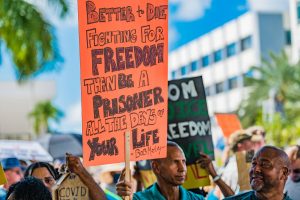
Austin-Smith says the extent to which vaccines could be shown to have reduced the risk of illness and death from COVID meant that it would be fairly easy for government to justify reasonable vaccine requirements on the grounds of public health. He believes government could, and perhaps should, have gone further (see below).
He points out that every challenge over vaccine mandates to date has been thrown out by the European Court of Human Rights – which is the final court of appeal for such challenges for Cayman residents.
Buttler says one potential “line of attack” for anyone considering a court challenge in Cayman would be a claim that the law is discriminatory, in that it only targets work-permit holders.
It might equally be arguable that it is irrational because it only impacts foreign workers in the private sector and not people working for government. The challenge for government would be to establish that the difference in treatment between the two groups was justified.
No fundamental right to a work permit
There is already strong precedent for treating work-permit holders differently to Caymanians, says Austin-Smith. He believes requiring vaccinations as a condition of permit renewals is within government’s power.
“I don’t have a problem with that,” he says. “It is no different to requiring HIV tests for work-permit holders.”
A key point here is there is no fundamental right to a work permit. Government can impose conditions that it considers reasonable.
The argument that such action is necessary for the protection of the public is undermined, however, when the requirement is not implemented more broadly. Austin-Smith believes it is within government’s power to introduce vaccine mandates for civil servants and government contractors.
Not doing so, he says, weakens the case that vaccinations are necessary for work-permit holders in the interests of public health.
He believes it would be more difficult for government to mandate vaccination for all Caymanians generally.
Related: Extended ‘house arrest’ for COVID cases could breach human rights
Related Videos












An HIV test is wholly different from a vaccination. The test obligates the individual to allow government to take a sample from them in the interest of broader public health. A vaccine on the other hand, is something we put into the body which the individual has to live with the consequences of for the rest of their life. I wonder whether a judge would see the issue in the same context, Allowing government to place substances in the body, particularly when vaccines are defensive in nature and those who are vaccinated are protected from anyone who is unvaccinated. The rest of the population who chooses to vaccinate should not care whether another party chooses not to vaccinate Because they are protected. I predict this will get tested eventually.
I also find it interesting that this Covid vaccine was never an actual “vaccine” by definition…and I believe that is why people believed it was a preventative thing to take advantage of. It should have never been referred to as a vaccine, and the CDC knows this, and that is why the CDC literally CHANGED the definition for “vaccination” and “vaccine” to support the fact this SHOT was more of a stimulation of the immune system instead of the original definition of “The act of introducing a vaccine into the body to produce immunity to a specific disease.”
So if you are in a position where this shot will benefit you because of age or a health condition, I highly recommend you get it. If you are a perfectly healthy person, you can make the decision that is best for you whether or not you feel you really need it. It’s a shame it seems there are people who want to punish the unvaccinated because they chose to trust their own immune systems to do the job they were meant to do.
The CIG needs to start talking about fully opening up and getting rid of these silly, unscientific quarantine laws.
I’m particularly amazed at the abject cruelty of keeping unvaccinated children from visiting their relatives on island. It takes a special kind of black heart to think that is OK.
I’m SO happy we didn’t purchase a property there and we are enjoying our visits to other Caribbean destinations.
It’s endemic. It’s over. It’s time.
I agree with all the observations and conclusions these attorneys have arrived at.
The concept Mr. Butler suggests of bringing a test case to the Grand Court SOUNDS good. However, by the time it would take for that case to actually come before a justice, as we have seen in the past, the current surge would be over and restrictions would eventually have been almost removed. And the economy and tourism would have suffered significantly. And Premier Panton would point back and say that he and his cabinet should be thanked for safely getting Cayman through the pandemic. And ask everyone to vote for him again!
YES, I will personally thank Premier Panton AND will vote for him again!!!
I agree. And unfortunately the costs of any litigation as stated in the article will be significant. The people that are most affected by these policies are not wealthy enough to consider a legal challenge. Your points seem on target.
Full disclaimer, I am not a citizen but have been a property owner for over 20 years. I have reluctantly scheduled a trip back to Cayman solely to protect my investment. I am strongly considering selling at this point.
FRAK S. Here’s the flaw in your “The rest of the population who chooses to vaccinate should not care whether another party chooses not to vaccinate Because they are protected.” thinking.
You’re right those who are vaccinated, for the most part, don’t care if the unvaccinated get sick and possibly die. The flaw (the selfishness) in this thinking is that the majority (the vaccinated) are held hostage trying to protect the minority (the unvaccinated).
Though you may live on an island YOU are not an island.
Amen to that David C!!!