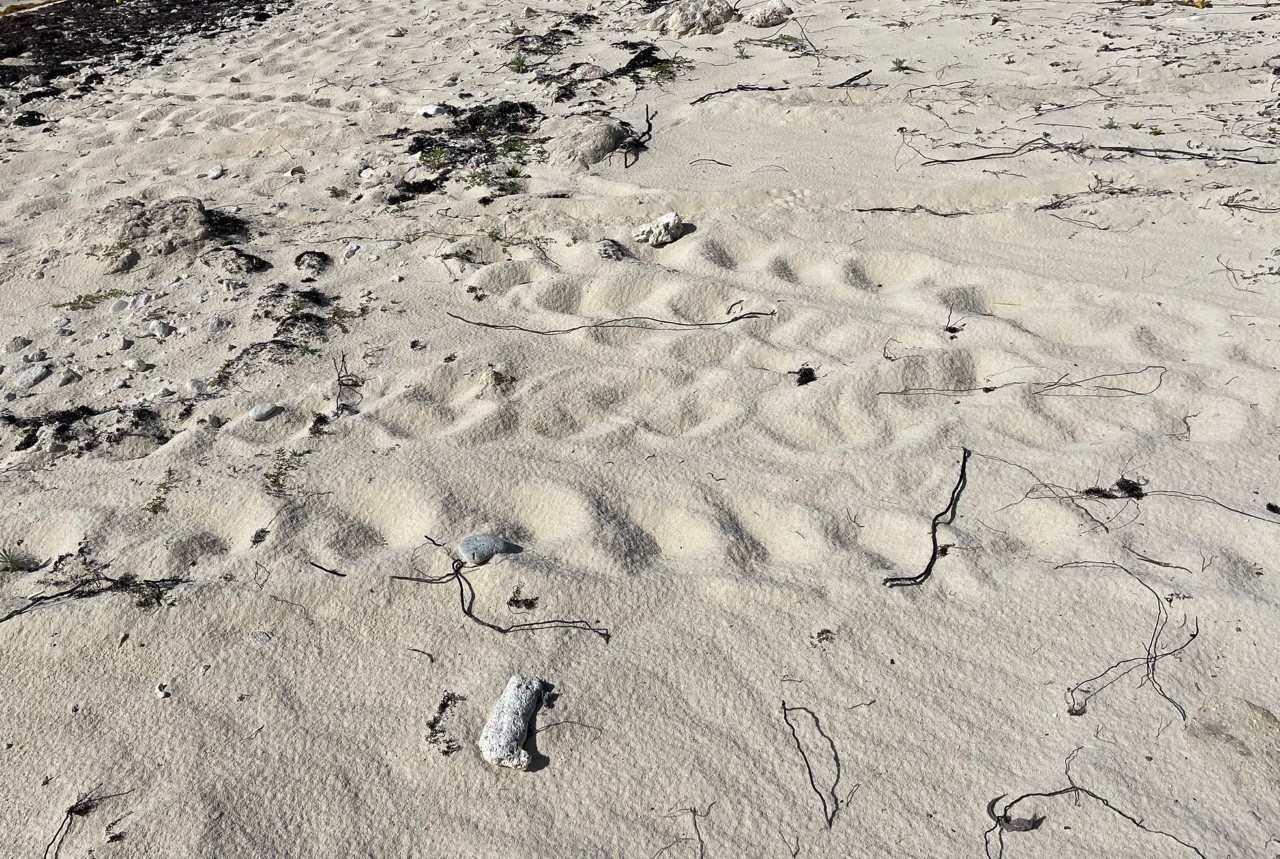
Cayman’s 2022 turtle nesting season has kicked off with an early start following the discovery of the first loggerhead nest on 1 April.
The Department of Environment announced the discovery on its official Facebook page on Tuesday morning.
Jane Hardwick, research officer at the DoE Sea Turtle Programme, responded to Cayman Compass queries via email that the team was “very excited” by the early discovery.
“We are now curious to see if more turtles will come to nest early this year or if it is a one off,” she said.
The DoE, in its post, added that, “the early nest was discovered on 1st April, leaving many of us at DoE to believe it was an April Fool’s joke. This very early nesting activity prompts us to remember that everyone can do their part this nesting season.”
A couple on Grand Cayman discovered the nest and reported it to the DoE.
“The tracks were discovered by property owners who noticed them from their balcony and sent us a photograph. The nest was later confirmed by DoE’s Leah Grant,” Hardwick said.
Typically the nesting season runs from May to November, so the discovery of this nest at the start of April has created a stir for local turtle volunteers.
“We have only had a nest this early once before, in 2017, so it is definitely unusual for nesting to occur this early. 2017 is still the current record year for nest numbers, so perhaps an early nest is a sign of good things to come for the season,” Hardwick said.
How to identify turtles by their tracks
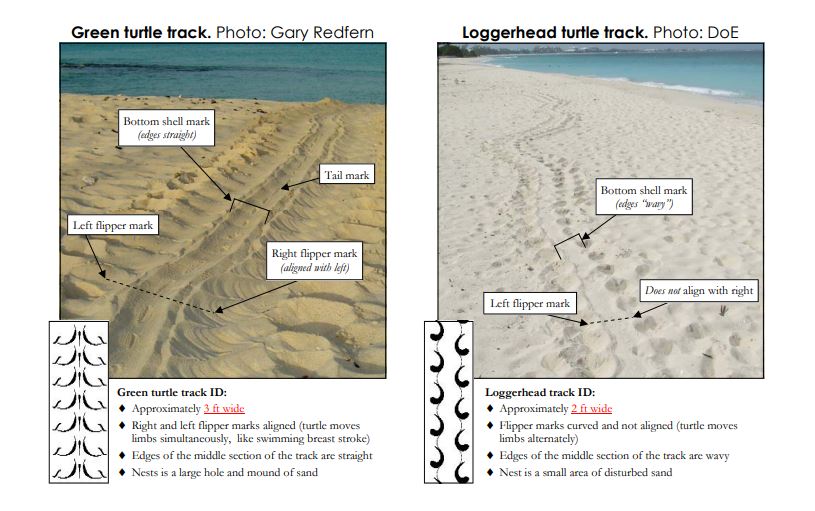
Source: Department of Environment (click to enlarge)
Last year Cayman’s loggerheads enjoyed a record-breaking season, more than doubling the nests registered in 2020.
Statistics from the Department of Environment showed that 350 loggerhead nests were recorded across the three islands last year, a 77% increase over the 2020 figure of 197 and surpassing the previous high of 332 nests counted in 2017.
Hardwick said the early start gives the DoE turtle a chance to kick start efforts to secure the nests for a successful season.
“We are hoping that we can keep all the nesting turtles and their hatchlings safe from human threats such as beachside lighting and illegal take. With increasing nest numbers, it becomes more difficult to protect every hatch from lights but we are making good progress with the DoE’s Turtle Friendly Lighting Retrofit Project,” she added.
Community urged to be aware of turtles
Hardwick urged the community members interested in turtle friendly lighting to reach out to DoE as it makes such a huge difference to hatchling survival rates.
“In addition, she said, residents who live on the beach can help turtles by keeping the beach clear at night by stacking beach chairs and tables.
She also reminded that residents should always apply for a permit for a beach bonfire by contacting [email protected] or [email protected] and consult with DoE if there is need to use vehicles or machinery on the beach.
“Never rake over or cover up turtle tracks. Never disturb mating or nesting turtles – keep a distance of at least 50 ft (15m) and never interfere with a turtle nest,” she added.
Hardwick urged residents to report suspected turtle tracks/nests to 938-NEST (938-6378) via WhatsApp and report suspicious activity to DoE enforcement on 916-4271 or call 911.
“Together we can help protect Cayman’s endangered turtles and make this a successful nesting season,” the DoE added in its Facebook post.
Learn more about protecting Cayman’s turtles here.
Related Videos