


Although the overall number of turtle nests declined in 2021, Cayman’s loggerheads enjoyed a record-breaking year, more than doubling the nests registered in 2020.
The latest statistics from the Department of Environment show that 350 loggerhead nests were recorded across the three islands last year, a 77% increase over the 2020 figure of 197 and surpassing the previous high of 332 nests counted in 2017.
“Cayman Brac had a phenomenal season with 93 loggerhead nests confirmed when their previous record was only 55,” a DoE post on its official Facebook page announced.
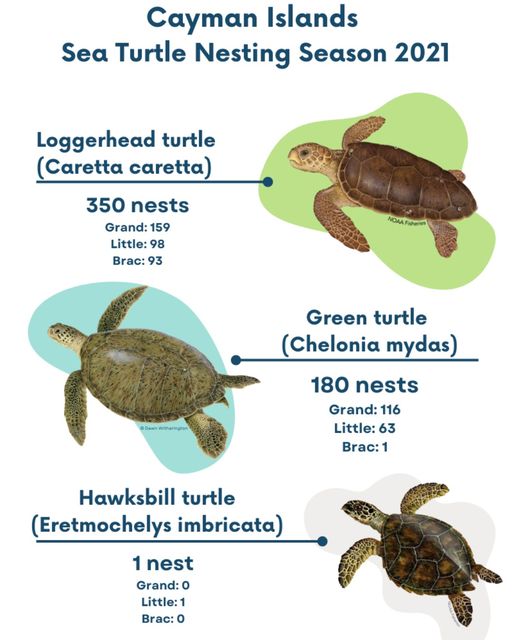
Overall, 531 turtle nests were recorded for 2021.
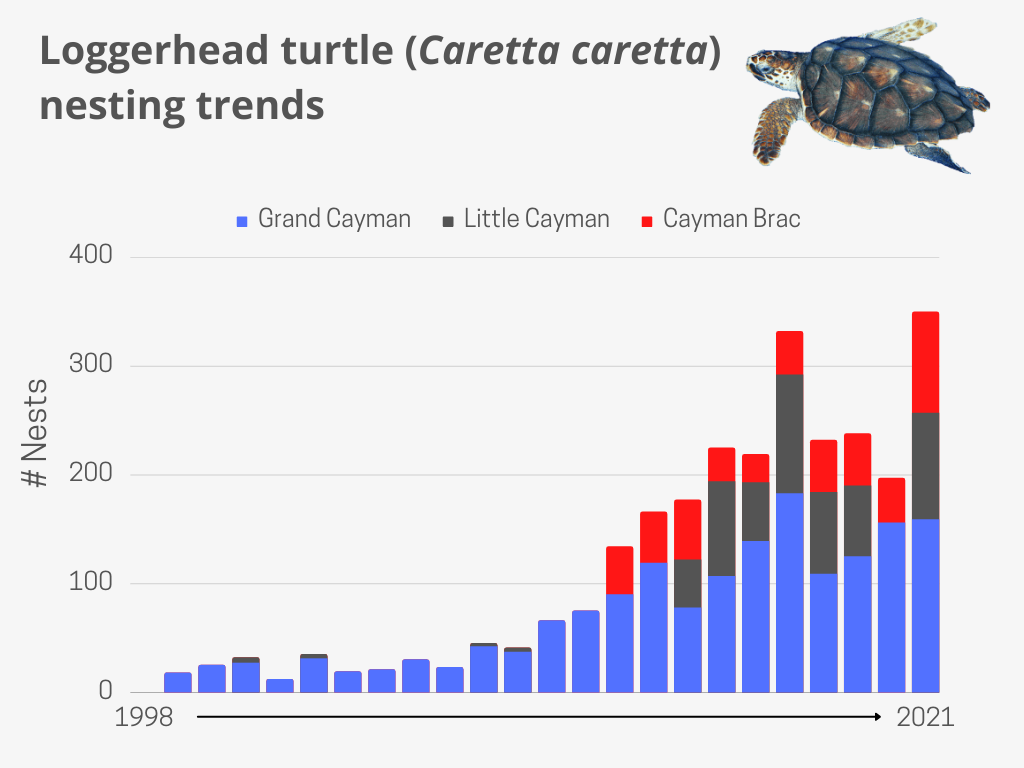
The graph above shows the numbers of loggerhead nests recorded each year since monitoring began in 1998, according to the DoE.
“In the first year of surveys, no loggerhead nests were confirmed at all and for many years it was thought the population, like the green turtles, may have been too small to recover.
“However, the numbers we are seeing in recent years are promising and reflect the results of long-term conservation and better protection of sea turtles in the Cayman Islands,” the DoE said in the post.
A special highlight of the season was the discovery of three rare leucistic, or pale-coloured, loggerhead hatchlings by the DoE’s turtle team last September.
Leucism is a genetic condition that causes reduced pigmentation.
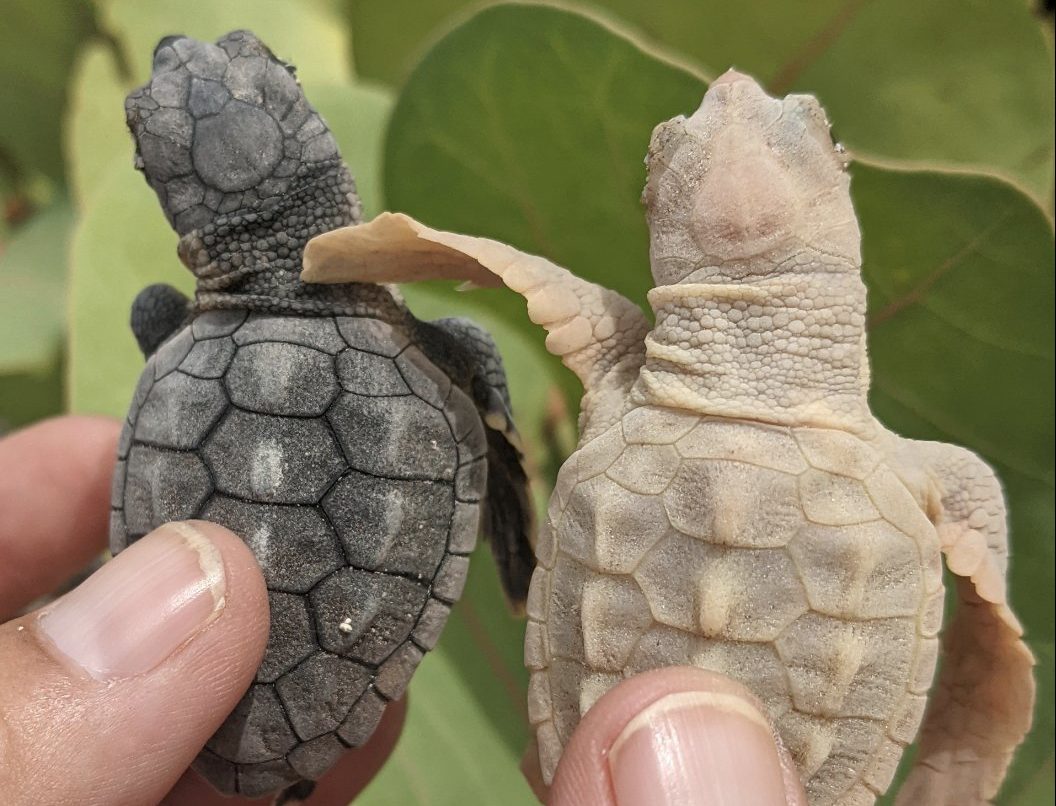
The DoE, in September, said, “Often leucistic hatchlings have other malformations which means they do not reach the final stages of development but the team [is] happy to report that these hatchlings were healthy and strong and have been released along with others that were found left behind in the nest.”
Jane Hardwick, research officer at the DoE Sea Turtle Programme, told the Cayman Compass via email on Monday that though there was a positive trend in 2021, last year’s active hurricane season also had a serious impact on local nests.
“The storms last year were really challenging as many nests were lost, even after they were relocated higher up the beach. DoE will be reporting more on this soon in more detail,” she said.
Green sea turtle numbers decline
While the numbers were considerably better for the loggerheads, green sea turtle nests dropped by 49% in 2021 compared to 2020 figures.
This drop was expected, Hardwick said, given the bumper season for green sea turtles in 2020 when 353 nests were recorded.
“The green turtles had a very low year of nest numbers in 2021 which was not surprising as it followed two very high years of nesting. The current record for all islands nesting was 2017 with 689 nests because that year experienced high nesting numbers from both species which does not happen very often,” she said.
The 353 nests recorded in 2020 was the second highest total nests for green sea turtles in the last five years, even with no data collected in Little Cayman for that year.
“It’s always difficult to predict how many nests we will get for each species because the same females do not return each year,” Hardwick told the Compass. “They nest every 2-3 years and some years there are new mature females joining the population too. However, after recording high green nest numbers in 2019 and 2020, it was not surprising to see much lower numbers in 2021.”
Hardwick said the record-breaking loggerhead nest numbers in 2021 were a welcomed statistic following a low year in 2020.
Only one hawksbill turtle nest – found on Little Cayman – was recorded last year.
Cayman 2021 turtle nesting stats
2017
2018
2019
2020
2021
Green 344
172
433
353
180
Loggerhead 332
232
238
197
350
Hawksbill 13
5
4
7
1
Total nests 689
409
675
557
531
COVID-19 restrictions, Hardwick said, continued to positively impact nesting turtles last year as Cayman experienced “less human disturbance to mating turtles, to nesting turtles and to the nests themselves”.
“There was also more willingness from property owners to keep lights out while no tourists were present. We also recorded nesting in two new locations during the 2020 season when the beaches were locked down, one location which was highly likely a result of less human activity on the beach at night,” she said.
Last year’s season saw the discovery of a green turtle nest, found on 31 Oct. on Seven Mile Beach.
It was a late season discovery, which came as a surprise.
Hardwick said one of major high point for the turtle team for 2021 was the number of properties that now have turtle-friendly lighting.
This, she said, “meant we could leave more nests to hatch naturally, without our intervention”.
Looking ahead
While Hardwick said it is always difficult to predict what the new nesting season will bring, the DoE hopes for lots of nests, the continued uptake of turtle-friendly lighting and less-damaging tropical storms.
“This year we are continuing to work with properties that are at various stages of retro-fitting lighting and it is so exciting to see this project expand. It still has a long way to go but the positive impact it is having on protecting sea turtles is very clear,” she said.
As the DoE prepares for the start of the season in May, Hardwick urged properties along the shoreline to “clear the beach at the end of the day (stack deck chairs, etc.) as turtles need lots of space to nest, [and] obtain permits for beach fires as these can kill eggs or hatchlings.
“Please report any suspected turtle nesting activity to our hotline 938-NEST and any suspicious activity to 911. Give turtles space and respect when in the water or on the beach and ensure they are kept in the dark when they come to nest,” Hardwick said.
Lights are the greatest threat to emerging sea turtle hatchlings, she added, as she urged property owners to contact DoE at [email protected] if they are interested in turtle-friendly lighting.
Related Videos








When will the DOE recommend to governmeny to enact regulations requiring property owners along the shorline to install turtle sensitive lightening or simply make illegal the use of lighting during nesting season?