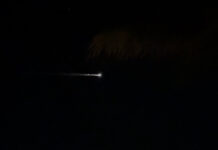
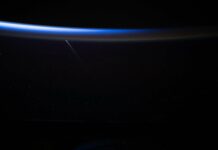
Skywatchers in Cayman could be treated to a spectacular meteor shower of up to 1,000 meteors an hour late Monday night into early Tuesday morning, 30-31 May. Or not.
Astronomers say the Earth could pass through the debris of a fragmenting comet around midnight, although it’s not yet certain if that will happen. But, if it is visible, it could result in a stunning display.
Bill Cooke, who leads NASA’s Meteoroid Environment Office, said in a NASA blog, “This is going to be an all or nothing event. If the debris from SW3 [comet] was traveling more than 220 miles per hour when it separated from the comet, we might see a nice meteor shower. If the debris had slower ejection speeds, then nothing will make it to Earth and there will be no meteors from this comet.”
The meteor shower, called ‘tau Herculids’ is a trail of debris from a disintegrating comet, known as 73P/Schwassmann-Wachmann or SW3.
According to NASA, the comet was first discovered in 1930 by German observers Arnold Schwassmann and Arno Arthur Wachmann. It was not seen again until the 1970s. In 1995, astronomers noticed that the comet had become hundreds of times brighter than previously observed, because it had broken into several pieces and was leaving an orbital trail made of its own debris. It was in about 70 pieces, NASA said, when it approached Earth in 2006, and it has been continuing to fragment ever since.
Tiyen Miller of the Cayman Islands Astronomical Society said Monday night may bring “a meteor storm, with up to 1,000 meteors an hour”.
He explained, “Basically, meteor showers are generally caused by the Earth passing through the path of a comet as it goes around the sun. Comets generally leave dust behind because they’re made out of dust and rock and ice. And as Earth passes through this trail of dust, we see meteors.
“However, something special happened in 1995… a comet disintegrated, it basically exploded. And when this happened, it got 400 times more bright than expected and dozens of big chunks went flying everywhere, and there were even smaller pieces.”
On Monday night, for about half an hour around midnight, Earth might pass through the debris trail of the shattered comet for the first time.
“It’s a very specific time that we’re going to be passing through this debris cloud,” Miller said.
If the meteor shower is visible, it will be almost directly overhead in the Cayman Islands, and as the night that will be moonless with a very dark sky, those watching from these islands should get a clear view.
Miller explained, “How comets disintegrate is very hard to predict and nobody’s really sure if we’re going to hit the cloud straight on or not. It depends on a lot of variables, but if we do hit this debris cloud, the first thing is we’re not in any danger. These chunks are very small really and they’re not going to cause any problems about coming down to Earth. It’s extremely unlikely.”
The meteors are travelling at about 10 miles per second, which is slow in astronomical terms, but means if they are visible, they may be somewhat dim, Miller said.
He advises people who want to watch out for the meteor shower to “go somewhere dark and let your eyes adjust, and around midnight, who knows? We might see one of the greatest meteor showers in our lifetime or you might just get a nice evening under the stars.”
If the meteor shower fails to appear, but leaves a hankering for more celestial viewings, the Cayman Islands Astronomical Society is inviting the public to join its event at Spotts Dock at 7:30pm on Thursday, 2 June, and take a look through its telescopes at the thin crescent moon and the Southern Cross.
Related Videos