 In its ongoing review of 2022, the Cayman Compass revisits some of the notable developments in the local courts, including landmark rulings, contentious cases and historic achievements.
As is customary, the Judicial Administration began its new year with the official Grand Court opening in January, during which outgoing Chief Justice Anthony Smellie presided over his final ceremony as head of the judiciary, marking the end of a “historic tenure of some 24 years as chief justice”.
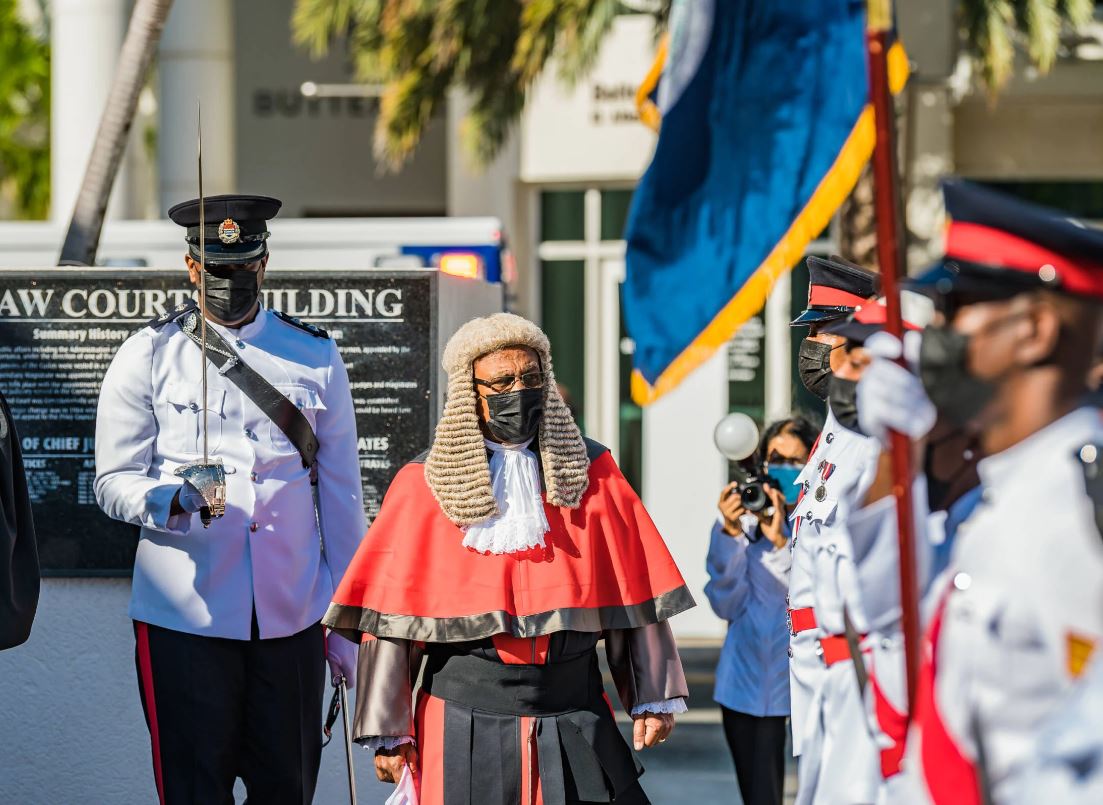
During the event, which was downsized amidst COVID-19 concerns, many legal professionals, such as Attorney General Samuel Bulgin, paid homage to the chief justice for his vision and leadership of Cayman’s courts.
Smellie himself took time to highlight the overall judicial growth, noting that in 1989, some four years before he was appointed as a judge in Cayman, the islands’ legal administration had consisted of only three individuals – a chief justice, a magistrate and a clerk of the court. Now, there are 39, including a panel of 18 acting judges and magistrates.
Smellie also noted infrastructural upgrades within the courts, including the official opening of two new courtrooms in what used to be the Scotiabank building. One of these was used for historic in-person hearings of Privy Council judges during their first-ever sitting in Cayman.
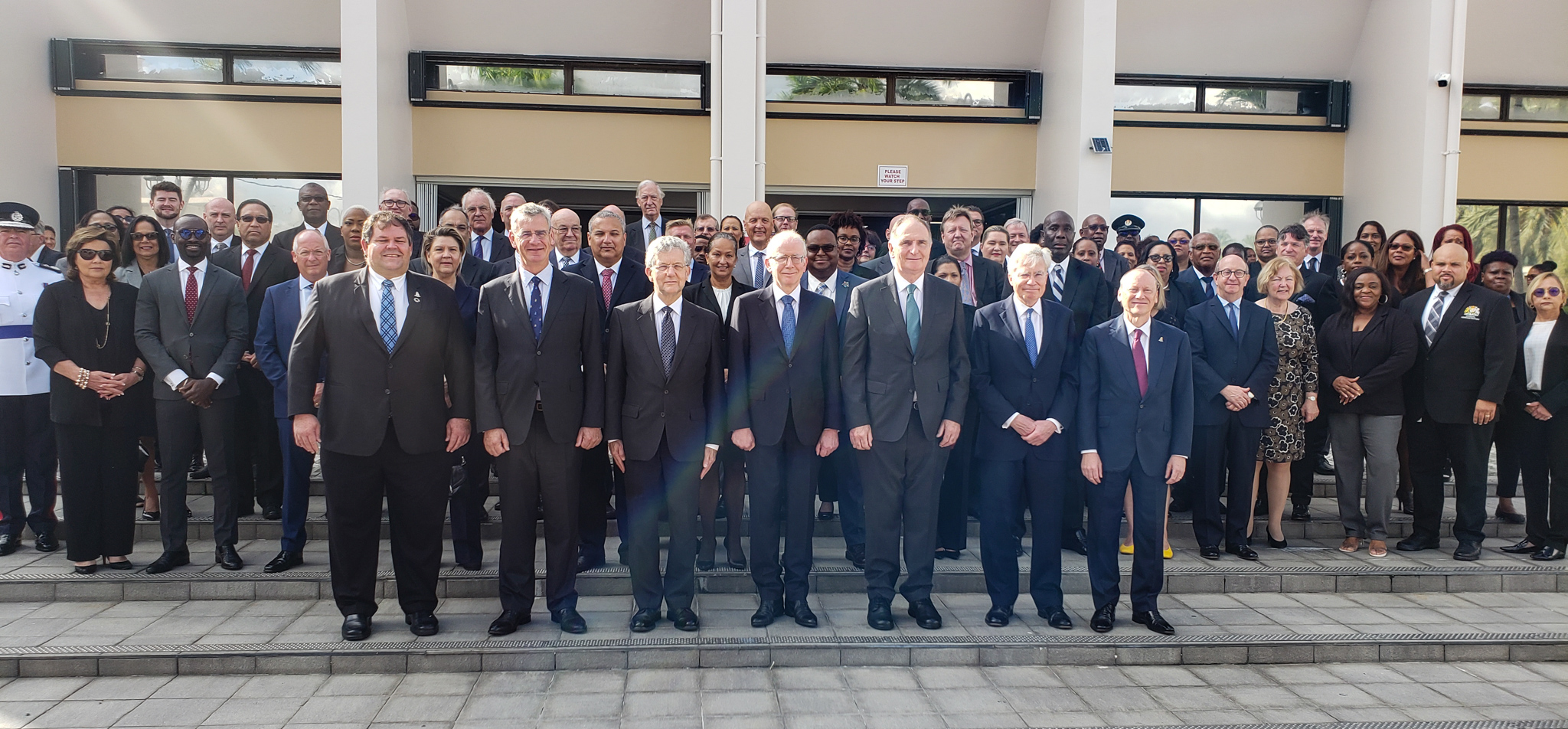
The panel of five ‘Law Lords’ included the president of the Judicial Committee of Privy Council, the UK’s highest court of appeal, who arrived in Cayman in November to preside over several complex legal questions.
Arguably, the most notable case was that of convicted murderers, brothers Justin Ramoon and Osborne Douglas, who were transferred to a maximum-security prison in the UK in 2017 amid claims that they were plotting a daring armed jailbreak from Northward Prison.

The burning question at the heart of their case was whether it was legal for Cayman’s courts to have conducted what amounted to a secret trial without the defendants before relocating them to the UK – because no written laws exist in Cayman granting such power. The attorneys for the brothers say it was illegal, but the Court of Appeal had earlier ruled it was an implied power that existed even without it having been written down.
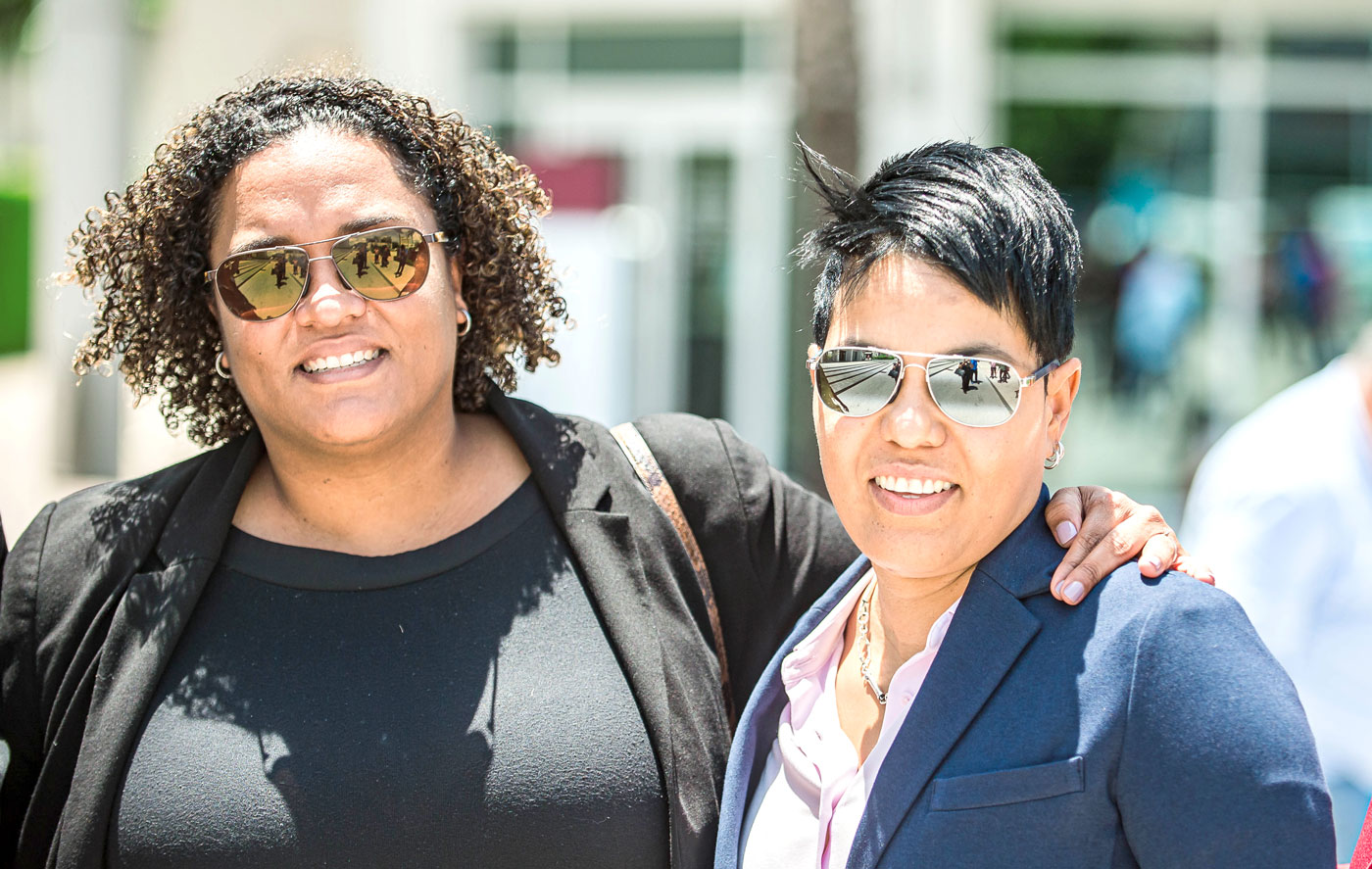
The Privy Council judges’ arrival in Cayman came some eight months after they had handed down a final ruling in the same-sex marriage debate, which brought a four-year court battle to an end. In March, they ruled that Cayman’s Constitution in its current form does not provide a right for same-sex marriage, and thereby dismissed the case of same-sex couple Chantelle Day and Vickie Bodden Bush.
An additional milestone for the courts was the appointment of the first-ever female chief justice, Margaret Ramsay Hale.
Clothed in her late father’s barrister robes, Ramsay-Hale was sworn in on 25 Oct., witnessed by Cayman’s political leaders, her fellow judges, the wider legal fraternity, and scores of viewers online. Her appointment runs through 11 Oct. 2031.
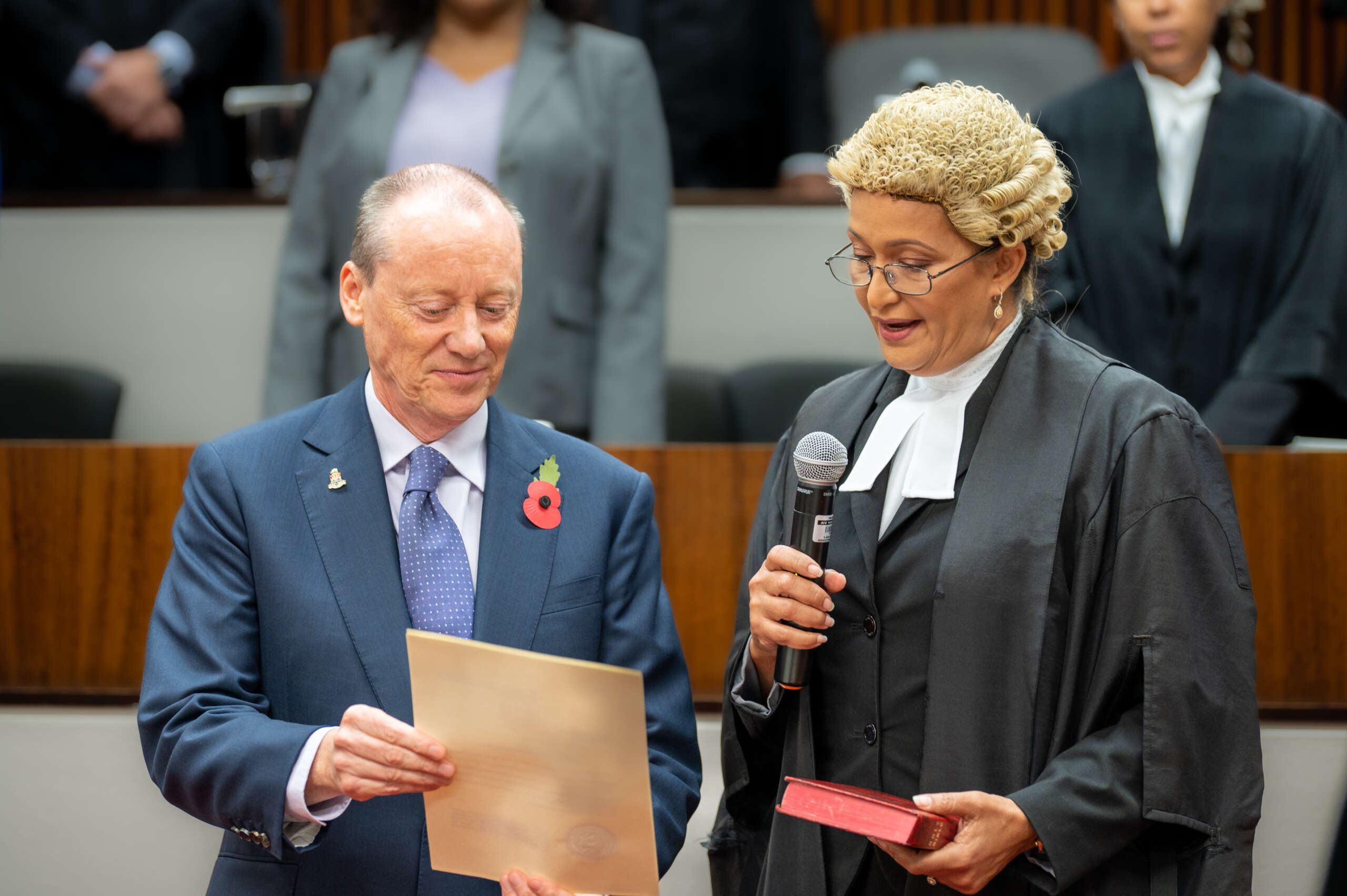
Historically, chief justices have been sworn in behind closed doors in the governor’s office. However, one of her first acts as the new judicial head was to take a different approach.
As Ramsay-Hale accepted the reins from Smellie, she noted that her vision was to build on his successes, and to adopt a blueprint that focuses on quality management systems with a view to improving overall court performances.
A year of notable cases
In the criminal division, one of the most gruesome cases involved Roger Davard Bush, who was convicted of murdering his own son, Shaquille Bush, in a “hail of bullets” over apparent rumours of an affair between the younger man and his father’s partner. He was sentenced to 33 years in prison.

During that trial, evidence came to light that the gun which was used to kill Shaquille Bush was the same weapon that had been used by multiple criminals for more than a decade to commit two other murders, numerous armed robberies and several other violent crimes.
The gun has still not been located by police.
Cayman’s courts also drew international attention with the trial and conviction of former Cayman Islands Football Association officials Canover Watson and Bruce Blake. Watson was convicted on money laundering and fraud charges and Blake on false accounting. By the end of the year, both were still awaiting sentencing.

Theirs are the latest convictions in widespread investigations into what has been dubbed the ‘FIFAgate’ scandal, which also includes Caymanian Jeffrey Webb, who is accused of masterminding an international multimillion-dollar racketeering and bribery scheme that collapsed in 2015 with his arrest in a Swiss hotel.
In the lower courts, embattled beauty queen Miss Cayman Islands Universe Tiffany Conolly has fought to defend her behaviour after being accused of beating up her ex-boyfriend and his father, damaging their cars and then assaulting and cursing at police officers.

Conolly’s trial concluded with her accepting that she did commit some alleged wrongdoing but she claimed it was in self-defence. A verdict is expected early next year.
Over in the civil section, the courts were tasked with hearing several judicial reviews. These included a challenge by Kattina Anglin over Governor Martyn Roper’s use of his reserved power to enact civil partnership legislation, which was initially voted down by the Cayman Islands Parliament.
The Grand Court eventually ruled in favour of the governor. However, Anglin has since received permission to appeal the matter, which is expected to be heard in the second quarter of 2023.
The court also considered a judicial review brought by Doctors Hospital over concessions granted to Health City Cayman Islands and Aster Caribbean Holdings by the Cayman Islands government.
In another judicial review, the Royal Cayman Islands Police Association challenged a new uniformed police shift policy introduced by Commissioner of Police Derek Byrne. The court ultimately ruled against the commissioner and ordered that the policy be reversed.
Related Videos