Glow-in-the dark sharks and schooling scalloped hammerheads are among the mind-bending discoveries from Cayman’s first serious effort to explore its deep seas.
A two-year survey using baited remote cameras and groundbreaking DNA analysis has already uncovered a new species for the region.
Blurred lantern sharks, just two feet long and covered in light-emitting photophores that allow them to thrive in the murky depths of the deep ocean, had never been recorded in the Caribbean before.
Now a Cayman-based research team has recorded footage of the rarely seen species on three separate occasions.
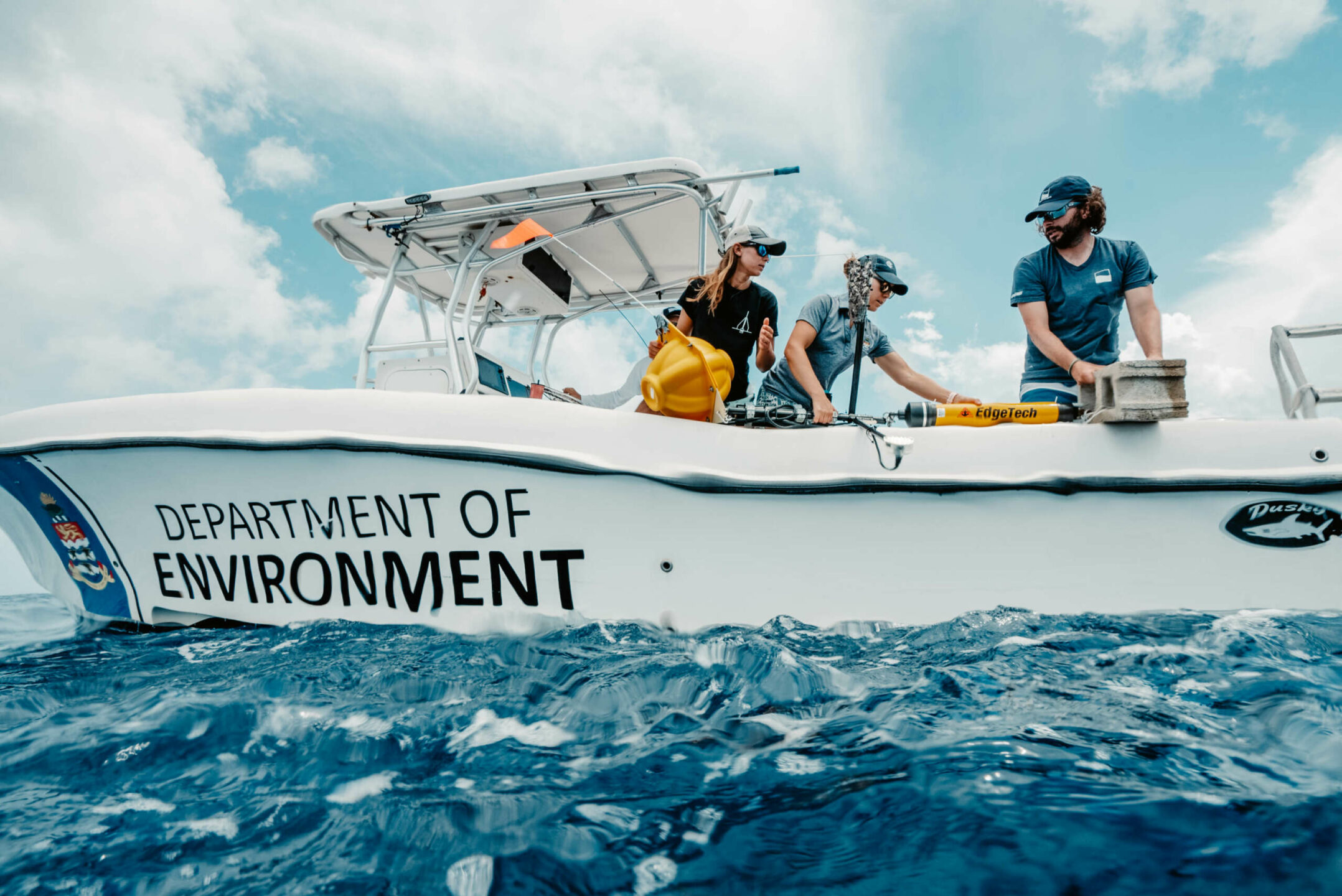
Johanna Kohler, Department of Environment shark project officer and part of the ‘Deep See Cayman’ project, said a whole different ecosystem had been revealed in the footage.
Rarely seen species including gulper sharks, catsharks and dusky smooth hounds are among those recorded so far.
“The star of the show is the blurred lantern shark,” said Kohler, who contributed to a scientific paper, published in April, charting the discovery.
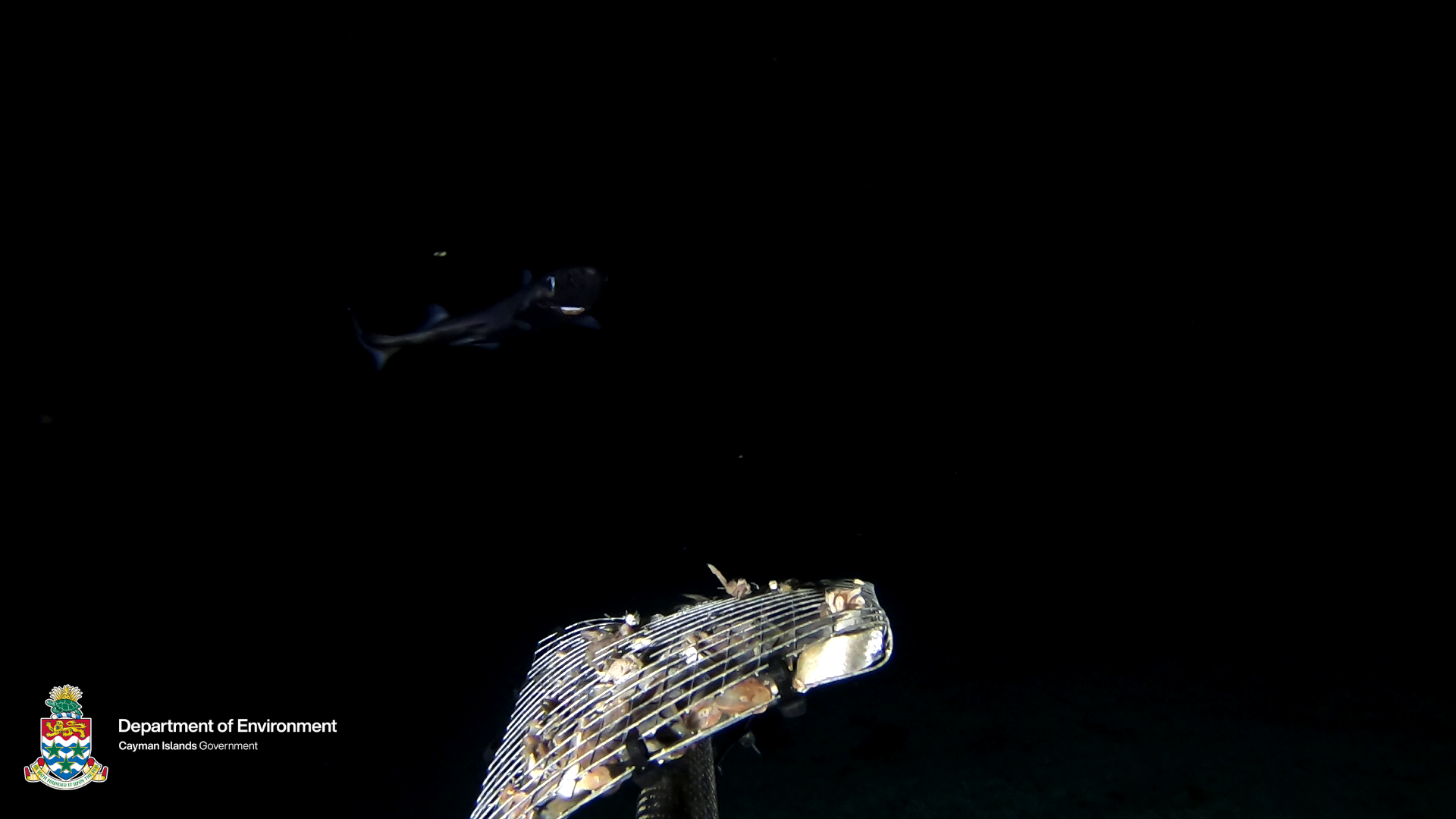
The find was recorded beyond 600 meters deep (around 2,000 feet) – 20 times the range of recreational scuba divers and beyond the reach of technical divers.
The research methods of the project – which involves 240 ‘camera drops’ at depths ranging from 150m to more than 2,000m – are providing high-definition footage of previously unexplored areas.
The truth is down there
The aim of the project at this stage is broad and relatively simple – to see what is out there.
Funded by the UK’s Darwin Project and involving researchers from non-profit Beneath the Waves, Marine Conservation International, Heriot-Watt University in Edinburgh and Cayman’s Department of Environment, it is the first serious scientific study of Cayman’s deep ocean habitats since submarine surveys in the 1960s and ’70s.
“Nobody has really looked down there yet. It is pioneering work,” said Kohler.
Baited remote underwater video systems will ultimately record more than 500 hours of footage of previously uncharted territory. The results, so far, are compelling.
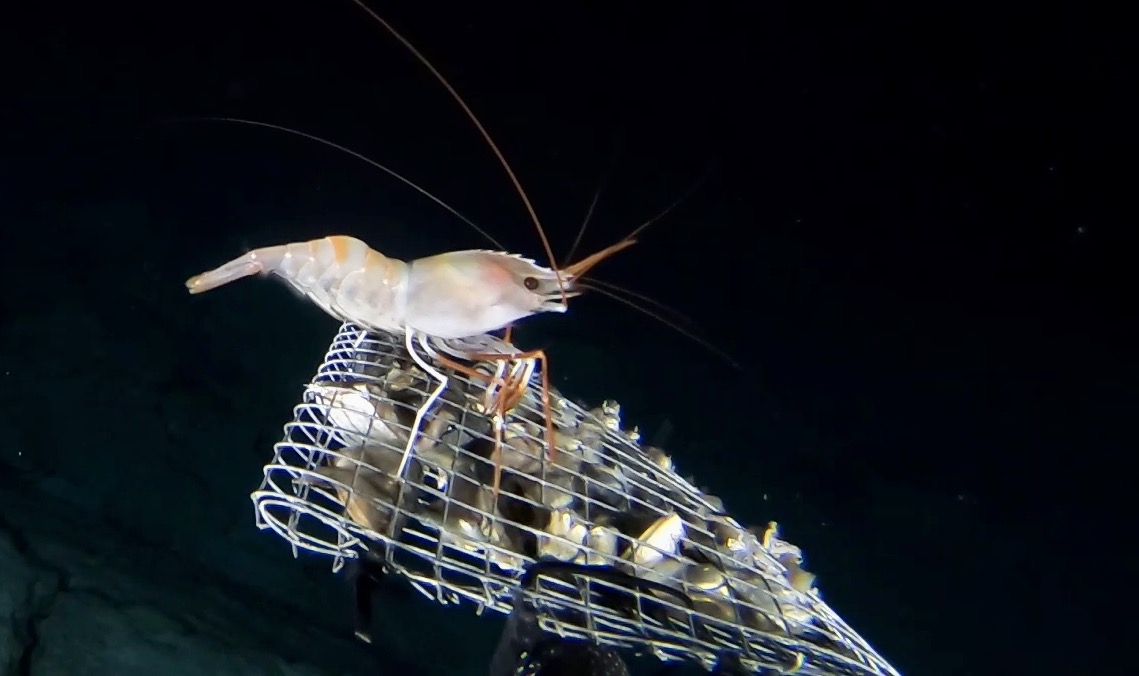
While the ecosystems and species are quite familiar down to around 300m, beyond that range it is like surveying an alien planet. Lights attached to the cameras help pick up strange shapes that move in the dark.
“It looks very spacey down there and there are all these little critters just floating around. It is muddy and sandy and it sort of looks like the surface of the moon,” said Kohler.
Schooling hammerheads
Closer to the surface, the species become more familiar. But the discoveries are equally thrilling.
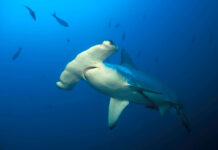
One of the first camera drops to come back when the project began last March, showed a school of about a dozen scalloped hammerheads at a depth of around 200m.
“We were blown away because we just don’t see them in schools like that on the coastal shelf. We thought those schools were essentially extinct so that gave us hope,” said Kohler.
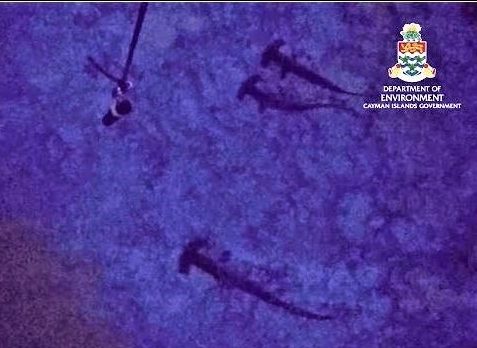
The cameras have also recorded tiger sharks, silky sharks, Caribbean reef sharks and nurse sharks, among other species, at a wide depth range.
The early work opens up a theory that could be a potential focal point of future research – the capacity for species to retreat from human impacts to deeper water.
“We want to see the level of connectivity between the deep and shallow habitats. The idea is that there could be a refuge in the deeper water for species that want to escape human disturbance.”
Climate change could influence that vertical migration of certain species, potentially providing reasons for hope amid widespread concern about the survival of marine life as ocean temperatures warm.
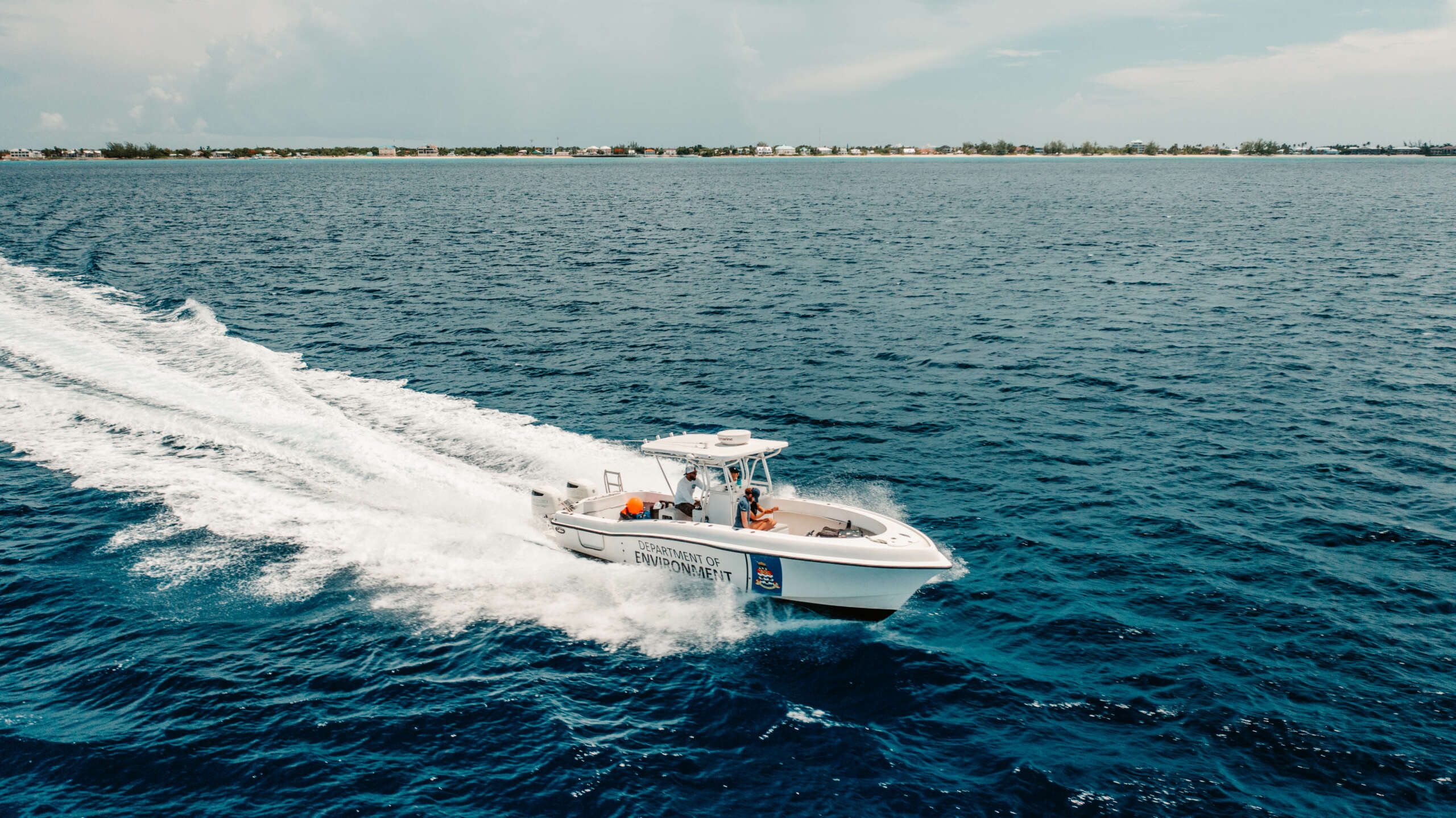
The study also involves environmental DNA analysis, a technique that has only been in use since 2017. Water samples are taken from depth and analysed for the presence of environmental DNA – biological markers left from fish scales or poop. The analysis can be used to identify which species have been within the vicinity of the water sample within two weeks.
Once the project is complete it will provide the first documented evidence of what is out there, and could be used to inform future conservation efforts and areas of study that could help Cayman take the lead in fighting the impacts of climate change and biodiversity loss.
Related Videos