For the latest information on storm activity in the Cayman Islands, as well as information on how to prepare for hurricane season, visit Storm Centre.
Hurricane Lee has increased in strength to become a Category 4 storm as it continues to barrel west across the Atlantic, according to the latest update from the National Hurricane Center.
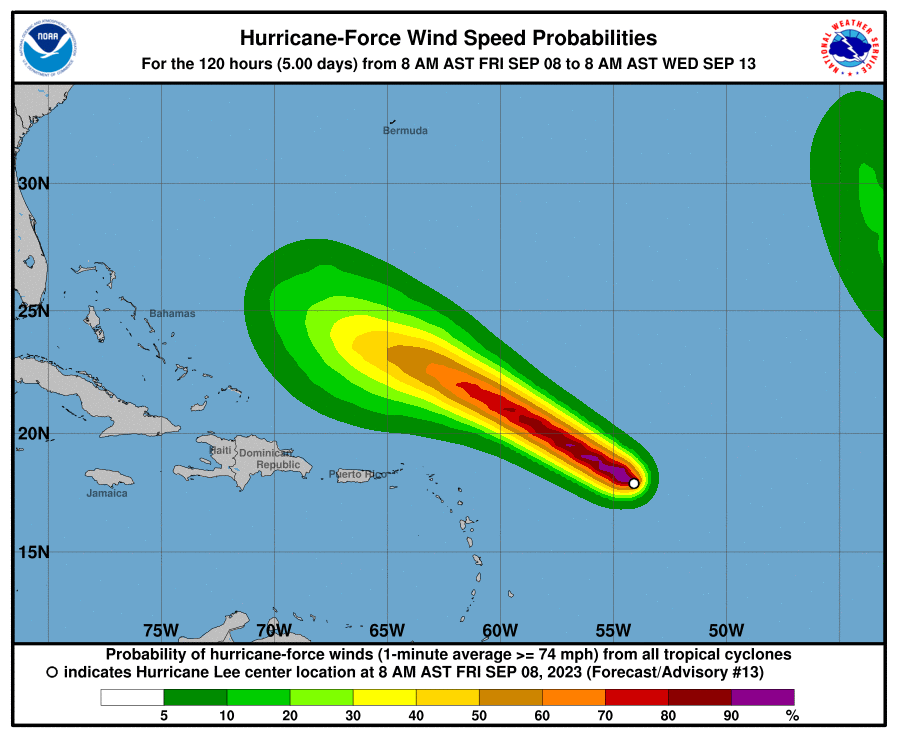
The storm is not predicted to directly impact any of the Caribbean islands and it is currently on track to pass north of the region, posing no threat to the Cayman Islands.
In its 11am AST (10am Cayman time) public advisory this morning, 8 Sept., weather experts said maximum sustained winds were at the time near 155mph with higher gusts.
“Some fluctuations in intensity are likely over the next few days, however Lee is expected to remain a powerful hurricane through early next week,” they wrote.
Hurricane-force winds are extending outward up to 35 miles (55 km) from the centre of the storm and tropical storm-force winds are extending outward up to 140 miles (220 km).
The hurricane is moving at 13mph west-northwest but this forward speed is expected to significantly decrease in three to five days.
“Lee is expected to pass well to the north of the northern Leeward Islands, the Virgin Islands, and Puerto Rico over the weekend and into early next week,” forecasters added.
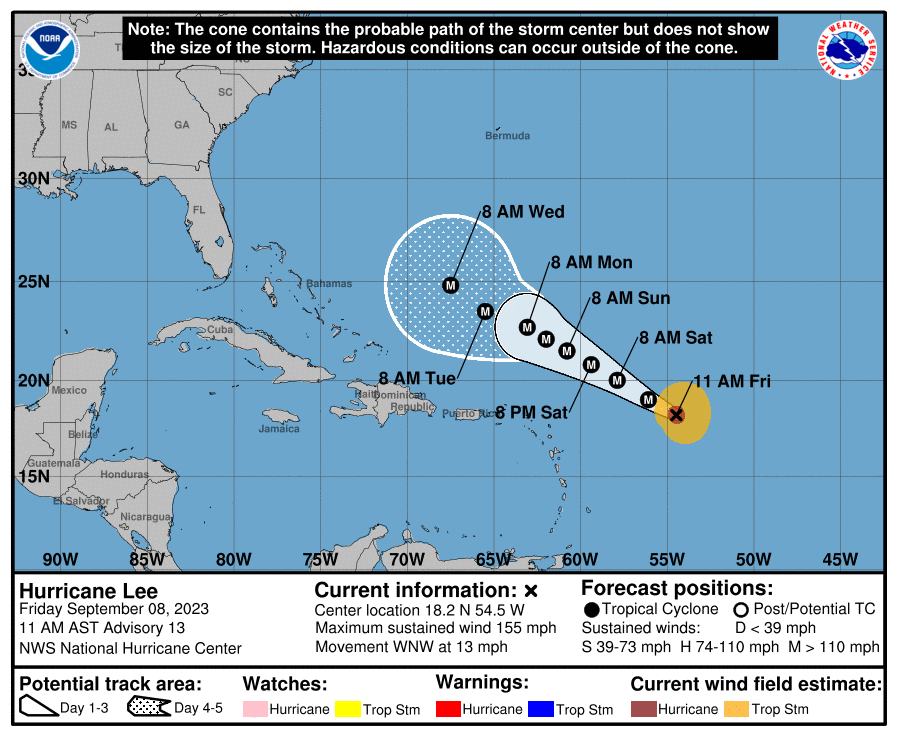
Swells generated by Lee are expected to reach portions of the Lesser Antilles later today.
They will reach the British and US Virgin Islands, Puerto Rico, Hispaniola, the Turks and Caicos Islands, the Bahamas, and Bermuda this weekend.
These swells are likely to cause life-threatening surf and rip current conditions, the National Hurricane Center said.
Dangerous surf and rip currents are expected to begin along most of the US east coast from Sunday.
According to the centre, both the National Oceanic and Atmospheric Administration and Air Force Reserve Hurricane Hunter aircraft were in the storm this morning.
The most up to date hurricane information is posted regularly on the National Hurricane Center website at www.nhc.noaa.gov/.
Related Videos