The Department of Environment is advising the public to be aware that “highly toxic” Portuguese man o’ war are currently present in local waters.
A number of the creatures have been found washed up on local beaches in recent days, as windy weather and rough seas have brought them in from the open ocean, where they normally live.
“Portuguese man o’ war are highly toxic and should never be touched. Even when washed ashore, their thin, nearly invisible tentacles can still sting if contact is made,” the DoE has warned.
Stings from the venomous Portuguese man o’ war can be severe and extremely painful, even after they are dead.
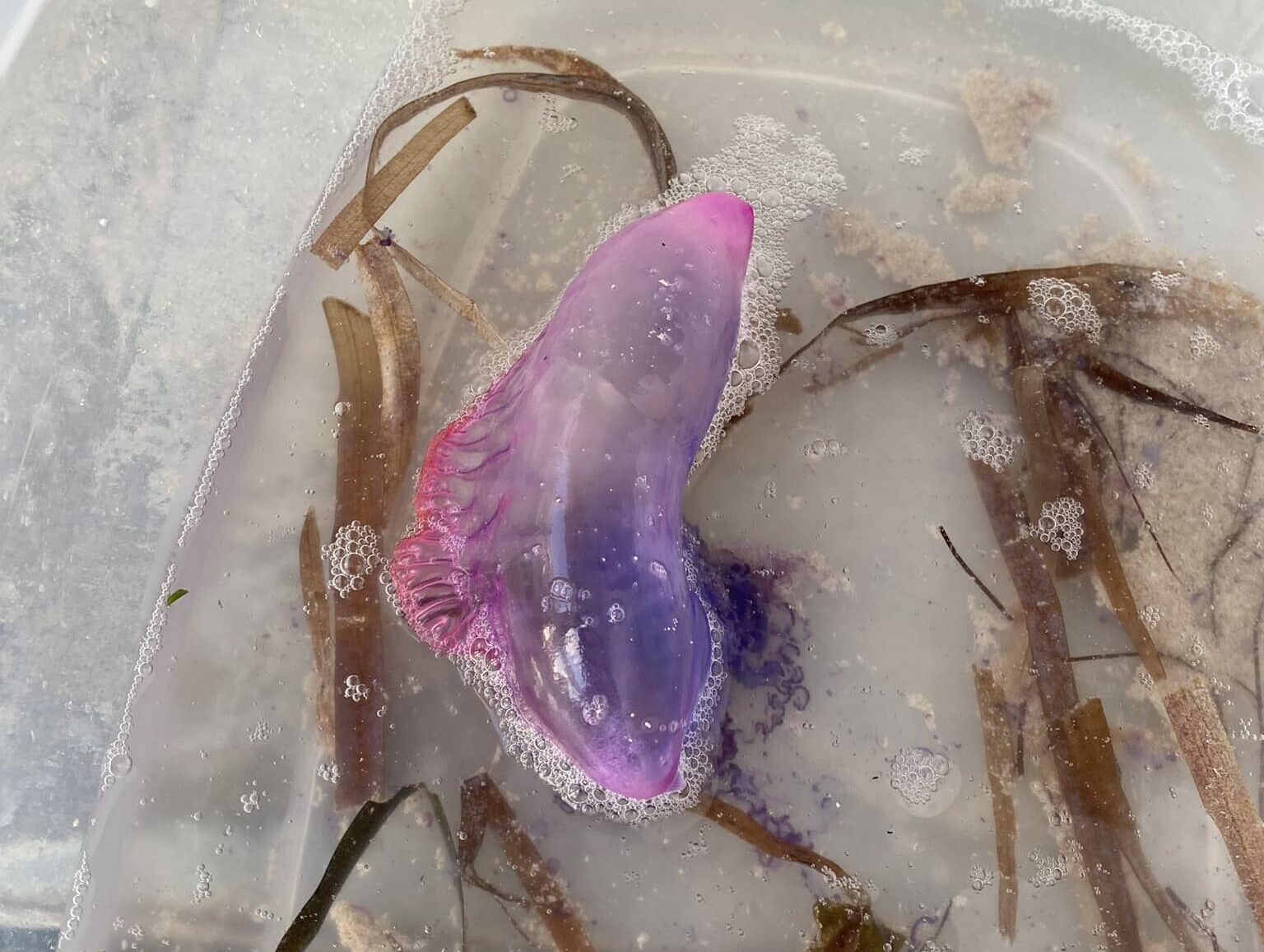
Carly Brouillette Gintz found a Portuguese man o’ war washed up on a South Sound beach, mixed up among sargassum, on Saturday.
“I was picking up trash and nearly grabbed it,” she told the Compass. “Then I was taken aback by the appearance and started poking it with a stick… Its tentacles were attached. They were like a dark blue colour in a tangled pile. It’s really a beautiful creature.”
She scooped it up with a Tupperware container, while she researched what it was.
The creature is so toxic, even the water it was in packed a punch, said Brouillette Gintz.
“In the meantime, my daughter splashed a bit of the water [from the container] on her hand and it began to burn her,” she said. “She didn’t touch the tentacles, but the water we had it in splashed on her knuckle and turned it visibly red and irritated.
“She said it burned, so we used some vinegar and washed it really well. Today, there’s no remnant mark.”

The man o’ war has also been spotted at other sites around the island, including in West Bay, in a rock pool on the ironshore off North West Point Road, where photographer Russ Goldenberg took photos and video of the creature, floating gently with its tentacles dangling below it.
Although it resembles a jellyfish, the Portuguese man o’ war is a siphonophore – a colony of organisms made up of units called zooids or polyps.
Their colourful – usually pink, purple or blue – gas sacs allow them to float on the surface of the sea and sail along, driven by the wind, with their very long tentacles floating behind them.
The translucent tentacles contain venom-filled nematocysts. Those tentacles can sometimes reach lengths of more than 50 feet, which they use to catch and paralyse small fish, crustaceans and other prey.
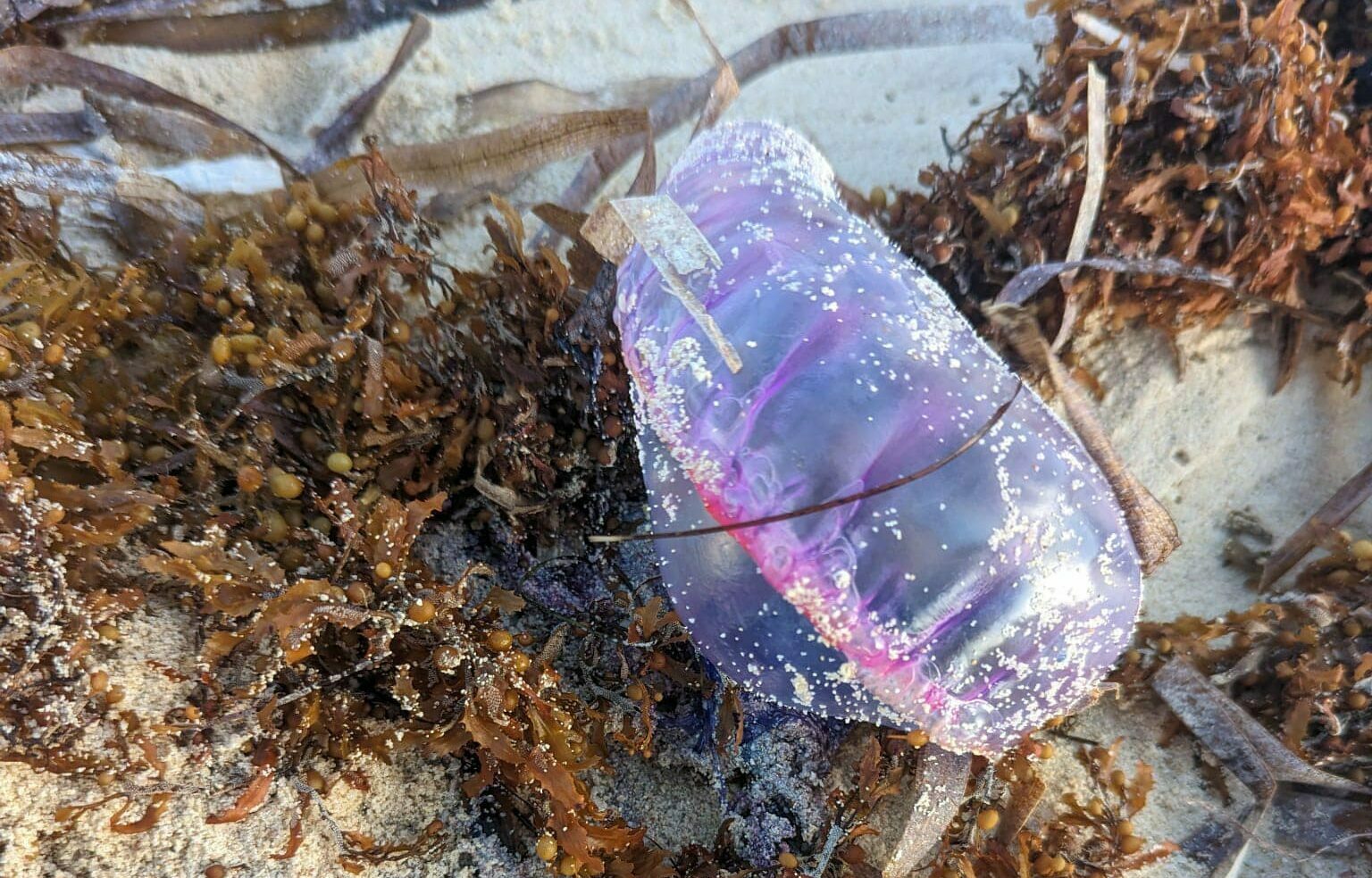
The DoE is advising members of the public – especially those with children and pets – to “exercise extreme caution” to ensure no contact is made with the creatures.
If a sting does occur, victims are advised to use vinegar and hot water to help mitigate the effects until medical attention can be sought, if needed.
Related Videos