


While Little Cayman’s Nassau grouper population has rebounded with strong signs of recovery this year, Grand Cayman has not achieved similar success as it faces challenges to growth.
Earlier this month, scientists recorded around 9,000 groupers during the recent spawning of the protected species, numbers that Croy McCoy, research manager at the Department of Environment’s Research and Assessment Section, has welcomed.
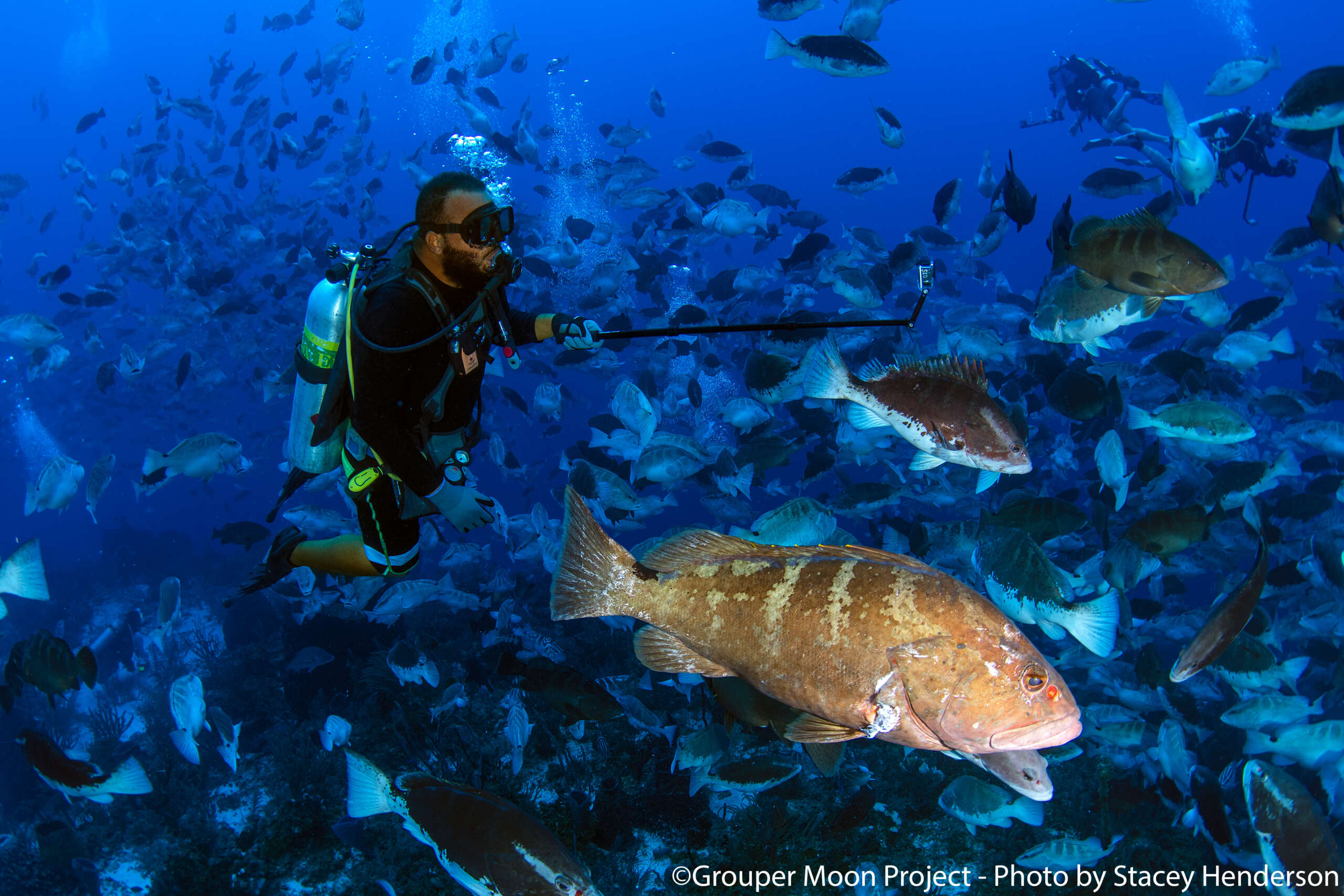
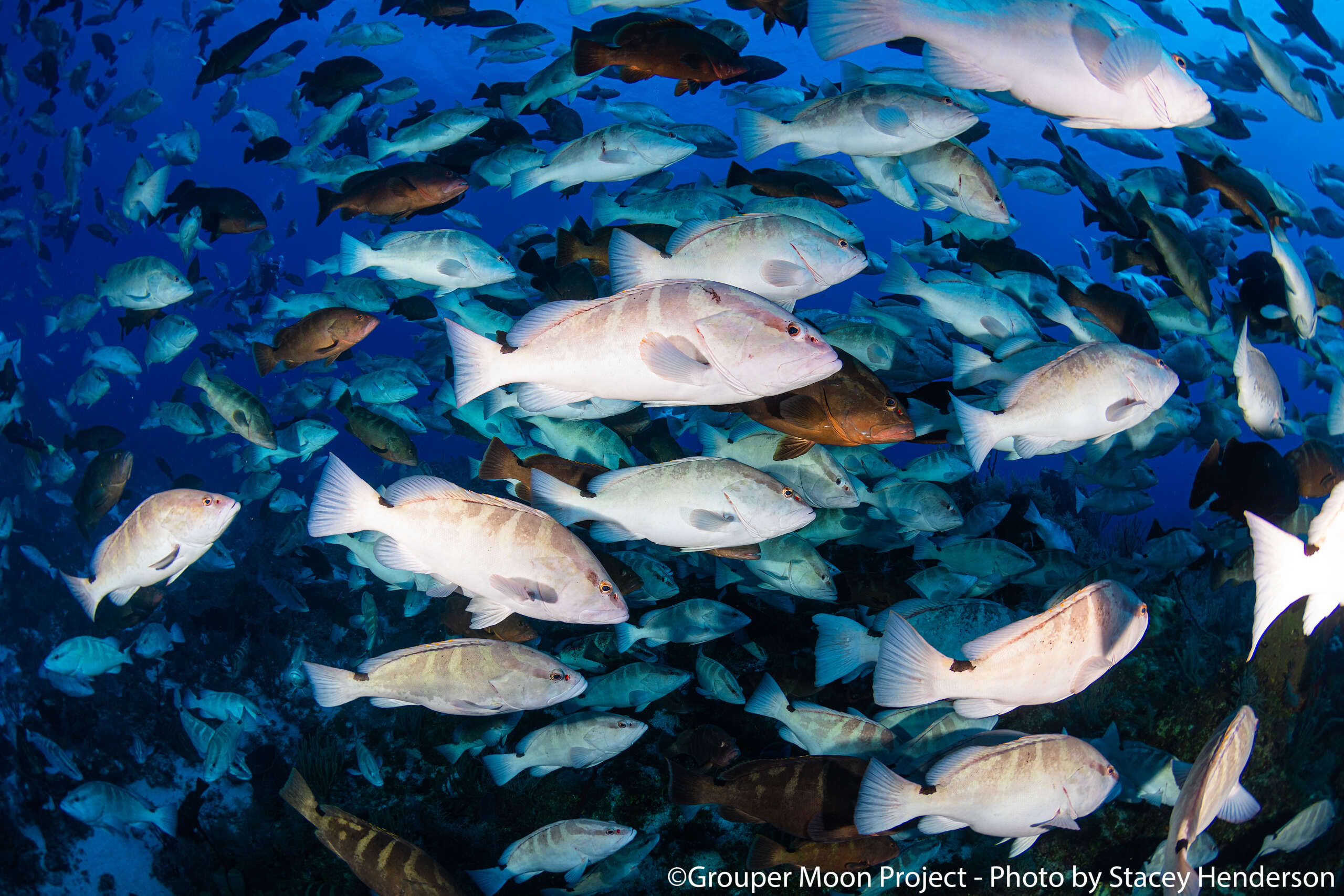
McCoy, who holds a PhD in ocean sciences, said that the recent ‘Grouper Moon’ – when marine scientists and videographers monitor the annual grouper spawning during a winter full moon – showed a flourishing species in the sea off Little Cayman, where numbers had fallen as low as about 1,000 in 2003.
“The median this year was about 8,600 fish, which is very encouraging,” said McCoy, who has been leading the effort to save the groupers.
Nassau grouper is described as a keystone species by the DoE, providing a host of services to local marine ecosystems – and people – as a top level predator on the reef.
Discipline challenges
While it was satisfying to see the Little Cayman population doing so well, McCoy was disappointed there were not similar rebounds on Grand Cayman.
“I hope eventually Grand Cayman will comply to the same level of stewardship towards the project [as the Sister Islands] and eventually they will actually enjoy what the Sister Islands are having. We worked very hard to make this work,” he said.
An encouraging sign was the migration of some groupers towards the eastern tip of Grand Cayman, he noted, which was recorded by a diver.
“That’s a good indication that the population is somewhat rebounding,” he added, but said that poaching has hampered efforts to increase grouper numbers.
Tim Austin, DoE deputy director of research and assessment, said the grouper holds cultural significance for the Caymanian community and the fish’s roe was a traditional Christmas staple, which has contributed to non-compliance.
However, he said, over the years, the implementation of protections, such as the closing of grouper season from 1 Dec. to 30 April, has helped stave off further declines.
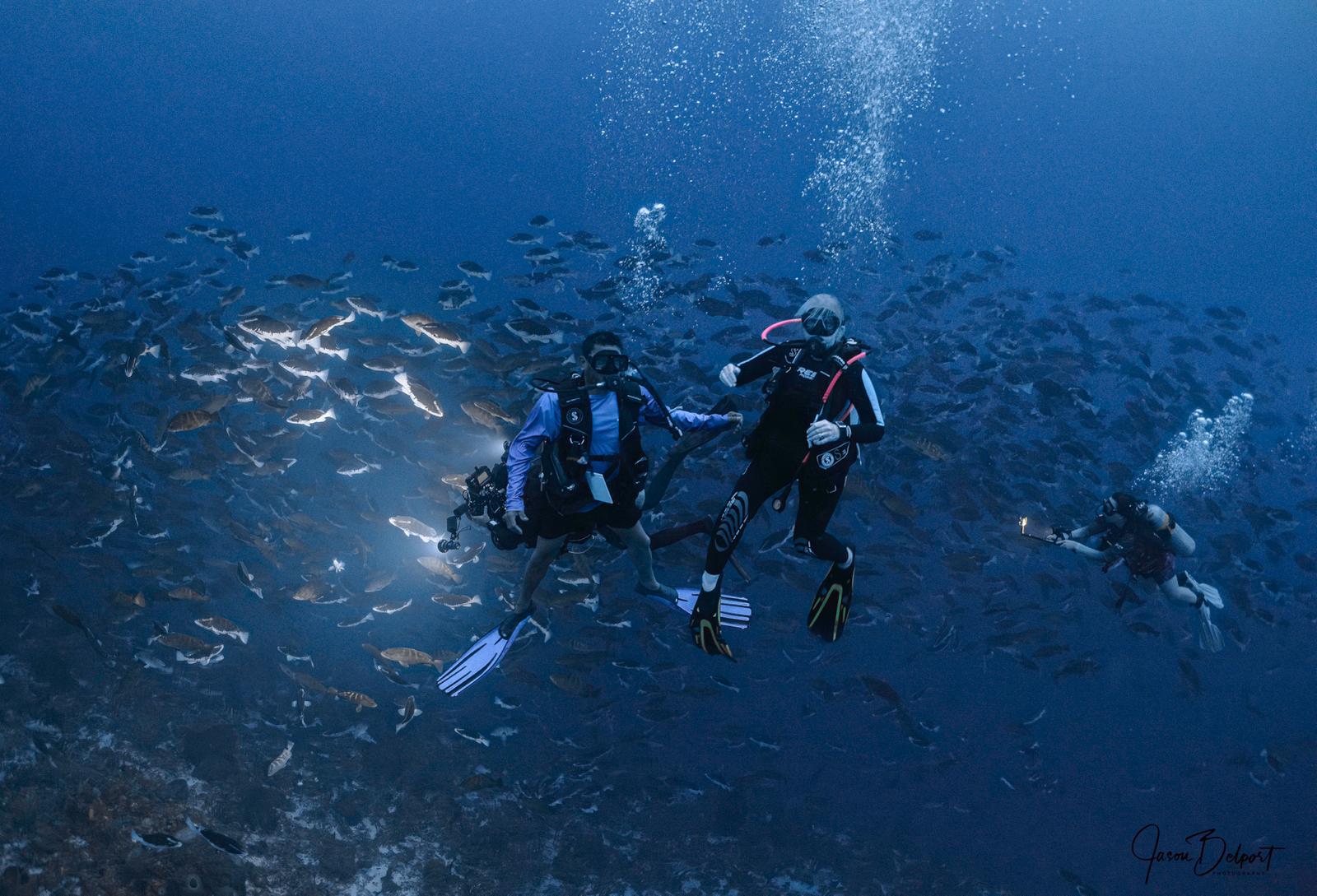
“The fact that you can’t fish at the aggregation [site] at all, now that has made a huge difference. We now monitor a recovering population,” he said.
This, however, does not mean the DoE is planning to make any changes to the existing rules.
Compliance on the Sister Islands, McCoy said, has not been an issue as fisherfolk there have cooperated and “they’re seeing the results of their sacrifices”.
“It took us 10 years to see the improvement that we needed to see, but once it got started”, it continued, McCoy said.
Cayman Brac’s grouper population is also rebounding, he said, but not to the extent of Little Cayman.
“The Brac population was down to 400-500, and that has shown also vast improvement over the years, though we didn’t get to do tag and recapture” because the site on the eastern tip of the island is a “harsh environment”, he said.
Recently, Governor Jane Owen joined DoE divers in Little Cayman to witness the grouper aggregation firsthand.
In a Facebook post on the dive, she said, “This amazing phenomenon is one of Cayman’s iconic treasures and a stunning display of the natural beauty of our islands’ marine life.”
Grand Cayman is even more difficult to track, given the conditions where the groupers aggregate, McCoy said.
The water has to be calm, he said, though the main difficulty is the depth at which the fish aggregate at the eastern tip of Grand Cayman – around 150 to 180 feet – which is deeper than DoE researchers are allowed to dive under recreational diving depth limits.
“We’ve tried with a [remotely operated vehicle] over the years, but the current’s been pretty strong…, but we also have a [digital spectrogram] there listening for them. We know there is an aggregation there; however, we know the numbers are low,” McCoy said.
When the Grouper Moon project began in 2003, he said, that marked the final effort to save the species and maintain a population here.
At the time, groupers had been fished to very low levels everywhere else in the region.
“Back then, the population was fished down to about 1,800 fish on the Little Cayman aggregation [site] on the west end,” he said, prompting the closure of the fishery there.
The grouper project is one of the most successful initiatives the DoE has been involved with.
“To actually see Nassau groupers almost on every dive you do in the Sister Islands, that there in itself is fulfilling,” he said.
Younger spawning fish
McCoy said, apart from rising numbers, researchers found younger fish spawning during the Grouper Moon, which is a welcome sign.
For almost 10 years, he said, the length of the fish stayed at around 62 centimetres (24.5 inches). But then, the length decreased, he said, explaining, “That’s when you start getting the younger ones joining the reproductive population”, which is a very positive sign.
This means “more recruits” are joining the reproductive population, increasing the grouper spawns.
He said the changes in sea temperatures and the overall impact of climate change on the population are still being investigated by DoE scientists.
Tests run in the department’s lab show mortality rates would rise when the water temperatures were increased by 2 degrees Celsius.
“This might be 30 or 50 years down the line, but at 31 [degrees], [the population] basically just plummets. Climate change is gonna have a heavy impact,” McCoy said.
The Grouper Moon Project is a collaboration between the DoE, REEF.org and other members of the Caribbean marine scientific community who have been studying the Nassau grouper spawning aggregation sites in Cayman for more than two decades.
Related Videos








I live on Grand Cayman for 5-6 months a year and do about 6 dives a week. Have been for 18 years. I have seen more Nassau groupers this year than in many years. Almost every day including today I get to see one or two. On the flip side I have seen less turtles this year than ever
Why do the local restaurants then have Grouper on the menu? I saw it on the menu at several of the restaurants over the past month I was there.