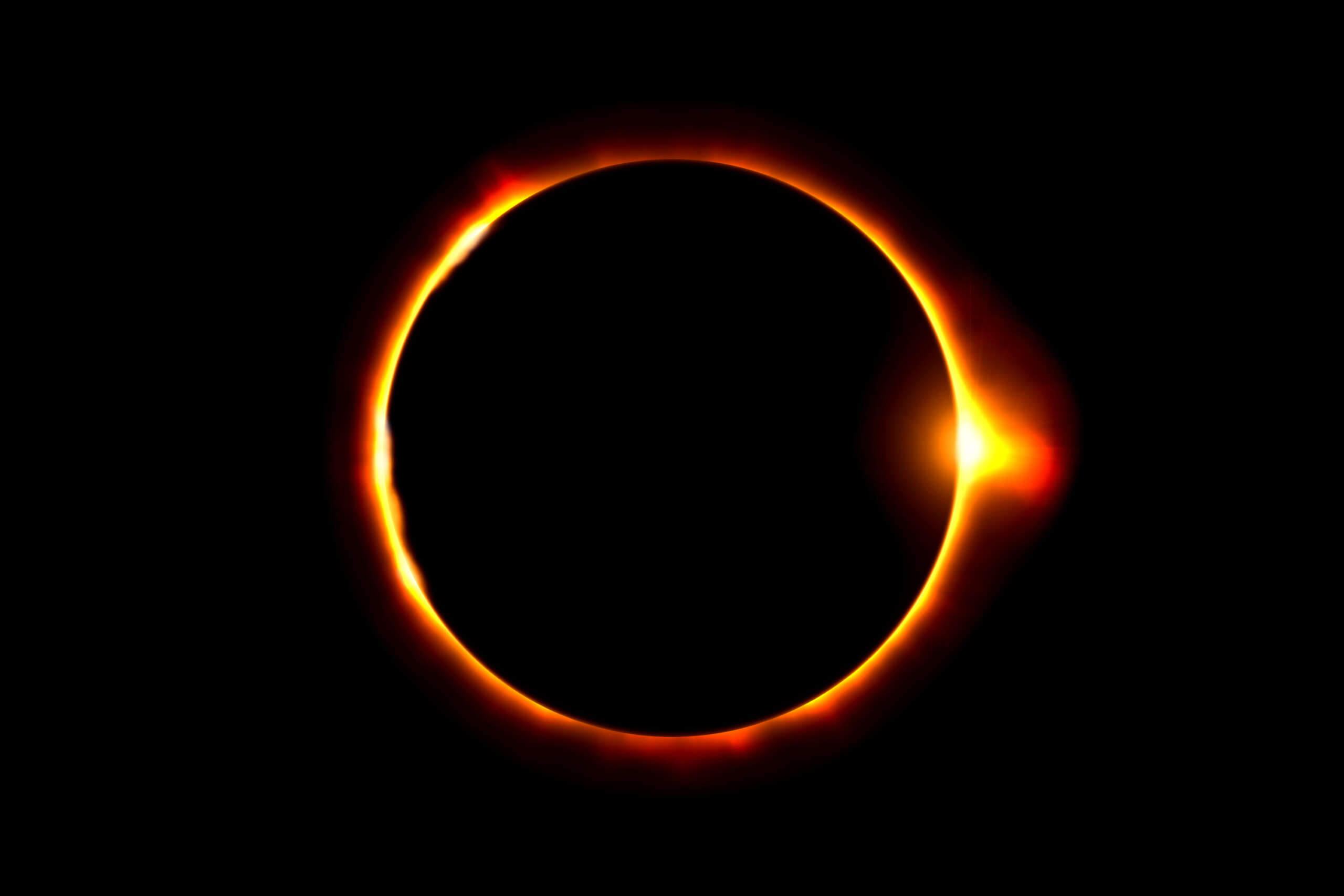
On Monday, 8 April, millions of people across the United States, Canada and Mexico will be able to look up and watch the moon entirely blot out the sun in the afternoon sky. And a handful of Caymanian residents are making the trip off island to join them.
Tiyen Miller, president of the Cayman Islands Astronomical Society, will be livestreaming the total solar eclipse from Texas to classrooms in Cayman.
“There are a few members from the Cayman Islands Astronomical Society that will be travelling to the totality zone to see the eclipse,” said Miller, for whom this is his 11th solar eclipse. “Some of us will be in the Dallas area and some near San Antonio.
“I will be in the Dallas area, and will be live-casting the eclipse on YouTube to be shared in classrooms in the Cayman Islands, as the event coincides with lunchtime on the first day back at school for the government schools.”
DID YOU KNOW?
Eclipse chasers are known as ‘umbraphiles’.
Other members of the astronomical society who will be making the trip to Texas will be Petro Kotze and Karen Perkins, Matthieu Guémas, and Collette and Steve Wilkins.
Some of them will be joining the former president of the society, Chris Cooke, and his wife Christine and son Matty, who will be travelling from the UK to San Antonio, Texas, in preparation for the eclipse.
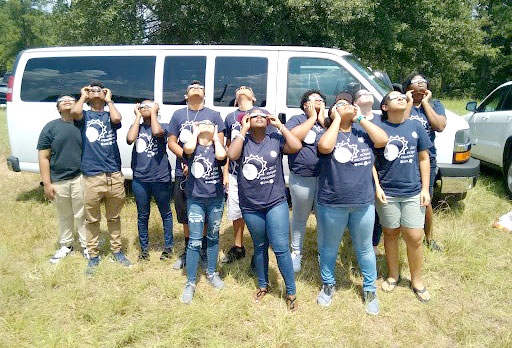
The Cookes, Miller, Kotze and Perkins were also in the US for the last total solar eclipse over America in 2017.
“Experiencing a total solar eclipse is a rare and, literally, an emotionally and astronomical moving event,” said Chris Cooke, who is now chairman of the Plymouth Astronomical Society in the UK.
“It’s really a celestial ‘Hand Of God’ moment,” he said.
He and his family viewed the total solar eclipse in Chester, Illinois, seven years ago.
The question that followed that and every other eclipse was “When is the next one?” he said.
“And seven years later, here we are – with numbers expanded to include more people from the UK and Cayman – over 12 now at last count.”

Steve Wilkins, who has seen two total eclipses so far – in Cornwall in 1999 and Oregon in 2017 – said he wishes he’d seen more.
“Eclipses are very special as there’s no other experience quite like it if you’re stuck on planet Earth. It’s quite awe-inspiring and makes you wonder at the majesty of our moon and sun which we see every day but take for granted,” he said.
“In 2017 we took the whole family and made a big road trip out of it, which kept the kids happy, but for me the solar eclipse was the ultimate prize.”
Finding the ideal spot
A total solar eclipse is when the moon passes directly between the sun and Earth, completely blocking the face of the sun. When this happens, ‘totality’ occurs, and the sky darkens so it resembles dawn or dusk.
For the people within the 115-mile-wide direct path of the eclipse, totality will last up to about four-and-a-half minutes.
Cooke said, “We forged good friends in the Caribbean and they have trusted me (again) to find a spot to see the eclipse. This time though, the weather forecast isn’t so favourable but by picking the southwest corner of Texas, we stand a chance, at least.”
Since there will be a short window of time to see the eclipse, ensuring they find a spot with clear skies, while battling potentially heavy traffic, can be a challenge.
Cooke anticipates that, like in the 2017 eclipse, he and his crew of eclipse chasers will likely make a last-minute decision where to watch the celestial event, with their starting point being San Antonio, which is a little outside the path of totality.
“So no pressure then to deliver the goods!” Cooke says.
He’s previously viewed total solar eclipses in England, Zambia, South Africa, China and in Illinois, US, as well as an annular eclipse in Scotland.
“It’s all worth it to see a good one,” Cooke said. “This is my seventh now, you just get addicted. You take the bad weather on the chin, I missed two due to cloud cover.
“Fortunately my next potential total solar eclipses, numbers 8 and 9, will be closer to the UK and visible in northern Spain, in 2026 and 2027.”
During totality, those lucky enough to be directly in the path will experience:
- Darkness during the day.
- A view of the solar corona.
- The ‘diamond ring’ effect at the beginning and end of of totality.
- A noticeable drop in temperature.
What’s happening in Cayman?
Here in Cayman, a partial eclipse will be visible from 12:40pm until 2:55pm, with maximum coverage occurring at 1:49pm.
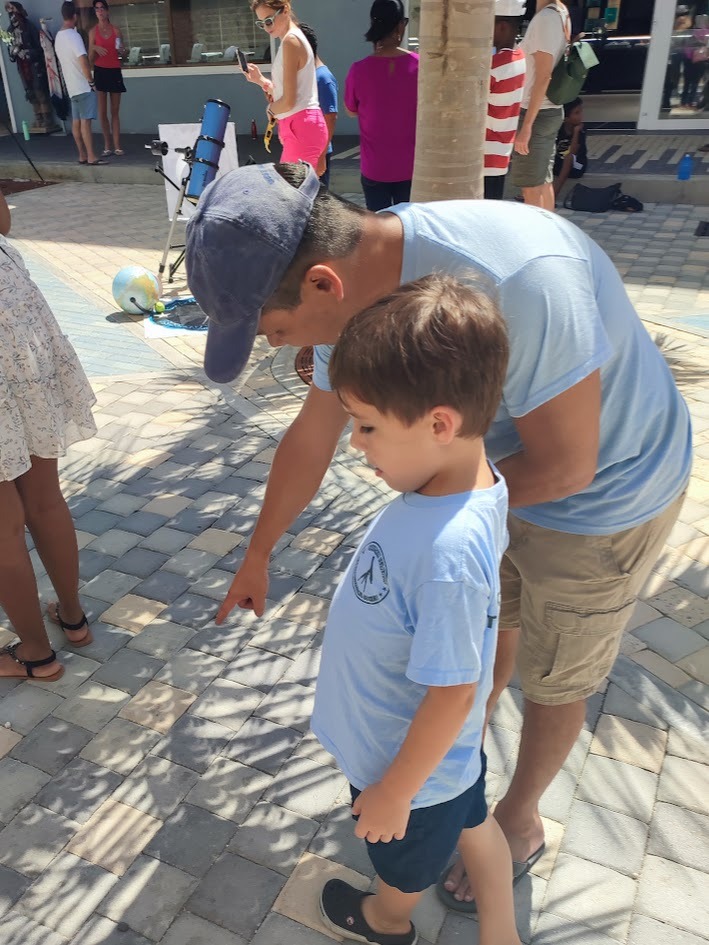
The Cayman Islands Astronomical Society will host a safe viewing at Camana Bay, near the cinema, using a telescopic projection system.
Unfortunately, Cayman won’t experience a total solar eclipse until 2132. The last total eclipse visible in the Cayman Islands was in 1832, just months after the first Legislative Assembly was formed, Miller noted.
Miller’s live-cast of the solar eclipse from Texas will be open to everyone via his YouTube channel.
He says the plan is to include both a live view of the sun from a camera setup, as well as a live image of the surrounding area, along with commentary. A chat system will also be in place so the public can ask questions live.
Related Videos