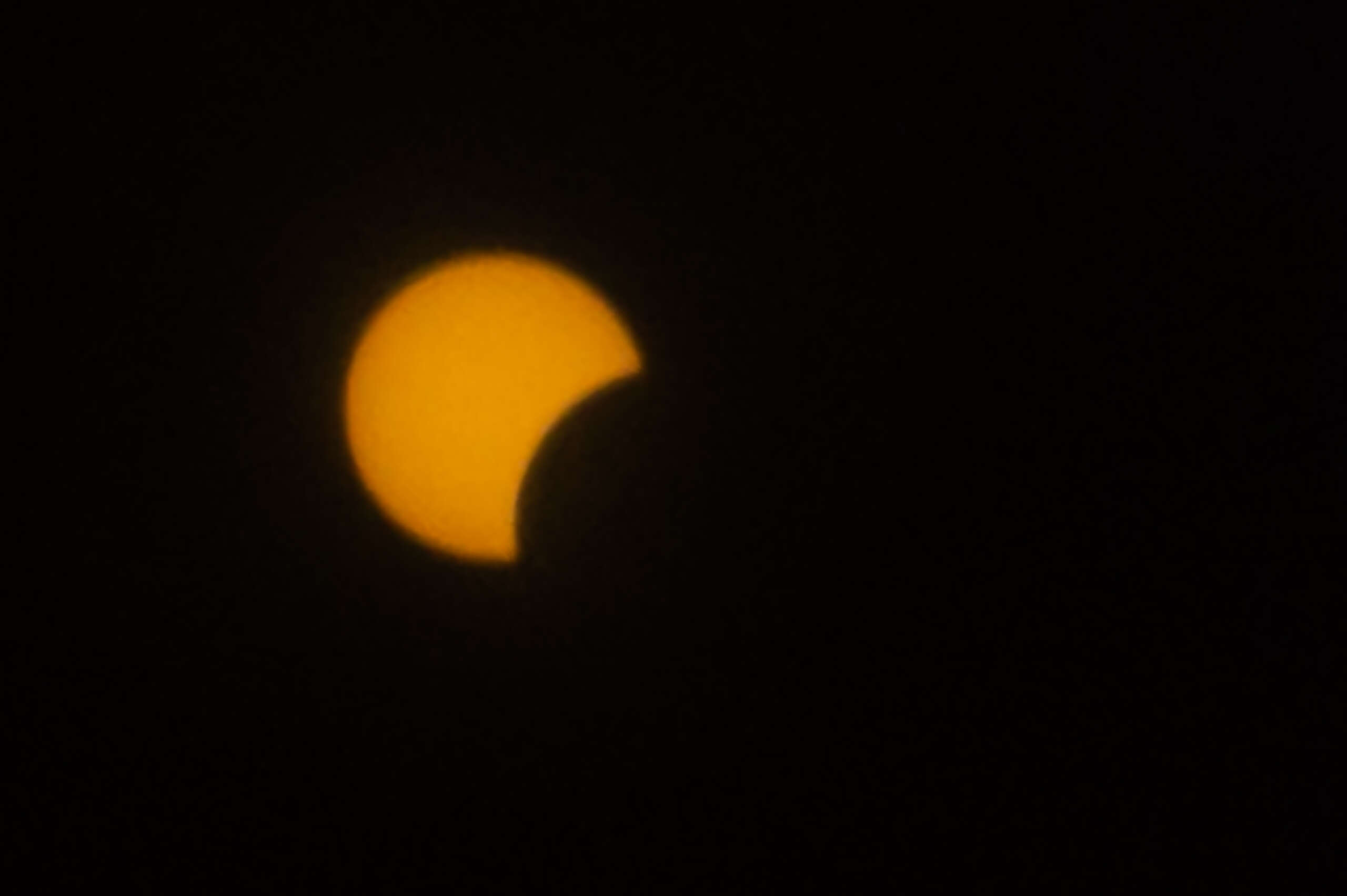
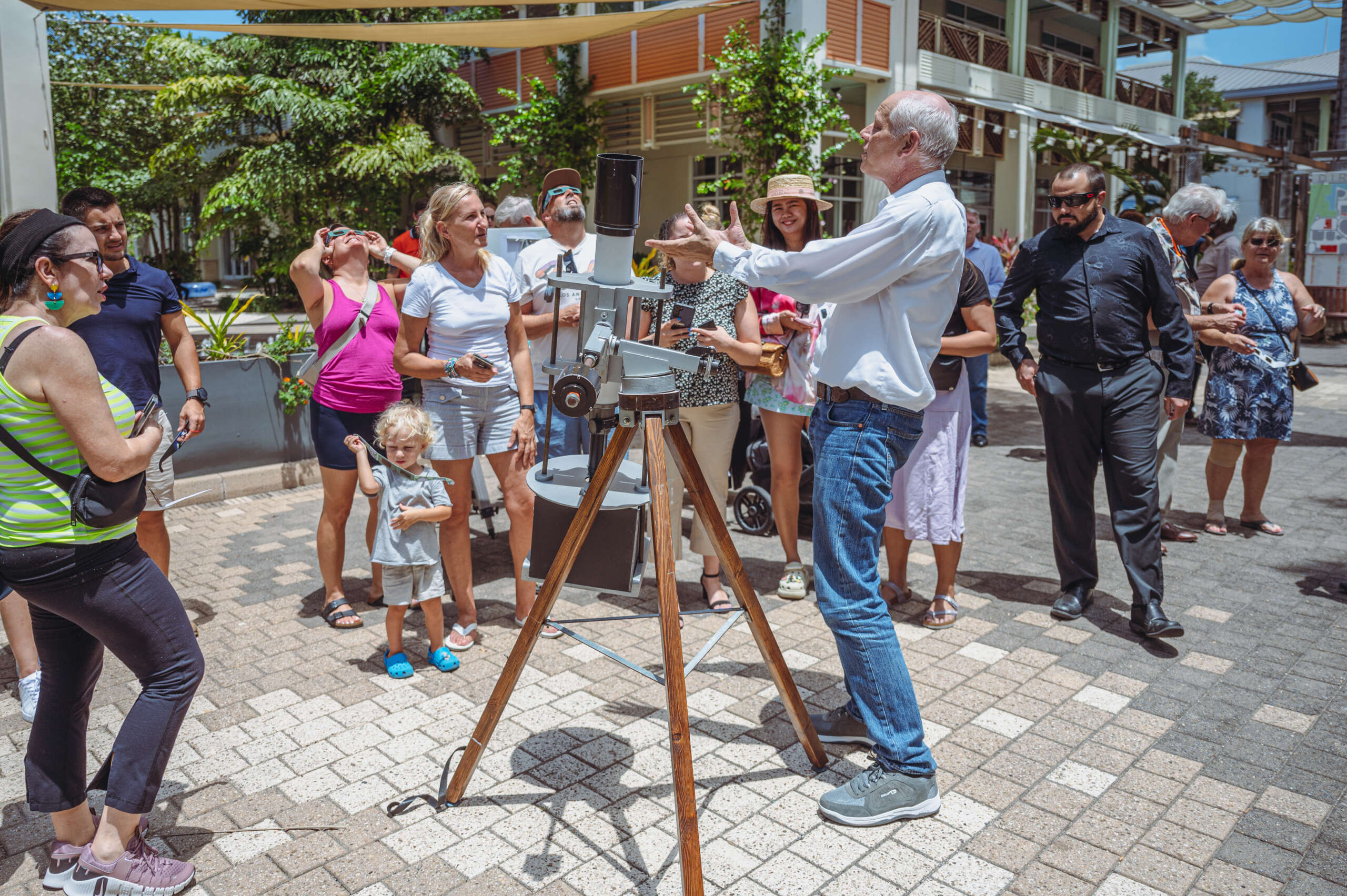
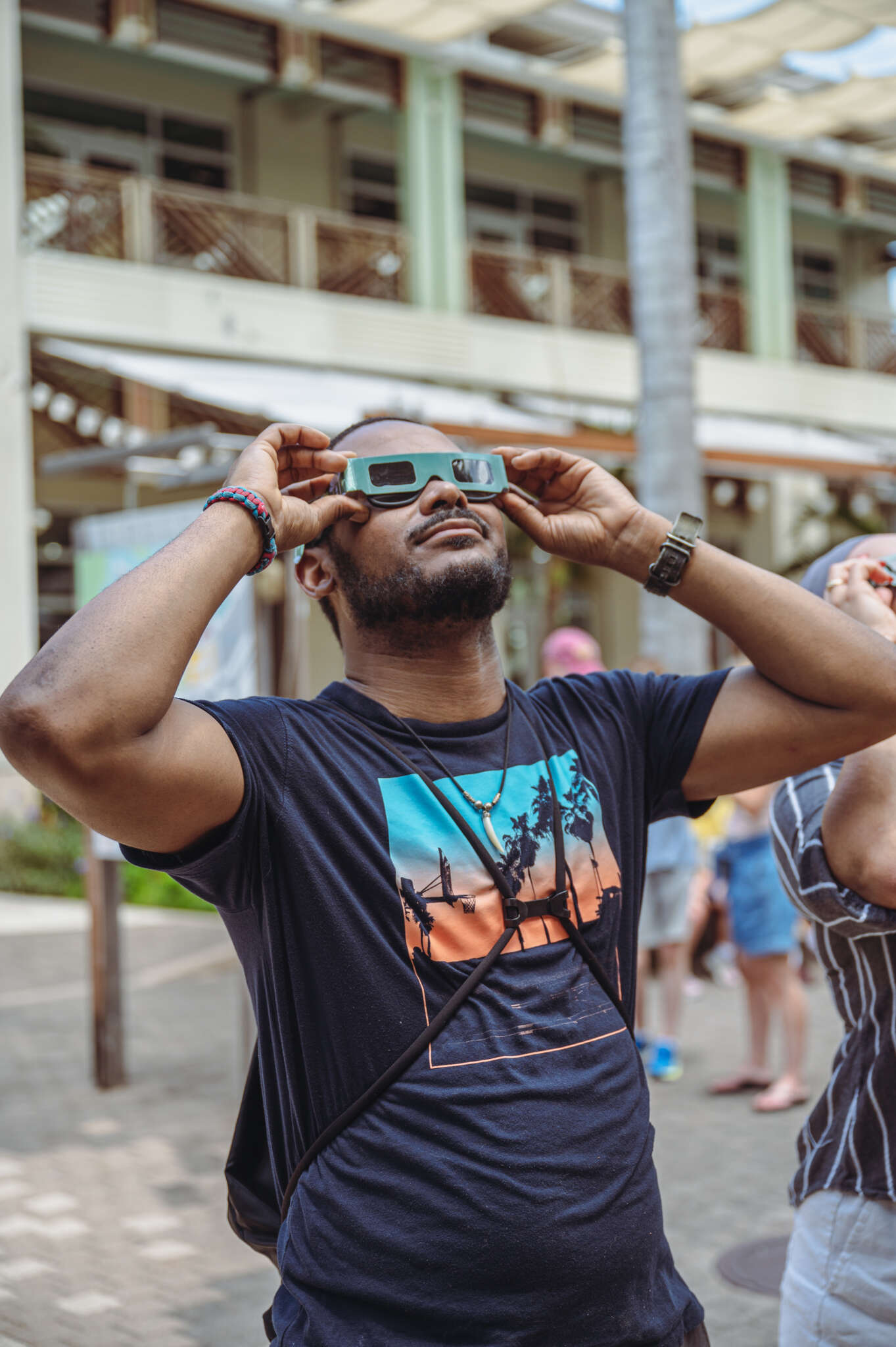
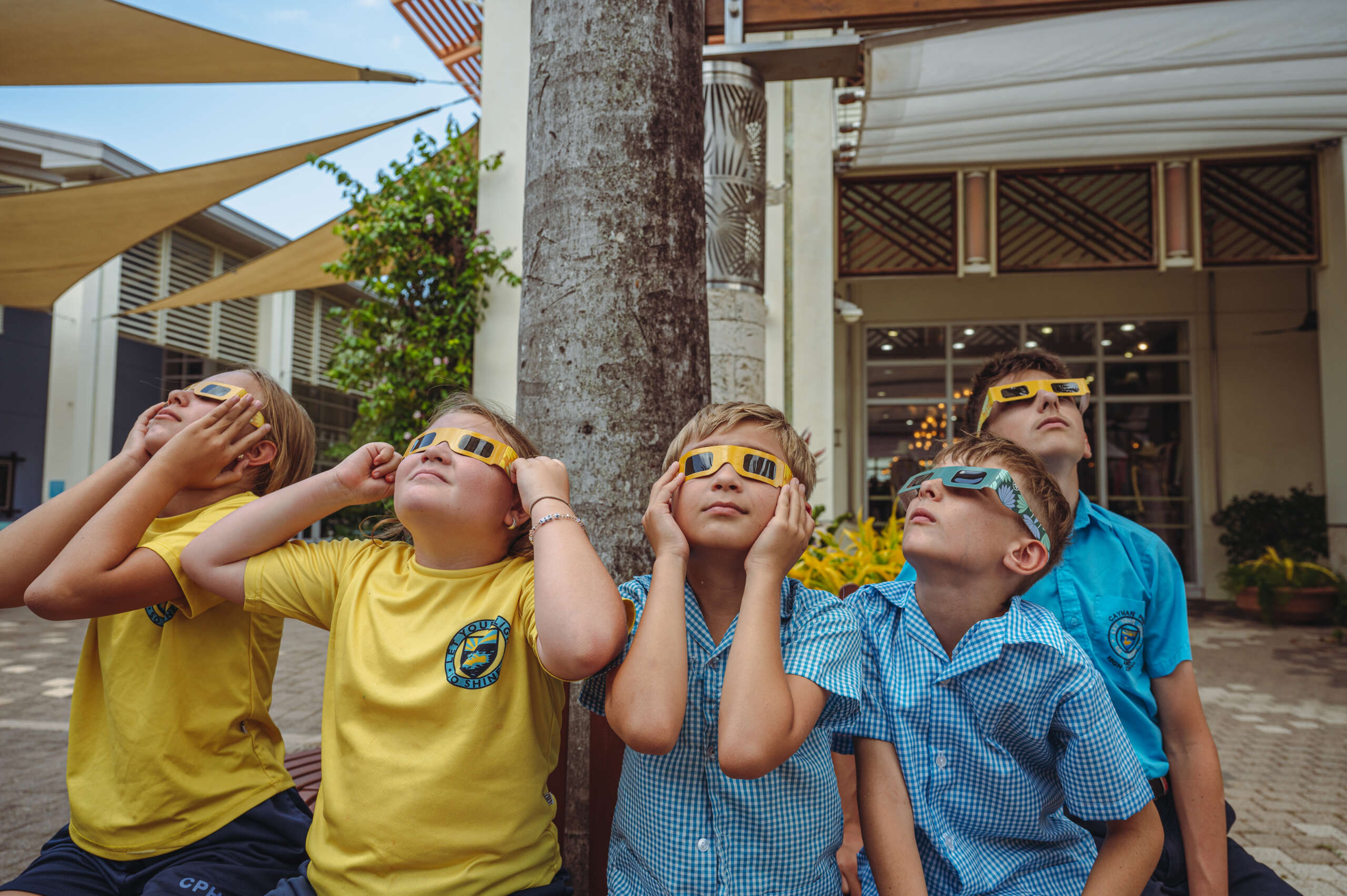
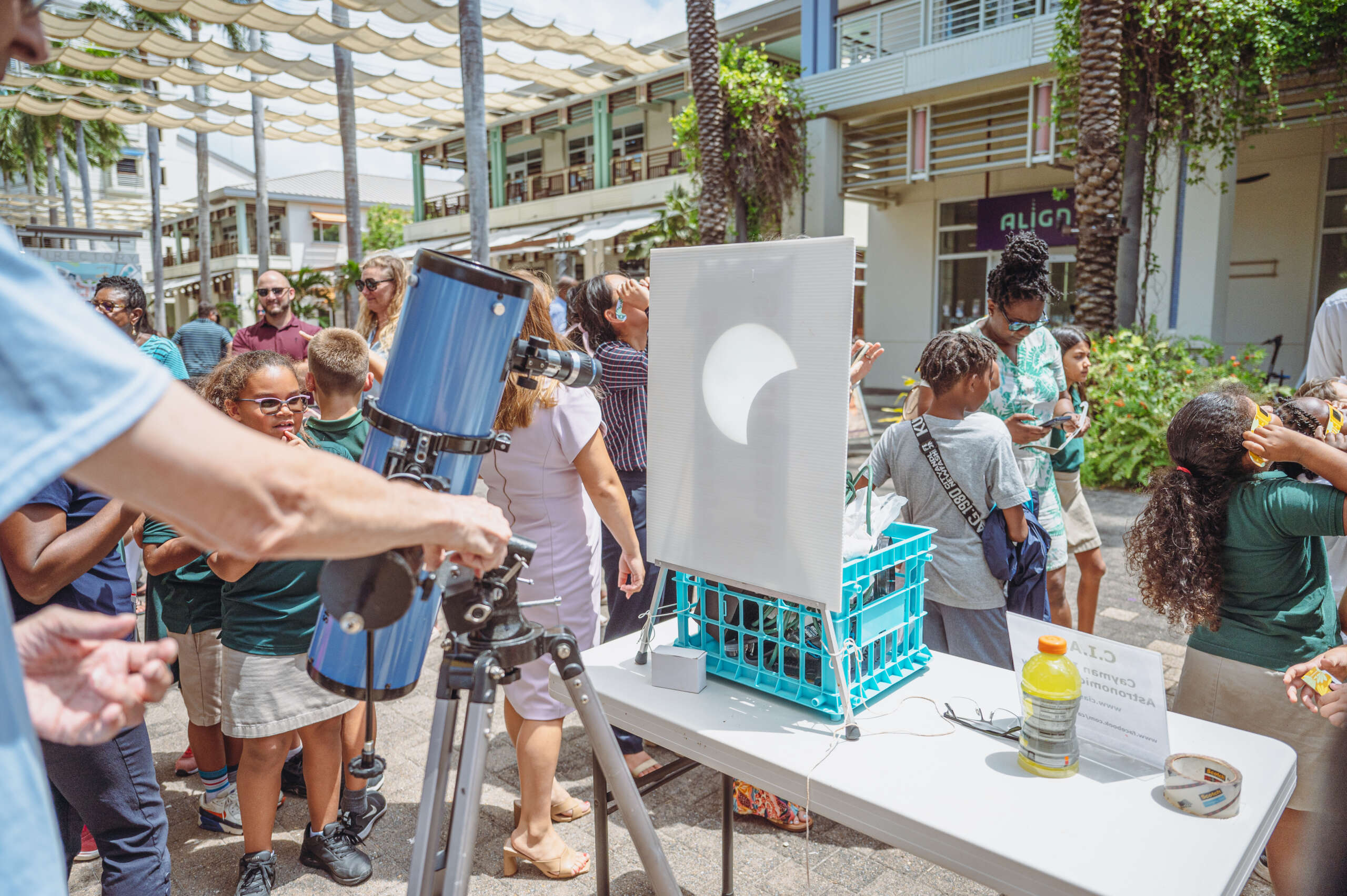
Under a nearly cloudless sky, dozens of spectators at a time gathered in Camana Bay to see the solar eclipse on Monday, with the Cayman Islands Astronomical Society hosting a free viewing.
Though not treated to the dramatic total eclipse visible in Mexico, the US and Canada, those who came out for the afternoon show, from 12:40pm to 2:55pm, witnessed about one-third of the sun blocked by the moon.
Missed it?
If you missed seeing this year’s solar eclipse, Cayman Islands Astronomical Society president Tiyen Miller broadcast the total eclipse from Texas on his YouTube channel.
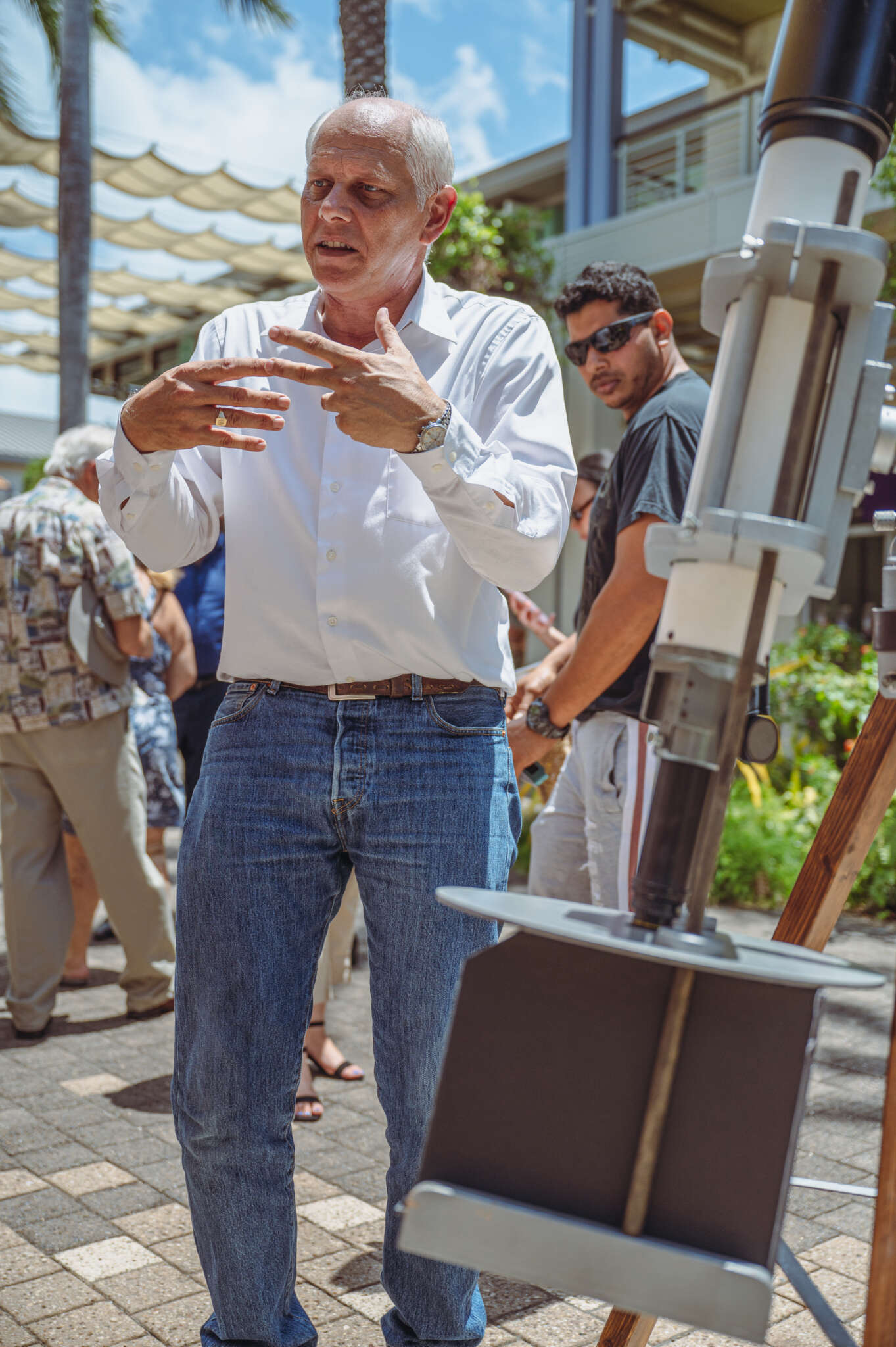
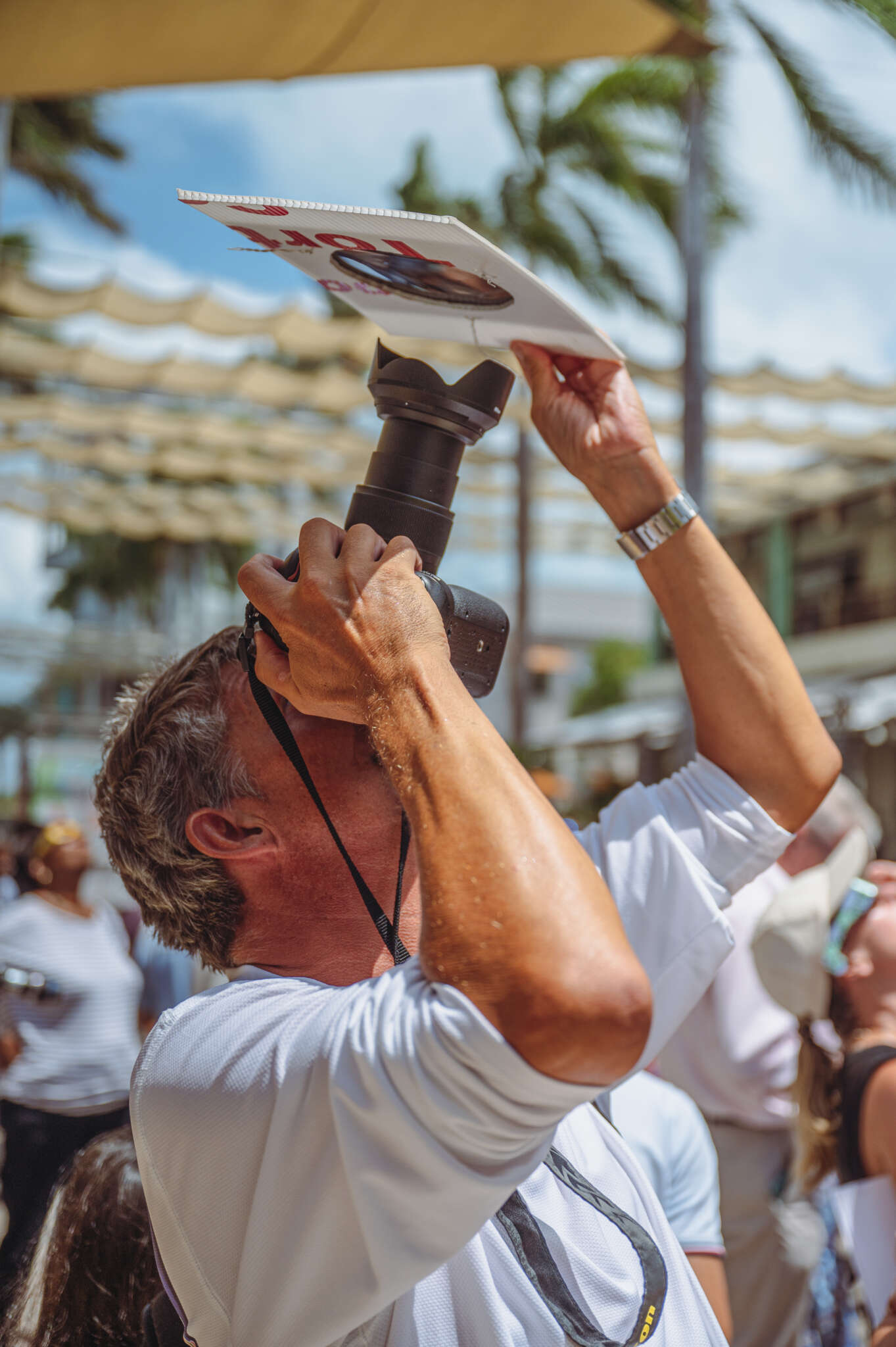
The Astronomical Society provided two telescopes that cast a shadow of the eclipse, giving viewers an idea of the eclipse’s progress without the danger of directly looking at the sun.
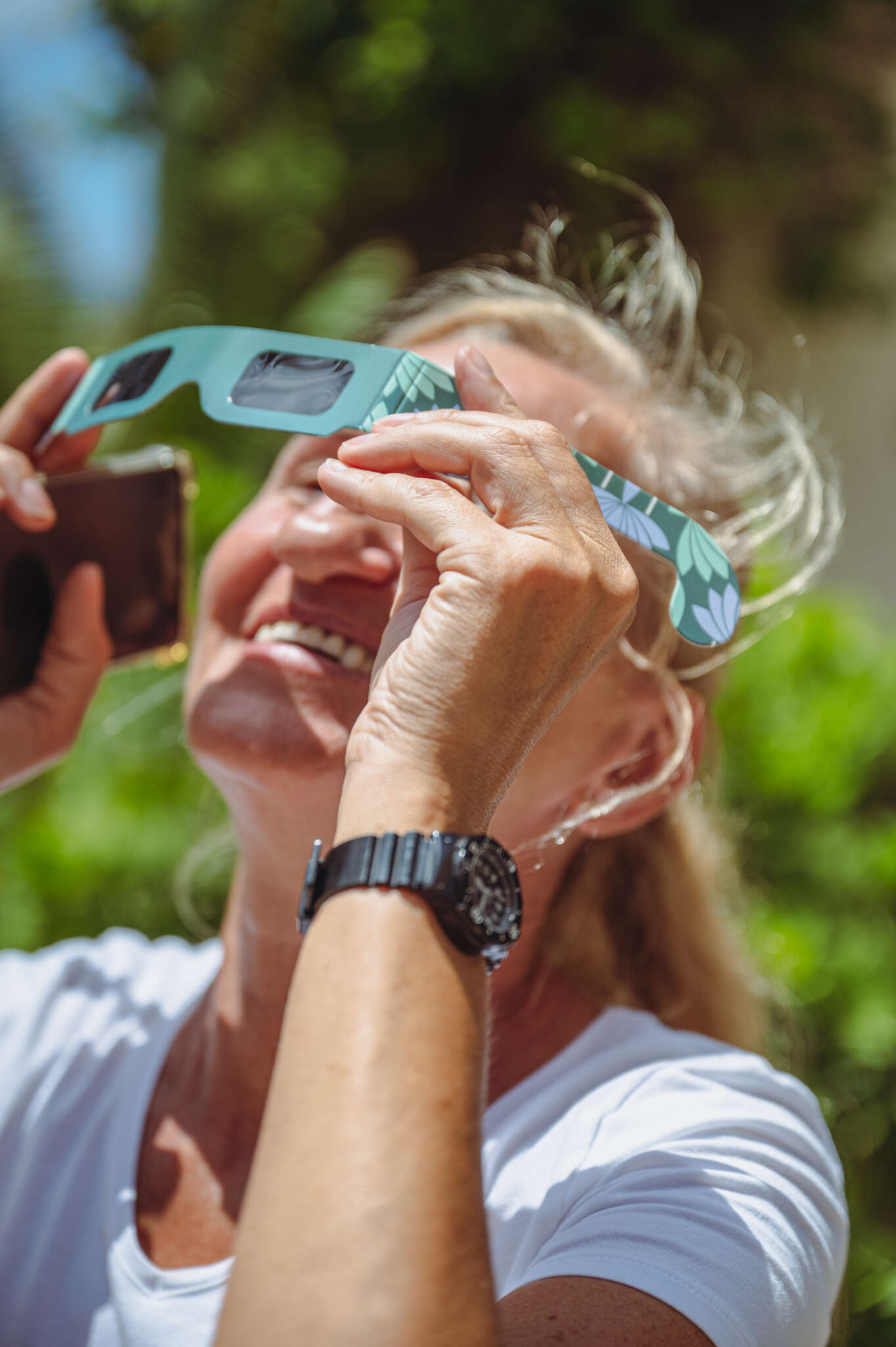
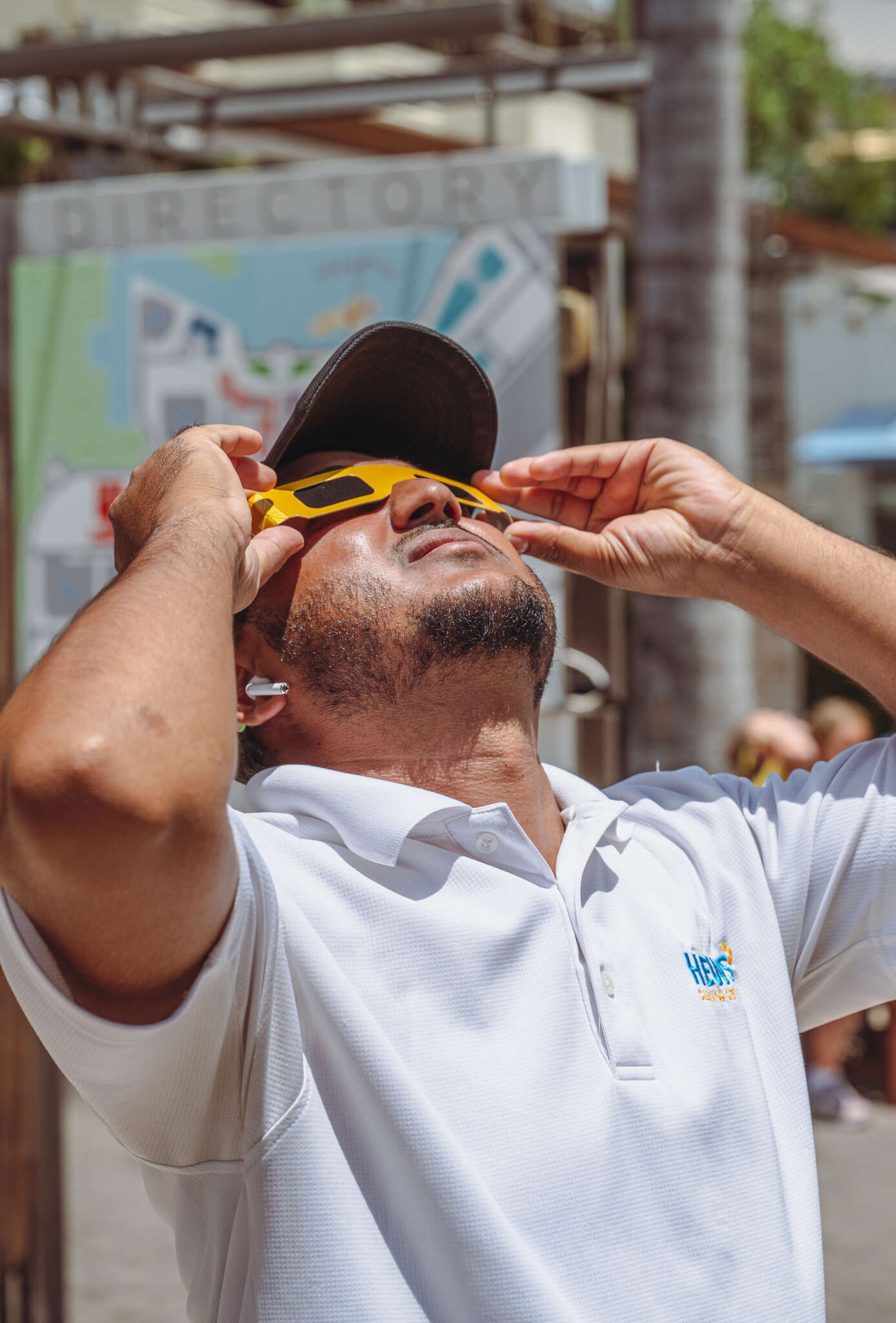
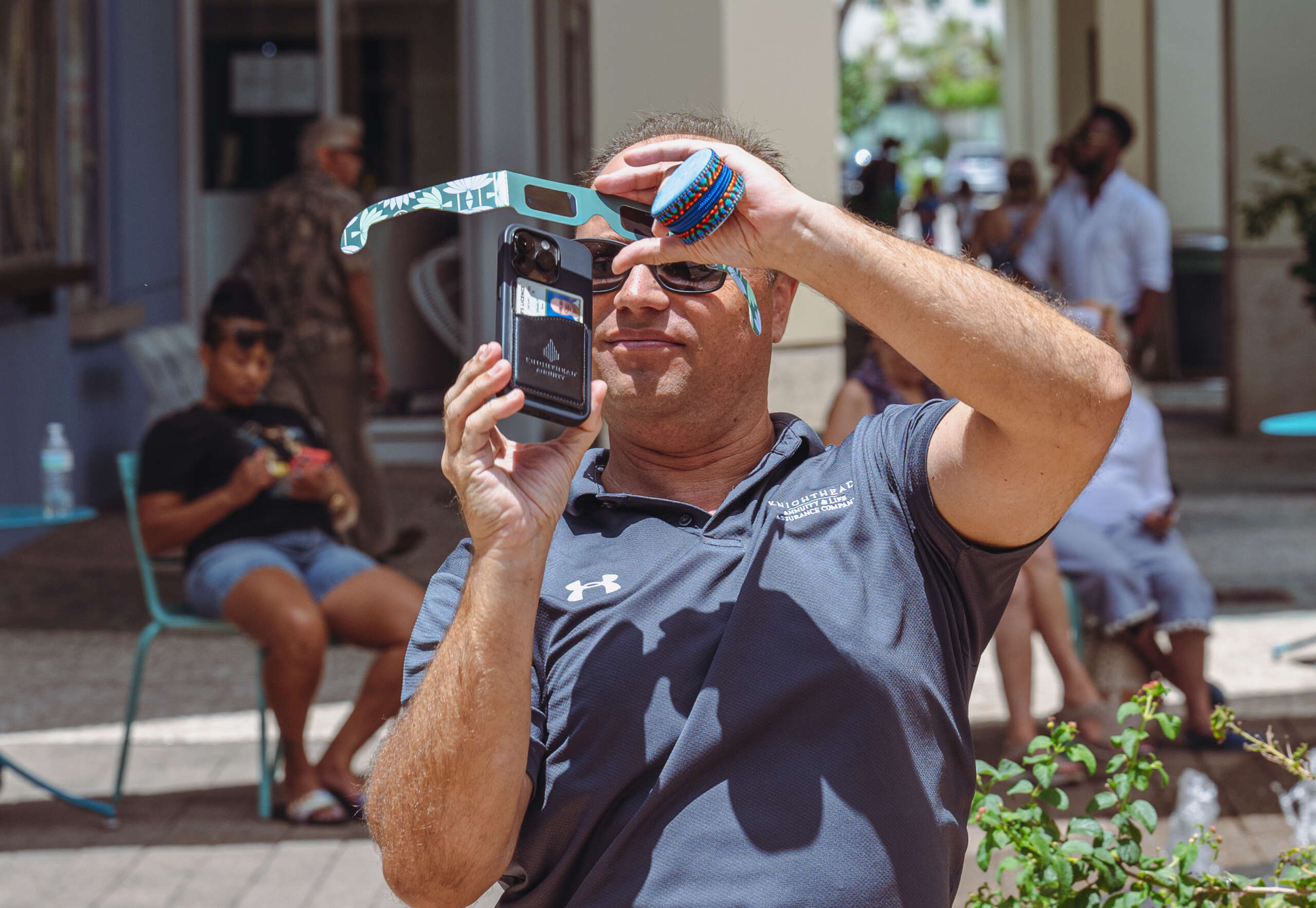
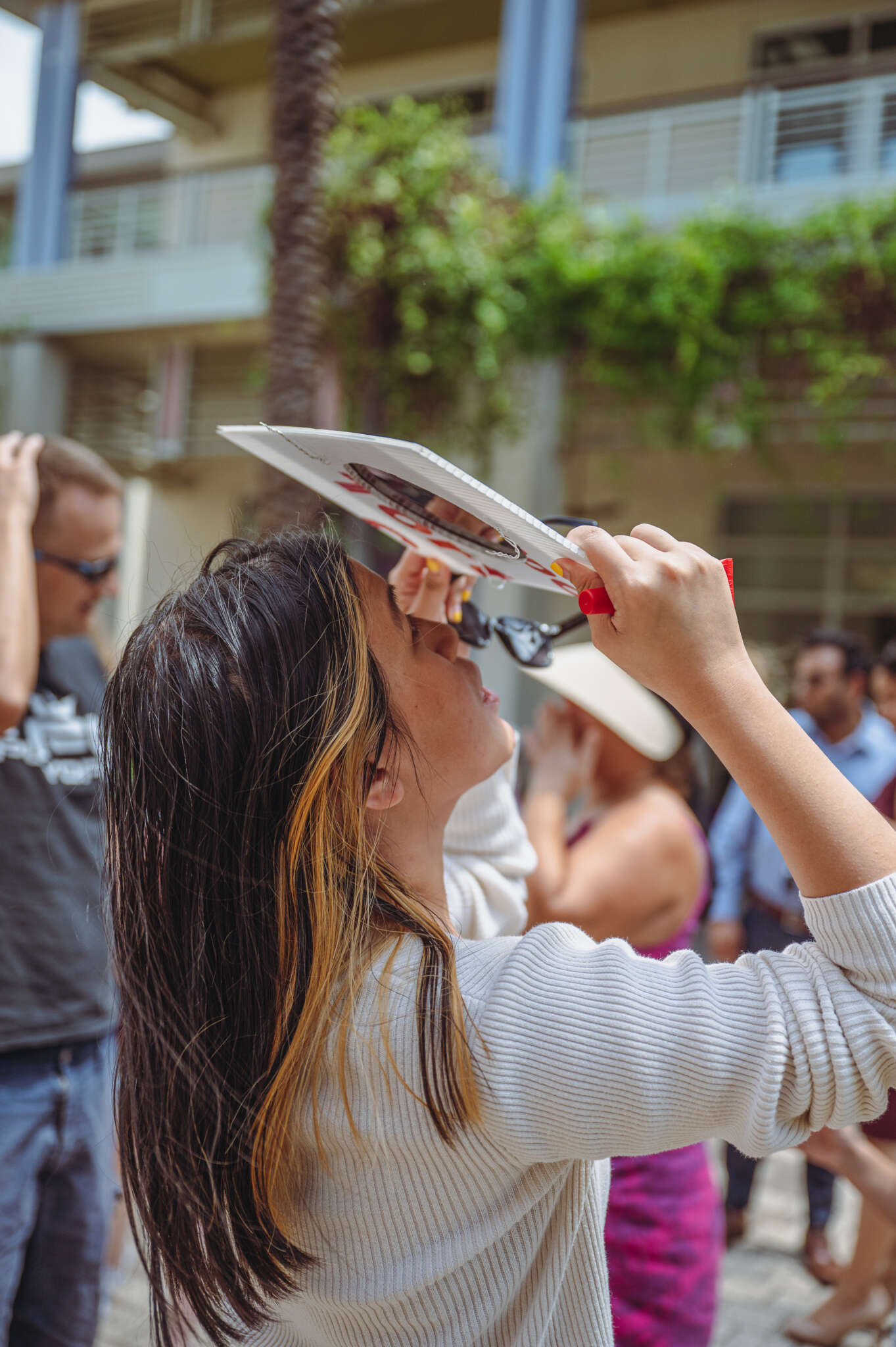
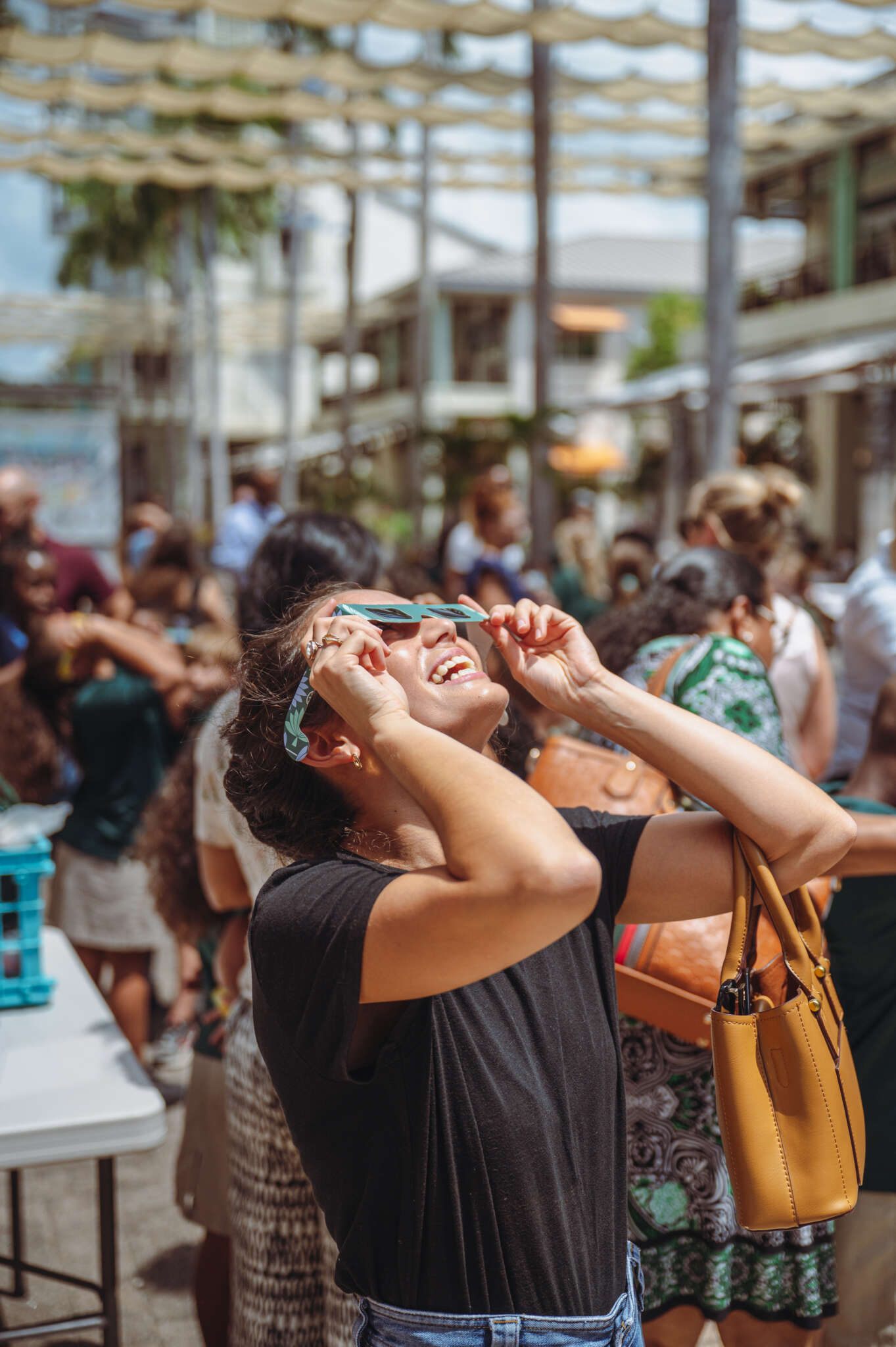
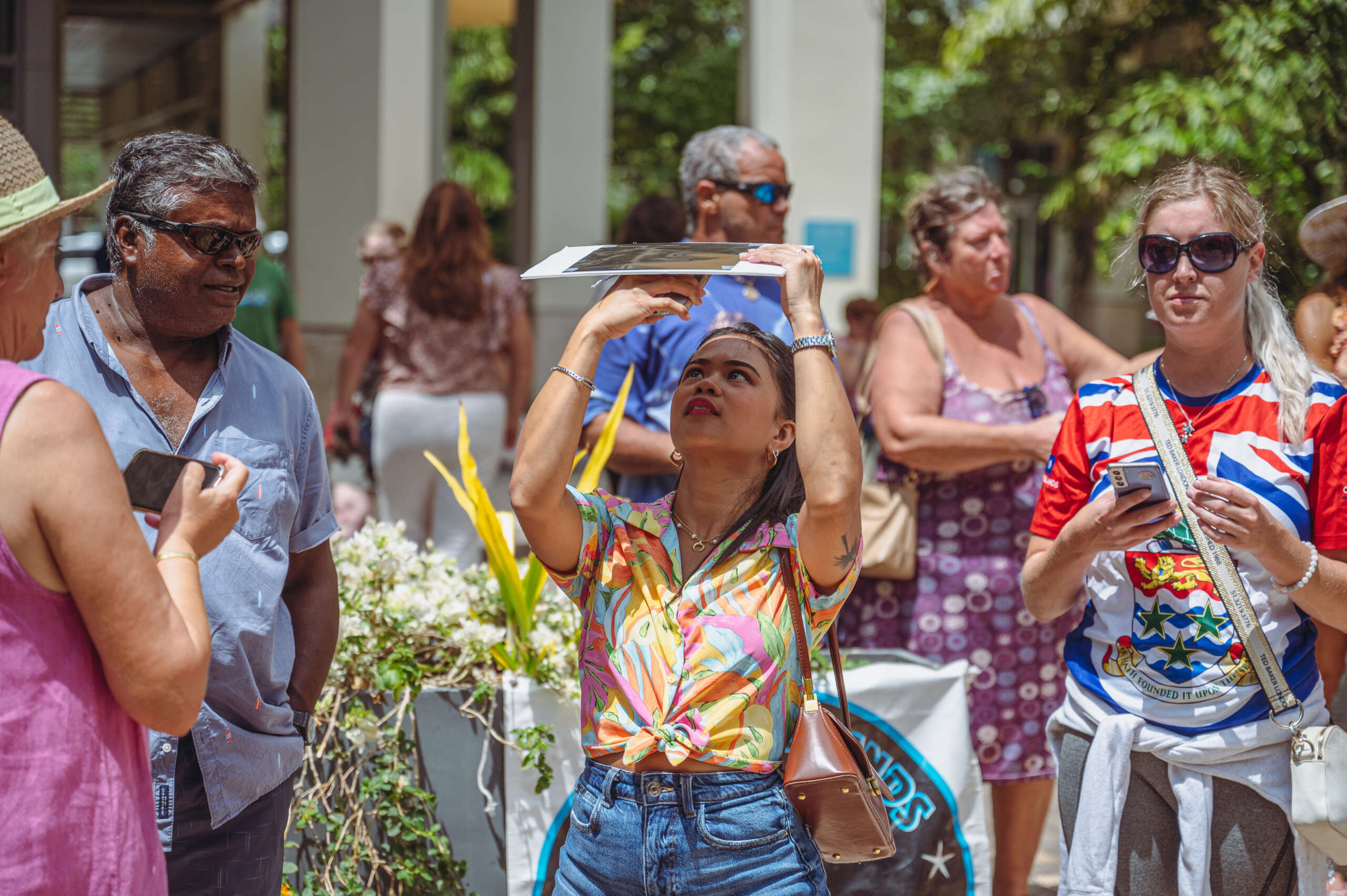
Maximum coverage happened at 1:49pm, and community members gazed above through their protective glasses and screens to get a glimpse of the astronomical phenomenon.
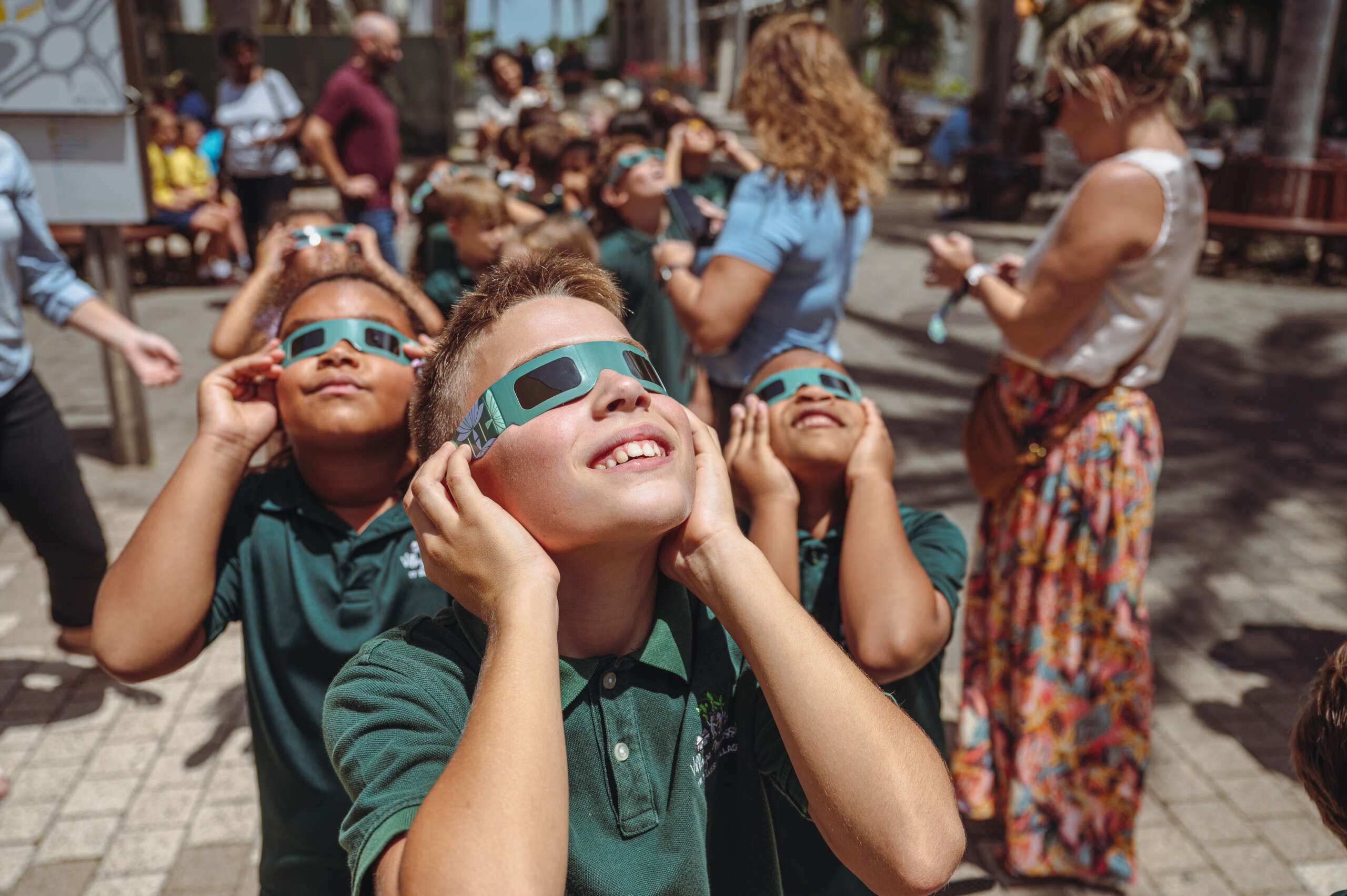
Among them were students ages 6 to 12 from Village Montessori, who filed into the area by the Camana Bay Cinema, eagerly peering up through their special glasses.
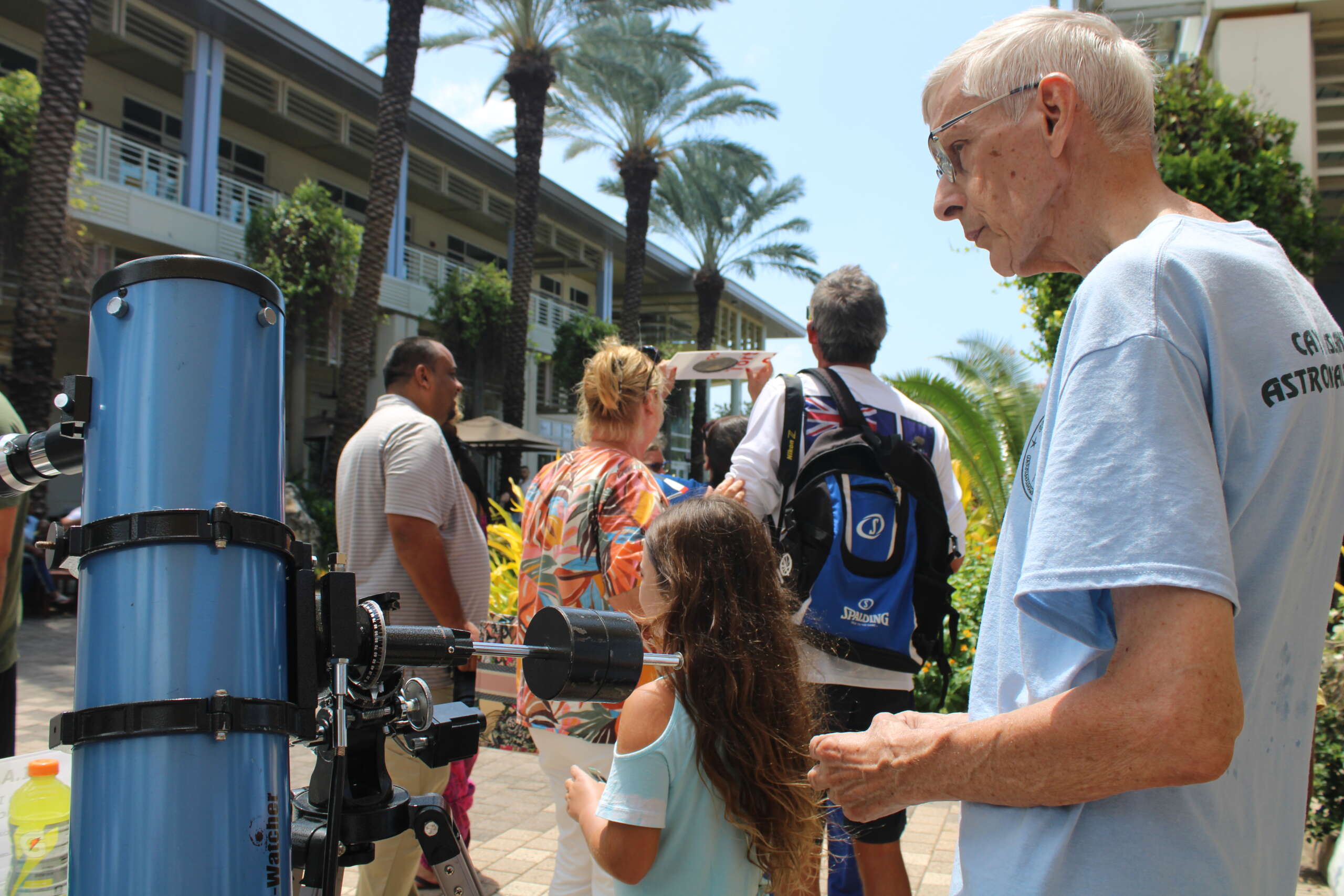
Traci Bradley, one of the Village Montessori owners, said the timing of the eclipse couldn’t have been better considering the students were working on an astronomy unit.
“They’ve been studying the solar system, so they were all really interested and excited to be able to come out to see it today,” she said, adding that such hands-on experiences enhance what they can learn from textbooks.
Eclipse chasing
While some were seeing the solar eclipse for the first time, others were experienced viewers.
Spencer Turner said one of the highlights of his skygazing was when he travelled to Paris in 1999 to view a total eclipse.
“They produced printed maps with the line of the eclipse all across France, and it’s one of my proudest possessions,” he said. “When I found out about it, I thought ‘I’ve got to be here.’”
He recounted viewing partial eclipses in England and Greece as well.

The next chance for the Cayman Islands to experience a total eclipse won’t come around until 2132, which may have prompted some residents to travel to Texas and other points along the path to see it.
Astronomical Society member Ruud van der Pluijm explained that total solar eclipses are special as they only occur every few years or so, which contributed to the worldwide interest in the event.
However, the path of totality varies. For the next one, in 2026, people in Greenland, Iceland and Spain will experience a total eclipse.
Van der Pluijm noted that the society aims to host monthly educational events for the public. Those interested can check their Facebook page or website.
Related Videos