

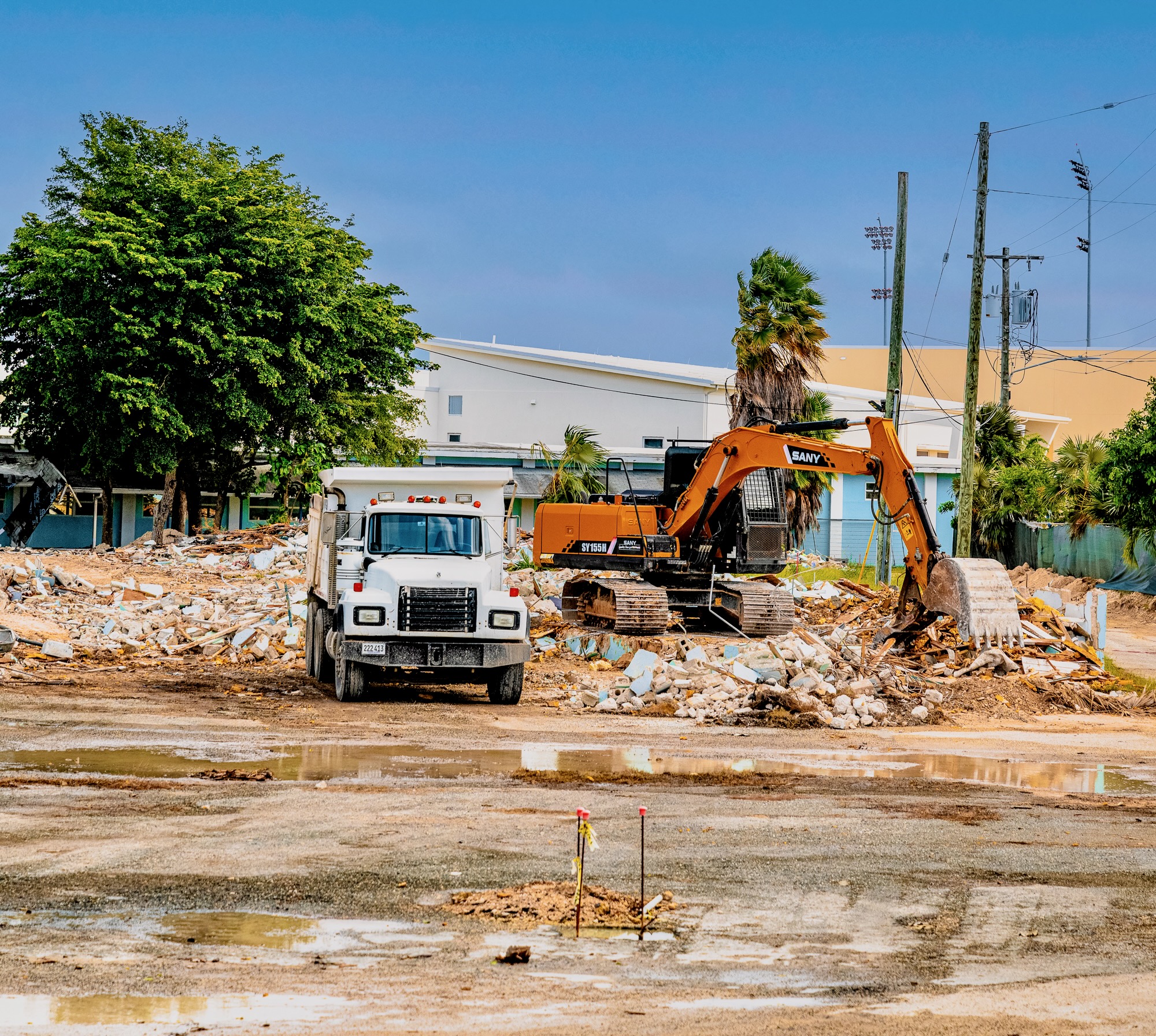
As the walls of the old CIFEC campus came tumbling down last month, students and teachers at the troubled school struggled through another day in temporary facilities that concerned parents and advocates warn are “not fit for purpose”.
In a large church hall, divided into classrooms with thin polyester curtains, teachers try to make themselves heard over the competing din of neighbouring lessons.
Four classrooms are separated by a long row of canteen tables. There are additional classes held on the stage and in meeting rooms, divided into separate learning spaces with see-through curtains.
The principal and his team survey the scenes from a long table at the front of the hall. The school counsellor holds sessions under a tree in the grounds.
Educators move from space to space, with no permanent home, few teaching materials and little privacy or space for lesson planning or staff meetings.
These are the daily scenes inside the Family Life Centre – the temporary home of the Cayman Islands Further Education Centre, where more than 200 children are struggling through their final year of formal education.
Many of them are retaking critical exams, including mathematics and English – subjects required to earn a government scholarship to continue their education and necessary for most jobs.
Others are pursuing technical and vocational courses without access to any on-site facilities.
Unlike the old CIFEC campus – which is being demolished as part of the long-running John Gray High School project and after being found to contain asbestos – there are no science labs, no mechanic shop, no art or photography studios, and no kitchen facilities for culinary training.
There is barely room even for the youngsters, aged between 15 and 17, to go outside at break and lunchtime.
The conditions have been described as “unacceptable” by parents and education advocates.
The temporary school
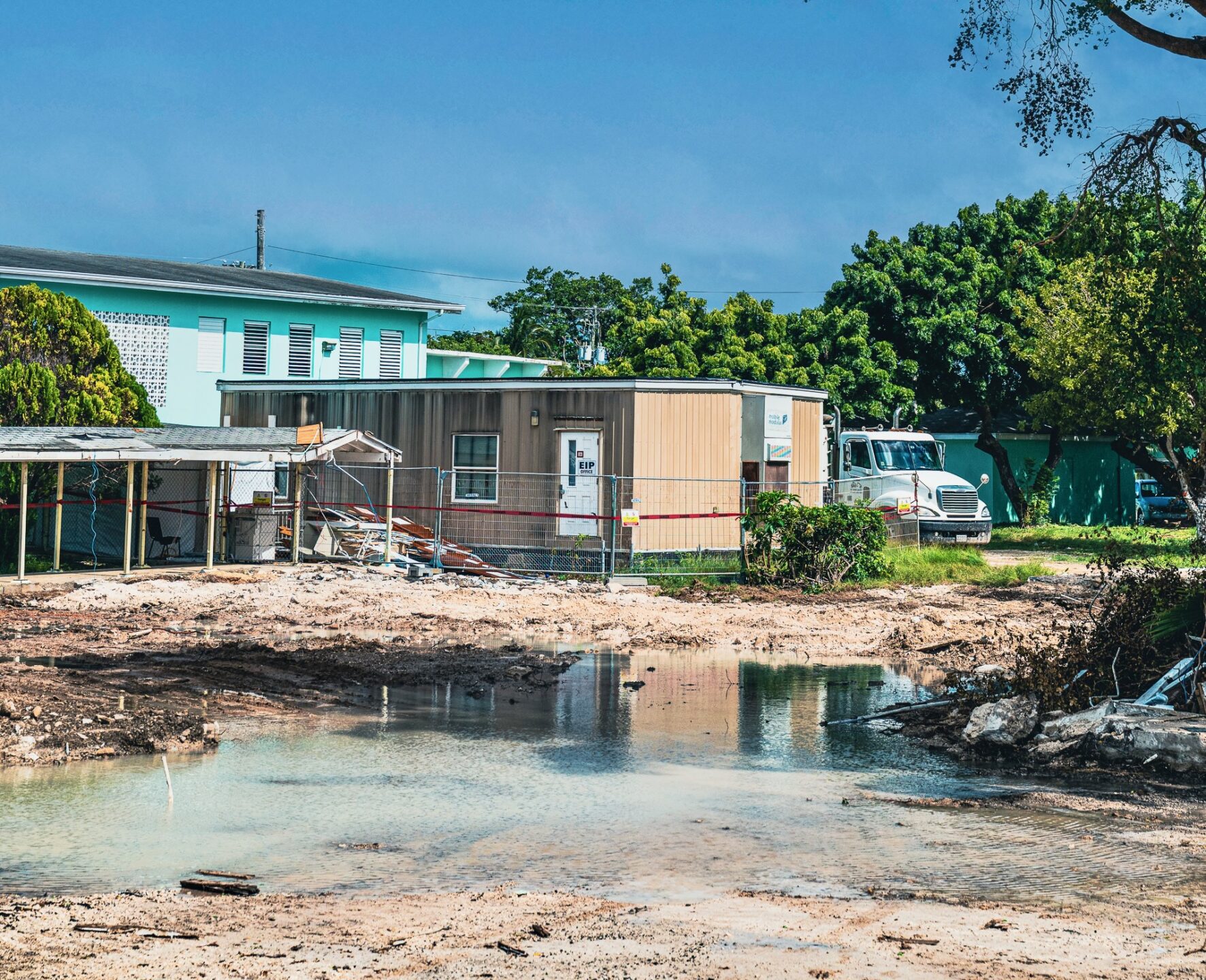
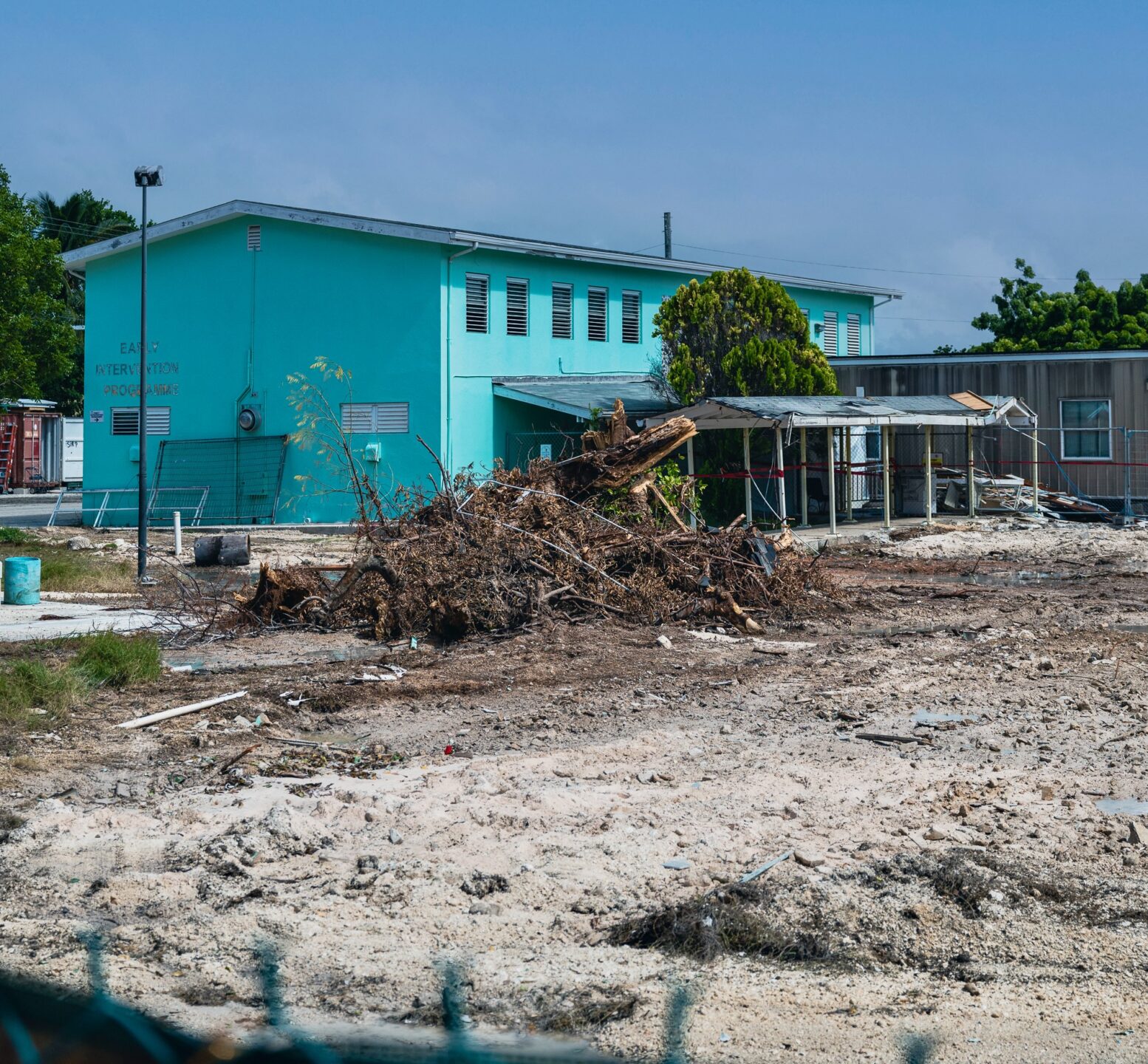
The old John Gray site, also known as the George Hicks Campus, is being renovated as a new headquarters for CIFEC, but delays on that project have left the school without a home.
Parents and students were told on the eve of the school year in September that the site was not ready and they would have to use temporary space at the Family Life Centre. The date for the move has since been pushed back further and now education chiefs say it will be January before students can move into proper classrooms.
An assortment of educators, parents, students and advocates spoke to the Cayman Compass about the chaotic first term at CIFEC.
One parent told us, “We live on an island with the highest cost of living in the world and one of the highest spends per student on education, and this is the best we can do? I am looking around and wondering how did we get to this point?”
The students themselves, many of whom are retaking exams in the hope of getting into college, tell us they expected better in their final year of compulsory education.
“I feel like I am getting left behind,” one student said.
“A lot of us are worried about not graduating,” said another.
Michael Myles, a former at-risk youth officer for government who now runs an internationally accredited Technical Vocational and Education Training Centre, said the conditions described at CIFEC were unacceptable for learning.
“You cannot deliver programmes in that type of environment – we are giving young people a half-baked education in the most important year of their lives,” he said.
The Ministry of Education and Department of Education Services did not respond to specific questions posed by the Compass, based on our interviews.
They did put out a press release late last week, however, confirming that CIFEC would remain at the Family Life Centre until Christmas and targeting a January move to enable a “seamless transition” to the new site.
Premier and Minister for Education Juliana O’Connor-Connolly, in the release, praised CIFEC’s adaptability, painting the Christmas term as a success.
“I am pleased to see how the CIFEC family has banded together to ensure a successful Christmas term. The move to their new campus in January will provide even greater opportunities for students to excel and reach their full potential,” she said.
Last chance saloon
Attending CIFEC is mandatory for students going into Year 12, who did not pass mathematics or English at the required level.
For some, it is their last chance to leave the public education system with meaningful qualifications.
For others, it is a key transitional year to prepare them for further education or apprenticeships.
Despite the challenges, many of the students are maintaining a positive attitude.
Jerrin Reynolds-Velasquez, 17, who is the speaker of the Cayman Islands Youth Parliament, told the Compass he is making the best of it.
“At first I was upset, but I have come to the conclusion that I have to accept it. I need to focus on school and getting all the education I can get,” he said.
“Time is very limited and it is going to go fast.”
The Compass allowed contributors to this article to remain anonymous. Reynolds-Velasquez, who aims to be a politician and is planning to run for office as soon as he is old enough, said he has no issue voicing his opinions.
If he were a politician today, he said, he would be asking questions about how the situation had been allowed to reach a point where there was no facility available on the eve of term starting.
“We shouldn’t be in this position,” he said.
“It seems everything was left to the last minute.”
The teenager, who is hoping to go on to the University College of the Cayman Islands, was complimentary about the job done by the teaching staff in difficult conditions.
He said the staggering of work experience days eased crowding to a degree. But learning is extremely challenging because of the noise from other ‘classrooms’ and the lack of facilities.
Reynolds-Velasquez, who was a student at John Gray, said he is excited to get back into that facility – where he started his high school career at age 11, before moving over to the new $100 million campus.
“It will bring back the good old memories,” he said. “I heard the facility is way better than it used to be and I am looking forward to getting back there.”
Curtains for walls
Two other students, who spoke to the Compass on condition of anonymity, said they were doing their best in a challenging environment.
One questioned the lack of facilities, including science labs and equipment, tools for basic mechanics or culinary courses, or space for art and photography projects. While partnerships with the new John Gray High School and Superior Auto enable some hands-on learning, students say their time is restricted as they are bussed over to these sites in traffic. There’s also no option to work on projects after school or outside of allotted lesson time.
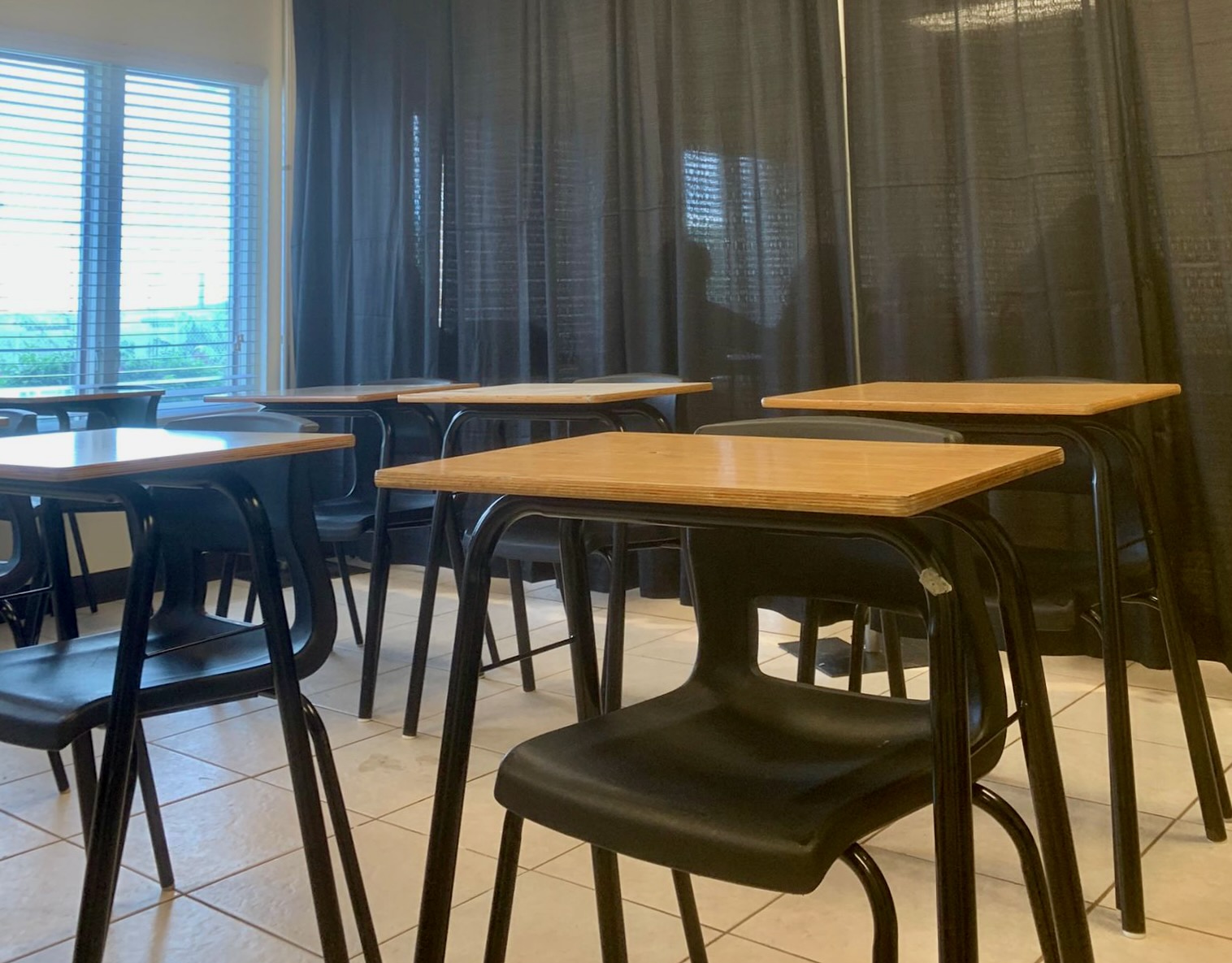
All the students who spoke to the Compass said it was challenging to focus in classrooms with curtained walls.
“You can hear a lot of noise from the other classes. It is especially difficult if you are having a test,” one said.
Adding to the chaos is lack of space – particularly amid lesson changes and break times.
“There is nowhere to go really,” a student told us. “You can’t leave the site and there’s basically just one bench outside. We mostly just sit in the hall.”
The intense atmosphere has occasionally spilled over into arguments and fights – footage of which has been posted on social media.
The school pulls children from different backgrounds. There are teen mums among the group and students with mental health challenges.
But access to the school counsellor is made challenging by the perception that there is no private space for him to see students.
“I look out of my class and I can see him talking to people – I don’t feel comfortable going there and knowing it is not private. I will just deal with my own problems,” one student told us.
Students said they were concerned about lost time in learning – especially as a series of tropical storms had further disrupted the term. The first exams take place in January, with the rest in May. It feels like time is running short, the students said.
“I feel like I am being left behind. A lot of us failed an exam, that’s why we’re here,” one said.
Parents frustrated by ‘unacceptable’ environment
While the students say they are making the best of a bad situation, some parents have been left frustrated and annoyed.
One parent told us they had enrolled their child in CIFEC, despite having other options.
“If they had said the campus is not going to be available, I and a lot of parents might have made different decisions,” they said. “They waited until the night before the school term to tell us and even then they didn’t have a clear plan.”
They said they were baffled as to why the new site was still not ready.
“There is no reason in the world why that campus could not have been ready by September. You can’t learn properly in a hall with curtains for walls. It is just unacceptable.”
The Compass understands that the bulk of the teaching materials for CIFEC’s staff were boxed up at the end of last term and moved over to the empty John Gray campus, where they remain.
“These sort of conditions would not be tolerated in another country. The teachers would go on strike,” the parent said.
They added that education officials had made a bad situation worse with their handling of parents’ concerns.
“The communication was terrible. It went bad from the get go. They never told us anything and they still have not apologised.”
Another concerned adult, familiar with the situation, said the mental health of staff and students was frayed by trying to teach and learn in an unacceptable environment, adding “It is not fit for purpose.”
“Some of the most vulnerable and needy students in Cayman are at CIFEC. We have one of the highest education budgets in the world. Where are we spending it if not on these kids?” they said.
Others have called for the Office of Education Standards to inspect the school.
History of mismanagement
Myles linked the “debacle” to a long history of mismanaged projects, highlighting the open-plan design of the $100 million Clifton Hunter school, which had to be renovated at further expense to include proper walls.
Some of the students now at CIFEC were not even born when the John Gray High School project first broke ground in 2008. Since that time, government has spent close to $250 million on high school buildings.
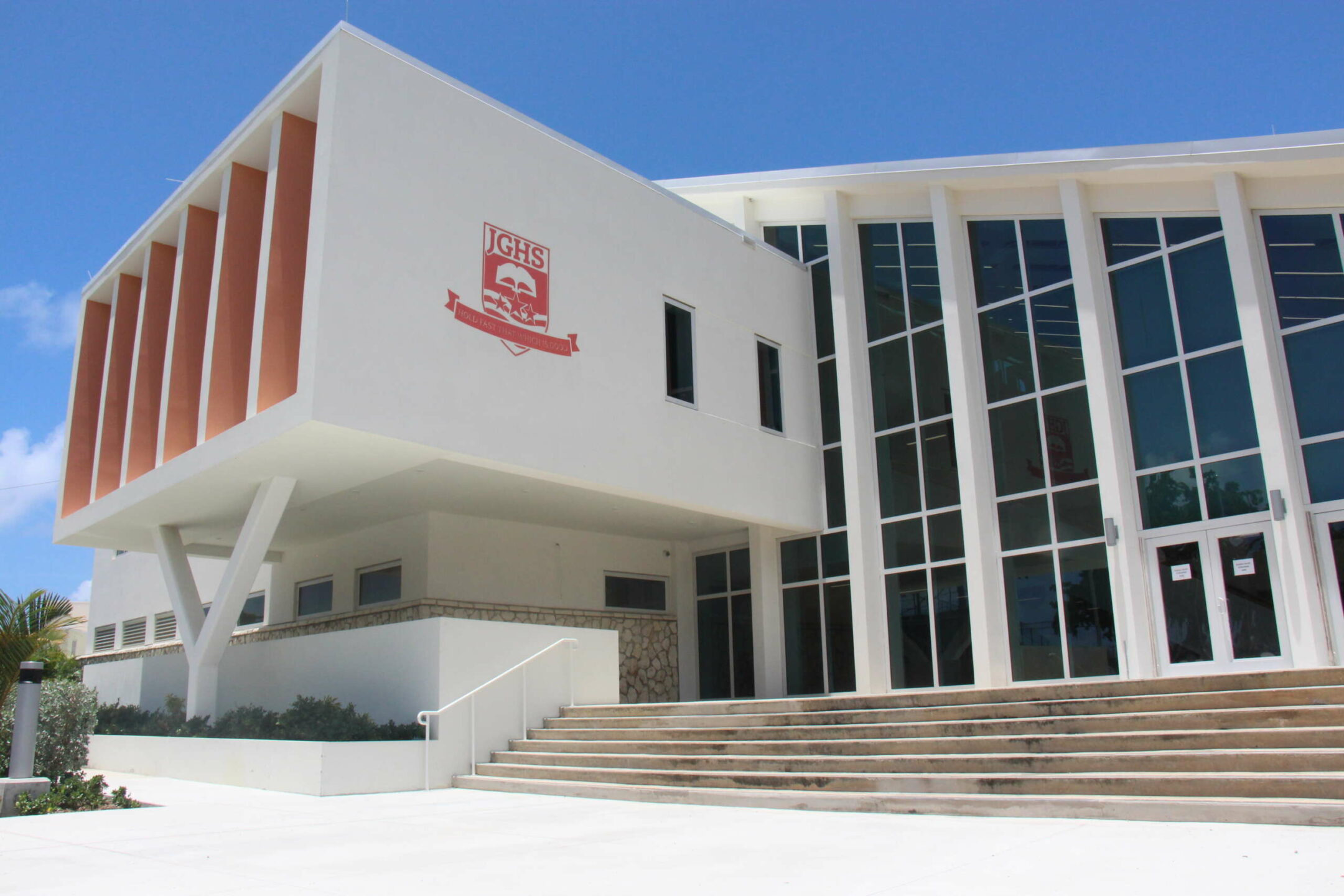
After a catalogue of construction and financing issues and a multi-year hiatus, the high school officially opened last March with much fanfare and celebration.
But further delays impacted the interlinked plan to demolish the CIFEC buildings and redevelop the old school as a new campus for CIFEC. In April, government officials blamed ‘logistic issues’ with the main project for the delay, but said the site would be ready by July.
“They should have seen this coming three years ago. I find it deplorable. It shows a lack of respect for education,” said Myles, who runs Inspire Cayman Training Ltd.
The educator, a former political candidate at the last election, said he had set up his own accredited TVET centre to help get high-school graduates ready for the world of work. He said thousands of work permits issued for well-paying trade jobs showed that the education system was not doing enough to prepare young Caymanians for the workforce.
“These are youngsters that I will get and we will have to turn around and spend more money on because the system has failed them,” he said.
And he criticised the government for allocating more money for another new school on Cayman Brac, likely to cost in excess of $50 million.
“We like our monuments where we can put our name on the door and say I built that,” he said.
Lack of long-term planning had left government with few alternatives for the CIFEC students when September came around, he acknowledged.
“They have backed themselves into a corner and it is a horrible situation at this point in time,” he said. “The least they could do is put their hands up and say sorry. All we hear is excuses. What kind of example is that?”
Our questions for government
The Compass submitted the following list of questions and concerns about CIFEC to the Ministry of Education and Department of Education Services on 25 Nov.
We are still awaiting a response.
- Classroom layout makes teaching and learning almost impossible, especially in the main area where four classes are separated by a thin curtain and noise filters across. How can children learn in this environment?
- The school counsellor has nowhere private to take students – they are often seen outside in full view of their classmates talking to the counsellor. How is this appropriate for children with mental health issues?
- There are zero facilities to support vocational programmes and bussing students off site is taking time away from learning. How can CIFEC really operate vocational training (e.g., culinary without a kitchen, mechanics without any tools or space, media without a studio or photo lab, etc…) in this environment?
- There is no space or place for the students to go on break time and lunch time – no access to playing fields, they are not allowed to leave the site. How is this fair to young people?
- We understand that specialist programmes – including for special needs children and for young mothers – are not being delivered in optimum surroundings either. Can you comment on this?
- There are almost no facilities for the teaching staff or school leadership – making lesson planning difficult and any kind of privacy a challenge. How are the staff coping with this?
- There are 200+ students at the site. It is crowded and leading to conflict. Are you concerned about the number of fights? How many times have police or ambulance been called to CIFEC this year?
- We are already approaching Christmas break. For many of these students, this is their last year of formal education. Do you think it is fair to them that their career chances could be impacted by having to learn in this environment?
- When do you expect to have more suitable facilities for staff and students at CIFEC?
- Is there any interim plan to improve the situation given the challenges of this first term?
Related Videos










A sad and pathetic situation here. And indicative of the way we treat those in need and vulnerable. 😣
There was no reason to demolish the old building merely because it contained some asbestos in its structure.
It’s certainly true that some workers, in close proximity to asbestos coming off a grinding wheel for years at a time, got asbestosis. A nasty illness.
But its mere presence in a building, where no person is within inches of asbestos dust, has a virtually zero health effect.
This is such a sad and disgraceful situation for the students to be in. In my opinion, the government would be wise to listen to and take advice from Michael Myles. State of the art schools are good and well if all students can benefit from them.
Why didn’t the renovation of the old John Gray campus not start when the school was moved into their new building over a year ago. It sat untouched for months?. There is no excuse for this delay and neglect. None whatsoever – the Department and Ministry have failed our students.