

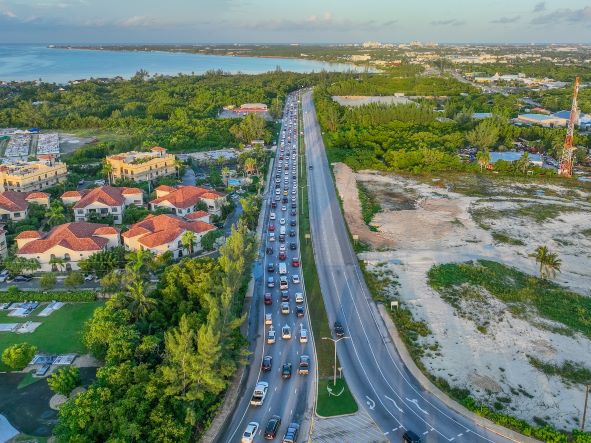
Following criticism about the cost of the proposed East-West Arterial extension at recent meetings, the National Roads Authority and its consultants say they will highlight cheaper options for the new road in their final report.
At meetings in North Side and Bodden Town last week, displays by consultants Whitman, Requardt & Associates, who are working with the National Roads Authority on the road’s environmental impact assessment, outlined the various phases the 50-year project would take.
Scott Thompson-Graves of WRA said the information regarding the more affordable and simpler road options was available in the draft environmental statement.
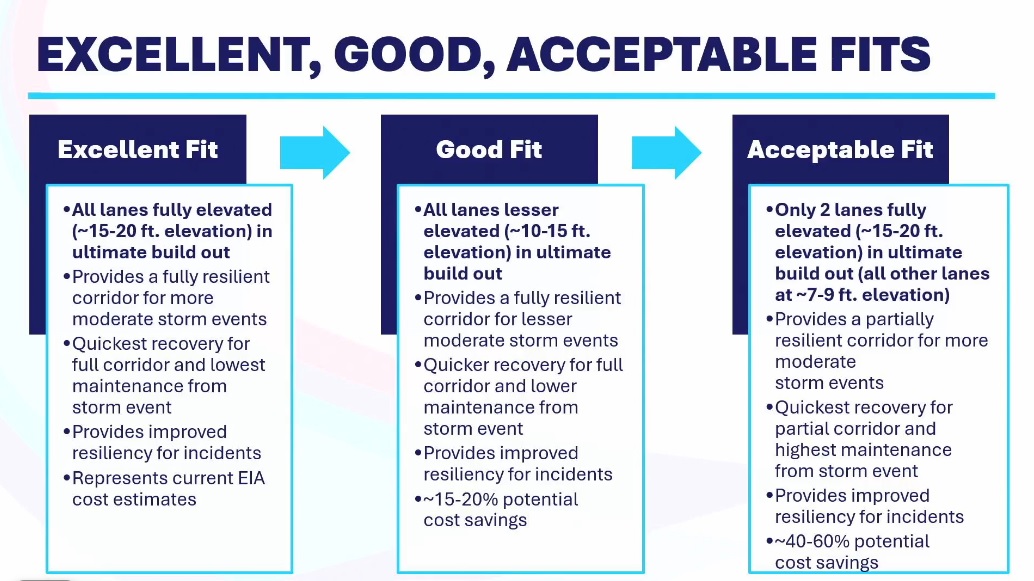
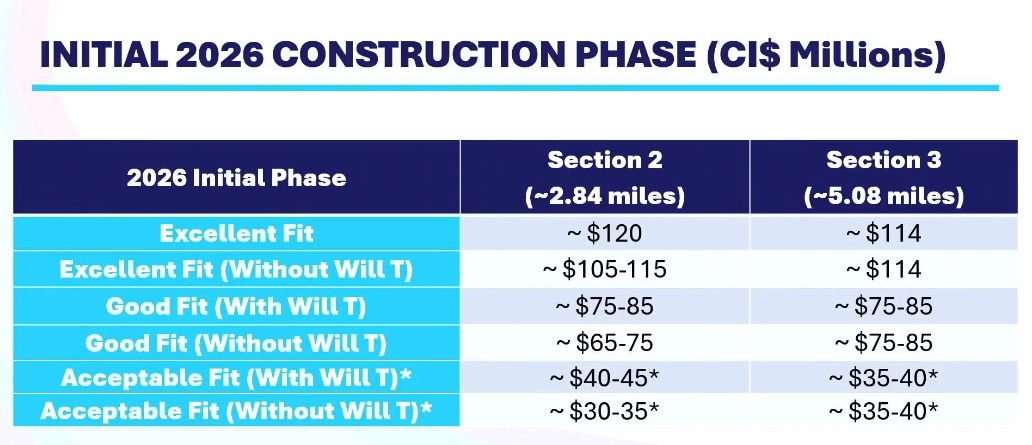
“We’ll certainly better reflect in the final environmental statement document the more realistic cost of the ‘good fit’, in addition to just the ‘excellent fit’, so that will be able to mitigate that sticker shock,” he said.
Three options are laid out in the draft document — a ‘good’, an ‘acceptable’ and ‘excellent’ fit — each with different costs, designs and impacts.
The meetings were held as part of an ongoing public consultation process into an environmental impact assessment of the proposed eight-mile East-West Arterial extension from Woodland Drive to Frank Sound Road.
Another section of the extension, from Hirst Road to Woodland Drive, which is currently under construction, is not subject to an environmental impact assessment.
The final decision on which version of the road extension to pursue will be taken by Cabinet.
Cheaper alternatives explored
Following an at times contentious public meeting in North Side a couple of days earlier, where residents decried a price tag of US$1 billion over 50 years for the most expensive, but most resilient option, the second presentation on Thursday in Bodden Town by the consultants delivered more information on the cheaper alternatives.
The meeting at the newly opened Church of God hall in Bodden Town was attended by a number of current and former MPs, including Dwayne Seymour, Isaac Rankine, Jay Ebanks, Wayne Panton, Heather Bodden, Osbourne Bodden and Mark Scotland.
East End representative Rankine, who is also minister of youth, sports and heritage, said when he’d entered the new hall, where several maps, graphics and tables regarding the proposed extension were on display, he “nearly turned around and went back home”.
“Because when you put something like that up there,” he told the presenters, “that gives the wrong impression of what this road could cost, and it turns people off, and certainly, from my perspective, I believe that is the whole intent of this.”
This was echoed by Seymour, the minister for sustainability and climate change and MP for Bodden Town East, who said, “We need to stop the scaremongering and get this road built”, saying there was no need for bridges along the route, which would drive the price up.
He added that for those who say more roads simply lead to more traffic, “We can change the laws … and stop certain imports”.
Former government minister Osbourne Bodden, who will be running as a candidate in Bodden Town West, urged the consultants and NRA to consider putting in a road that is built at surface level, rather than an elevated one, and asked them to “focus on what’s possible and not what is impossible and totally expensive and prohibitive”.
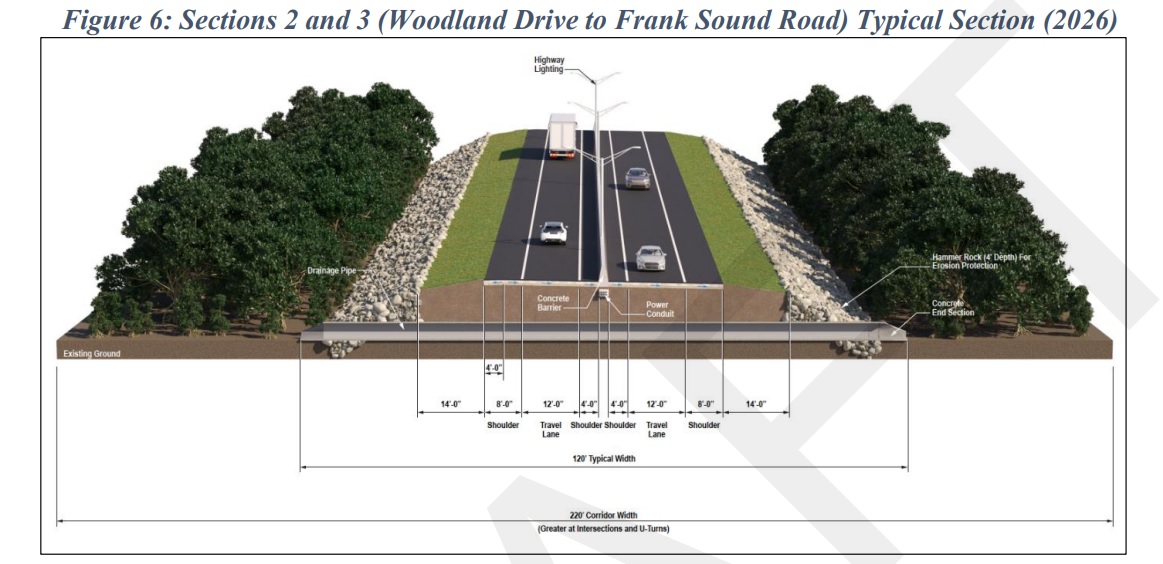
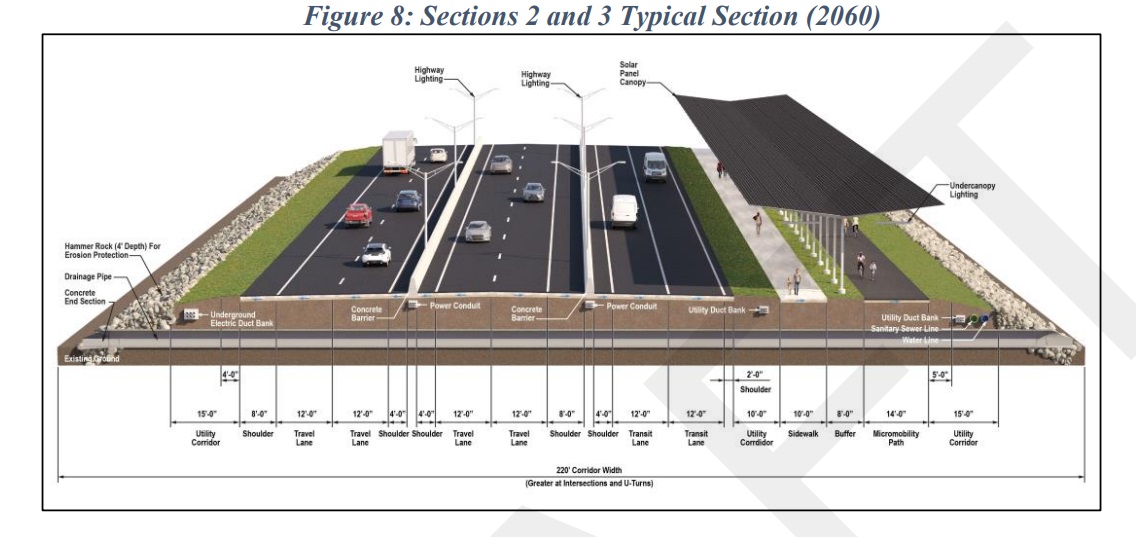
The most basic road layout, earmarked to begin construction in 2026, involves an elevated road with one lane in each direction.
One audience member asked why this simple road drawing was not presented in the plans shown to the public at the presentations, rather than “the Cadillac version”.
Thompson-Graves said, because the NRA plans to build the road in phases over several decades, it was typical to go with the “broader approach”, as it would ensure the relevant studies cover the lifetime of the project, rather than having to be repeated as each phase is built.
Public transit options
Thompson-Graves also noted in his presentation that, while a second road from the eastern districts would help address congestion issues, improving the public transit system would also do so, and the proposed roadway could include dedicated laneways to accommodate this.
While public transportation does not fall under the remit of the National Roads Authority, which is tasked with creating the extension to the East-West Arterial, the new road could include lanes for buses, trams or other public vehicles.
Thompson-Graves said congestion could be reduced by making the use of buses and public transport options “more competitive when compared to travelling by car, so that transit could possibly become a mode of choice for people, rather than a mode of necessity”.
He noted that the new route could also include a dedicated lane to accommodate the use of electric modes of transport for shorter trips, such as e-bikes and e-scooters — again, cutting down on congestion.
His colleague Lindsey Ulizio, in response to an audience member’s question regarding public transport provisions, said the option of a build-out into dedicated lanes for public transit “could become available based off of travel demand and available funding”.
Travel times
Questions were also raised at the meeting about the travel time that would be saved by the building of the road. According to tables included in the environmental statement document, for example, just three minutes would be shaved off the trip from eastern Bodden Town to the schools on Walkers Road in George Town during rush hours.
Speaking to the Compass after the meeting, Denis Thibeault, the assistant director of National Roads Authority’s Transportation Planning Unit, said those numbers were an average taken over three hours during morning and evening rush hours, and that the savings during specific hourly periods during the busiest times would be considerably more.
A number of the politicians highlighted the ongoing issue of the current length of time journeys from the eastern districts to George Town take, especially in the mornings, saying parents are having to wake their children at 4am to ensure they can get them to school on time.
The draft environmental statement contains 694 pages, as well as about 6,000 pages of appendices. A shorter 65-page, non-technical summary is also available. The documents can be found at the National Roads Authority website.
The public consultation into the draft environmental statement continues until 3 Feb.
Comments on the draft environmental statement can be submitted:
- In writing during the public meetings – comment sheets will be provided.
- Electronically via e-mail to [email protected]
- By mail to the Department of Environment, P.O. Box 10202, Grand Cayman KY1-1002, or
- By hand, in writing, to the Department of Environment, Environmental Centre, 580 North Sound Road, George Town, Grand Cayman.
Related Videos










I find it hard to understand that no one from NRA, the Consultants, government officials and Engineers are not addressing is the flooding to existing homes. This is a potential risk n no one is discussing it. I would like some discussions around this and don’t tell me deep wells are the answer as it is not.
That’s great news. The meeting earlier this month at North Side only the highest option was presented?