

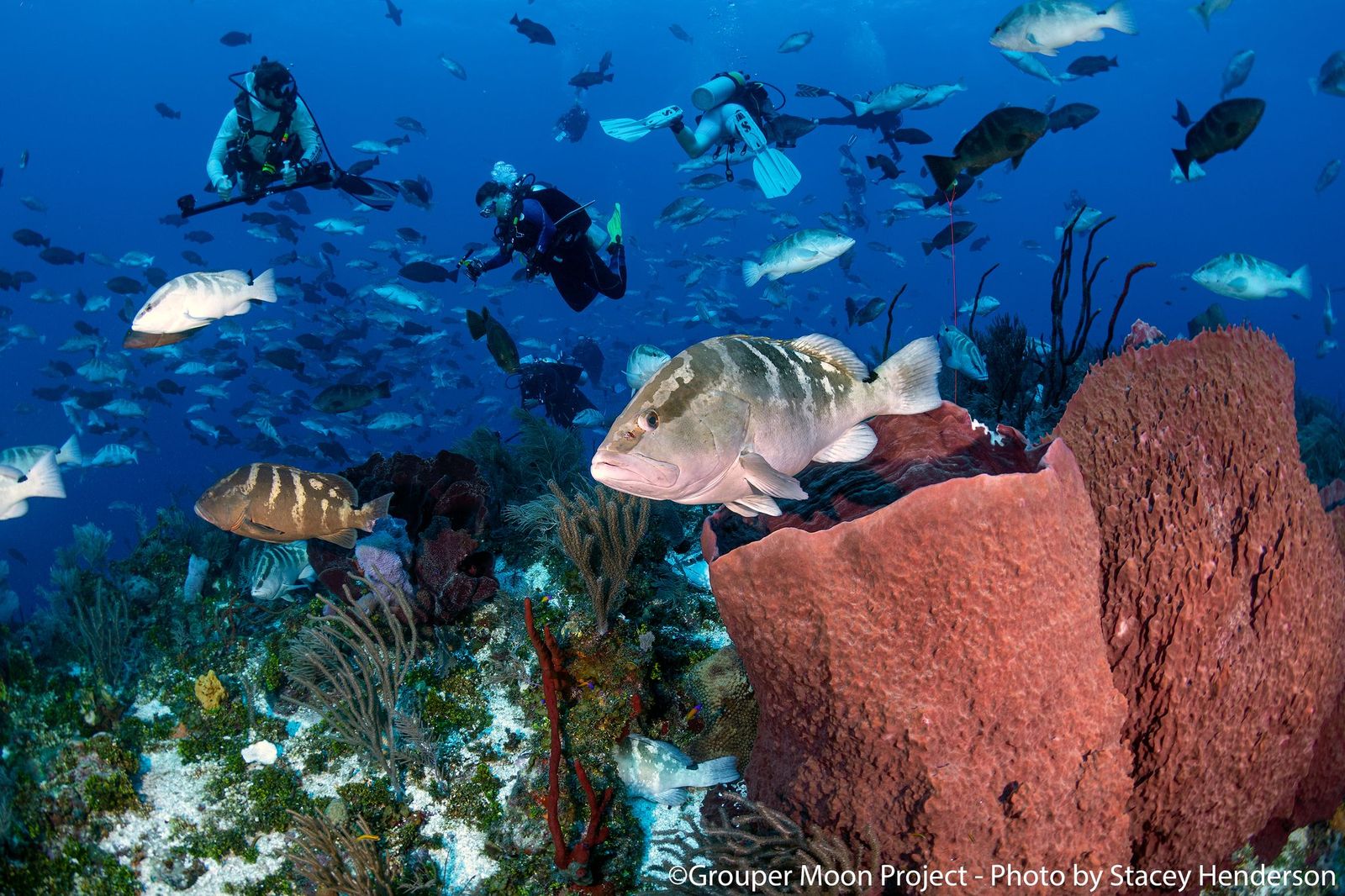
Every year, thousands of Nassau groupers gather at spawning sites on Little Cayman after a winter full moon – watched, monitored, tagged and recorded by Grouper Moon Project researchers from Cayman and the United States.
This year, however, the scientists have been left scratching their heads as the groupers haven’t shown up in numbers anywhere near the expected amount.
Brice Semmens, one of the scientists with the Grouper Moon Project, told the Compass while adult groupers are being spotted, they’re not aggregating at the spawning sites at which they’ve been gathering annually for decades, and admitted it was “quite the mystery”.
Last year, more than 8,500 groupers were counted at the aggregation sites at the west end of Little Cayman – a massive rebound in the population that had practically been decimated because of overfishing in earlier decades.
The Grouper Moon Project, which was launched in 2001, is a conservation science partnership between the Cayman Islands Department of Environment and REEF, along with scientists from Scripps Institution of Oceanography of the University of California, San Diego, and Oregon State University, aimed at studying the endangered Nassau grouper.
Nassau groupers typically spawn in great numbers on the nights following a winter full moon. If the full moon is late in January, that’s when they’d be expected to spawn, or if it’s early in February. This year, however, was what Semmens, a professor at the Scripps Institution, described as a “split moon”, when the full moon fell in the middle of both months.
In anticipation of the possibility of the spawning happening last month, Department of Environment staff, along with a skeleton crew from Scripps, went to Little Cayman to check the site. While they did find about 2,000 groupers at the aggregation site, they did not see spawning activity, Semmens said.
This month, “there are a couple of hundred out at the spawning site,” he said.
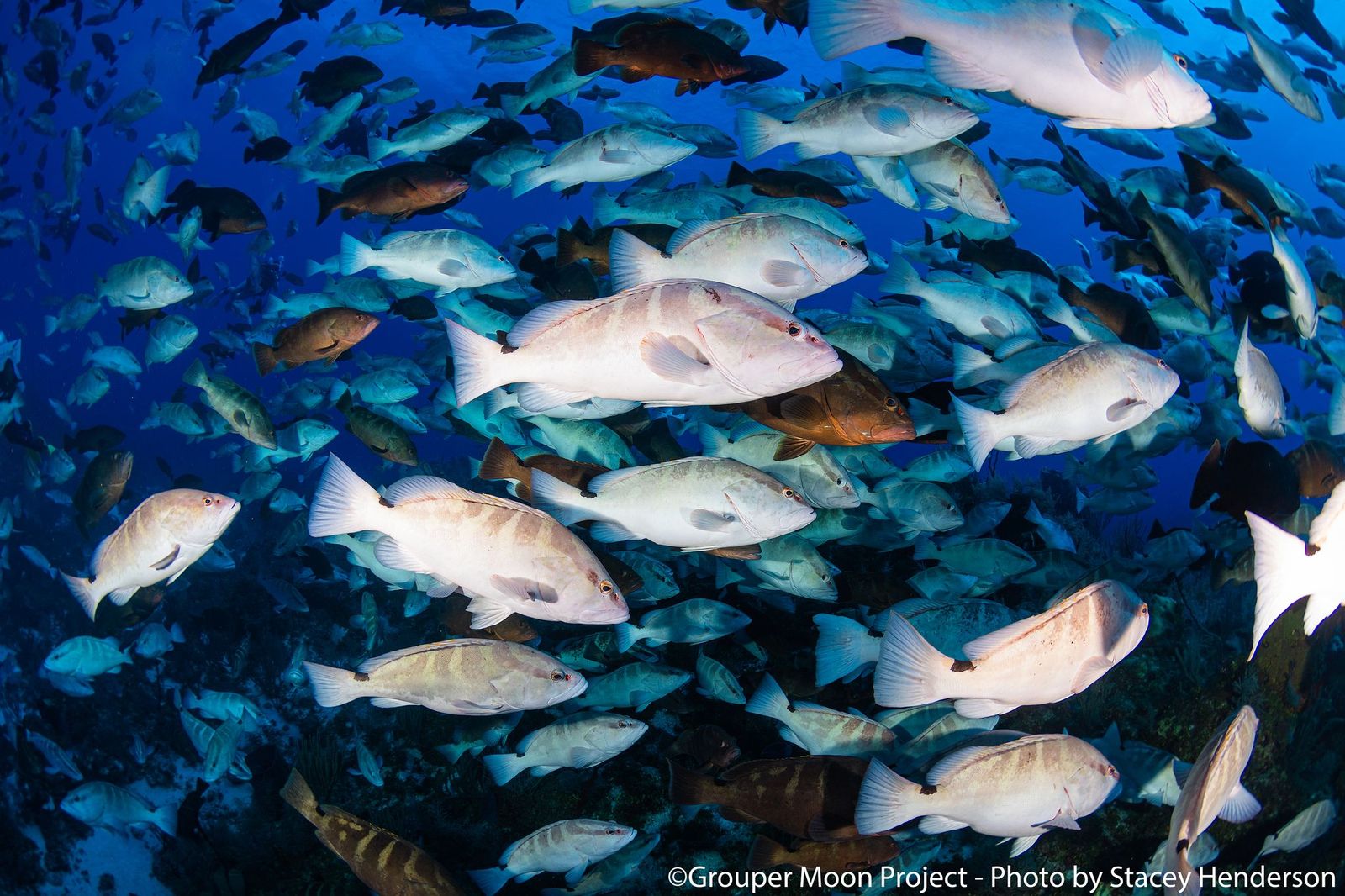
“It is possible it happened last month and we missed it,” Semmens said, as the team had been concentrating on “capturing fish faces” as part of a facial-recognition exercise, using AI software that can identify individual fish by their unique markings. This may replace the tagging of fish, as it means each creature can be tracked over days, months, seasons and even years.
“So last month we were capturing faces, and that requires daylight, so much of the diving was done during daylight hours,” while spawning usually occurs at night, he said.
Another possibility the team is considering to explain the mystery of the ‘missing’ Nassau groupers is that because it was a particularly cold December, they spawned then – though this is unlikely, Semmens says, as it would be a month earlier than they have ever previously been recorded as doing so.
‘Big mystery’
“We’ve been doing this for 20 years and we’ve never had such a mystery,” Semmens said.
He stressed, though, that the fish are not, in fact, missing. “They haven’t disappeared from the reef. The mystery is why they are on their home reefs and not out spawning at their usual sites,” he said.
The good news is there are plenty of juvenile or ‘teen’ grouper on the reefs, he said, meaning the population “is continuing to build”.
Steve Gittings, chief science officer for the US National Oceanic and Atmospheric Administration’s Office of National Marine Sanctuaries, was also on Little Cayman for the Grouper Moon Project this month.
He said the lack of adult spawning groupers at the sites was a “big mystery”.
The team, he said, visited nine sites in a single day looking for the groupers, and was “still trying to figure out what is going on”.
Semmens says he thinks it may be unlikely that the mass spawning will occur after next month’s full moon. “It would be beyond strange if they showed up in January, didn’t show in February, and came back in March,” Semmens said.
But, just in case, a DoE team, led by Croy McCoy, research manager at the department’s Research and Assessment Section, will have a crew there to keep an eye out.
“The reason the Cayman Islands government has protections in place through April is because some spawning behaviour happens in those later months,” Semmens explained.
Protecting the species
The DoE’s McCoy, who holds a PhD in ocean sciences, has been deeply involved in the project from the beginning, and says, as a Caymanian – born in Cayman Brac – he is very proud of the work that has been done over the years to protect the species.
He says it’s a testament to the Cayman Islands community, especially the fishermen who complied with the sustainability practices that were introduced to save the species, that Cayman now has the biggest population of Nassau groupers in the Caribbean.
Since 2003, there has been a ban on fishing at aggregation sites during Nassau grouper spawning season, making it illegal to fish there from December to April.

For more than 20 years, McCoy and the other scientists have been showing up at the aggregation sites annually to monitor and study the spawning. Based on all their available data, the groupers should be there this year, but they aren’t, McCoy told the Compass.
He said there are “major months and minor months” for spawning, and surmised that perhaps March might be a “major month” for spawning, despite the data that had suggested otherwise.
“We just don’t know. Everything was consistent for the past 20 years,” he said. “You can get it right 99% of the time, but there’s that 1%, that one time, that throws us off.”
Scientists love a mystery, so it’s conundrums like this that keep them coming back every year to gather more and more information, Semmens said. “Just when we think we have the whole thing worked out, nature throws us a curve ball. It’s a really good justification for why we keep doing what we do.”
The prospect of the groupers having moved to a new spawning site, perhaps off nearby Cayman Brac, is an unlikely one, Semmens says. “We have never in the entire time we have worked on this project seen fish move between islands [to spawn],” he said.
While the fish may travel around the islands, they always come back to the same spawning site to breed.
Despite the absence of the groupers, there is plenty of other work for the scientists to do, and other species of fish to monitor and learn about.
McCoy noted that, as well as the Nassau grouper, 22 other species of fish spawn at the aggregation sites on Little Cayman and Cayman Brac, including tiger and yellowfin groupers.
Live streams from underwater to the classroom
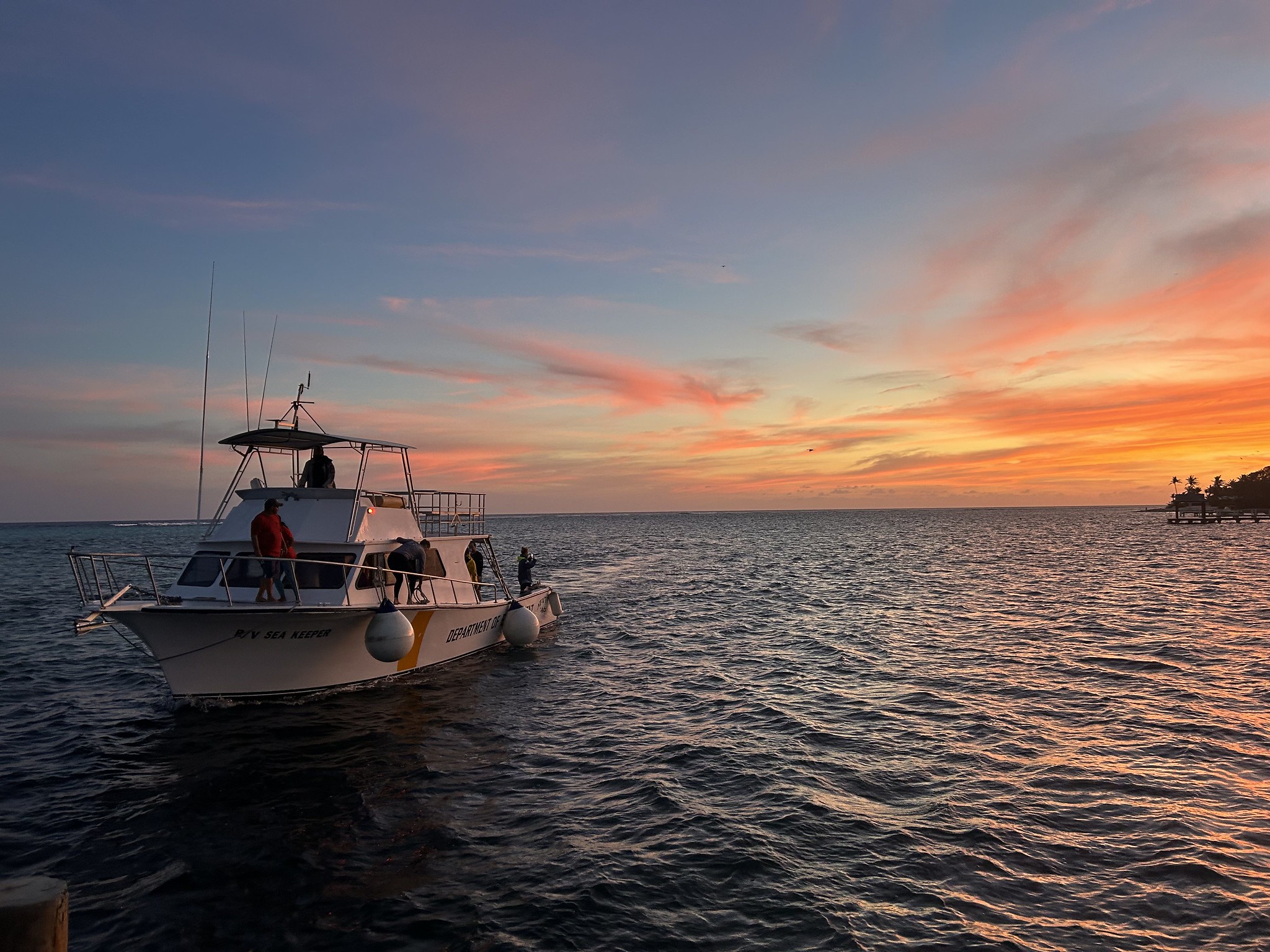
Live feeds of the scientists working underwater on the Grouper Moon Project are being broadcast at local schools.
McCoy said this is important to show the younger generation the work that has been done in Cayman to protect this species, that is a considered a valuable part of the local reefs.
“We have something that no other Caribbean islands have,” he said, adding that it was necessary to continue the legacy of ensuring that this “iconic species” not just survives, but thrives, in Cayman.
Related Videos








Fascinating. Despite this new mystery, this is valuable work.
We have done well with the Nassau groupers, but sadly other species such as lobster, conch and turtles in Grand Cayman have been illegally taken by a small number of local fishermen, often in protected areas, and greater protection is required.