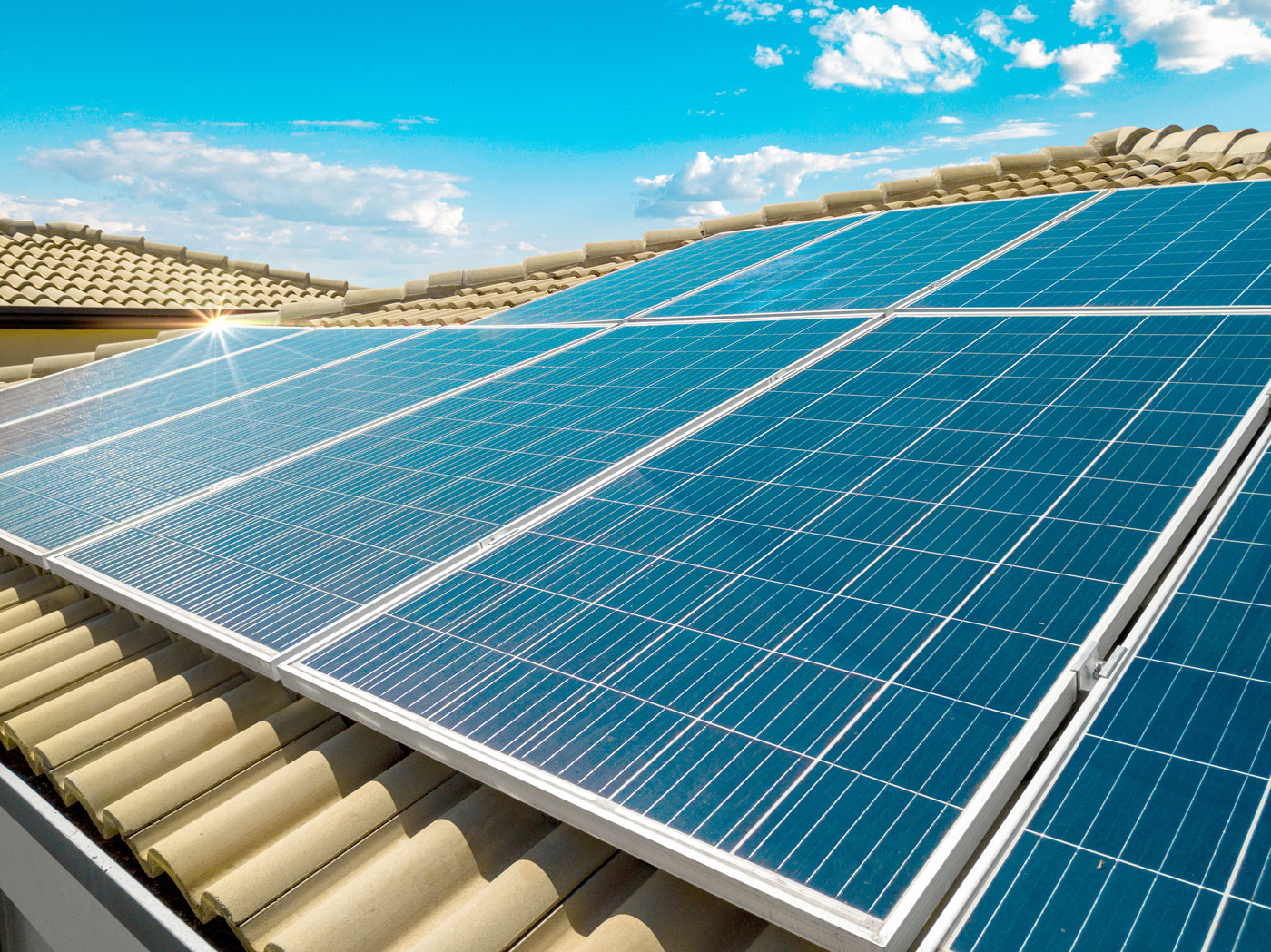
Caribbean Utilities Company is reopening applications for customers who want to connect their distributed renewable energy sources, like rooftop solar panels or wind turbines, to Cayman’s electricity grid.
Utility regulator OfReg has approved the allocation of an additional 3 megawatt (MW) to CUC’s Consumer Owned Renewable Energy (CORE) and Distributed Energy Resource (DER) programmes.
The application forms will be available for digital completion on CUC’s website from 6 Dec.
OfReg determined that adding capacity to the grid is essential to the continued promotion of both the CORE and DER programmes before CUC’s Battery Energy Storage Project (BESS) is coming online, CUC said in a press release.
This battery project, once online, will allow for the introduction of more intermittent energy sources like solar and wind without compromising grid stability.
CUC Vice President Customer Services and Technology, Sacha Tibbetts said the electricity provider is “very supportive” of the decision taken by the regulator.
“The additional capacity will give more customers access to the CORE and DER programmes and we anticipate that we will see an increase in the number of customers who will sign up,” he said.
“Our company anticipates that the extension to the programme will be rapidly taken up by our customers and will assist in our goal of reducing Grand Cayman’s dependence on fossil fuels.”
Cayman’s National Energy Policy, released in 2017, has the goal to source 70% of total electricity generation from renewables by 2037 to address the effects of climate change.
Premier Wayne Panton recently reiterated that Cayman had to reduce its own carbon emissions, if it wanted to credibly demand that larger industrialised nations do their share, too.
Regulation of solar programmes
But progress has been slower than anticipated, with regulator OfReg frequently finding itself in the firing line for acting too slowly.
Capacity of the very popular CORE programme has been oversubscribed and snapped up quickly in recent years. So much so that the rooftop solar installers in Cayman suffered from the stop-start nature of OfReg either allocating or restricting new capacity.
James Whittaker, CEO of Greentech and president of the Cayman Renewable Energy Association (CREA), said “the 3MW’s of additional capacity is welcomed and has been badly needed by consumers and industry since Q1 2020”.
He said, “The fact that it is only now being provided in December 2021, when CREA proactively urged OfReg to take this very same solution in mid-2019 before the programme stopped, simply speaks to the very unfortunate way the solar energy programmes have been historically regulated.”
However, Whittaker added that he is optimistic that the newly-appointed OfReg board will ensure better regulatory management of solar programmes, “whereby the regulator is no longer stopping and starting them every few months; which has now been done multiple times over the last few years”.
Like CUC’s Tibbetts, the CREA president believes that after two years of excess consumer demand build-up while the programmes were closed, capacity will be allocated very quickly over the next few months.
The risk, he said, is that capacity will run out before CUC’s battery programme will come online next year.
“As such it will be important for OfReg to proactively pre-allocate the coming capacity from the BESS battery system so that consumers avoid yet another stoppage to the solar programmes.”
He also questioned why the regulator no longer delineated the residential CORE programme from the more commercial DER programme and made capacity available to both at the same time, particularly when capacity is very scarce.
Rates unchanged
The rate mechanisms for the DER programme and the recently established CORE Feed in Tariff rates remain unchanged for new capacity allocation.
CUC pays CORE customers $0.175/kWh if they have solar PV systems that are 5kW and below, and $0.15/kWh for systems between 5kW and 10kW.
The CORE rates have dropped considerably over time and been contentious in the past, because the decline lowered the return for distributed energy generators. CUC and OfReg, on the other hand, argue that the CORE programme is subsidised by non-CORE customers, as the rate paid to CORE customers for their electricity production is higher than the cost CUC would incur and charge to customers for the same energy from other sources.
Whittaker commented on the rate debate that “going forward rate setting will be informed by a third-party consultant who understands proper rate setting methodology, which accounts for all the costs and benefits of consumer solar, which is also a requirement of our National Energy Policy”.
However, the contract for a ‘value of solar’ study to that end has yet to be awarded and the analysis completed.
CUC said customers, who want to participate in the new 3MW quota, can expect that CUC may only be required to allow systems to connect to the grid “where the customer’s installer has a record of proper workmanship and has facilitated for their earlier customers the contracted inverter settings and ride-through criteria agreed to in either their CORE or DER Agreements”.
Related Videos