


The Department of Environment may have to reassess its green iguana culling initiative, after recent trends point to the once-successful population-control programme becoming less effective.
In the latest issue of Flicker Magazine, the DoE stated that the number of registered cullers had fallen from 320 at the inception of the programme in 2018, to 83 in August 2021. Along with the reduction in cullers, the DoE said there has been an overall drop in culler interest “despite an increase in the per iguana value”.
“There is significant evidence to suggest that the bounty style approach to control the iguana population may have reached the limit of its effectiveness,” wrote the DoE.
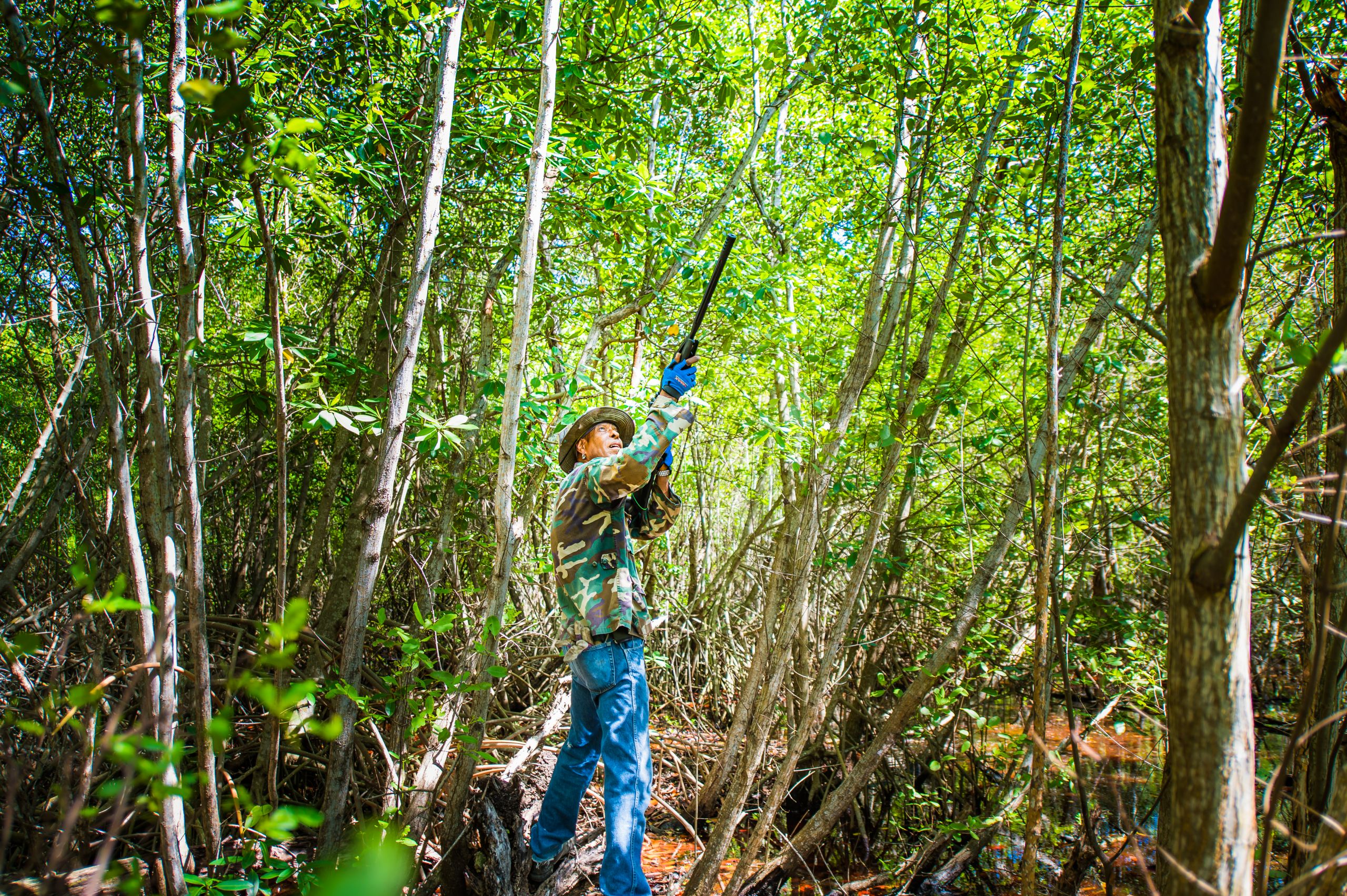
Bounty-style culling was effective
Since launching the culling programme back in November 2018, the DoE’s collection station, at the George Town landfill, recorded more than 1.3 million green iguanas, with the initiative paying out more than $7.9 million in bounty.
At the peak of the programme, from January to December 2019, there were more than 320 registered cullers, who managed to eliminate 825,420 iguanas for a bounty of approximately $4.5 million.
In the years since then, the DoE has recorded a decrease in the number of culled green iguanas. In 2020, 139,032 iguanas were culled, with the number dropping to 87,361 in 2021.
The DoE says there are several reasons for the drop in the number of culled iguanas, one of which is the significant decrease in the estimated remaining population of green iguanas in the wild.
In 2018, a DoE annual survey estimated an invasive reptile population of 1.3 million; that figure later dropped by a staggering 98% in 2020 when the department revised its calculation of total iguana numbers to 25,000.
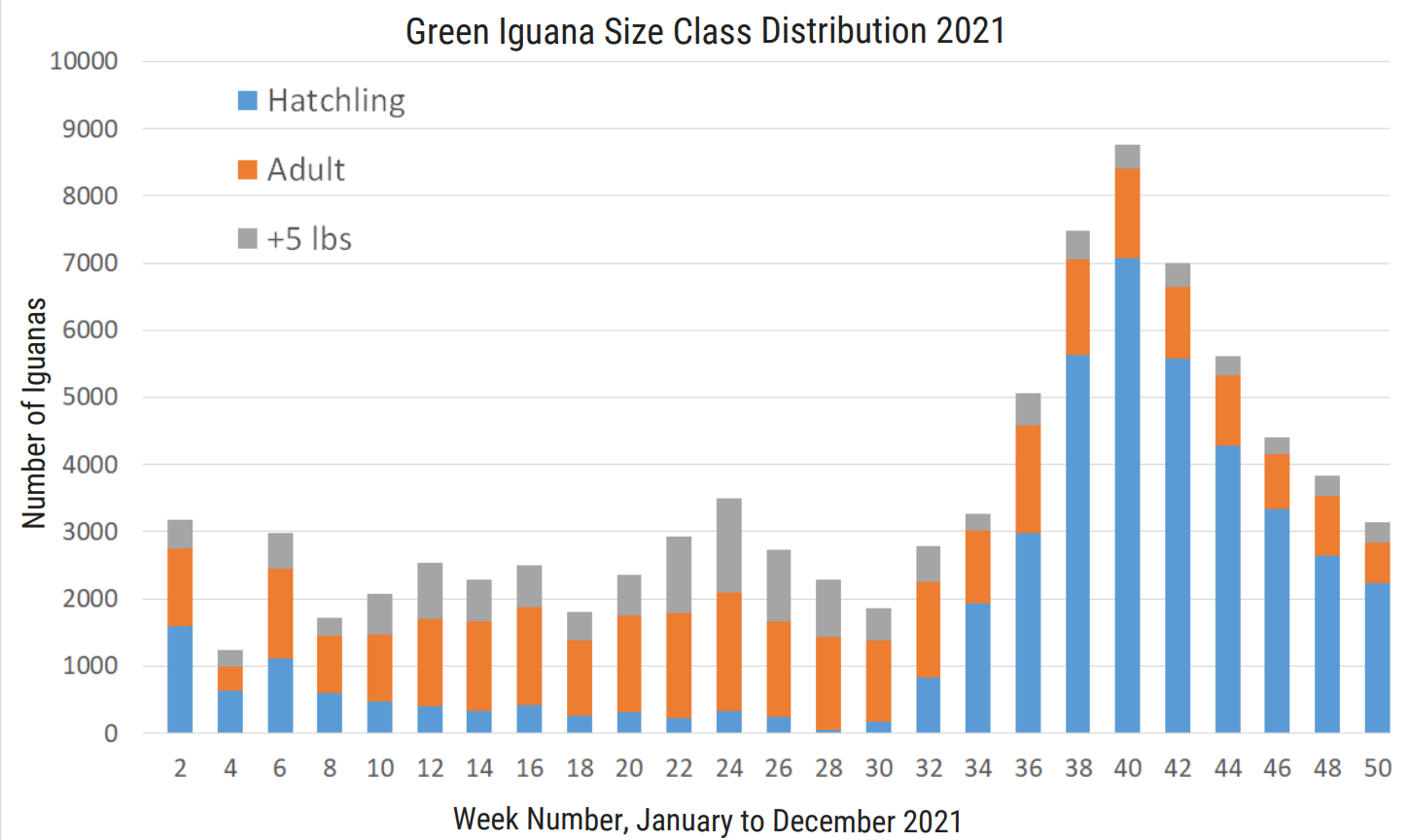
Effectiveness of culling appears to be waning
The decrease in iguana numbers is thought to have been short-lived as the DoE now suspects the wild population has rebounded to approximately 87,000 as of August 2021.
“The remarkable capacity of Green Iguanas to reproduce and recruit when adequate controls are not in place, is clearly revealed in the size class data [see above chart] for the 2021 intake, with newly recruited hatchlings accounting for the majority of culled iguanas arriving at the station from August through to December,” wrote the DoE.
In addition to the drop in culler numbers and interest, the DoE said the temporary halt to the programme due to COVID-19 restrictions and the start of a new budget cycle in January this year which affected the continuity of funding, attributed to the rebound in the iguana population.
The way forward
Although the DoE has not announced any efforts to revive culler interest or numbers, it has stated there are no plans to abandon the culling programme.
“The Department of Environment remains committed to ensuring that the successes, effort and money invested to date is not in vain, and that for 2022 and onwards, while eradication remains virtually impossible, a long-term sustainable and affordable solution is developed,” it wrote.
The DoE confirmed that the culling programme resumed on 24 Jan. this year with an additional commitment of government funding through the Environmental Protection Fund, which should take the initiative to the end of 2023.
Related Videos










Since the green iguana culling began the chicken population has exploded and has now become a real problem. Cause and effect….. play with nature and see what happens.
Perhaps they should turn their attention to culling the excessive, and growing, population of wild roosters and chickens which have proliferated since Ivan. They have now become a symbol akin to a third-world country. They’re everywhere, particularly around areas with large amounts of rubbish. They’re a health hazard and distort the aural ambience of this quiet island, particularly early in the morning. Why hasn’t the Dept of Environment done anything to tackle this problem which is steadily getting worse and worse?
It does not need an Einstein to conclude that the cullers should be diverted to our hordes of feral chickens. They are everywhere, at the Courthouse, strutting in Hero’s Sq, around the Post Office, giving our visitors’ the impression we are a third world country. More importantly I see them congregating around rubbish left in plastic bags by residents, outside their homes, ripping the bags open to get at the contents and strewing them everywhere. The cullers will be keen to earn their money this way as it’s much easier than traipsing through the jungle and there should be a market for the “local meat”.
YES!!! GET RID OF THE CHICKEN PROBLEM!!!! Cayman refused the building of a poultry farm in East End. The entire Island is a poultry farm. It’s a nuisance and unhealthy.
Get rid of the chickens They yell at 4am every night
The Cayman Compass should do an article on the rooster/chicken scourge looking at both environmental and health concerns. It’s completely out of hand and no one appears to be taking it seriously. Even the post above has only received a handful of comments. It’s a third world problem in what Caymanians would hope is considered a first world country. Action is needed at Government level. NOW!
We have been visiting the islands for over 23 years now on a regular basis. The green iguanas, along with the wild chickens were part of what made this a beautiful and exotic place to visit. It’s a shame that people flee other areas because they dislike them, only to come and make the same changes to the areas they visit or move to. You can no longer handle the turtles at the turtle farm, like we did for years because of disrespectful tourists. If you don’t want to live on or visit an exotic place as it is, why go? I love seeing the chickens and used to enjoy the iguanas. You can’t eliminate the green iguanas. Who knows, they may hold medical value someday that us humans will find valuable. They have survived so much… one of our last dinasours left on earth. Be kind to nature, please. They aren’t hurting anyone. Humans are.