

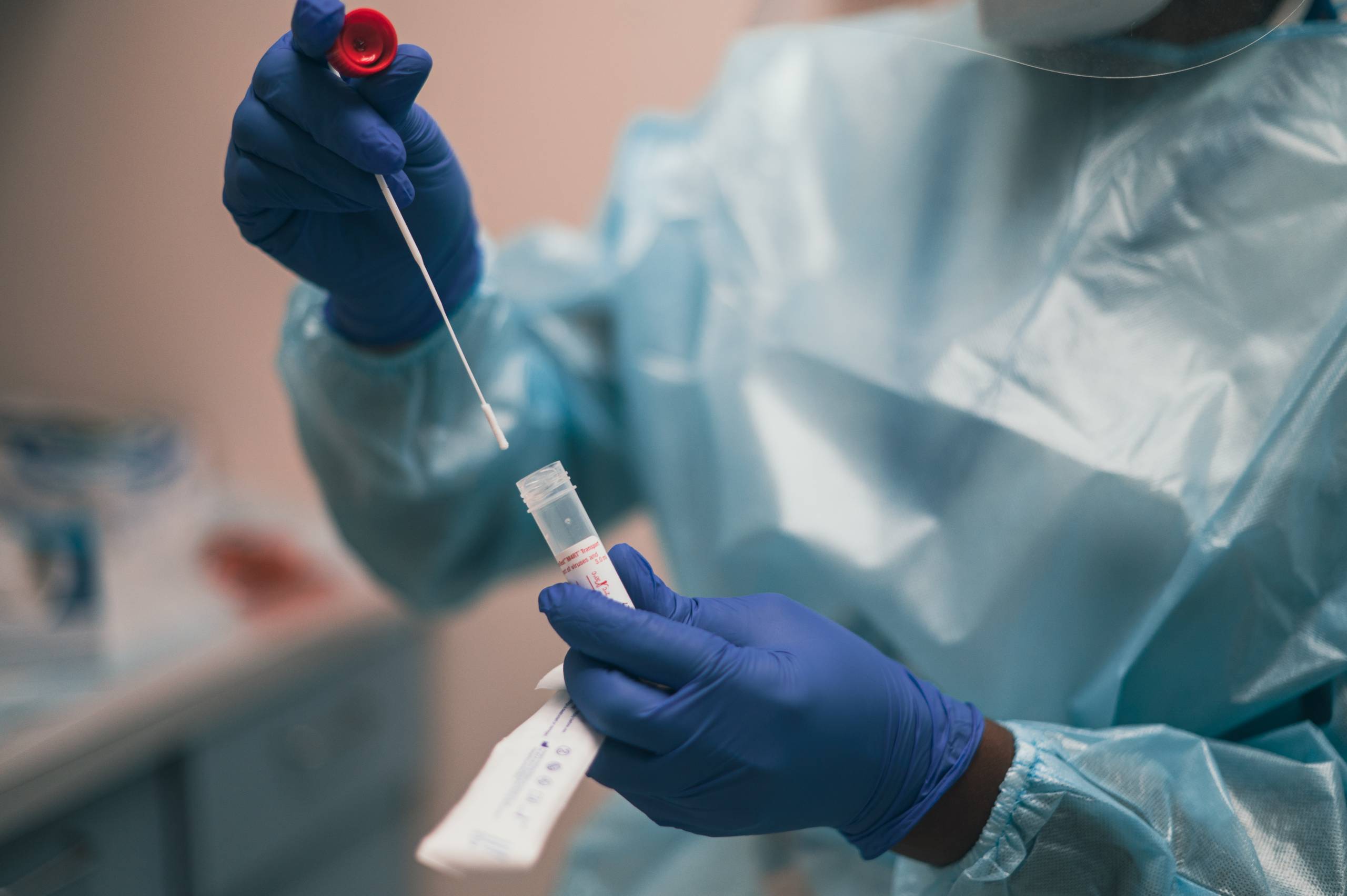
An 8-year-old school boy who was forced to isolate at home for almost a month after contracting COVID-19 is at the centre of an historic test case challenging Cayman’s pandemic suppression policies.
Lawyers acting for Tyler Anglin and his mother Dione Anglin, of Prospect, filed a petition in the Grand Court, claiming that the boy was required to isolate long after he was likely to be contagious, in breach of multiple human rights.
The basis of their case, filed against the Attorney General and the Health Services Authority, is that requiring a PCR test as a condition of release is a flawed policy, because it detects the presence of the virus for as long as 90 days after infection and is not considered a reliable indication of whether someone is infectious or not.
They are asking that the policy be quashed.
The case – the first of its kind in Cayman – could have implications for thousands of other residents kept in mandatory isolation for extended periods. While government does have the power to breach individual rights in a pandemic, it is legally required to show its actions are rational and proportionate to the threat.
Anglin told the Cayman Compass, Wednesday, that she had brought legal proceedings after seeing the mental and emotional toll the experience had on her son. She said she was also concerned about the impact of repeated PCR tests on his physical wellbeing and had reached out to the Health Services Authority, without success, before taking court action.
Though he has been released from isolation through a consent order since the petition was filed, she is pushing ahead with the legal challenge in the hope that it can help other families in the same situation.
Missed milestones
She said her son had missed nearly a month of school, including the annual sports day, multiple exams and had spent his birthday effectively under house arrest, despite having had two negative LFTs at that point.
“I am concerned about the educational aspect as well, but the hardest part has been watching him break down emotionally. Some days he would just go into a corner and cry,” she said.
She added that her son loves football and is a “social bug” who enjoys spending time with his family and friends. It was challenging and confusing for him to be stuck at home, alone, for so long or playing by himself in the family yard.
After repeated tests, she said he had met the HSA’s threshold to be considered for release, but was told he must stay in isolation.
“Each test was a complete letdown for him and he felt very depressed and hopeless,” she added.
“I never thought I would see him cry because he couldn’t go to school.”
Tyler was finally let out of isolation on Monday, 21 Feb., after lawyers from KSG Attorneys, acting for the family, filed for an injunction. Before the hearing, health officials agreed to release him, though no admission has been made at this point that his rights have been breached, according to Rupert Wheeler of KSG.
Test case
Tyler’s mother, who works in the financial services industry, said she was determined to persist with the case, both to avoid a repeat occurrence if he or his family catches the virus again and to challenge rules that she finds illogical and disproportionate.
She acknowledged there were divided opinions in the community over COVID regulations, but believes the issue of PCR exit testing for isolation is one that impacts everybody.
“From my perspective, the policy doesn’t make any sense. The PCR test can remain positive for 90 days and in some cases, longer, which will have you potentially stuck in isolation for months at a time. It does not determine whether a person is infectious.”
She added, “It has impacted my child and I think it would benefit everybody to bring attention to it. It doesn’t matter what side of the fence you fall on, this affects everyone.”
‘Unlawful and irrational’
Thousands of people have been forced into mandatory isolation in Cayman since the outbreak of community transmission on the islands last September. Many of those people have been kept behind closed doors for more than two weeks because they were unable to get a PCR test result that was within Public Health’s threshold for release.
The petition, filed in the Grand Court last week against the Attorney General and the Health Services Authority, challenges that requirement.
The court filing alleges that government’s current policy on PCR exit testing is unlawful and irrational and has resulted in the breach of Tyler’s human rights, including his personal liberty, right to an education and to freedom of movement. At this early stage in the proceedings, government has not had an opportunity to respond.
Five PCR tests before release
The background to the case outlined in the court documents indicates that Tyler first showed symptoms of the virus on 26 Jan. and produced a positive result on a lateral flow test on the same day.
He was already asymptomatic by the time his diagnosis was confirmed through a PCR test on 28 Jan., the petition claims. He became eligible for his first exit PCR test on 2 Feb., which came back positive.
A second test, three days later, was also positive but within the cycle threshold range of 28-32, making him eligible for release pending guidance from health officials, per the HSA policy.
When his mother called the Flu Hotline, Tyler was not released, the petition indicates. Instead, he was asked to take another PCR test, which, again, came back positive, this time with a slightly lower CT threshold, indicating a higher viral load.
As a consequence, he was instructed to remain in isolation and required to take a fifth PCR test, before he would again be considered for release.
‘Risk does not justify continued detention’
Lawyers argue that the decisions, and the policy on which they are based, are irrational and unlawful.

Citing evidence that suggests the majority of individuals who contract COVID-19 pose no more than a minor risk of transmitting the virus after seven days, the petition indicates that it was not justifiable to ask Tyler to continue isolating after 2 Feb.
“The risk that he posed to others in the community, if any, did not justify his continued detention and the consequential contravention of his human rights,” it states.
The court filing goes on to argue that PCR tests regularly return positive results for people who are non-contagious or have recovered from the virus, sometimes for as long as 100 days after the onset of symptoms. It was not justified, the petition alleges, for health officials to continue to require PCR tests as a condition of release because the results would likely be “meaningless”.
The lawyers argue that insufficient weight has been placed on the fact that COVID-19 is “present and prevalent” in the community and one in 20 people had the virus at the time the petition was filed. It was disproportionate, against that backdrop, to keep Tyler in isolation for so long, they suggest.
The level of vaccination in Cayman and the amount of people who have already had the virus should also have been considered, the court documents indicate.
Aim to quash policy
Tyler, through his mother, is asking the court to quash the decisions requiring him to isolate beyond the seven-day mark, the requirements for him to take repeated PCR tests and the policy that those decisions were based on.
The policy, reproduced in the court filing, stems from a section of the Public Health Act which allows the medical officer of health power to order home isolation for anyone suspected of suffering from a “notifiable disease” – a category that includes COVID-19.
Public health guidelines indicate that the policy for release is based on the ‘CT values’ indicated in a PCR exit test.
CT or ‘cycle threshold’ in a PCR test reflects the amount of times a sample had to be multiplied before COVID could be detected. A CT value in the low, single digits represents an extremely high viral load, whereas a higher CT value reflects a low viral load.
The petition argues that the entire policy is flawed because it misuses PCR test results as a guide to how contagious an individual is and it ignores medical evidence that people with COVID-19 are generally very unlikely to be contagious for more than a week when asymptomatic. As a result, the court filing argues, ongoing quarantine after that period is not justified.
Wider significance
Rupert Wheeler, who is leading the case for KSG, said it had wide implications for anyone who has been isolated for a significant period of time in Cayman on the basis of the PCR exit testing policy. The court is being asked to declare that policy as unlawful and he acknowledged this could open the floodgates for further challenges, and claims for damages from individuals who had been detained under the same guidelines.
The case is the culmination of widespread public tension over isolation requirements after a months-long COVID outbreak that has seen as many as 10,000 people impacted by the policy at one point or another.
Wheeler said it was the first legal challenge to the COVID mandatory isolation policy in the Cayman Islands, which differs from many similar jurisdictions by requiring a PCR test as a condition of release. He said this may have resulted in many individuals being detained for substantially longer than necessary.
Though public health officials can restrict people’s rights in the case of a pandemic, he said government was required to show that these restrictions were reasonable, rational and proportionate to the threat.
“The fundamental point here is that when you look at other countries’ guidance – the US, the UK, Australia, New Zealand, Canada – the general advice is that, certainly after 10 days of isolation, there is so little risk that it can’t be justified to keep you out of the general population when you have no symptoms.”
He said it would be up to government, in its defence, to attempt to justify why the situation in Cayman was different enough to justify a policy that is so much stricter than its peers, despite the presence of significant community transmission on island.
Related Videos











Good on this mother! I commend her for protecting her son and looking out for future people who find themselves a victim of this same situation. The Cayman government has made too many ridiculous decisions throughout this whole pandemic that are way out to lunch. They keep citing that their decisions are based on science, but clearly they are not since they are the only Country in the world with such strict restrictions. I really hoped that the new government administration was going to be more current with the times than the last administration, but clearly they aren’t. They are just as cautious, if not more, in every move they make, to the detriment of their own people, businesses and Country. The CDC says you can come out of isolation now if you have no symptoms after 5 days. Why isn’t that good enough for you to go by?
Finally someone is challenging this draconian requirement. I was held in quarantine 16 days on the same basis and finally released without a negative PCR because it was impossible to get one. There may be some side issue here, certainly there are benefits to the island if tourists are forced to stay and pay for hotels and food beyond their planned stay. But human rights are the main issue, it is not right to lock people up for so long with no medical justification and to rely on a test that can be flawed. My partner had two different results from the same PCR swab within one hour , how can that be? If a class action suit is planned please count me in. I would be willing to be a witness in this case regardless, I can’t imagine how traumatic this must have been for a young boy.