Cayman’s ongoing battles against invasive species, such as green iguanas, lionfish and feral cats, have been highlighted in the annual Virtual Island Summit, which addresses issues faced by island nations across the world.
Some of Cayman’s top conservation experts were featured in the online event last week, which discussed a variety of topics that are common to all islands, including biosecurity, food chain challenges, energy vulnerability, and affordable and sustainable travel.
The session involving Cayman was hosted by the Ministry of Sustainability and Climate Resiliency, which is led by Premier Wayne Panton, who pointed out invasive species are not just a nuisance, but can cause “devastating environmental and economic harm”.
In Cayman, culls are ongoing to try to keep the numbers of lionfish, green iguanas, rats and feral cats under control in areas where they are having major impacts on other species and eco-systems.
Green iguanas
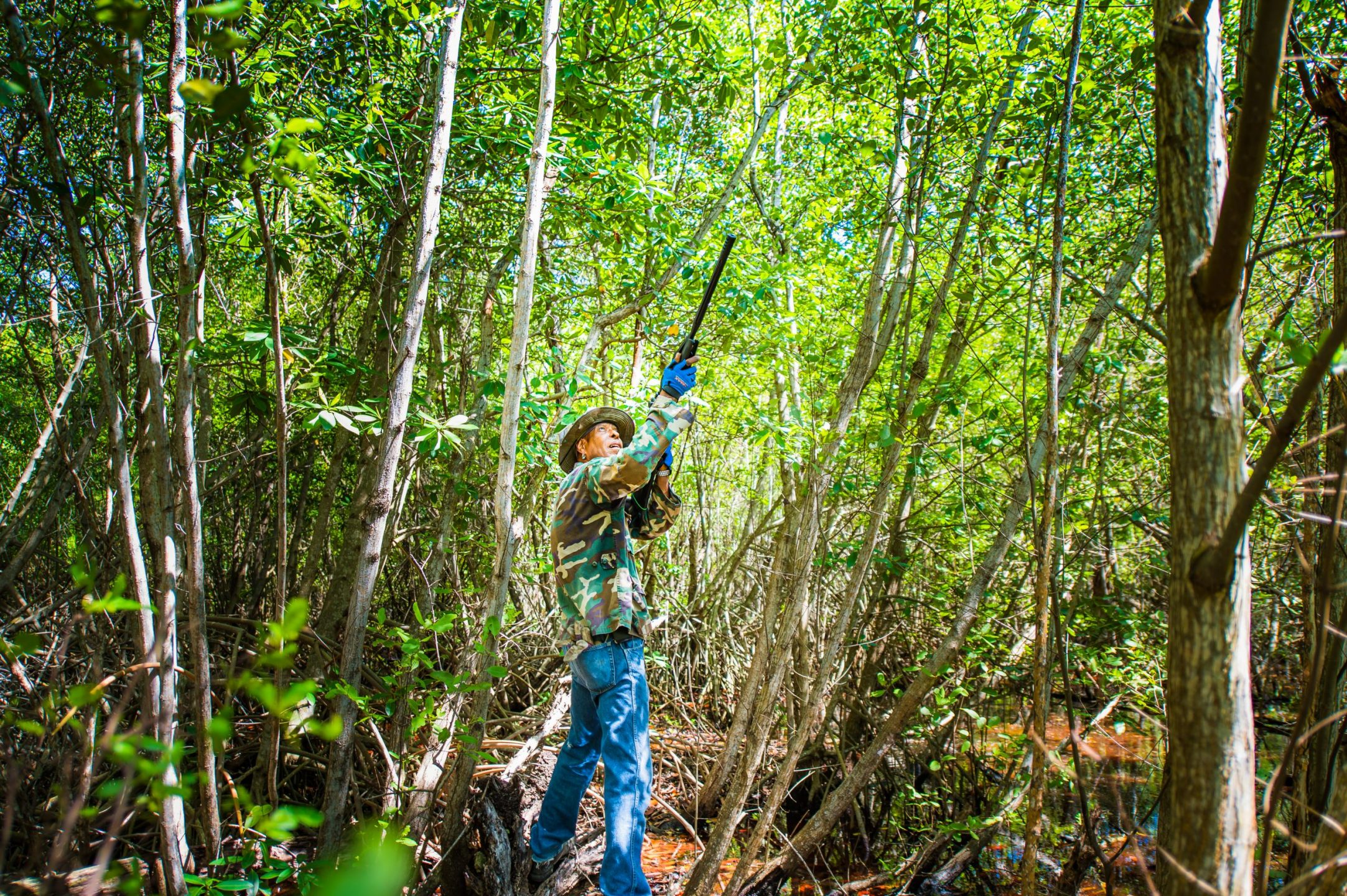
One of the most visible invasive species in Grand Cayman is the green iguana. Far fewer are seen nowadays following an island-wide cull launched in October 2018, when cullers were licensed and paid a bounty for killing the animals. At that time, the island had an estimated population of 1.3 million of the reptiles.
Since then, according to the Department of Environment, 1,399,258 iguanas have been culled, at a cost of $8.4 million.
DoE Deputy Director Tim Austin, one of the speakers at the online summit, said the department estimates there are now about 80,000 green iguanas left, but as the population can double annually, “it would not take us long to get back to a couple of million”, and therefore culling efforts must continue.
He said the target is to cut the population down to between 10,000 and 50,000, but reaching those numbers may be problematic, as the animals have become “skittish” and have moved to remoter areas to avoid the cullers. In turn, this makes the hunting of iguanas, once so plentiful and easy to find, a less lucrative business for the cullers.
According to the DoE’s latest Flicker magazine, there are currently 66 active cullers, who are catching an average of 1,366 iguanas per week. A survey carried out by the DoE in August this year indicated that there were 80,500 green iguanas in the wild at that time, compared to 87,751 counted in the 2021 annual survey.
Green iguanas are also found on the Sister Islands, where a policy of culling them also exists, though without a bounty.
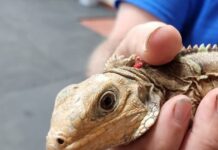
One of Cayman’s most successful species-management programmes in Cayman is the National Trust’s Blue Iguana Conservation initiative, which has brought the native blue iguana species back from the brink of extinction.
However, Luke Harding, operations manager of Blue Iguana Conservation, noted that the iconic animals still face threats, including from invasive species such as cats, dogs and green iguanas.
For example, he said, the green iguana is highly adaptable to Cayman’s environment, and can lay five times more eggs than the blue iguanas, meaning their populations can grow much faster, taking up more resources.
“They are evolutionally evolved to do better with some of the challenges here than the blue and the Sister Islands rock iguanas are,” Harding said.
Feral cats
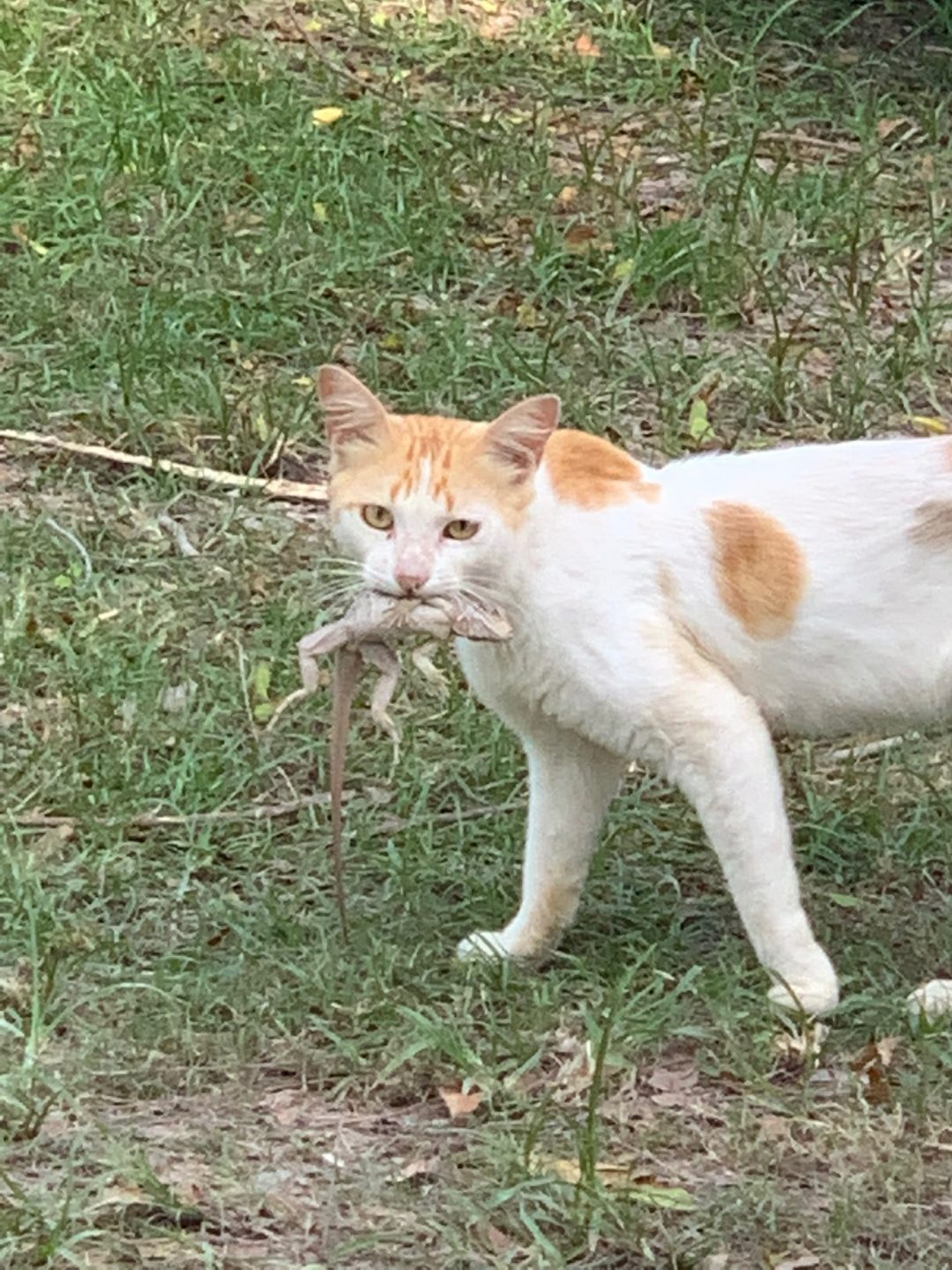
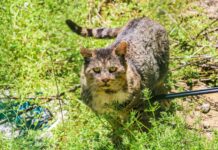
On Little Cayman, one of the biggest threats to the native Sister Islands rock iguana has been feral cats. A cull of those animals was implemented earlier this year, as the cats have been hunting and killing large numbers of juvenile iguanas on the island, threatening the survival of the entire species.
Tanja Laaser, of the Royal Society for the Protection of Birds, who previously has worked on a head-start project with the DoE to help protect young iguanas from the cats, explained at the summit, “Our baby iguanas … have never encountered a cat or a dog yet. When a baby iguana sees a snake, that are native here in the Sister Islands, they run away, but when they see a cat, they’re just looking at it and wondering what it is.
“So, they don’t have that natural fear, and this is why, in island nations, there are species that are so naïve, if you want to call it that, and it makes them even more vulnerable to threats from the outside.”
She said there were also indirect threats from green iguanas eating and destroying plants that provide other animals and birds with habitats, food sources and nesting grounds, as well as more direct threats from iguanas eating bird eggs or passing on diseases.
“This is why biosecurity is so important,” Laaser said.
Birds on the Sister Islands, such as booby birds and white-tailed tropicbirds, are also under threat from invasive species, including green iguanas and cats, said Marique Cloete, community engagement officer of the Royal Society for the Protection of Birds.
Plans are currently being discussed to designate critical habitats for dwindling nesting populations of six species of seabirds across the Cayman Islands.
Lionfish
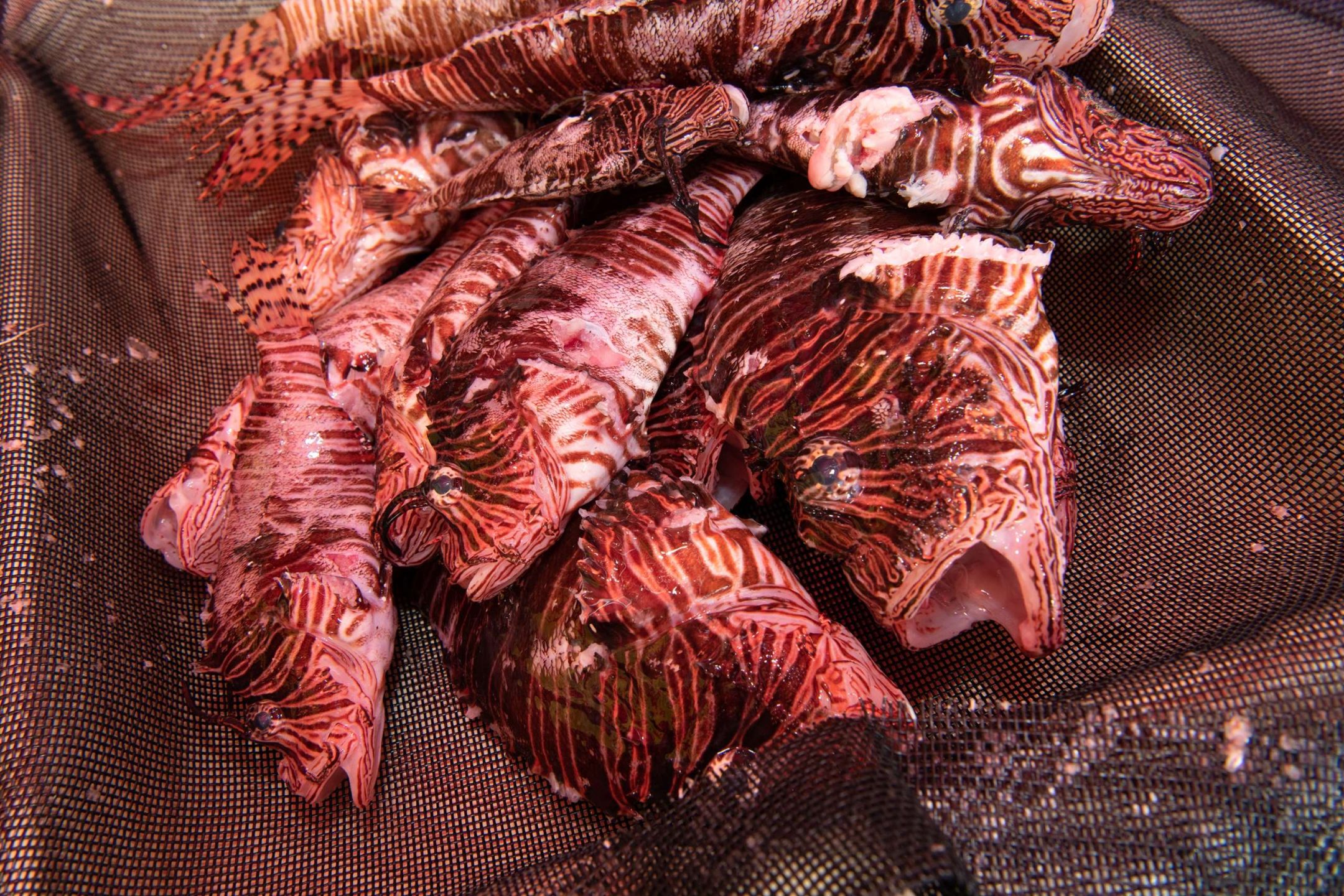
Cayman’s battle against the lionfish invasion has been going on since 2008, when the first lionfish was found on a Little Cayman reef.
Austin explained that lionfish have a much more detrimental impact – growing to much larger sizes and numbers – on the reefs in the Atlantic and Caribbean than they do in their native Indo-Pacific, because, over there, the eco-systems has evolved as the fish evolved.
Similar to how young iguanas are easy prey for cats, the fish that lionfish prey on don’t recognise them as predators, so are easy targets. And, conversely, the types of fish that would prey on the lionfish in the Pacific don’t recognise lionfish as their own potential prey.
“A lot of the predation that happens in the Pacific, we think, happens at juvenile stage, the planktonic stage, when they are much more vulnerable,” Austin said. “That mechanism, that break, does not exist in the Caribbean. The species are naïve, they don’t know how to react; other species don’t know how to eat them, so all of the typical control mechanisms that are in place are just missing, and that allows these animals to just completely thrive, and eventually dominate and cause immense damage to the eco-system.”
Austin explained that the first lionfish caught in Little Cayman 14 years ago is still kept in a glass jar at the Department of Environment. Since then, Cayman has been trying to keep the numbers of lionfish down on the local reefs, licensing special spears that can be used by registered cullers, and backing local culls, the latest of which was held this past week.
Funding
Cayman has been the recipient of Darwin Initiative grants to help deal with invasive species that are threatening local species.
Currently, the aim is to “implement some really effective and robust invasive species management and control programmes”, Cloete said, which primarily will focus on green iguanas, feral cats and rodents, though other species may be identified as requiring similar measures.
Laaser, whose work as the Royal Society for the Protection for Birds biosecurity officer in Cayman is funded by a Darwin Initiative grant, had a simple definition of biosecurity – “keep out species and plants from places where they do not naturally occur”.
And she added, “Biosecurity starts in your house. You close the door to keep rodents, flies and insects out of your house. That’s simple biosecurity. You project that to the world. As the world gets better connected every day and shipments gets easier, as travel gets easier and faster, the risk of invasive species travelling between islands and countries and even continents increase day by day.”
Currently, the Darwin Initiative grant is funding a two-and-a-half year, multi-agency project that focuses mainly on inter-island biosecurity.
“Our goal is to keep the momentum going and make sure biosecurity is a topic that is always addressed and never forgotten again,” Laaser said. “We hope that a permanent biosecurity officer position can be embedded in the Cayman Islands government, which would be very important to focus on international biosecurity as well as inter-island biosecurity.”
When she was previously based on Little Cayman with the Department of Environment, she would inspect containers and barges, and she said her single strongest piece of advice to help stop green iguanas travelling to the Sister Islands would be to block the ends of PVC pipes before shipping as the iguanas and other species “love to hide in there and just hitchhike over to the Sister Islands”.
Related Videos