

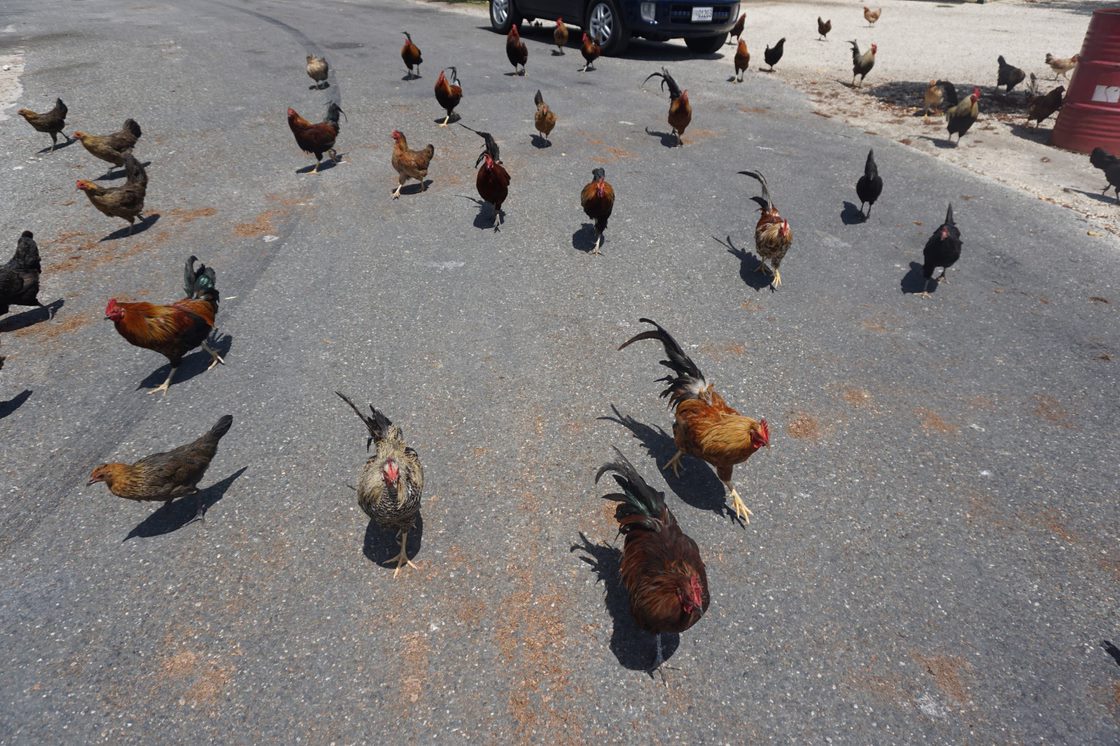
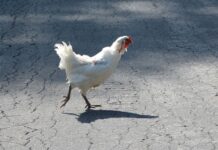
New regulations that ban the feeding of feral chickens and cats from Friday, 3 Feb., carry a maximum penalty of a fine of up to $500,000 and/or four years in prison for people who repeatedly feed them.
From Friday, it will be illegal to feed chickens or cats living in the wild. The new rules do not apply to people feeding the animals on their own property.
A spokesperson for the Department of Environment said the feeding ban would not be enforced immediately, as there would be a transitional period “where enforcement will take an ‘educate and inform’ approach”.
However, she said, if or when enforcement becomes necessary, it would mean a warning – effectively a cease-and-desist order – for a first offence; a fine of up to $5,000, upon conviction, for a second offence; and a fine of up to $500,000 and/or imprisonment for up to four years for a third and subsequent offence, under the National Conservation Act.
The new regulations are part of a stricter approach to controlling invasive and alien species of animals and plants within the Cayman Islands announced in December by the National Conservation Council.
As well as a ban on feeding feral animals, releasing stray dogs or cats after neutering or spaying them is also prohibited under the regulations, a move which animal charities say is counterproductive and will lead to a larger, not smaller, population of feral animals.
Both the DoE spokesperson and a list of Frequently Asked Questions on the National Conservation Council website stress that any penalties imposed for feeding feral animals would ultimately be determined by a judge.
Enforcing the new regulations will fall to the DoE’s conservation officers, although the Royal Cayman Islands Police Service and Department of Agriculture officers can also police offences.
The stiff maximum penalties for feeding feral animals comes under Section 38 of the National Conservation Act. In contrast with the maximum penalty under that law, cruelty to animals in Cayman carries a maximum penalty of a $4,000 fine and imprisonment for one year. Last week, a man convicted of cutting wattles and crowns off 15 roosters and filing down their spurs was sentenced to 80 hours of community service.
The maximum penalty under the National Conservation Act applies to any offence under the legislation where no punishment is specifically prescribed.
In practice in Cayman, maximum penalties are rarely imposed by judges when passing sentence.
Looking for sensible solutions
According to the FAQs accompanying the new regulations, cats that are allowed to roam freely outside a person’s property, even if microchipped and considered family pets, would be deemed to be feral cats.
The DoE and the Department of Agriculture say they plan to work with the animal charities and veterinarians “to find sensible, time-limited solutions so feral cats can be contained and cared for in accordance with the new Regulations”.
A cull of feral cats has been carried out in Little Cayman and on a part of the Bluff on Cayman Brac, in a bid to protect native species, such as Sister Islands rock iguanas and booby birds, that the animals are preying on.
To highlight the immediate threat of feral cats on native species, in a recent social media post, the DoE released images of the bodies of an adult brown booby bird and chick which had been killed by a cat on Cayman Brac. It noted that a necropsy done by a veterinarian showed the bird had compound fractures and a broken wing, and it and the baby bird had 14mm puncture wounds consistent with cats’ teeth.
The DoE says feeding and supporting feral animals in the wild gives them “strength to breed and impose greater impact on the habitat which actually belongs to Cayman’s native species”.
“The Department’s active projects are currently focused around ecologically sensitive areas where our most threatened native species require protection from feral animals,” the DoE spokesperson said. “The Regulations have been established to provide the legal framework for best practices when it comes to alien/invasive species management in the Cayman Islands.”
Related Videos








Has April Fool’s Day come early?
“According to the FAQs accompanying the new regulations, cats that are allowed to roam freely outside a person’s property, even if microchipped and considered family pets, would be deemed to be feral cats.” Are cat owners expected to put up large fences to stop their moggies encroaching on a neighbours property?
The capture / spay / release programme has done an incredible job of spaying ferel cats on the island for years. It makes absolutely no sense that they are going to make this illegal. Cats can have 2-3 litters per year, with an average of 4 or 5 kittens per litter; which makes 15 cats in 1 year. If the cat lives to age 10, that’s 150 cats. Cats can have kittens as early as 5 months of age. Well, if you do the math, offspring breeding over 10 years from ONE cat could produce over 500 kittens. Now multiply that by hundreds of cats having litters if they go ahead with this insane idea. The humane society can’t keep them all, so they’ll be in the business of euthanasia. Or the cats will be starving (but killing more endangered species). It’s the stupidest idea I’ve ever heard of.
I suggest that we set up Constituency or District “Chicken Coupes” to put those wild chickens in; proper “Coupes” that are safe, secure, with a roof and also Roosts (for them to sleep), and also an area for the laying of eggs. This could become little neighborhood or cottage industries, for the harvesting and selling of fresh “farm raised” chickens and Eggs. This could be managed by neighbourhood “Cooperatives” (similar to what is done in Israel). This would also be a humane way of dealing with the wild chickens population, consistent with Cayman’s “Christian” heritage and the ethos of “Cayman Kind”.
This almost sounds like it was intentionally designed to make things worse.
When you don’t feed the cats, they feed on something else. That means more dead wildlife.
When you don’t allow spaying and neutering, that leads to more feral cats. That means more dead wildlife.