

A new report by UK experts highlights some of the biggest threats the Cayman Islands face from climate change.
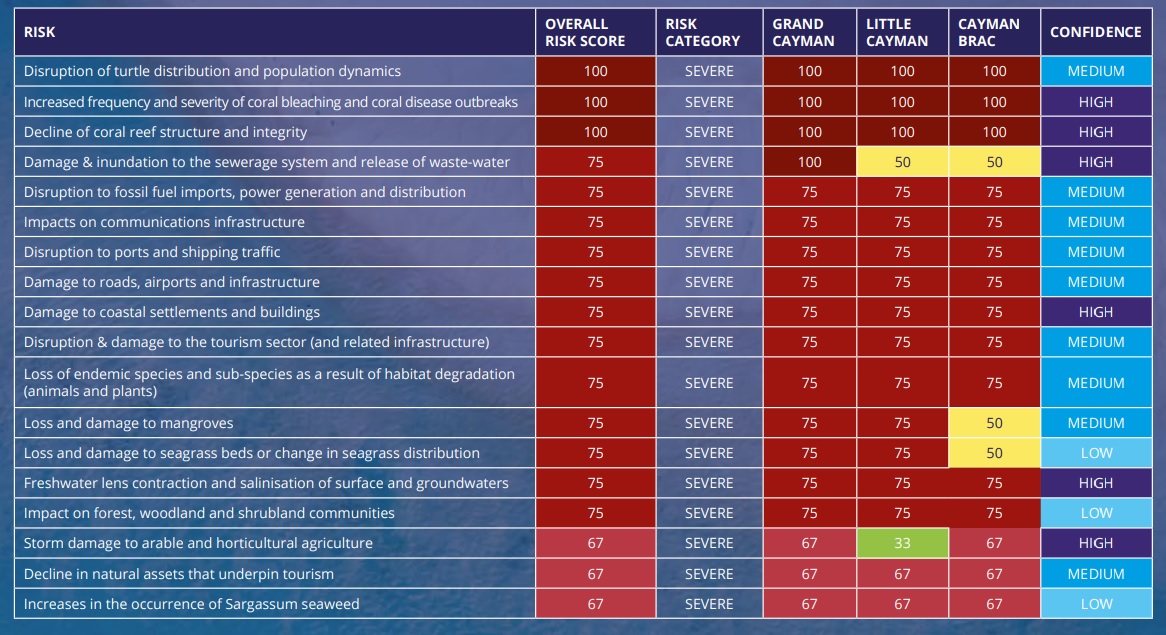
Of the 52 risks analysed in a climate-change risk assessment, which began in late 2021, 18 were considered ‘severe’ based on a combined review of their seriousness, urgency and the available scientific data.
Half of those 18 severe risks relate to the economy and society, while the other half are related to biodiversity and habitats, the report notes.
The severe risks included impacts to marine species such as sea turtles and corals; loss and damage to natural habitats; disruption to the energy sector; and damage to and inundation of key infrastructure such as sewerage systems, roads, airports, coastal settlements, ports and shipping traffic.
The purpose of the detailed 163-page report is to update a climate-change policy drafted in 2011 but never implemented.
Below are the top five environmental and top five socio-economic risks the researchers found:
Top 5 environmental risks:
1: Threats to turtles
Beach profile changes from past hurricanes have caused losses of loggerhead and green turtle nests. In the future, further beach erosion, flooding, temperature changes and impacts on food resources are all expected to affect turtle nesting and breeding patterns. Sand temperature affects the proportion of male to female turtles that hatch, which in turn affects future reproduction rates. Flooding affects the survival of turtle eggs and hatchlings, beach erosion reduces the areas available for turtles to breed, and changes to wider ecosystems may mean that there is less food available in the future.
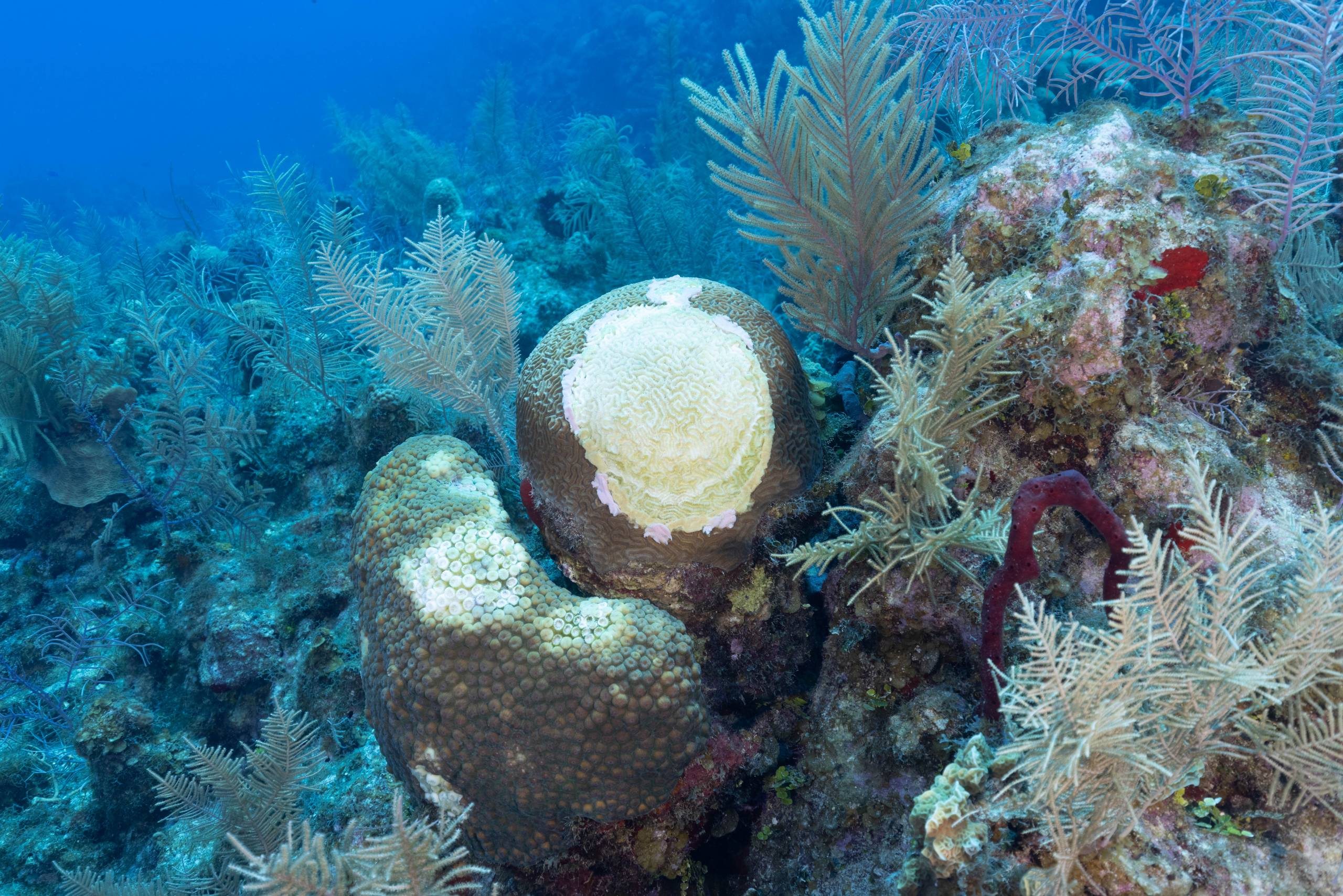
2. Increase in coral bleaching and disease
Rising sea temperatures have caused catastrophic increases in the frequency and magnitude of coral-bleaching events, coral disease and death. Rising sea level, sea temperatures and ocean acidification are likely to increase the incidence of coral bleaching and disease. The combination of human and natural pressures on coral reefs could influence how resilient corals are to future climate-change pressures. Corals in Little Cayman, where there are few human pressures, have been more resilient and show fewer impacts from rising temperatures compared with the other islands.
3. Decline in coral reefs
Past storms and hurricanes have caused severe damage to reefs and particularly shallow and fringing reefs. Reef structures have been damaged with soft corals and sponges also affected. Expected future changes to hurricane intensity are likely to increase damage to reef structures. Reef structures and integrity will also be affected by ocean acidification and an increase in coral death as a result of coral bleaching.
4. Impact on endemic animals and plants
Climate change is affecting endemic species throughout the islands. Hybridisation with invasive species is also a threat. Future climate change puts endemic species at risk because they typically have lower population sizes and their restricted ranges mean they are less able to disperse compared to more widespread species. The extent of climate impacts on endemic species (e.g., the emblematic blue iguana or the rare land snail Cerion nanus) will largely depend on the interaction with other human pressures, such as land-use change.
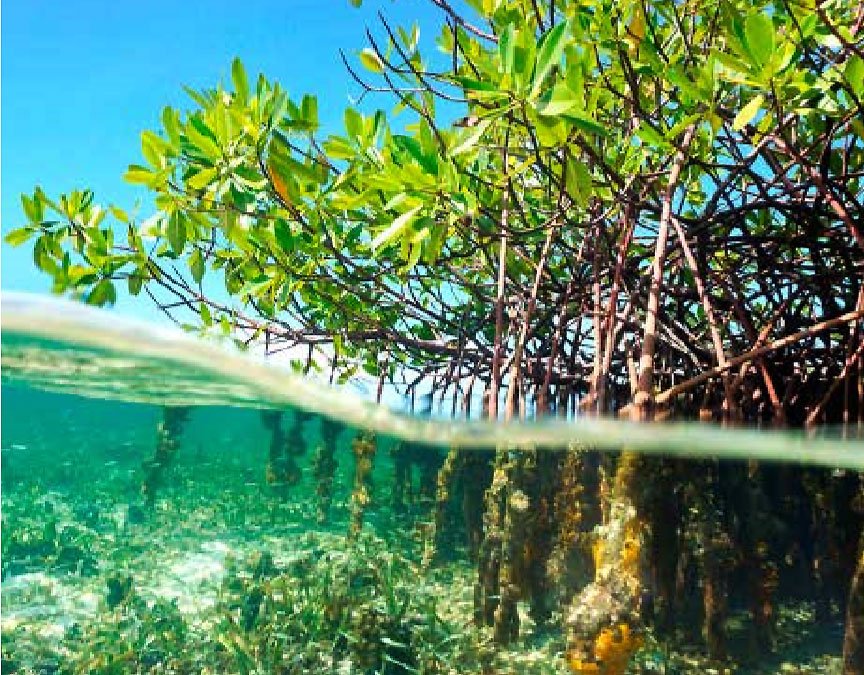
5. Decline in mangroves
Mangrove cover has reduced around the islands, mainly due to human disturbance and development. Hurricanes have also caused retreat or dieback through occasional inundation, after which recovery can be slow. Hurricanes, sea-level rise and storm surges could all damage mangrove forests in the future, exacerbating flooding of coastal infrastructure as the protection afforded by mangroves is lost or reduced.
Other severe environmental threats identified by the researchers were a degradation of seagrass beds; contraction of freshwater lenses and salination of groundwaters; impacts on forests and shrublands; and increases in sargassum influxes.
Top 5 socio-economic risks
1. Impacts on sewerage and wastewater
Changes in hurricane frequency and severity, in conjunction with sea-level rise, pose a risk to wastewater-treatment infrastructure, and in turn to public health and the environment, due to storm surge and surface water flooding from high rainfall events. Storm surges and episodes of high rainfall may exacerbate inland flooding through blockage of the outfalls of drainage systems with hurricane debris.
2. Disruptions to fossil fuel imports, power supplies
The Cayman Islands is heavily dependent on imported fossil fuels to meet its energy needs. Increases in storm frequency and intensity could hamper fuel deliveries, as well as cause damage to marine ports and infrastructure. Storms and hurricanes also have the potential to cause direct damage to power lines and other transmission infrastructure, as witnessed during Hurricane Ivan. Indirectly, heat waves can increase energy demand for cooling, which have resulted in disruptions to electrical supply in other countries.
3. Disruptions to communications
The strong winds during Hurricane Ivan, combined with the intrusion of seawater from the associated storm surge caused extensive damage to telecommunications in the Cayman Islands, with losses estimated at $79.5 million. Some telecommunications lines on the islands are now buried underground. After Hurricane Paloma, landline services in Cayman Brac and Little Cayman were disrupted for two to three weeks.
4. Impact on ports and shipping
Disruption of maritime transport due to extreme weather events represents a significant risk to the import of goods and therefore food security in the islands, and could significantly impact tourism services. Loss of working days due to the passage of storms, hurricanes or strong winds has become almost an annual occurrence since the 2000s. Any future increase in the severity or frequency of storms is likely to mean that George Town port becomes inoperable more often. Disruption to regional major hubs such as Miami and Jamaica where most commodities dispatched to the Cayman Islands are shipped from would have a cascading effect on the economy.
5. Damage to roads, airports and infrastructure
Coastal roads and airports on all three islands are highly vulnerable to flooding and storm surge, as well as impacts from Category 4 and 5 hurricanes. Grand Cayman has a network of primary, secondary, unclassed, access and unpaved roads, which sustained substantial damages of over $146 million during Hurricane Ivan. A one-metre rise in sea level would directly affect around 10% of roads on Grand Cayman, particularly those bordering the North Sound.
Other socio-economic threats from climate change outlined in the report included the impact on tourism due to the loss of natural resources, such as beaches, coral reefs and fisheries; damage to coastal settlements and buildings; the disruption to tourism due to hurricanes; and the impact on agriculture because of storm damage.
Existential threats
Premier Wayne Panton, who is also the minister for sustainability and climate resiliency, said the climate-change risk assessment provided an important evidence base for informing an updated national climate-change policy, which is currently being developed by a technical working group spearheaded by his ministry and the Department of Environment.
“We know small island nations like the Cayman Islands are the figurative ‘canaries in the coalmine’ for the existential threats posed by climate change,” the premier said in the press release accompanying the report. “Initiatives like the Climate Change Risk Assessment and development of an updated national Climate Change Policy are essential to ensuring our community can navigate the ongoing and anticipated challenges of a warming world while balancing our environment, economy and society.”
Panton said the technical working group continues to be in contact with the climate-change risk assessment team that drew up the report, and they are working to refine a first draft of the climate-change policy.
The risk report analysed a variety of drivers and impacts of climate change, including changes in storms, cyclones, winds, waves and storm surges; sea-level rise; increasing air and sea temperatures; changes in ocean salinity; ocean acidification; and changes to rainfall patterns.
It noted that local and regional data indicates that many of these impacts are already occurring, including fewer but more severe rainfall events; increased frequency and intensity of tropical cyclones; and increases in air and sea temperatures.
The report was drafted by a panel of experts from the Centre for Environment, Fisheries and Aquaculture Science, an executive agency of the UK Department for Environment, Food and Rural Affairs, together with the UK Centre for Ecology and Hydrology, an independent, non-profit research institute.
In November 2021, the Cayman Islands government began work with this panel to deliver a climate-change risk assessment as a first step in reviewing and updating the draft National Climate Change Policy.
Limited information
The researchers noted that, in many cases, there is limited information regarding climate-change impacts on Cayman, and the data that is available mostly relates to observations made following September 2004’s Hurricane Ivan, which caused a reported $2.86 billion in damages here.
“Ivan’s winds and storm surge caused widespread property damage. A quarter or more of the buildings in the Cayman Islands were rendered uninhabitable, with 95% having some degree of damage. Hence, Ivan has been viewed as a ‘case study’ of what might happen in the future should the frequency or severity of storms increase and as a general test of vulnerabilities and sensitivities across natural ecosystems and human infrastructures within the Cayman Islands,” they stated.
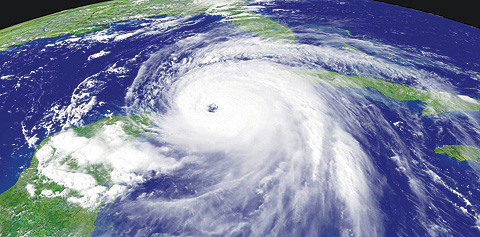
However, they added, “Whether or not it is safe to draw such inferences from a single event, or whether the occurrence/magnitude of Hurricane Ivan can be related back to long-term global warming remains a matter of conjecture.”
The report highlights some other gaps in information, such as the potential impact of future climate on maritime safety, stating that when a vessel runs aground, it can cause harm to coral reefs, seagrass meadows, mangroves and other essential habitats that are critical to Cayman’s economy and culture.
The researchers also acknowledged that their report paid “only scant attention” to the issue of food insecurity, but pointed out that this is a relevant climate-change-related matter, as Cayman imports almost all the food it consumes, mostly from the US. “Therefore climate change impacts on US agricultural production will affect availability and price of these goods with costs indirectly borne by residents and visitors alike,” they stated.
The impact on US crops by changes in heat, rainfall and soil quality, together with increased hurricane activity, could “greatly disrupt” food supplies to Cayman “with corresponding impacts on health and resilience”, they noted.
Next steps
Once a draft of the new policy has been finalised by the technical working group, Cabinet will review it and approve the start of a public consultation.
According to the release, there will be a 30-day public consultation period for the draft policy, which is expected to begin around April this year. It said several public meetings will be held across all three islands, and there will be a “digital feedback mechanism to capture community feedback”.
Once public feedback has been incorporated into the ultimate draft, the policy will be presented to Cabinet for final review and approval. Implementation planning for the policy is expected to take place over the course of 2023-2024.
Related Videos









It seems pointless to feign worry about things you can’t impact, like climate, all while allowing garbage to accumulate. How do you justify focussing on climate change, while accepting the 24/7 365 stink wafting over the island from the archaic dump and while not even having a basic household recycling program? You can’t even drive by Kirk’s Market anymore without gagging at the smell from Mt Trashmore, so why continue harping on climate? What do you suppose breathing that noxious gas does to the health of islanders? Ponder that question instead. What about ground water pollution? There’s nothing that distracts more from what is really important than gratuitous virtue signalling about things you know you can’t help. So, maybe we can focus on what we can control and actually improve the environment. The weather isn’t one of those things, especially for a tiny island with less than 100,000 people, whose emissions don’t even register on a global scale.