


The Cayman Compass’ series on the risks the territory faces from climate change, including rising seas and intensifying storms. has highlighted some of the key challenges as well as possible solutions and innovations as the islands face the future.
Premier Wayne Panton set up the Ministry of Sustainability and Climate Resiliency with the same goals in mind. In an in-depth interview, he talked to the Compass about the delicate balancing act of resetting the trajectory of the country.
When Premier Wayne Panton came into office, it was with a clear ambition to make Cayman a more sustainable society and address long-neglected issues, including the escalating threat of climate change. Almost a year into the job, he is already facing friendly fire from supporters who hoped for swifter progress towards that vision.
But the premier, who also leads the new Ministry of Sustainability and Climate Resiliency, insists significant work is taking place behind the scenes.
And Panton believes the diminishing significance of COVID-19, which has sucked up much of his time in office to date, will give him the freedom to focus on a broader and more ambitious policy agenda.
Fighting the tide
- Small force protects Cayman’s waters from man-made threats
- Organised poaching gangs threaten survival of key species
- Cayman 2050? How surging seas could redraw the map
- What does Cayman’s environment contribute to the economy?
- The issue explained: Putting a price on nature
- Expert: ‘Climate threats already impacting Cayman’
- Climate change’s biggest threat may be to Cayman’s economy
- Cayman braces for impact as ‘climate catastrophe’ looms
We owe it to the next generation, he says, to face up to the reality of climate change and set Cayman on a more sustainable course.
As the leader of a coalition government, he’s cautious about over-promising. Politics at this level is about consensus and compromise.
He would have liked the planning department, for example, to be part of his ministry, but conceded that battle in the negotiations with his team.
Another constraint is the sheer scale and complexity of the challenges Cayman is facing in relation to climate change and its economic and physical development.
There are no quick fixes. Even many of the policies he hopes to put in place won’t yield dividends in a four-year time frame.
By 2025, the development plan may finally be in place. The first major renewable energy projects could be under way. A public transport plan may be on paper.
But he won’t be able to stand in front of the electorate and claim ‘victory’ in the battle to make Cayman more sustainable.
It’s a race without a finish line, he acknowledges.
Small steps
Change will come in small steps, he believes, in quiet policy changes that don’t always catch headlines, in broad data collection to create the credible foundations for more radical reform.
“It’s like turning a ship around,” he said. “You have to have strong policies, strong data analytics, you have to have confidence in what you are doing and where you are going.”
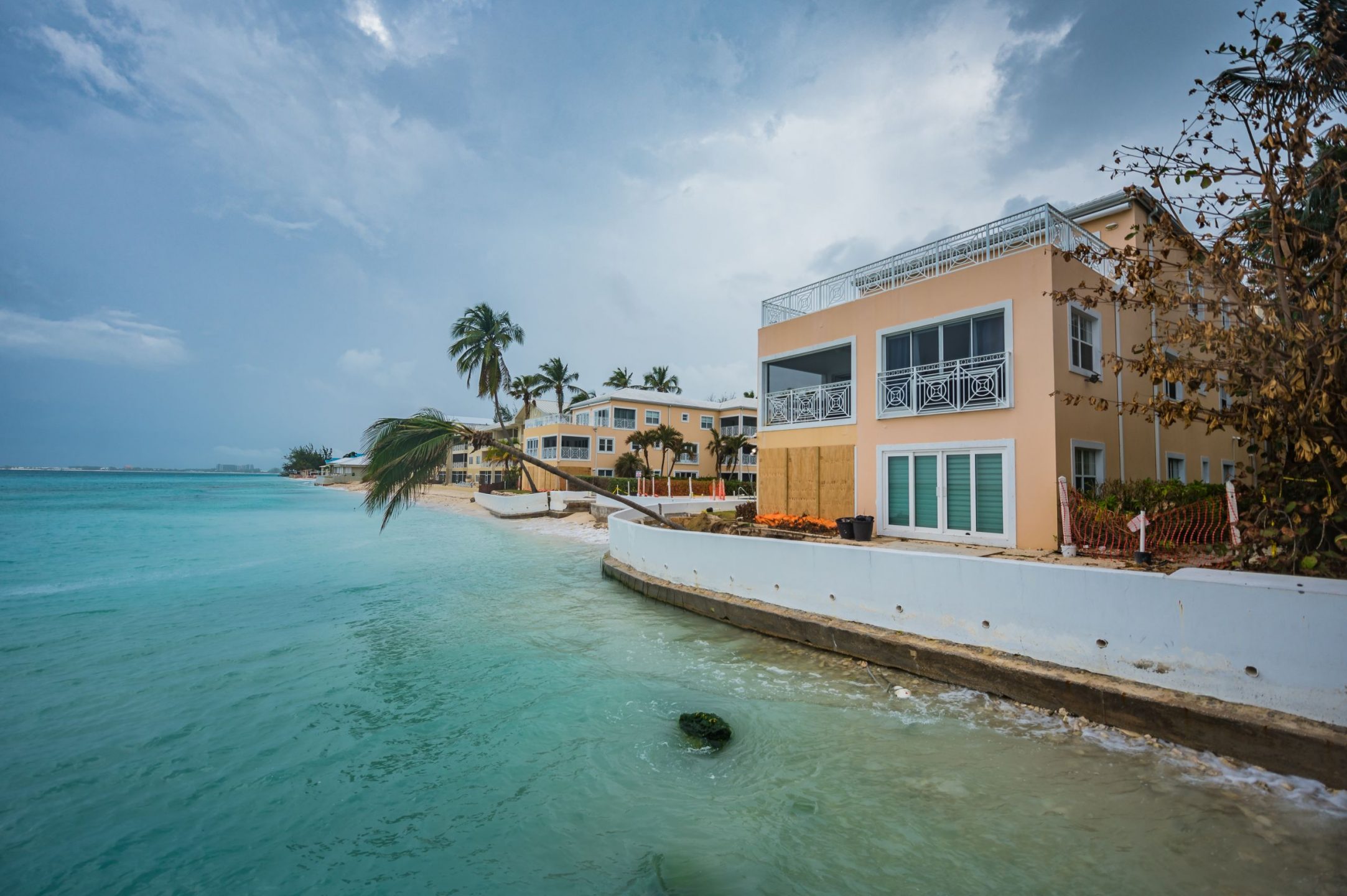
He cites the standardising of the high water mark on shorelines as one such policy – a small change, that eradicates the ‘crazy’ but common practice of developers choosing the line that suited them best, based on their own surveys.
He said Cayman had not served its people’s best interests by giving away more and more of the beach to development.
So, why not go further? Why, with the authority of the premier’s office behind him, hasn’t Panton implemented new setbacks that outlaw building so close to the ocean? Why hasn’t he put his own team on the planning board and taken a harder line with developers?
Some of those questions echo around social media forums as the development rush continues.
But Panton is determined to ‘hasten slowly,’ working with a scalpel rather than a machete, when it comes to reshaping the islands’ policy framework.
A key part of that strategy is the climate risk assessment, currently under way, that will be on his desk in September.
That will clarify the scale of the risks Cayman is facing and determine whether the measures the premier and his team have in mind will be enough to manage the threats ahead. The UK, which funded that analysis along with a number of other analysis and research projects, is a key ally.
The data collected will feed into a range of policies.
“This is not about one major thing, but a lot of smaller changes that have to be implemented across the board,” he said.
Economic and social sustainability
A pragmatist, with a financial services background, Panton is also anxious that change doesn’t come at the cost of the economy, which supports Cayman’s quality of life.
He wants to reclaim the word ‘sustainability’. It is not just an environmental term, he insists. It’s also about ensuring social and economic sustainability.
A ‘just say no’ policy to development might win plaudits but could have detrimental implications in other spheres.
The premier wants to address concerns around speculative building aimed at overseas investors.
But he cautions that Cayman does need to consider its own housing and infrastructure demands as it plans for the decades ahead.
“We need to identify what our true needs are as a country,” he said. “The last thing we want is to have a housing bubble and a crash with a lot of unoccupied residences, apartments, condos and houses and then having done all this development and caused the implicit environmental harm, there is no benefit.”
Identifying the policies that meet the demands of the country without going beyond those demands is the sweet spot he is aiming for.
Population growth
Controlling population growth, without damaging the financial wellbeing of Cayman and Caymanians is another long-term challenge.
Just getting the numbers right, was a start, says Panton. The census pegged Cayman’s population at around 72,000 – 7,000 more than the figure being used by the previous government.
Questions have been raised about whether Cayman has a ‘carrying capacity’. There were just under 8,000 people here in the 1960s. The number has doubled every generation since then.
Halting the in-flow of new residents would be one strategy to curtail that growth.
But Panton argues for a more nuanced approach.
“If we said we’re not going to grant work permits, as much as we may have some people saying ‘Hey, that’s a great thing,’ we are going to have lots of small Caymanian businesses owners and operators saying ‘This is killing us.'”
Evidence of that has been seen in the tension between business owners and government over recruitment in the resurgent tourism industry.
While he advocates for a balanced approach, Panton insists he is willing to get tough when he needs to.
Regaining control
Part of Cayman’s economic success can be attributed to its light-touch approach: few taxes, few regulations, an open property market, and few constraints on development, population growth, vehicle ownership or traffic.
“Cayman has benefited to some extent from having little controls but what we now have are the problems associated with having little controls,” Panton said.
“We do need to face that reality.”
The development plan is a core priority that will help shape Cayman’s climate resiliency. How and where we build in future is a huge part of that equation.
But Panton cautions it could take the balance of his term in office just to put the framework in place. While that might seem like more delay for a policy revamp, that is already more than four decades in the making, the premier believes this could be Cayman’s best chance to get it right.
He has different views on his preferred direction for the country than the previous government. And he says he will take the time to ensure the document factors in projections of sea-level rise, greater intensity storms and the challenges of upgrading and climate-proofing infrastructure without further impacting the islands’ last remaining wild places.
Turning reports into action
He is conscious, too, of the pitfalls of procrastination. Government’s record of turning reports into action is not great.
The growing mounds at Mount Trashmore are testimony to that. Panton was environment minister, and still allied with the Progressives, when the project was first set in motion nearly eight years ago. Now he is trying to renegotiate a deal which he fears has strayed too far from the original intentions.
His government’s climate-risk analysis will update a report that was drafted, but never implemented, in 2011. The national energy strategy – which dates from 2017 – is also in need of an update and almost zero progress has been made towards its targets of considerably increasing Cayman’s renewable energy supply.
Meanwhile, the warnings from the United Nations Intergovernmental Panel on Climate Change get more dire with each new report.
Last year it was a ‘Code Red’, last month United Nations Secretary-General Antonio Guterres lamented failed global leadership and warned of an ‘atlas of suffering’.
Panton has been following those developments closely.
“In relation to things like climate change, adopting renewable energy, I personally think we’re going to have to accelerate our efforts in those respects,” he said.
“Every IPCC report that comes out, the predictions become worse and worse. Why is that? Well, it’s because globally, we have not committed to taking enough actions.”
Switching to solar
While Cayman’s role in cutting fossil fuel emissions is small in the global context, Panton says he is determined that the islands must make the switch to greener energy.
He acknowledged challenges at OfReg, the utilities regulator, as cause for concern, but insisted the transition to renewable energy will speed up during his term.
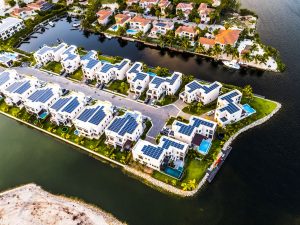
He wants to ensure that is done in the right way, with a mix of utility-scale solar farms and distributed generation that makes use of existing modified environments, like car parks, roads and rooftops.
“We cannot take hundreds and hundreds of acres of green land and denude that and put up solar farms and think that we’re doing something really positive,” he said.
“We’ve got to have some degree of utilising existing modified spaces and infrastructure to help develop the distributed power that we need.”
The Caribbean Utilities Company has plans in place for up to six solar farms and has insisted this can be achieved on ‘brownfield sites’ without impacting Grand Cayman’s environment. OfReg is supposed to go out to auction to allow bids for these projects at some stage this year.
‘Roads are not the answer’
Roads pose a similar challenge. While heavy traffic erodes quality of life across the island, government is progressing long-delayed expansions to the roads network.
That includes a 10-mile extension of the East-West Arterial that will cut through the Central Mangrove Wetlands. An environmental impact assessment will determine how that road is engineered, and the National Roads Authority insists it can be done without negatively impacting the wetlands and the flood defence and drainage they provide.
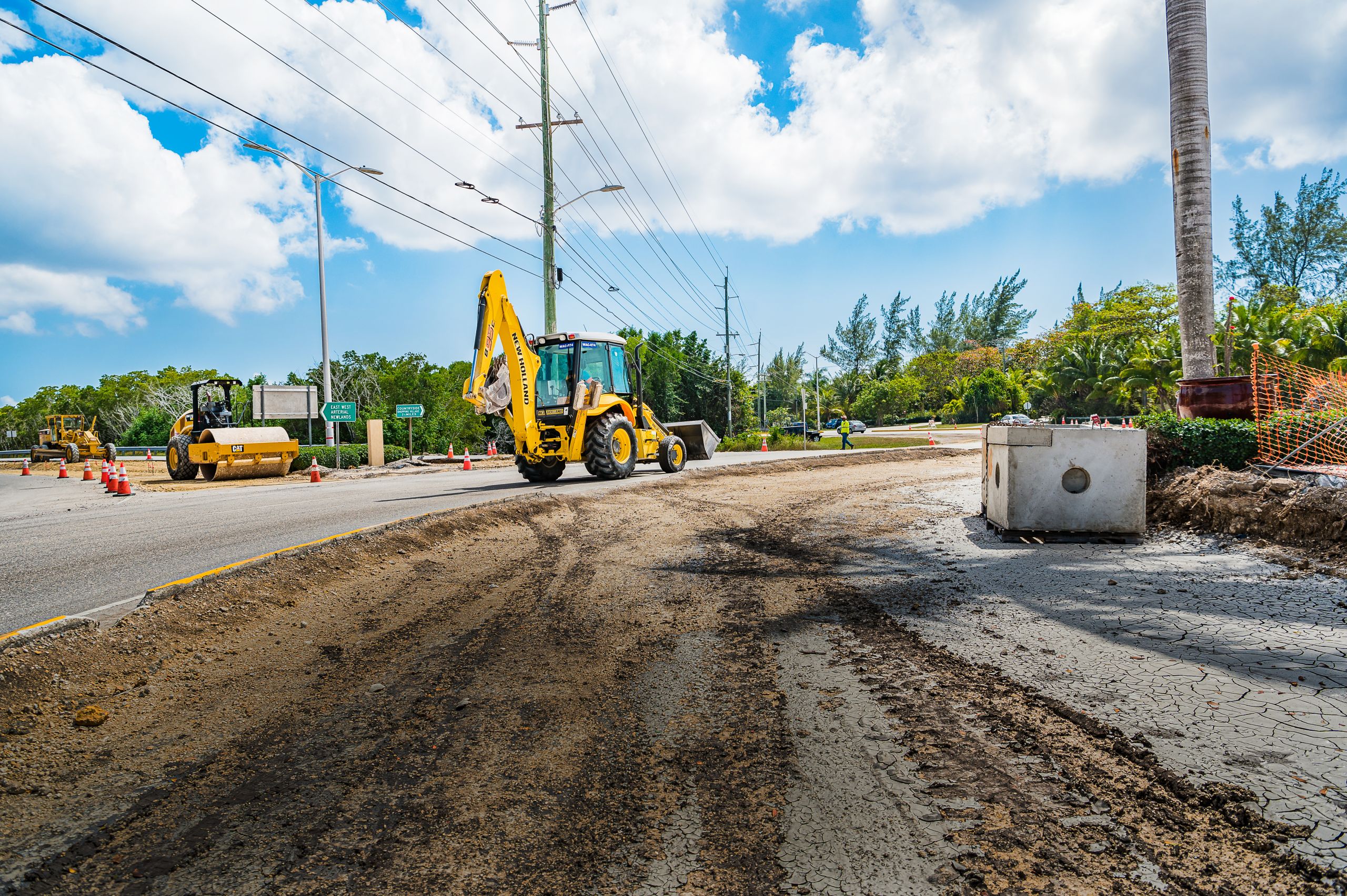
Panton said a certain amount of road building was needed to address extreme traffic challenges in the short term. But he insisted that would not be the long-term strategy.
“The answer is not to build more roads, that is not a viable approach. What we need to do is to minimise the traffic,” he said.
That might contrast with the extensive work that is going on right now, with NRA diggers, working around George Town and beyond. But reliable, clean public transport and restrictions on vehicle imports are among the policies currently on the agenda of a cross-ministry transport committee. A request for proposals went out earlier this year for a public transport plan and the long-term approach will involve moving people out of their vehicles.
“We are doing the groundwork,” Panton insisted.
Ticking clock
In terms of climate risks, the clock is ticking for Cayman. Flood risk maps, published by the Compass, demonstrate the escalation in areas considered at risk within the next three decades
Though he is determined to proceed carefully and with concrete data in hand, Panton believes he needs to inject some urgency into the process. “It is beyond doubt that we are going to have climate change impacts that affect us,” he said.
“We’re concerned about sea-level rise, ocean temperature, increasing ocean acidification, the fact that we’re likely to have hurricanes.”
The thought of another Ivan or a storm like Dorian, that lingered for three days over the Bahamas, keeps him up at night.
“I am always conscious of scaring people,” he said.
“I hate having to talk about the existential risks of this issue to young people, because I worry that it’s going to scare the hell out of them.”
But, it’s not the youth that need to hear the ‘Code Red’ warning. They are already out there advocating for change, both globally and locally.
“They are worried because they’re looking at the adults in the room who are trying to retain the legacy ways of doing business and not really appreciating how significant these changes could be,” he said.
If Panton can change one thing during his time in office, he hopes it will be this. That those young people can look at the adults in the room and see that they take these issues as seriously as they do.
“We have an incredible obligation, I think, a duty to give them a future and a quality of life, at least equal to what we have had.”
Related Videos









Good article but Compass is far too one-sided on climate. Science debate requires differing opinions. Read a recent book UNSETTLED by Professor Steven Koonin, Phd physicist from Caltech and MIT who gives a far more balanced and far less scary picture. A member of National acad of scientists and undersecretary for Science under Obama.
Dear Premier, what of the existential threats to our children’s mental health brought on by your governments continued insistence on mask wearing, when most other countries around the world, save communist China, have long since dropped such draconian measures…
So when is this government going to do something about the lack of sand on SMB. It is only getting worse. Build a wall and fill it with sand to replace the lost sand. It was there before so it is not destroying anything to replace it. It is only go to get more expense the longer it takes
Let’s build community solar on parking lots. We can add in ways to capture stormwater and use that to cool down the solar panels and irrigate crops and trees in the panel’s vicinity. This arrangement could provide affordable power to locals and combat the heat island effect of the parking lots.