

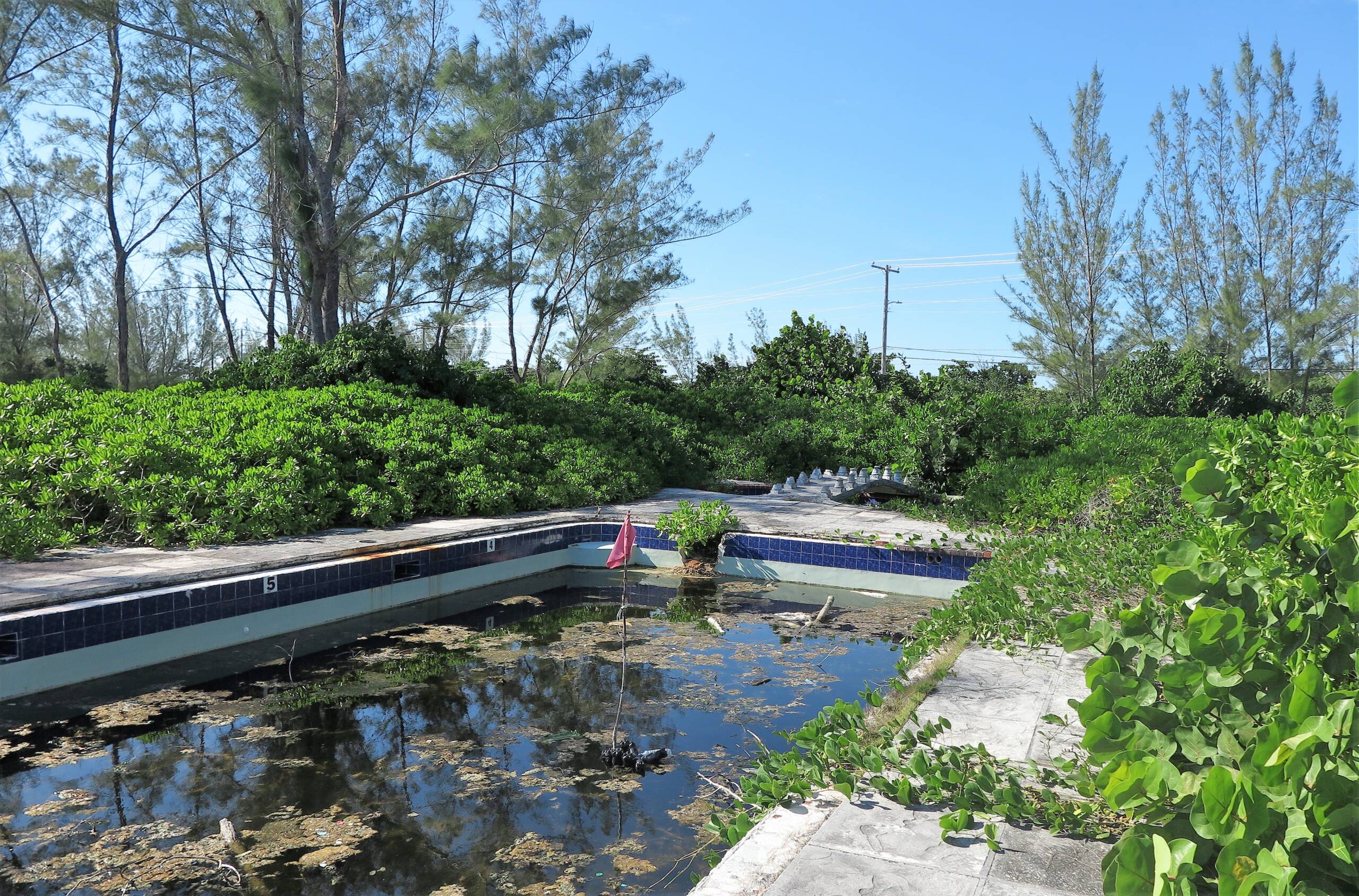
Thick slabs of floor tiles are scattered amid the fast-growing shrubs that cover Mariners Cove on Cayman’s south shore.
An ornamental stone bridge looks out over a grungy pool, filled with rainwater and assorted debris.
The once-manicured lawns are thick with Casuarina trees and a makeshift skate park has been set up amid the remnants of the formerly thriving complex.
The cluster of seafront condos and townhouses was ripped from its foundations in Hurricane Ivan. In the 18 years since the powerful storm, nothing has been rebuilt at the site.
Ivan might have been a ‘worst-case storm’ for the Cayman Islands, says Robert Muir-Wood, of catastrophe modelling company Risk Management Solutions, but it could also serve as a guide to the islands’ major vulnerabilities as Cayman assesses its risk exposure to climate change.
An increase in Category 4 and Category 5 storms in the Atlantic is projected to be one of the major threats to Cayman in the coming decades, based on the latest analysis of scientific literature by the United Nations Intergovernmental Panel on Climate Change.
The emerging science raises the prospect that storms like Ivan, previously considered to be ‘once in a lifetime’ events, could become much more frequent.
That analysis has implications beyond the obvious and immediate threats to life and property posed by an individual storm.
One of the greatest climate-associated risks facing the islands is the threat that insurers could pull out of Cayman, said Muir-Wood.
“Ivan was pretty much a worst-case storm for Cayman, and the total damage was estimated at $2.86 billion, almost double GDP at the time,” he said, adding that another similar event on the heels of Ivan would have made property insurance hard to obtain.

“Insurance rates went up significantly in the aftermath,” he said. “If there had been another similar storm within the decade, insurance would have been difficult to buy.”
He said repeated damage from storms would make insurers think twice about underwriting policies in Cayman, or at least in areas that were continually impacted. While that is a worst-case scenario, he believes it is one that the islands’ leaders should take seriously.
“If you think of front-line places around the world for climate-change impacts,” he said, “the Cayman Islands would be high up there in that list of places facing the greatest risk because it is so low-lying and susceptible to storms.”
Maintaining insurance is key to the stability of Cayman as a place to live and work, he said.
Climate resilience vital for Cayman’s economy
Fighting the tide
Muir-Wood did an analysis for the Cayman Islands government in the 1990s which linked rising insurance rates to storm activity in Florida. He returned to the islands after Hurricane Ivan and said he was pleased to see evidence that some lessons had been learned in the rebuild, with the bottom floors of most buildings raised to a higher level.
He said further adaptations to the building code – including wash-through bottom floors in some areas – may help make Cayman more resilient. Action to address older structures, not developed to the same standard, is harder to address, he said.
“The possibility that insurers could withdraw from Cayman is the biggest risk [from climate change] to the economy,” he told the Compass.
“If you have a solid disaster strategy and you have built properly, you can avoid that risk.”
Ensuring that a storm like Ivan, or Dorian which impacted the Bahamas, doesn’t cause the same level of damage is key to maintaining insurability, he said.
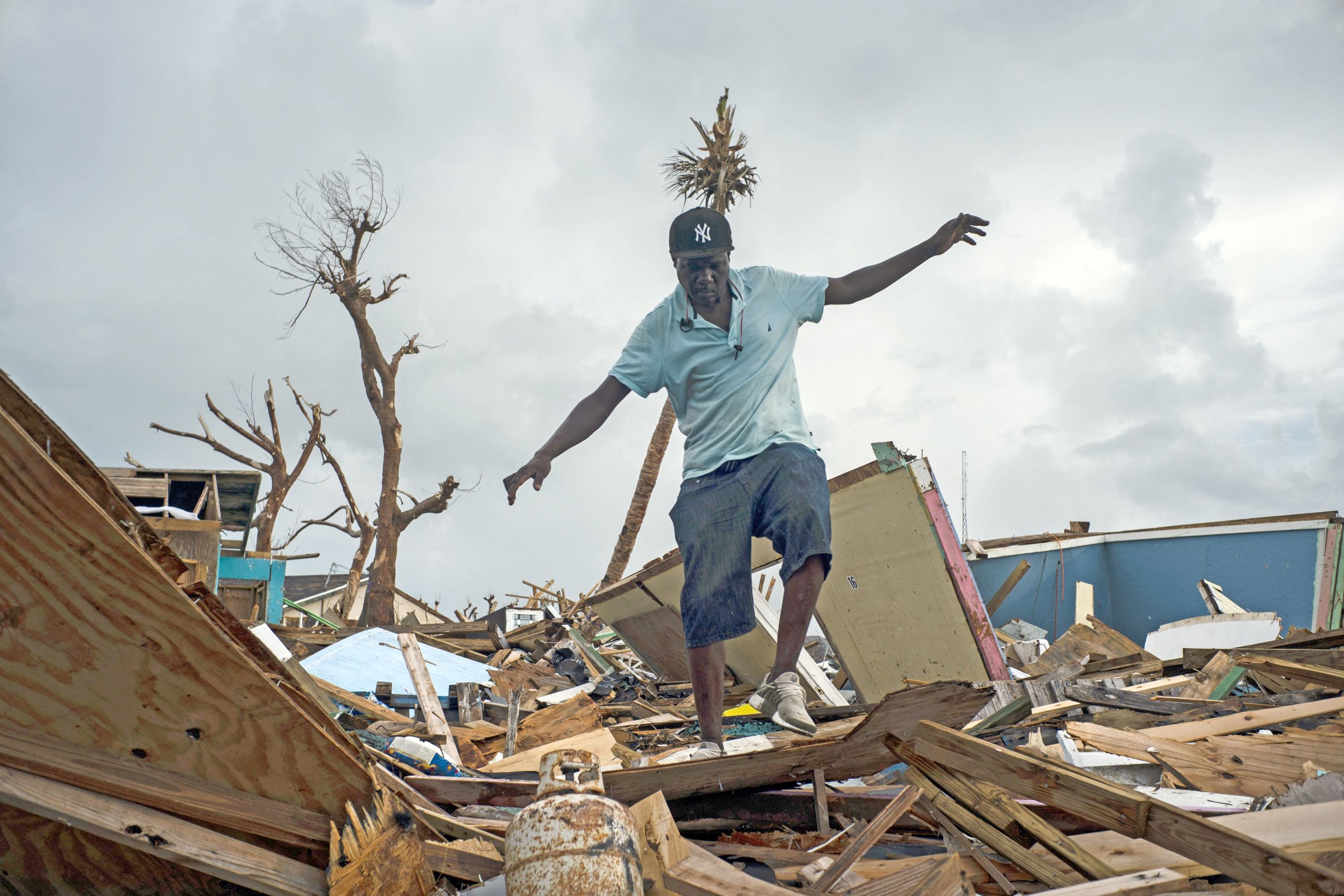
“The storm could be the same, but the damage – and the costs – could be completely different if you have made such good preparations and taken such precautions that the impact is absorbed,” he said.
Muir-Wood advises that Cayman appoint a national risk officer with a purview to analyse and assess the key threats posed by climate change and ensure the island is equipped to absorb them.
He said planning where and how to build was a key part of managing and mitigating risk.
Highlighting developments on the southern shore of Grand Cayman, that were swept away in Ivan, he said the post-storm analysis could provide a checklist of the islands’ most vulnerable points.
It is not impossible to rebuild on those sites, he said, but the risks would have to be factored into the design.
Realtor Kim Lund and his wife Ashleigh acquired the Mariners Cove property in 2015 but have no immediate plans for the land. If and when anything is built there, Lund said, it will be to totally different specifications than the previous development.
Muir-Wood argues that a coordinated national plan is needed to determine how and where buildings should be constructed in future.
“Climate change is not going to fade away and the Cayman Islands can’t change its location,” he said. “Storm impact and sea-level rise are not going to go away. A number of these impacts are getting worse and it is going to require consolidated action to respond.”
Related Videos










The man used the word “if” at least 6 times, “could” three times, and “possibility” more than once. It’s been 18 years since “the storm of the century” (one of the more abused expressions of climate change fear mongers). Large storms are not the results of climate change, they are the result of weather patterns. 15 years ago Gore predicted a third of Florida would be under water in ten years. Adjust as it comes, stop bankrupting countries with political agendas shrouded in fear. The farther has had sea level rise and fall millions of times in its history. None were caused by man then, and neither is this one.