

Cayman Airways CEO and President Fabian Whorms says even as the airline looks to commence the procurement process for a third Twin Otter aircraft to service Little Cayman, actually getting a plane in could be a challenge.
Whorms, speaking on the Cayman Compass weekly lunchtime talkshow ‘The Resh Hour’ on Wednesday, said the process of securing the financing for the third plane is underway and the procurement process will start soon.
However, he said, delivery of the Twin Otter may take some time.
“The only problem is, there’s a severe shortage of these types of aircraft, so I can’t promise anyone that we actually will have a third one in place for the upcoming maintenance season, but it’s far enough away that I’m pretty confident we will be able to acquire and have a third Otter,” Whorms said.
Tourism Minister Kenneth Bryan, in an interview with the Compass last year, affirmed a third plane was coming for Little Cayman as part of a large plan to develop tourism for the Sister Islands.
Captain Perry Panton, who also appeared on the show, also spoke to the concerns over the challenges with the Little Cayman route, which led last November to tourists being ferried to Little Cayman on dive boats from Cayman Brac.
He urged patience, as the national flag carrier works on ironing out the aircraft woes, saying, “it’s not as easy as people think. It is actually a very complex business model”.
“Flights are delayed all over the world everyday, there are airplanes that have emergencies all over the world everyday. When it happens here, the expectation is Cayman Airways and Cayman Airways Express will deliver,” he said, adding there’s an expectation placed on the team to be 100% all the time and no flight should be delayed.
Panton reminded that, “you need money to really fix our problems in this area”.
Airport a challenge on Little Cayman route
Whorms explained that, when it comes to the Little Cayman route, there are “certain periods of the year when we’re vulnerable”.
He said there are currently only two Twin Otters and, every year in the autumn months, they each require annual heavy maintenance.
Cayman Airways, he said, does routine and preventative maintenance on island throughout the year and has its own maintenance unit. However the planes, he said, literally get overhauled once a year where they are sent overseas for additional work.
“One will be away for six weeks and, as it comes back, we wait a few days and make sure it’s in service fine, then we send the other one off. But it typically exposes us to a three-month period where we only have one Twin Otter in service, that’s when we’re vulnerable,” Whorms said.
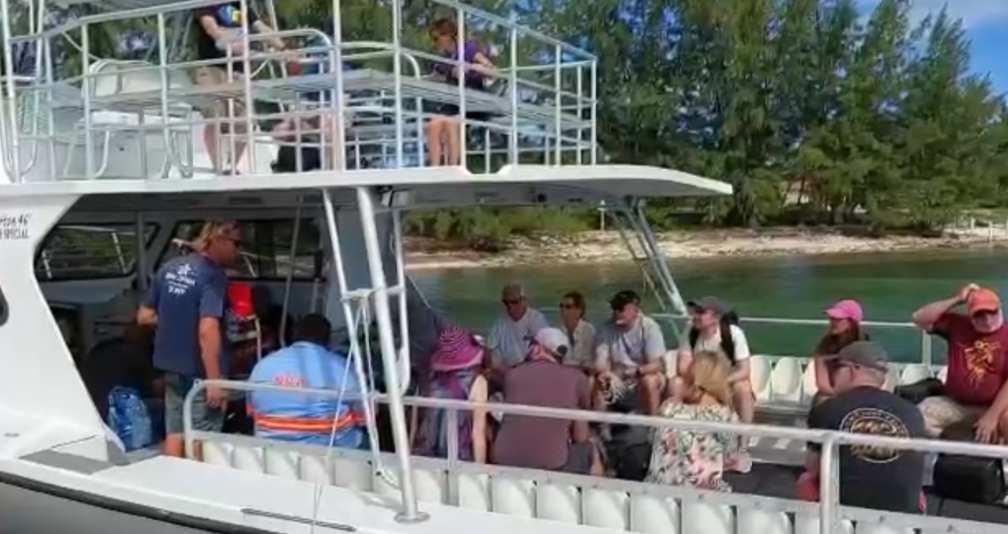
He said the service is “very reliable,” but there have been instances where it had been unavailable for a day or two or, at worse, three or four days.
“We can’t snap our fingers and find another aircraft somewhere else and introduce it into our service,” he lamented.
Whorms said Little Cayman is more vulnerable in this regard because the Twin Otter is the only aircraft that can fly into the island. He added, until the airline knows what is happening with the plans for the Little Cayman aerodrome, procuring a third Twin Otter is the only solution at the moment.
This, he said, is not the case for Cayman Brac, as the airline can use the jet to service that domestic route if the Saab is unavailable.
Change in aircraft can help with efficiency
However, he said the airline will also have to look to preparing a plan in the near future to replace the Saab which services Cayman Brac.
“Ideally, we’d like that whatever we replace it with be something that can also fulfil the mission that the Twin Otters currently fulfil for us. But that’s dependent as to what happens with the Little Cayman aerodrome,” Whorms said.
“That’s another challenge we have which increases our operating costs. We have three different types of aircraft, three different types of maintenance support [and] three different sets of pilots… because our pilots don’t just jump from plane to plane to plane,” Whorms explained.
Panton added that pilots are also constantly training to not only move up in rank, but build resilience for the airline.
Whorms added that Cayman Airways is – and has always been – a “tool” for the government for strategic business opportunities.
The gateways operated by the airline, he said, are deliberate in design to create economic advantage for the Cayman Islands, even if it is at a cost to the airline.
He said a study, which was done about six years ago, found that the economic contribution from Cayman Airways to the islands was in the region of US$ 200 million, at that time.
“So when you compare that with whatever the government provides us in the form of financial assistance to keep our operations running, then it’s worth it,” he said.
Related Videos









Was never an issue, when Island Air operated the route.