


An invasive carnivorous species of snail with moustache-like tentacles has been discovered in Grand Cayman.
The Department of Environment is asking the public to help find the snails before they do irreversible harm to the island’s native snail populations.
“It can be particularly damaging because not only is it able to breed on its own but it actually hunts and eats other snails,” DoE Terrestrial Resources Unit manager Fred Burton told the Compass.
Euglandina rosea, also known as the rosy wolf snail or cannibal snail, is originally from the hardwood forests, shrubs and gardens of the southern United States.
The DoE suspects it arrived on island in a shipment of potted plants.
Three have been spotted in Grand Cayman so far – near Hirst Road, Lower Valley and Seven Mile Beach – which suggests they have been around a while and have already spread, Burton said.
The snails are a major contributor to the extinction of 234 mollusc species in dozens of countries and are on the International Union for Conservation of Nature’s list of 100 of the world’s worst invasive species.
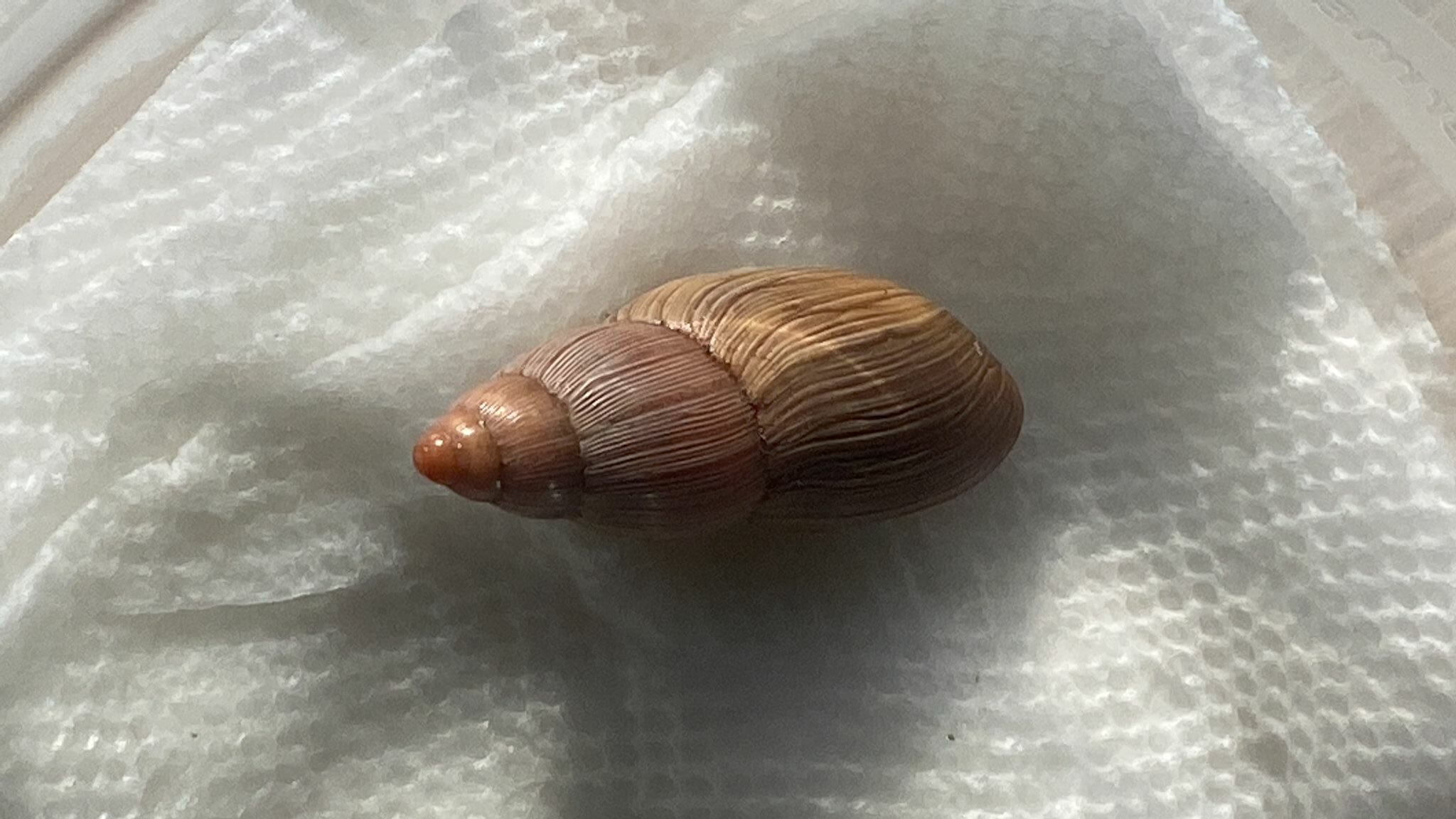
“This is bad news for Cayman’s native snails,” Burton said, adding that there are about 48 recorded species of native snail, with 30 considered unique to Cayman.
If anyone spots what they suspect to be one of the snails, the DoE says they should immediately capture it in a closed container with small holes for air.
They should also take a photograph and send it to [email protected] so that it can be identified.
Although not encouraged, the DoE said people can then keep the snails in an enclosure as pets, or alternatively hand them over to be destroyed.
The snails, which are most active in April and May, are hermaphrodites – both male and female – and can lay 25 to 35 eggs in the soil which hatch after 30 to 40 days.
Adults range in size from 7-10 centimetres (3-4 inches), where the dimensions of its oblong shell are about 46-76 millimetres (1.8-3 inches) long and 21-27.5mm (0.8-1 inches) in diameter.
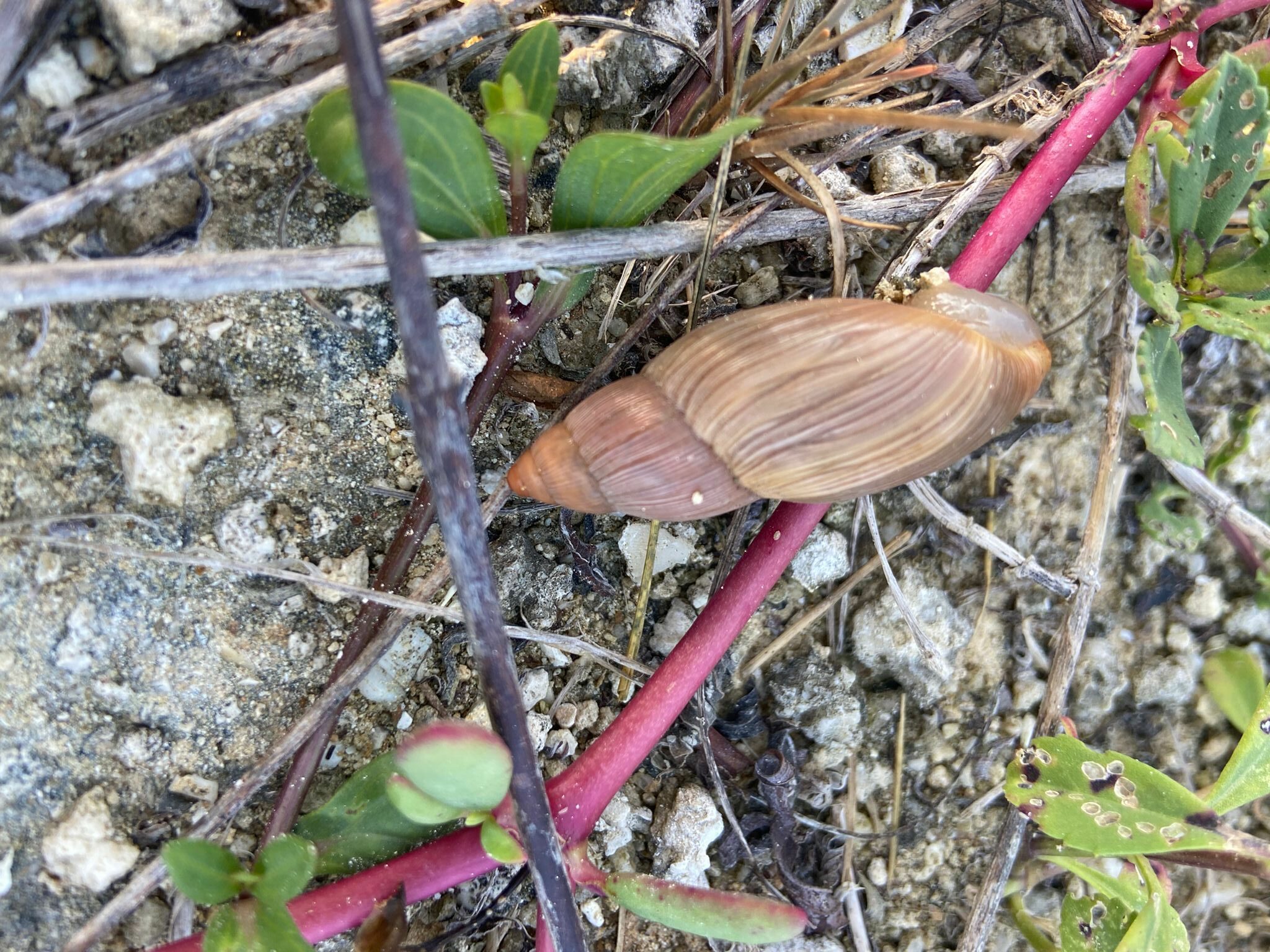
The shape of the glossy shell pattern is unique, with the first three whorls being smooth and the rest irregularly sculpted with fine longitudinal grooves.
There are no spiral grooves on the shell and it can vary in colour from brownish pink to brownish orange.
The snail’s face is very distinct as it has chemosensory moustache-looking tentacles below its eye stocks, used for following the slime trails of other snails while hunting.
“We just want to make sure that we are preventing something that so easily reproduces and consumes resources so devastatingly,” a DoE spokesperson told the Compass.
“We want to make sure that is contained and eliminated as quickly as possible to prevent it from becoming uncontrolled in the wild.”
Related Videos






Why don’t you just squash them like any other pest?
that headline though……