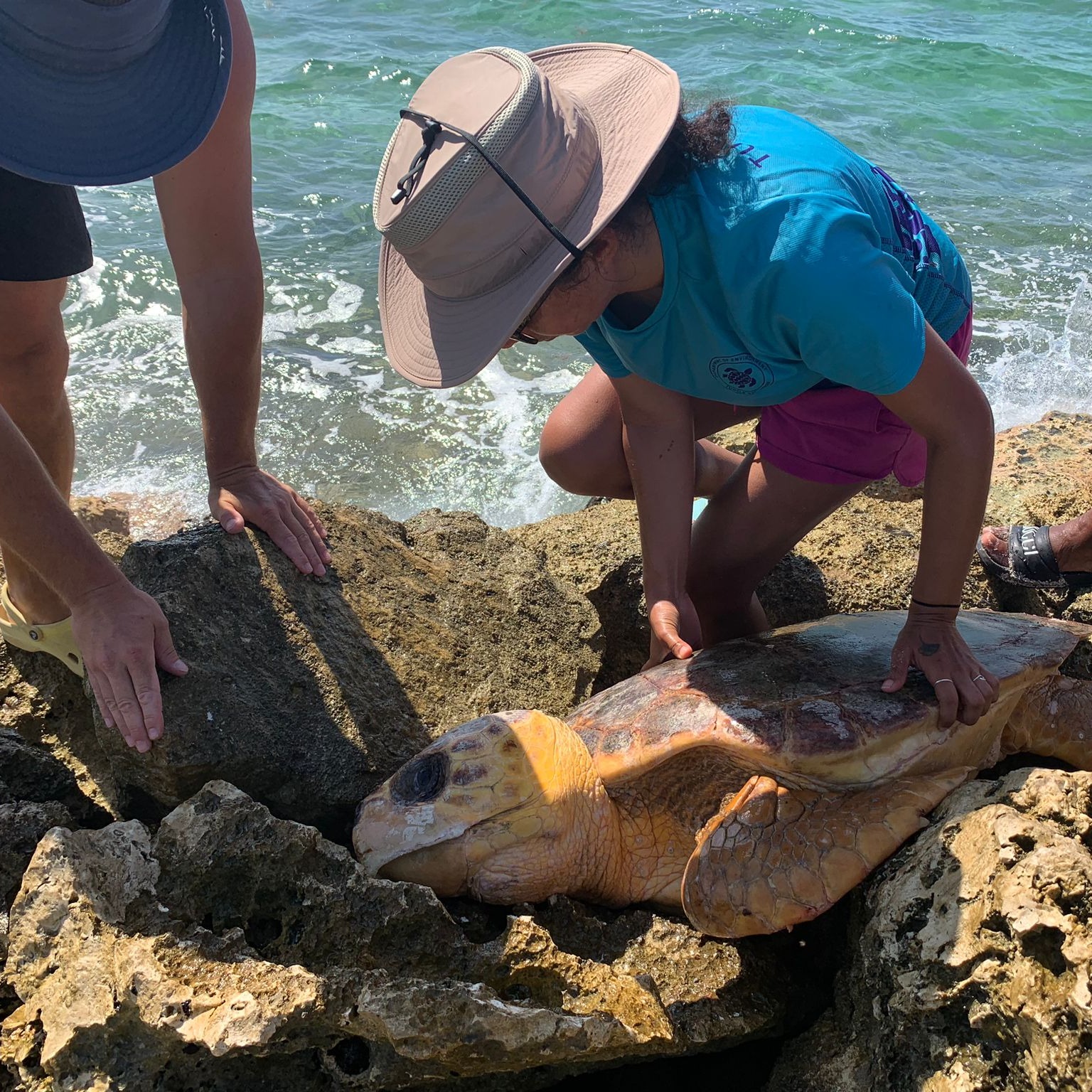
Swift action from two fishermen and the Department of Environment Turtle Team led to the rescue of an adult female loggerhead turtle that was found trapped in a man-made groyne, a type of sea barrier built to prevent erosion.
The turtle team was checking the Beach Bay area for nesting activity on Tuesday when a couple of fishermen spotted the turtle on the rocks and waved the team over, said Jane Hardwick, DoE marine research officer and Sea Turtle Monitoring Programme coordinator.
“It became apparent from the tracks on the beach that the loggerhead turtle had crawled onto the beach to nest [either in the night or early morning] and had made her way back to the sea over the groyne, where she had then become trapped between the rocks,” Hardwick told the Cayman Compass via email.
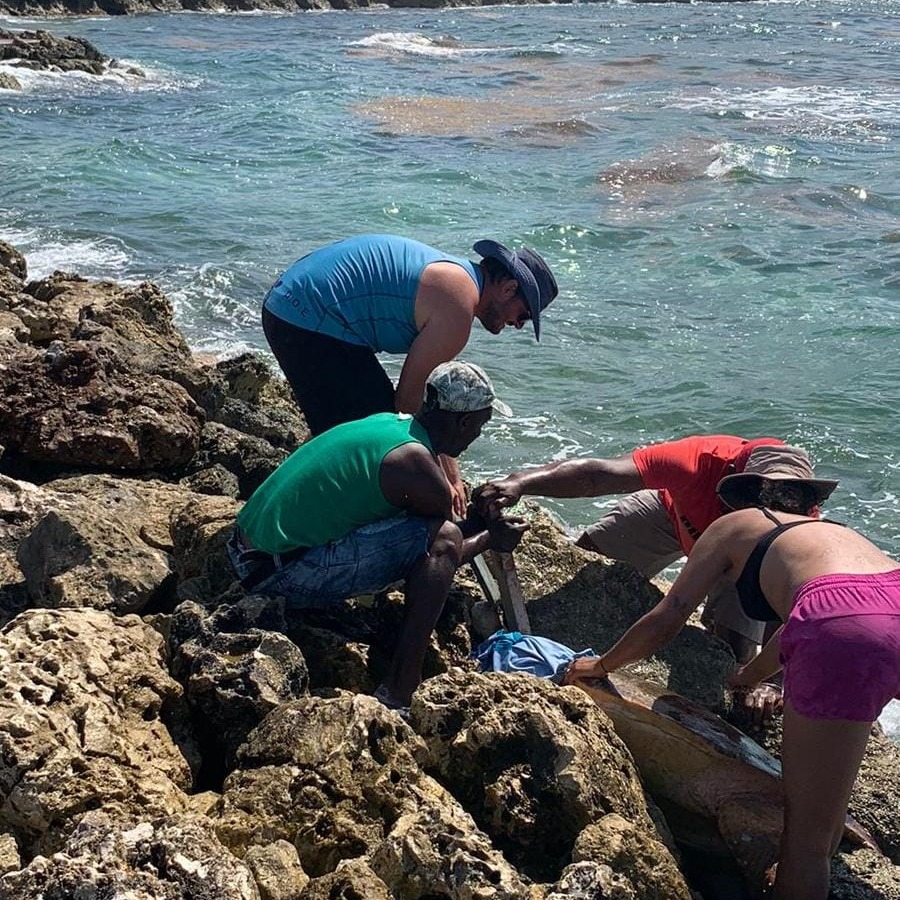
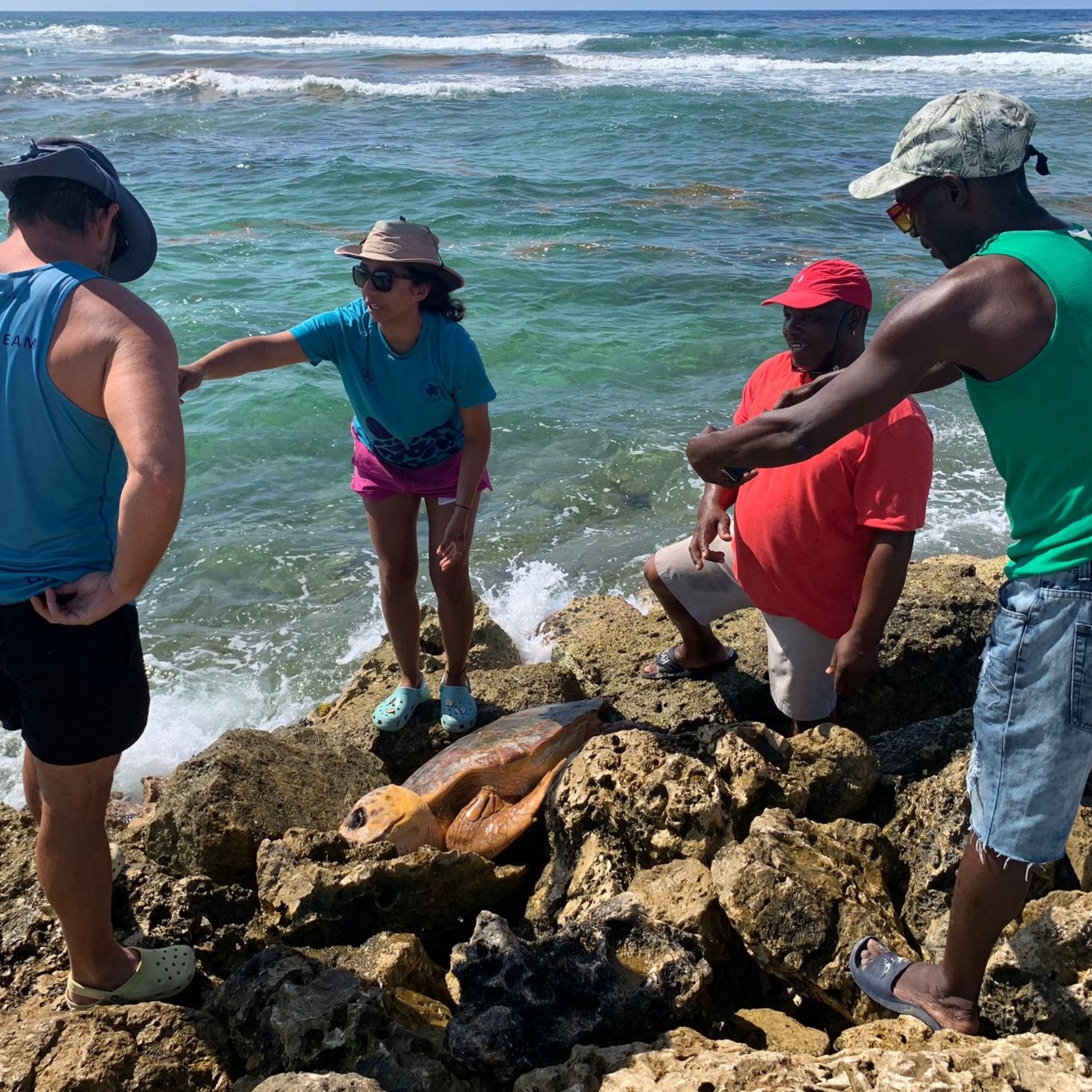
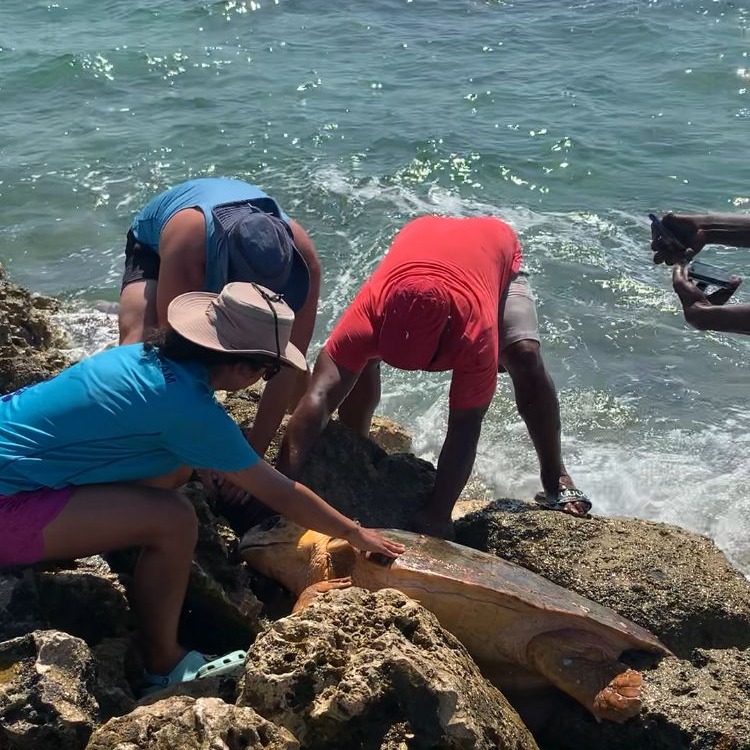
Hardwick said after some time, they were able to dislodge the turtle with the help of turtle conservation officers Joe Roche, Gloria Guerrero and Jimena Gutierrez, and the two fishermen, identified only as Hector and Anthony.
“As she did not have any significant injuries, she was placed back into the sea,” Hardwick said, adding that the that the turtle was estimated to be between 20 and 30 years old.
The DoE shared the rescue story in a post on its official Facebook page on Tuesday.
“This is an unfortunate example of why man-made structures on nesting beaches are so dangerous to turtles and also why it’s always recommended that proposed developments take turtle nesting and other environmental considerations into account at the design phase,” the DoE said.
Cayman’s nesting season has started and more turtles will be seen on the annual journey to local shores to lay their eggs, making it imperative that steps be taken to safeguard the turtles.
This is why the DoE continues to plead with coastal property owners to install turtle-friendly lighting and provide clear paths so turtles can freely access the beach for nesting.
“Anticipating impacts to native species and habitats early will save both money and our ecosystems in the long run,” the DoE said.
The annual nesting season runs from May to November.
Last year was a record-breaking season with the number of nests surpassing the 1,000 mark for the first time since the Department of Environment stared monitoring nests in 1998.
Cayman’s 2022-23 turtle nesting season was the longest on record with the last official nest hatching on 22 Feb. 2023 in Little Cayman.
The DoE said it was “really grateful to all that assisted in the rescue and our Conservation Officers and the members of the public who were coming with tools to help”.
If a sea turtle is found to be in danger, people can call the 24-hour Turtle Hotline on 938-NEST (938-6378) and a team will respond.
Related Videos