Florida-based firm Synergy Lighting has been awarded a $73,001 contract to supply turtle-friendly lighting for the Department of Environment’s ongoing campaign to install the lights along coastal properties.
With the island recently logging record-breaking years for nesting, with a slight drop in numbers this year, the department has had a strong focus on ensuring turtles are protected and able to navigate the coastlines safely to nest.
Turtle-safe lighting
Though turtle-friendly lighting is not mandatory on properties along the coast, the department has been recommending its installation through planning applications and the existing turtle-friendly lighting programme.
Synergy Lighting, according to government’s public procurement portal Bonfire, was chosen as the preferred supplier of turtle-friendly lighting products.
The contract will consist of a “number of orders for various property types over a period of at least two years”.
The fixtures and fittings to be used, according to the original Request for Proposals for the contract, must be certified by the Florida Fish and Wildlife Conservation Commission as wildlife friendly.
The contract includes electrical systems, lighting components and accessories.
Sea turtle nesting season runs from 1 May to 30 Nov., which means the season is on the homestretch and hazard risks continue for mothers and their hatchlings.
This year’s season started with the discovery of a loggerhead nest on Cayman Brac in April.
It was the second-consecutive year that the Brac marked the start of Cayman’s turtle-nesting season. Last year, the first loggerhead nest was found on the Brac, also in April.
Cayman’s 2022 turtle-nesting season was the longest on record and continued into the following calendar year. The last official nest of that season hatched on 22 Feb. 2023 on Little Cayman.
Conservation plan remains in draft
The DoE has drafted a conservation plan for sea turtles, which includes addressing the issue of artificial lighting along the coastline.
The draft species conservation plan for sea turtles has been approved by the National Conservation Council and has been with Cabinet since 2019 for approval and action.
At last check, the plan was still to be approved.
Under the proposed plan, new and existing developments on critical nesting beaches will be mandated to install turtle-friendly lighting.
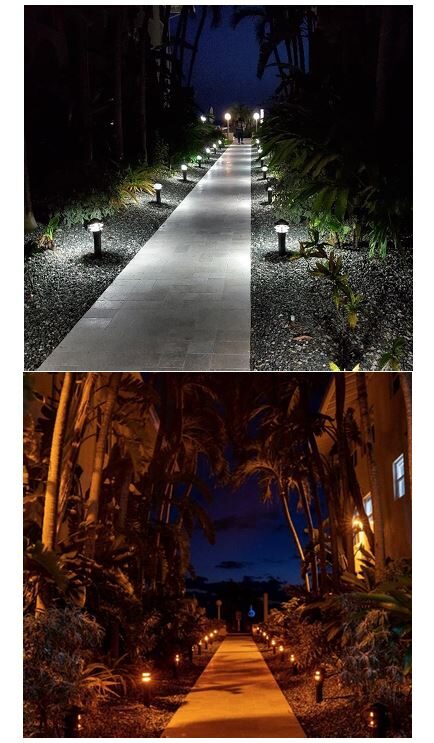
Use of long-wavelength amber lights that are shielded can prevent turtles and hatchlings from being misoriented away from the sea.
A DoE report, ‘The State of Turtle Friendly Lighting in the Cayman Islands 2024’, said that with “the legal catch of the sea turtles inactive since 2008, one of the largest threats to the future populations of sea turtles is artificial lighting. The illumination of sea turtle nesting beaches can be considered a form of habitat loss”.
During the 2023 nesting season, 84% of the Department of Environment’s interventions with nests and hatchlings “were required solely because of artificial lighting threats and could have been avoided with turtle friendly lighting,” the report stated.
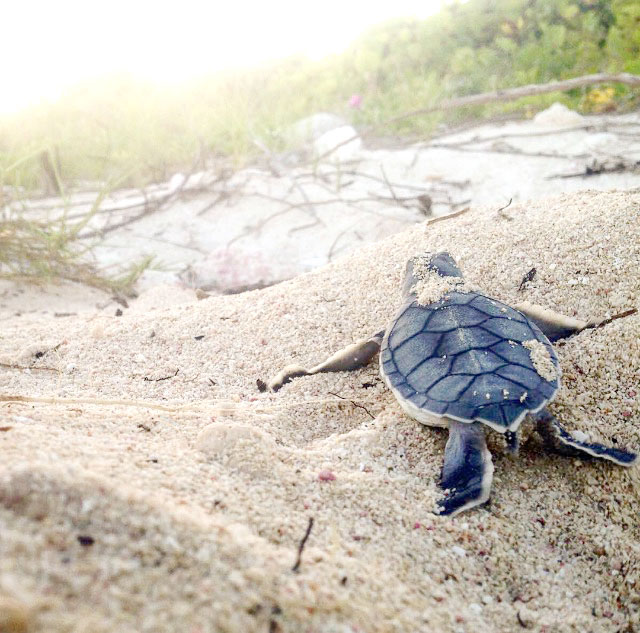
“One of the most critical acts a sea turtle must perform takes place immediately after it views the world for the first time, as a hatchling. When sea turtle hatchlings emerge from their nests, they find the ocean by moving away from dark silhouettes and toward the brightest light they can see,” it said.
In a natural environment, the report explained that for the turtles, the dark silhouettes they see would be beachside vegetation or sand dunes and the light would be the moon and stars reflected on the ocean’s surface.
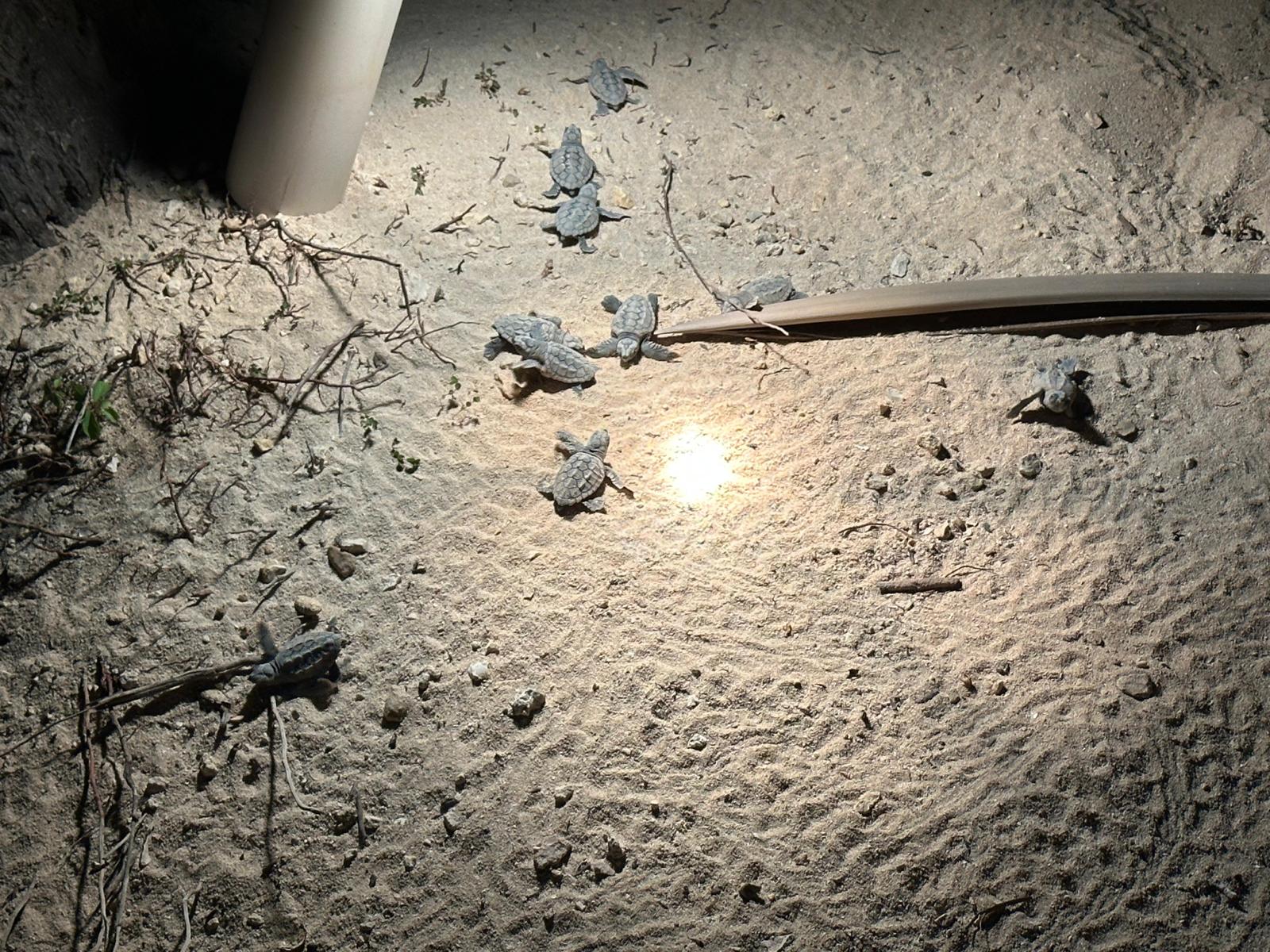
“When artificial lights on land are brighter, hatchling turtles become ‘misoriented’ and crawl away from the sea which often results in their death,” it said.
The DoE says it provides advice and suggestions to the owners of existing properties that are interested in turtle-friendly lighting.
Planning recommendations, inspections
In the absence of the conservation plan, the DoE says in its report that it is “reliant on the Planning Department to include appropriate gates and checkpoints to ensure that turtle friendly lighting is implemented”.
It said it is also reliant on the Planning Department, particularly the Building Control Unit (BCU), “to ensure that a Turtle Friendly Lighting Plan is prepared and submitted to the DoE prior to the issuance of a Building Permit”.
The DoE added that it is also dependent on the BCU requiring an inspection to ensure that turtle-friendly lighting is installed before a certificate of occupancy or completion is issued.
Under the Environmental Protection Fund Retrofit Programme, which started in 2018, 40 homeowners and property managers expressed interest in switching to turtle-friendly lighting.
A total of 20 of these properties completed the programme and installed lighting as planned.
As of 2024, of the 20 properties, nine were not in compliance with their lighting plan and were no longer turtle friendly, the 2024 DoE report said.
The DoE report has said that through the Central Planning Authority, 41 developments have had conditions for turtle-friendly lighting on their planning decision letters.
“Out of the 41 developments, 32 have prepared a Turtle Friendly Lighting Plan. As of 2024, four developments have been completed and have installed turtle friendly lighting in accordance with their plans. As of January 2024, 12 developments have no record of Building Permit issuance on the Online Planning System (OPS) and therefore it is presumed that construction has not started,” it added.
The DoE is reminding the public to contact the turtle hotline at 938-NEST (938-6378) if they see suspected turtle tracks.
To report suspected illegal activity, such as poaching, residents can call 911.
Related Videos