


Officials will be taking their proposal to relocate the airport on Little Cayman to the island’s residents this week as part of a public consultation on the potential environmental impact of the project.
If the plan goes ahead, the Edward Bodden Airfield by Blossom Village would be closed and a new airport opened on government-owned land by the Booby Pond Nature Reserve and Rookery.
Residents of Little Cayman are being invited to attend a public meeting on the issue on Thursday night.
The airfield currently operates under an exemption that has been granted annually since 2003 by the Civil Aviation Authority of the Cayman Islands, which permits Cayman Airways Express’ de Havilland DHC-6 Twin Otter planes to be the only commercial passenger aircraft to land there.
The Cayman Islands Airports Authority says, to adhere to International Civil Aviation Organization standards, it must relocate or modify the existing aerodrome to meet regulations, and that the Civil Aviation Authority “has confirmed that this practice of exemption will not continue unless steps are taken to achieve certification”.
According to a draft Environmental Impact Assessment Terms of Reference document, which is open for public consultation, “there is an urgent need for works to be carried out to maintain air service to the island”.
Construction of the new airport, if approved, will begin next year and the aerodrome is proposed to be operational by 2028.
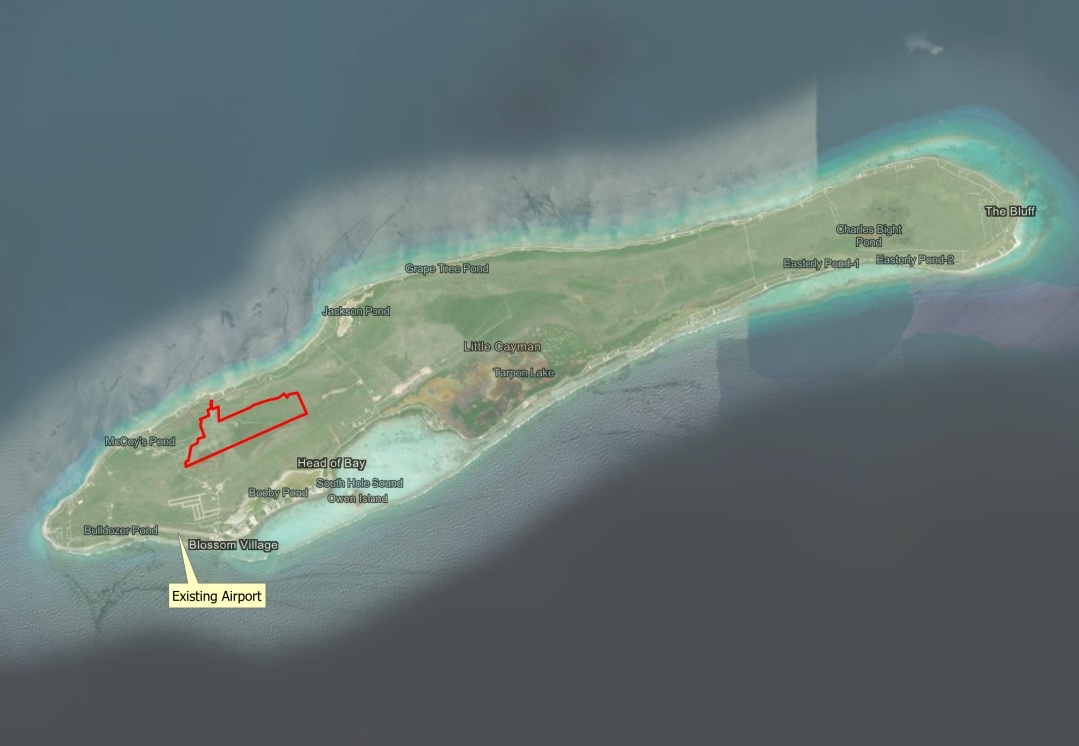
A number of other options to relocating the airfield were considered, including modifying the existing aerodrome, and shutting it down and replacing the air service with a helicopter, seaplane or ferry service, but those alternatives were not deemed to be feasible, the document noted.
Many residents of the island oppose the airport being relocated, arguing that the airfield has never experienced a serious accident. Last year, they petitioned Governor Jane Owen to intervene to save the airfield from being moved.
Safety issues
Royal HaskoningDHV, the consultants working with the Cayman Islands Airports Authority on the proposals to relocate the airport, notes in the Terms of Reference document that the existing airport has a number of safety issues, including that there is no parallel taxiway for the runway, which, they say, is not marked and “lacks threshold, edge lights, edge identifiers, slope indicators, and a rotating beacon”.
They also pointed out that the airfield has no air traffic control tower, and that the road “running along the south side of the runway strip, across the taxiway, and between the runway and aircraft parking apron is a clear violation of aerodrome standards and would need to be remedied before certification”.
The airfield is currently located on privately owned land, while the proposed site is owned by the Cayman Islands Airports Authority and the Crown.
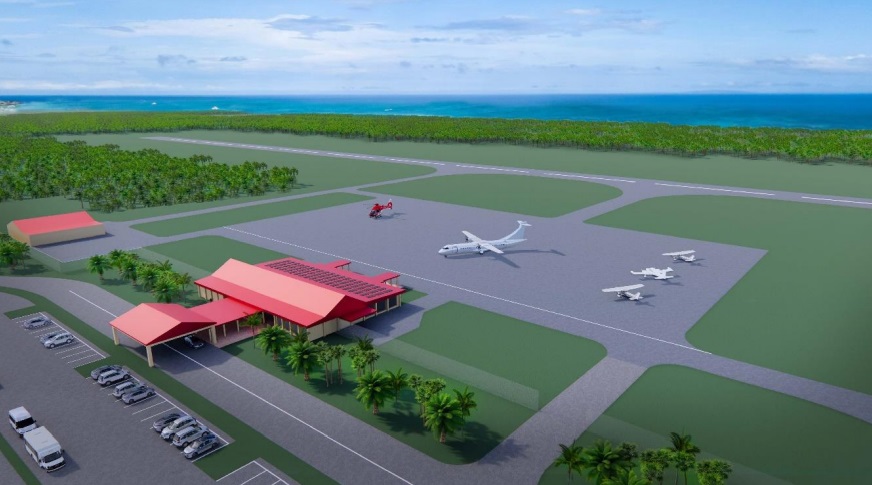
The proposed relocated airfield will include a new terminal and a 4,000-foot-long runway, with 767-foot-long runway-end safety areas at each end, and an access road to the coastal road. The current runway is 35 feet wide and 3,000 feet long, and planes must cross Guy Banks Road to reach the aircraft apron by the terminal.
Environmental concerns
The terms of reference report includes the scoping opinion provided by the Environmental Advisory Board, which notes that the proposed new airport site is located immediately to the north of Booby Pond, and consists of dry shrubland, seasonally flooded mangrove shrubland and man-modified areas.
The Booby Pond is designated as a Wetland of International Importance under the Ramsar Convention – the only Ramsar site in the Cayman Islands – and is home to one of the largest breeding colonies of red-footed boobies in the Caribbean, and the only breeding colony in the Cayman Islands.
The proximity of the pond and wetlands to the proposed new airfield not only raises safety concerns about possible bird strikes on aircraft, but also will likely disrupt migratory bird patterns, the scoping opinion notes.
It also notes that the dry shrubland surrounding the ponds provides habitat for the endemic, and endangered, Sister Islands rock iguanas, whose nesting grounds are likely to be disturbed by the clearing of land in preparation for the construction of the new airport.
A critically endangered, and protected, snail, the endemic Cerion nanus, can also be found in that area. The proposed access road, according to a map indicating its location, appears to go through a protected area for this snail, meaning the construction would be an offence under the National Conservation Act unless it is authorised by the National Conservation Council.
Bigger airport, more passengers
A bigger airport and runway would accommodate larger planes and, therefore, more passengers, which, at a previous public meeting, local residents pointed out may lead to larger hotel developments on the quiet island.
Currently, the small size of the runway means the only commercial plane that can land there are Cayman Airways Express’ twin-prop Otters.
The residents’ fears about hotel and related development were echoed in the scoping opinion in the report which noted that the construction of a larger airport “has the potential to increase passenger numbers to Little Cayman, and with this comes the potential for accelerated development, particularly in the absence of a Development Plan for the island”.
“As such, the relocation of the aerodrome has the potential for a number of indirect impacts on ecology,” it stated.
Apart from ecological impacts, the potential for increased development, an influx of tourists and new residents on the island is likely to affect the “unique cultural identity” of the tiny island, the scoping opinion noted.
The new airport would also bring economic changes, in the form of increased tourism, trade and foreign investment, “which can come with economic benefits but is also likely to shift economic activities and livelihoods of local residents to further rely on tourism”, the report stated.
Flooding concerns
The scoping opinion also highlighted potential flooding issues, noting that the new aerodrome would require the permanent alteration of a large area of seasonally flooded mangrove shrubland.
“This could significantly affect the resiliency of the surrounding area to accommodate flooding associated with severe storm events,” it states. “The site of the proposed relocation also includes areas of low and high elevation which will be required to be filled in or levelled, which may change the area’s vulnerability to hazards.
“Due to the low elevation of Little Cayman the project will be vulnerable to climate change in general and specifically to sea level rise. In order for the project to be successful it will be necessary to review impacts of climate change and sea level rise.”
How to give feedback
The proposals for Little Cayman are part of a wider master planmaster plan for all three of Cayman’s airports, elements of which will be subject to environmental impact assessments.
To find details of the draft terms of reference for EIAs for all three airports, click here.
Little Cayman residents are invited to a public meeting at 5:30-7:30pm on Thursday, 29 May, at the Little Cayman Beach Resort, where representatives from the Cayman Islands Airports Authority, consultants Royal Haskoning DHV, and the Environmental Advisory Board will be present.
Residents can also submit feedback through the following channels:
- Email: [email protected]
- Mail: Department of Environment, P.O. Box 10202, Grand Cayman KY1-1002
- By hand: Drop off written comments at the Department of Environment, Environmental Centre, 580 North Sound Road, George Town, Grand Cayman
Related Videos











Any idea of the cost?