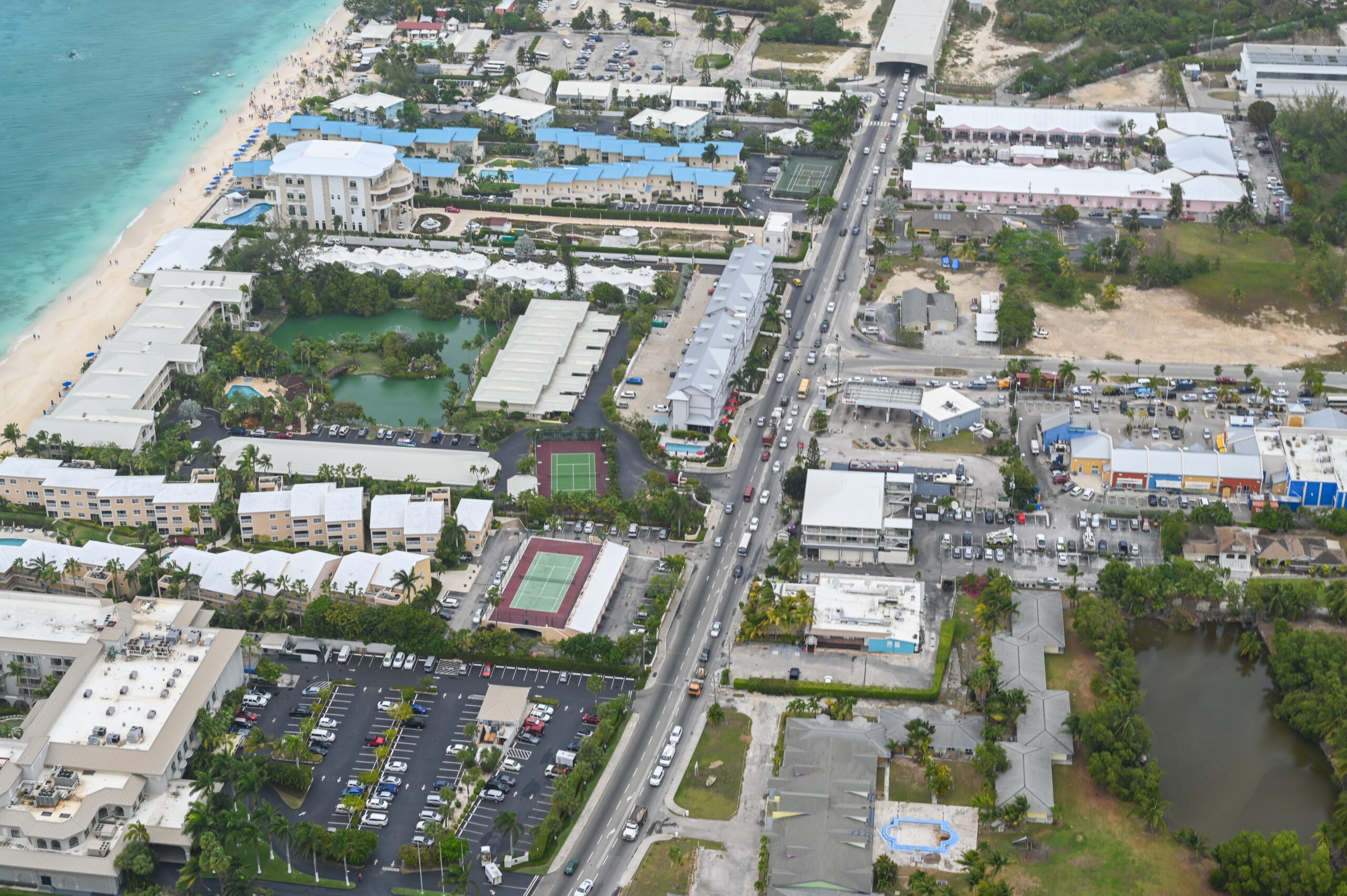
A recent Caribbean Development Bank report is the latest data release to show Cayman’s economy is the outperformer in a struggling region.
The regional bank’s Caribbean Economic Review and Outlook 2025-2026 highlighted some key strengths in the Caymanian economy. Growth across the Caribbean, excluding oil-rich Guyana, came in at 0.6% in 2025, down from 1.4% in 2024. In comparison Cayman’s economy grew by 2.6% last year.
One reason that economic growth was slower in the Caribbean was a tourism slowdown. “Stayover arrivals declined across the region compared with the previous year, reflecting softer conditions in key source markets,” read the report. “The region’s two largest tourism markets recorded declines, with the Bahamas reporting a 2.6% decrease, driven largely by weaker U.S. demand.” Jamaica posted a 10.3% decrease, although that was mostly driven by the impact of Hurricane Melissa.
Cayman, which wasn’t affected at all by Melissa, saw an increase in lucrative stayover tourism, which helped to compensate for a fall in lesser-spending cruise passenger arrivals.
The report cited Cayman’s non‑bank financial sector as another key economic driver. “The Cayman Islands reported solid increases in the number of insurance licenses, total fund registrations and registrations of new companies and partnerships,” stated the report.
Key macroeconomic indicators
The region benefitted from lower inflation in 2025, with the average rate in the Caribbean falling to 3.4% in 2025, from 4.4% in 2024. Despite a strong local debate about Cayman’s cost of living, the rate of price rises is relatively low in the jurisdiction with 2025 inflation coming in at 1.2%.
Cayman also has the lowest unemployment rate of any island in the Caribbean. The jurisdiction’s unemployment rate of 2.8% compares favourably to 3.4% in Jamaica, 4.5% in Trinidad and Tobago, 6.3% in Barbados, 9.4% in Grenada, 10% in the Bahamas and 13.2% in Saint Lucia.
Debt-to-GDP is another key macroeconomic indicator where the Cayman Islands outperforms the region. Cayman, which is subject to the Framework for Fiscal Responsibility, has a debt-to-GDP ratio of just 7.5%, far lower than the regional average of 46.6%. Jamaica, Barbados, Trinidad and Tobago and the Bahamas all have debt-to-GDP ratios above 60%.
Looking ahead, Cayman’s outperformance looks set to continue. The report’s authors expect Caribbean GDP, excluding Guyana, to grow at 1.1% in 2026 while Cayman’s Economics and Statistics Office forecasts the jurisdiction’s economy will grow by 2.2% this year.
Related Videos