

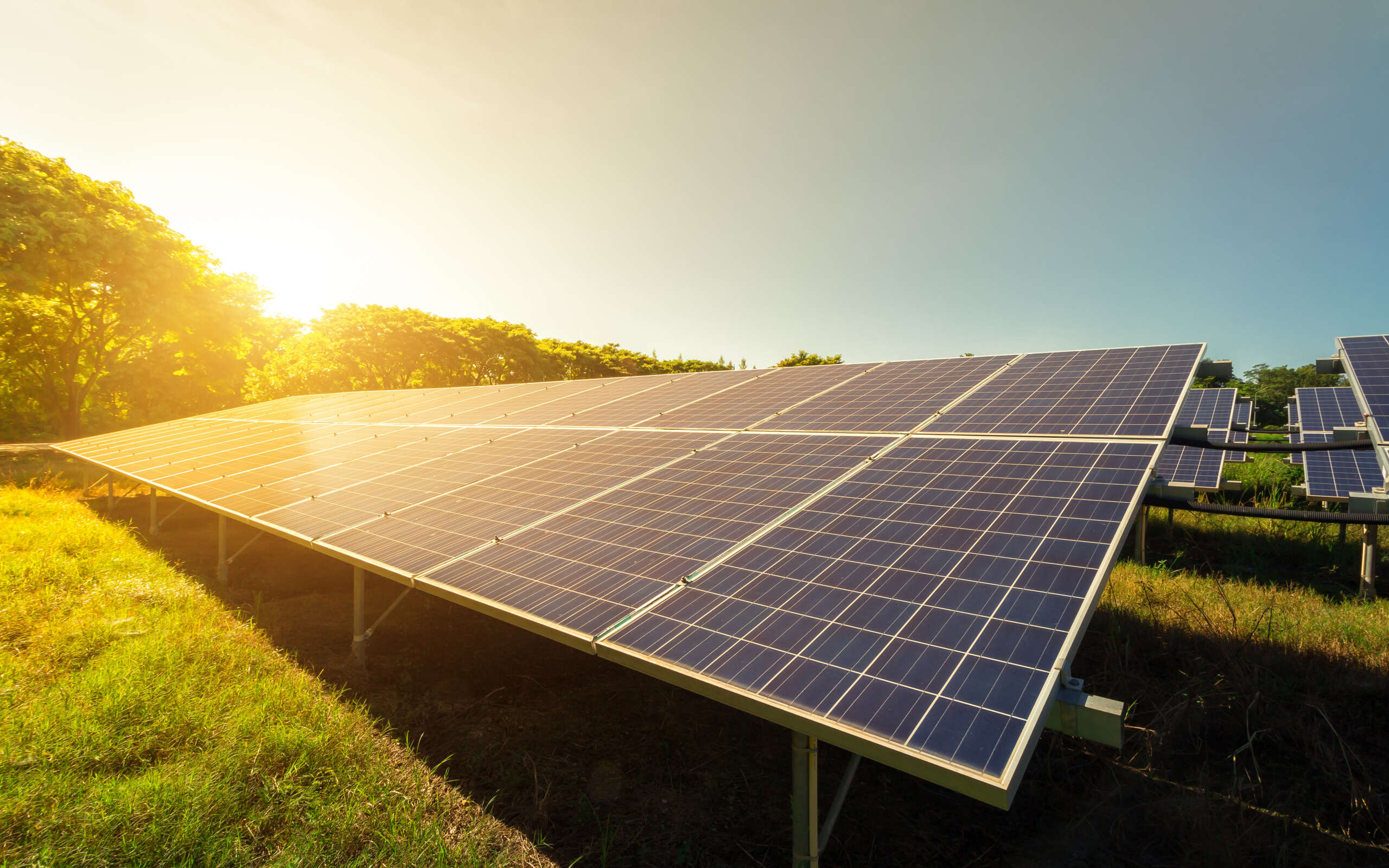
Caribbean Utilities Company has told investors it is ready to boost capital expenditure to help Grand Cayman meet its growing power demand and its ambitious renewable energy targets.
During its investor briefing, held at Hotel Indigo Grand Cayman on 11 May, CUC outlined US$484 million of planned capital expenditure for 2026 to 2030. Yet it says it could spend up to an additional US$500 million over the next five to 10 years if it is successful in winning new energy project bids.
The financial numbers come as the energy transition, population growth and economic expansion force Cayman to overhaul its energy infrastructure. At present, just 3% of Cayman’s electricity is generated from renewable energy, far short of a government target of 30% by 2030. Meanwhile, Cayman’s expanding population – the latest report from the Economic and Statistics Office calculates more than 90,000 people now live on the islands – coupled with energy-intensive projects such as new hotels, is pushing up electricity demand.
Cayman’s energy regulator has outlined two major projects to help the islands meet the energy challenge. It has issued a request for proposals for a 22.5 megawatt solar plant and also approved CUC’s ‘certificate of need’, which calls for 94 megawatts of new generating capacity. The solar project is expected to come online in the second half of 2028, while the 94 megawatts is scheduled for early 2028.
CUC said that the Utility Regulation and Competition Office named CUC as one of the “top rank bidders” for the 22.5 megawatt project. It’s a competitive process with other bidders and CUC expects the winning bid to be selected by the third quarter of 2026.
The 94-megawatt certificate of need is more complex and the winning bid won’t necessarily be entirely composed of renewable energy. “CUC will propose a balanced portfolio of generation technologies in its CON bid submission,” said the company in a written statement to the Compass on 14 May.
Increasing investment
Even if CUC doesn’t win the bid, the company has already upped its investment in Cayman’s energy infrastructure in recent years. Between 2016 and 2021 CUC’s annual capital expenditure averaged US$57.8 million. But from 2022 to 2025 CUC’s capital expenditure averaged US$97.5 million per year. The increase was mostly driven by upgrades to existing transmission lines and generation capacity.
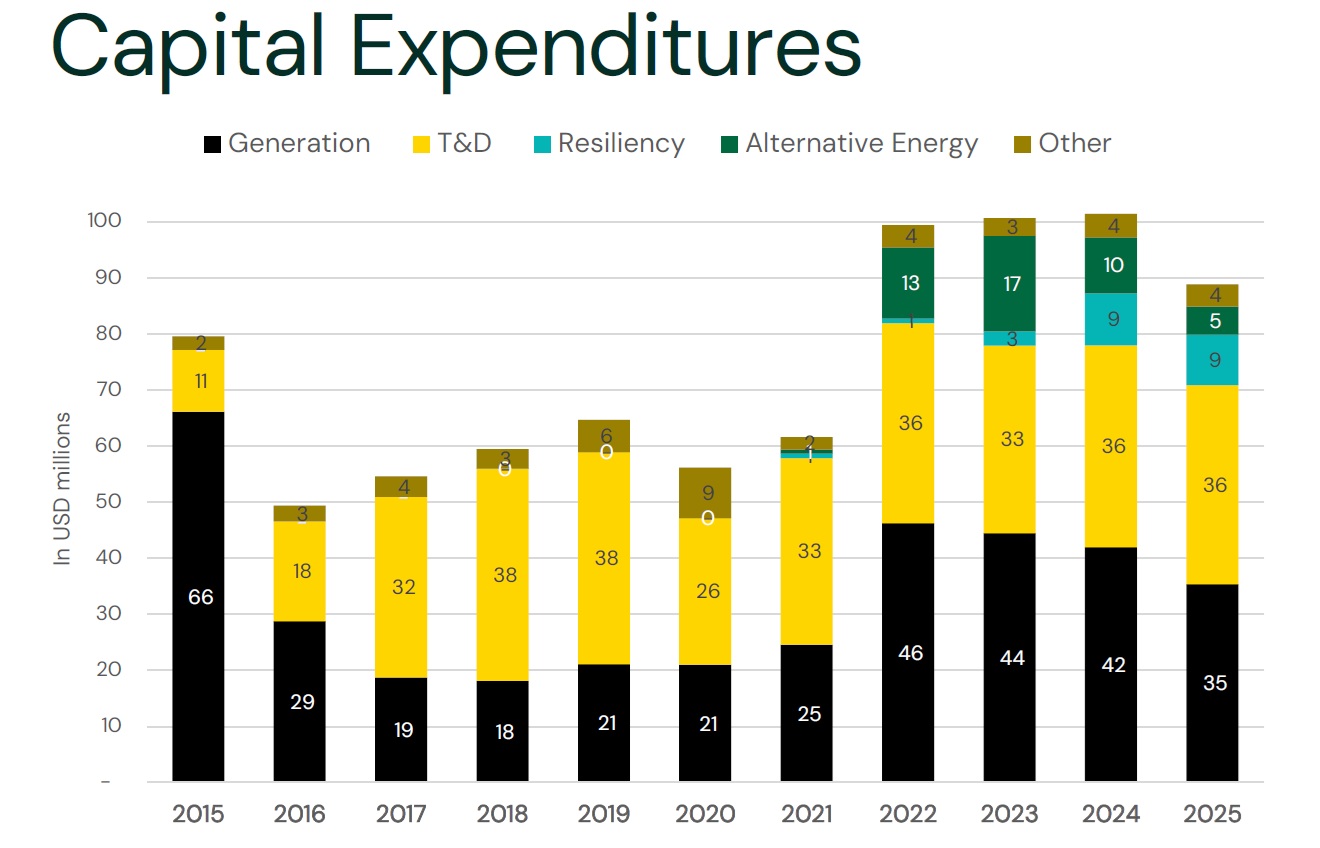
Ultimately any CUC investment is paid for by its end users. Yet the company claims the investment that it has already made in modernising existing generation plants and a battery energy storage system will save money for its customers in the long run.
“Investments in Battery Energy Storage Systems (BESS), grid resiliency and the Life Cycle Upgrade projects, all of which have contributed to improved fuel efficiency and reduced fuel related costs for customers,” said the company in its written statement.
At present, the majority of Cayman’s electricity is produced from diesel fuel, which has risen in price in the wake of the Iran War. Using that fuel more efficiently is one way to save money. But larger savings would come from switching to energy sources, such as solar or natural gas.
“Based on CUC’s analysis, utility-scale solar combined with BESS has the potential to deliver fuel cost savings of approximately US$25 million annually,” said CUC. “In addition, the introduction of liquefied natural gas (LNG) as a transitional fuel could provide a further US$15 million in annual savings for customers.”
By way of context, CUC earned US$128.5 million from electricity sales in 2025. But not everyone believes that large ‘utility scale’ projects are the right solution. James Whittaker, president of the Cayman Renewable Energy Association, has previously told the Compass that more of the renewable target should be met by distributed solar, specifically by home and business owners putting solar panels on their roofs.
Related Videos











We wanted to put solar on our roof years ago and CUC would not let us
🚨 What is Unstated: They just need the Government / URCO to ensure they gain a defacto monopoly over renewable energy and that means curtailing consumers rights to produce their own energy and minimizing 3rd party generation.
Hopefully the government will be wise to the points made above and will protect the interest of the community over allowing them to continue this monopoly and fleecing of the country.