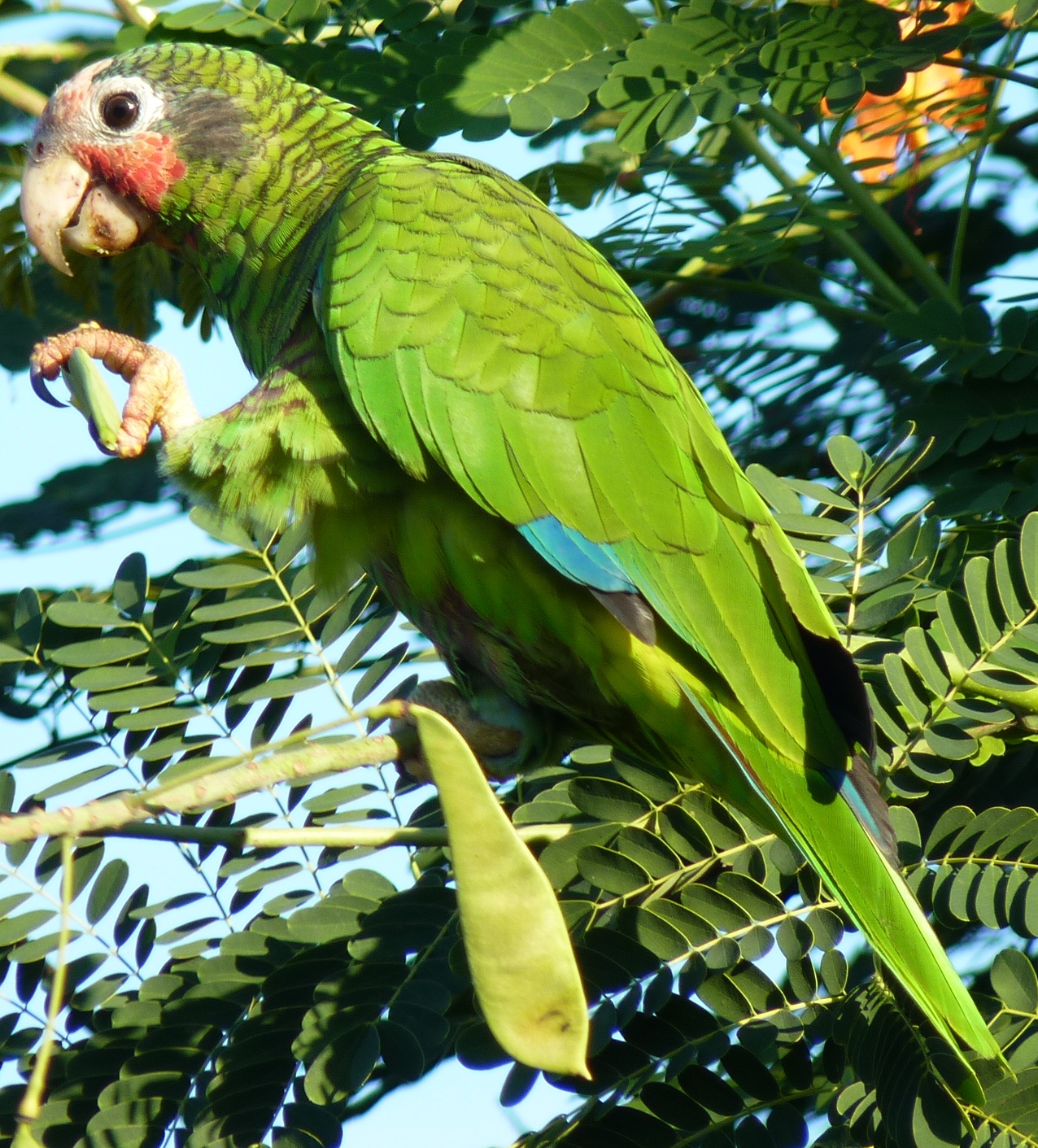
The bright green flash of a Grand Cayman parrot crossing the road or calling from a tree remains a familiar sight and sounds in the Islands. But despite being Cayman’s national bird and a protected species under the National Conservation Act, conservationists say the long-term future of the birds remains uncertain.
According to Department of Environment research officer Jane Haakonsson, the Cayman Islands’ parrot populations continue to face significant challenges.
“Parrot numbers fluctuate over time but are generally decreasing due to habitat loss,” Haakonsson said. “Populations are negatively affected by major hurricanes, conversion of primary habitat, and other pressures such as alien invasive species including feral cats and rats.”
The situation is particularly stark on Cayman Brac, where Hurricane Paloma in 2008 wiped out more than half of the island’s parrot population. Similar losses were experienced on Grand Cayman following Hurricane Ivan in 2004.
Recent Department of Environment surveys estimate the Grand Cayman parrot population at approximately 3,184 birds and the Cayman Brac parrot population at around 1,065 birds. Researchers note that the Grand Cayman parrot population has declined by more than half over the past decade.
Cayman parrots exclusive to the Islands
The Cayman Islands are home to two unique subspecies of the Cuban Amazon parrot: the Grand Cayman parrot and the Cayman Brac parrot. Found nowhere else on earth, both are considered endemic to the Cayman Islands.
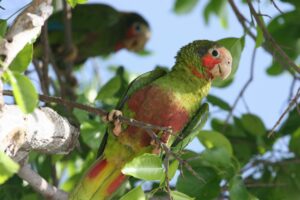
Monitoring these populations is a major undertaking. Haakonsson explained that Department of Environment researchers use distance-sampling surveys across both islands, recording parrots seen or heard at established survey points and estimating their distance from observers. The data is then analysed to estimate overall population size and track trends over time.
The current nesting season, which runs from March through July, is a particularly sensitive period for the birds.
“Yes, Cayman parrots are nesting right now,” Haakonsson said. “They nest in natural cavities in mature trees such as black mangrove, almond and mango trees, as well as hollow palm trees.”
She stressed that nesting birds, eggs and chicks should never be approached or disturbed.
Poaching concerns
The warning comes as poaching remains an ongoing concern. While the National Conservation Act allows for fines of up to $500,000, actual penalties imposed by the courts have been far lower.
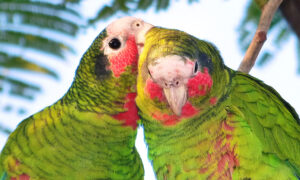
Haakonsson pointed to a 2021 case in which two Cayman parrot chicks were stolen from a nest. The offender was ultimately fined $2,000 and ordered to complete community service.
“When we quote the National Conservation Act with the maximum sentence of CI$500,000, we do ourselves a bit of a disfavour given that only CI$1,000 per bird is what was actually fined,” she said.
The department has worked to combat the illegal pet trade through education, enforcement and a 2019-2020 amnesty programme that allowed owners of captive parrots to legally register their birds. More than 300 captive parrots were documented, fitted with identification bands and microchips, helping authorities distinguish legally registered birds from newly poached ones.
Public awareness appears to be improving. In 2024, a social media advertisement offering a captive Cayman parrot for sale sparked widespread outrage and led to an investigation by the Department of Environment.
Habitat protection remains equally important. Cayman parrots depend on mature forests containing large, old trees that provide nesting cavities and food sources. As development continues, conservationists warn that the loss of these habitats reduces the birds’ ability to recover from hurricanes and other environmental pressures.
Parrots can be problematic for farmers
The birds feed on a variety of native fruits, flowers, seeds and buds, including wild fig, sea grape, mahogany and red birch. They may also feed on cultivated fruit and crops, particularly when these are abundant and easily accessible.
Haaksonnson acknowledges that the parrots can be problematic at times for local farmers and the Department of Environment has been testing a range of non-lethal crop protection measures with farmers.
“One of the more effective methods is playing species-specific parrot alarm calls, which can discourage parrots from remaining in a crop area.” Haakonnson said. She added, “Keeping fruit trees relatively low can also deter parrots as they prefer taller fruit trees.”
Haakonsson noted that the Cayman Islands are fortunate to still have thriving native parrot populations at all.
“The Caribbean has lost more than 50% of its parrot species to extinction,” she said. “We are therefore extremely lucky to still have them around.”
Related Videos