

Attendance, behaviour no longer enough
A revolution has occurred in the Cayman Islands education system, with the Ministry of Education rolling out new graduation requirements for all students of government high schools.
Previously, the only criteria for graduating from government schools were attendance and behaviour, meaning those who had achieved a higher standard during their high school careers were not necessarily distinguished from those who had not.
However, following consultation with teachers, employers and education stakeholders, a national qualifications framework, which has been designed to provide an easily understood and consistent system for evaluating and comparing qualifications, has been formulated and was announced 15 November.
“In the English system there is no graduation and students’ certificates are the consideration. Graduation is in fact an American concept, so we have been using an American concept in an English system, which was largely the result of parents wanting a ceremony for their children. We are going to continue having that ceremony, but the requirements to participate and be considered as having graduated are what we are focusing on,” said Education Officer Shirley Wahler. She said now all students who wish to obtain a graduation diploma at the end of compulsory education will also be expected to meet a minimum academic standard.
The new requirements mean there will be levels of diplomas that can be obtained, which correspond to certain passes or accomplishments.
For instance, a level 1 is the lowest standard at which someone can graduate from high school. This would mean that an individual would need five level 1 passes of CXC or CSEC grades 4 through 6 or GCSE/IGCSE grades D through G at the minimum to graduate. The equivalent standard of such passes would be equivalent to a middle school or junior high standard.
The range of requirements and standards for high school graduates range from level 1 through 3. Someone with a level 2 pass could fall into two separate categories, one being standard and the other of particular distinction or Honours.
Passes at CXC and CSEC grades 1 through 3 or GCSE/IGCSE grades A through C would be considered a level 2 or standard high school level qualification band. Essentially, five level 2 qualifications are recognised internationally as equivalent to a United States high school diploma and mark successful completion of secondary education.
International Baccalaureate or Advanced Placement diplomas and GCSE A Level passes or Associate Degrees will fall into the Level 3/Advanced Level band. At this level, qualifications indicate the individual is suitable for tertiary education.
“Whether CXC and GCSE qualifications have equal value or if BTEC qualifications compare to ICCSE passes or what the meaning of a COEA qualification and what skill levels does a person with these passes posses are questions that are often asked.
“The newly implemented levels will ensure that everyone in the community understands how qualifications are ranked and rated and how these match up with skills and knowledge levels,” said Education Minister Rolston Anglin.
The levels and their corresponding standards are being referred to as The Cayman Islands National Qualifications Framework.
In addition to the academic criteria, students will need 90 per cent attendance or more during years 10 to 12 and fewer than 15 days suspension during the said years.
If suspended, a student can work of days of suspension by remaining suspension-free over a period of time through agreed and monitored community service, in order to meet the graduation criteria.
Mr. Anglin said the new graduation requirements and the ability to quantify what level a student is at in terms of skills and standards “has the potential to transform our education system, both in terms of setting clear goals for students and providing much needed information for employers.”
Vocational training has not been left out of the package, with BTEC playing an important part in the new structure.
“It is conceivable that someone could graduate with strictly BTEC courses, though they would have to have Math and English Level 1 passes,” explained the minister.
Chief Officer in the Ministry of Education Mary Rodrigues said, “Our aim is to further develop the National Qualifications Framework to include technical and vocational education and training, as well as work-based training qualifications achieved through overseas national training agencies and local providers.”
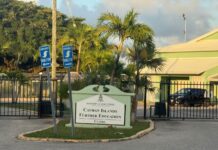
Students who do not obtain optimum standards during high school have the ability to attend the Cayman Islands Further Education Centre/CIFEC, to resit exams or take new exams of a higher standard.
Related Videos











Not that the US education system is the greatest to compare or base any systems on. But this is however to me a good thing, it will give school aged youth something to work for if they want to stand out from the crowd, and those who work harder to achieve a better standard deserve to be distinguished from the rest. It only serves to make hard work pay off. It will also give perspective employers a way to distinguish the hard working and committed youth from the rest when considering them for employment. In the long run young people will realize that they have to work hard and excel in school if they want to get that job and obtain a certain standard of living.
A long time coming but it is finally here. A framework that students and prospective employers can relate to. Having a student walk across the stage because they attended school for a specific number of days and didnt get kicked out for more than 15 days was nothing short of laughable.
I dont care that its modelled after any particular country whether it be the UK or the US. Its a model thats useful and meaningful and there is a standard. Students must now perform or do without the certificate. I am sure the system will allow for the special needs of those students needing alternate programs.
This government has been in office for 2 years so far. Mr. Anglin has been the Minister for Education and Labor for the same length of time.
Do you really think that this is a star in the crown of his performance? Think again.
Take all heads out of the sand now.
The UK is on their case and I mean on their backs with a whip.
The UK Partnership for Progress and Prosperity includes this Graduation requirement initiative and its NOT the idea of those who live in our society, be it the Education Officer, or Rolston Anglin or any school Principal. The feedback on the UK website gave the UK a true picture and a snapshot of what life looks like for our young people.
Trust me on this one. This is a mandade, not Rolston’s idea, he’s not that interested. If he was this would have been done 2 years ago.
I don’t think Caymanians realize just how serious the UK is about our local government organizing for Caymanian. They mean business.
Read between the lines. No more personal and special interest advocacy. The UK now clearly wants our government to deliver substance to the Caymanian people and not symbol.
The new graduation requirements is long overdue. I am so delighted to hear of this change in graduation requirements, which I have strongly advocated for a long time. In the past, it was grossly unfair to the achievers who worked hard, studied hard, applied themselves, sacrificed play, pleasure, and idleness to achieve academic success. These students are the real graduates and must be fully recognised.
I endorse the levels of diplomas that can be obtained. This makes a lot of sense and present students and parents with choices and indeed some incentive to meet particular objectives. It is also a good move to facilitate those students that don’t actually obtain optimum standards to have the ability to attend Cayman Islands Further Education Center to either retake exams or sit exams that are of a higher standards.
Kudos to all concerned who contributed to bring about this long awaited necessary change.
You make a good point Dubai and you’re most likely right. But whatever or whoever made it happen. It’s a good thing and hopefully more good things like this will happen under the whip…