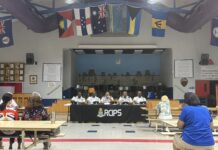
Justice Charles Quin will give a written judgement as to the guilt or innocence of Raziel Jeffers as soon as possible, but he has to wade through much evidence and testimony.
There had been about 50 Crown witnesses and four for the defence.
In their closing speeches this week, prosecution and defence attorneys agreed the Justice must be satisfied that Jeffers murdered Marcus Leon Ebanks and attempted to murder four other people in a shooting incident in West Bay on the evening of 8 July, 2009.
Andrew Radcliffe, assisted by Deputy Director of Public Prosecutions Trevor Ward, submitted that the case against Jeffers was proved by both the identification evidence of shooting victim Adryan Powell and by the evidence of Jeffers’ confession to Megan Martinez, the mother of his child. Mr. Radcliffe called gunshot residue evidence powerful and cell phone record evidence devastating in their support of the two main witnesses.
In response, Peter Champagnie said Justice Quin had earlier ruled there was a case for Jeffers to answer, but now the judge had to “exercise your jury mind” because the standard of proof was much higher at this stage – beyond reasonable doubt.
“If there are any doubts they must be resolved in favour of the accused,” the defence attorney said.
“It is our contention that Your Lordship cannot be satisfied to the extent you feel sure,” Mr. Champagnie said.
He described the Crown’s main witnesses as not credible.
Adryan, 14 when he was paralysed by his bullet wounds, was mistaken when he said he recognised Jeffers as one of the gunmen, Mr. Champagnie asserted. He referred to evidence that the people in the yard were smoking and drinking. After he was shot, Adryan told a neighbour who came to his aid, “Don’t tell my dad I was here.” What was the logical inference? Was Adryan participating? the attorney said.
He said the Crown had given the impression that Adryan was initially unable to disclose who had shot him because of his medical condition after being shot four times, including once in the face. But an ambulance paramedic and a hospital nurse both gave evidence that Adryan was alert.
Mr. Champagnie observed that both Adryan and Megan had said they knew Raziel in 2007, but Peter Polack of the defence team produced a letter from Northward Prison stating that Raziel was in custody from 2005 until March 2008.
Mr. Champagnie said Adryan’s evidence was untrue because he was mistaken in his fleeting glimpse of the gunman, but Megan’s evidence was untrue because of malice.
“Hell hath no fury like a woman scorned,” he commented, referring to her own evidence that Raziel left the home he had shared with her and the baby and she suspected him of forming a relationship with another woman.
The Crown had argued Ms Martinez could not have known certain things if she had not received Raziel’s confession because the cell phone records supported her account. She had given her statement to police in May 2010 and Intelligence Analyst Joanne Woods had not put the phone records together until September 2010. But, Mr. Champagnie said, Ms Woods did say she got material that had been prepared. The defence could not argue that such material would have been exposed to Ms Martinez, “but it is there for your consideration.”
He reminded the court that cell phone tracking tells only where the cell phone is; it does not tell who is using it. And even the location is not that specific because each cell phone mast covers a significant area.
As to gunshot residue, Mr. Champagnie said he was not suggesting that two particles had been “planted” on a pack of Rizla cigarette papers Raziel had in his pocket when arrested. But the evidence was that Raziel had emptied his pockets for the station sergeant – how could there not be any gunshot residue on any other items, not on his clothes and not on his hands? The possibility of contamination was not something that could not happen and in all likelihood it may have happened, the attorney argued.
Related Videos