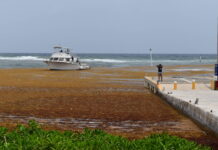
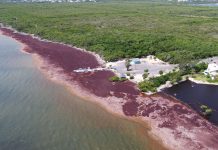
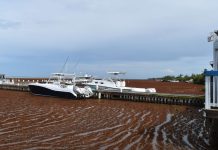
While driving along Seaview Road in East End, motorists with an eye for detail will have noticed isolated batches of orange vegetation floating on the sea before washing onto the dark grey iron shore.
The vegetation is sargassum, a seaweed that grows on the sea surface in the Atlantic Ocean. Researchers believe the isolated batches could foreshadow what the Caribbean region should expect for the rest of 2020.
Last month, NASA’s satellites captured images which showed almost clear seas in the Western Caribbean and the Gulf of Mexico. However, photographs paint a completely different picture for the Eastern Caribbean, where a moderate amount of sargassum was recorded.

According to researchers from the University of South Florida, that moderate development of sargassum amounts to more than two million tons of the seaweed which will find its way onto the shores of the Lesser Antilles.
“In March 2020, the sargassum amount increased significantly across the central Atlantic,” according to an information bulletin posted on the USF’s website on 31 March.
The bulletin continues, “In all [Caribbean] regions combined, the total sargassum amount increased from 1.6 million tons in February to [approximately] 4.3 million metric tons in March, similar to March 2015 (4.2 million tons) and March 2019 (4.7 million tons).”
For Cayman, which was inundated last year with sargassum, the crucial difference between 2019’s seaweed development and this year’s, is the location.
In 2019, the majority of sargassum in the area developed in the central and western Caribbean, putting Cayman at the centre of the tidal currents which ferry the seaweed around. However, this year the satellite images show the development in and around the lower Lesser Antilles.
“This is alarming for the coming months,” stated the bulletin. “Looking ahead, the eastern Caribbean will see large amounts of sargassum in April to June 2020.”
USF states that Cayman and the wider western Caribbean can expect small to moderate amounts of sargassum leading into summer.
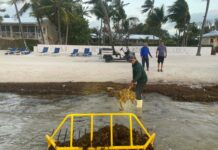
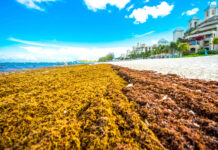
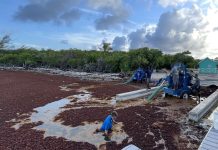
Last year, Cayman was heavily hit by sargassum, with miles of usually pristine beaches and rocky waterfronts buried beneath the seaweed.
To help combat the problem, government deployed the Public Works Department, which was later reinforced with workers from the National Community Enhancement Project to clear the beaches.
Related Videos