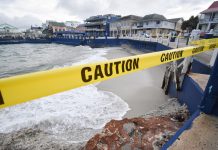
Climate change is an existential risk and countries, including Cayman, must do more to halt the rise in global average temperatures, Premier Wayne Panton said during the virtual Caribbean ESG Financing Summit on Wednesday, 17 Nov.
Speaking about his experience at the United Nations’ COP26 climate conference recently held in Glasgow, Scotland, Panton said Cayman had to make the necessary changes itself to be part of the solution.
“But the rest of the world, which is contributing the vast majority of the greenhouse gases, need to get on board and they need to make the moves necessary,” he said.
The target remains to limit global warming to a 1.5 degrees Celsius increase from pre-industrial levels. Without the necessary measures, a 2.4- to 2.6-degree Celsius rise is projected until the end of the century.
“Effectively, that means we’re failing, and we need to have a paradigm shift,” the premier said.
Even at 1.5 degrees Celsius there were already impacts such as in increase in storms. Panton noted that 2020 was a record year for storms and 2005 was the record year for Atlantic hurricanes.
In fact, 10 of the 15 most active hurricane seasons in the last 150 years have occurred since the year 2000.
Panton said these weather events have major socio-economic impacts on countries in the region. Anything from agriculture to tourism was heavily impacted by storms as well as by the changes in the environment, such as sea-level rise, ocean acidification and higher ocean temperatures.
“If we are not able to to maintain a maximum of around 1.5 degrees, we’re risking losing, for example, 80 to 90% of our coral reefs and this is an essential and integral part of our our tourism product,” he said. “It really does present an existential risk to us.”
On Tuesday, the Duke of Cambridge told the British Overseas Territories they are “on the front line” of climate change as he addressed representatives from 14 territories at a Foreign Office reception in London.
“Your contributions to global emissions are negligible, and yet you face the dire consequences of rising sea levels, changing weather patterns and the destruction of coral reefs,” Prince William said.
“Climate change is threatening the very survival of the territories, your ways of life, and the future of all your people.”
The premier echoed these sentiments, saying it was great that at COP26 so many Caribbean leaders were speaking on these issues and the impact they are having on many small island developing states in the region.
“It is in our interest to add our voices to the discussions around the world to implore the countries that need to make these changes to lower greenhouse gases,” he said. “To do so they need to move away from fossil fuel, especially coal.”
But Cayman would need to do its part, too. “And that means we’ve got to bring sustainability into everything we do both as a government as well as the private sector,” Panton added.
The reliance on traditional diesel-power energy stations in the Caribbean meant that every year huge sums of money were leaving the regional economies due to the cost of fuel.
Each year, Cayman imports between $130 million and $150 million in petroleum products for both energy production and transport.
New forms of energy generation such solar, wind, hydroelectric or geothermal were needed to build new industries that create economic diversification, additional jobs and save money, he said.
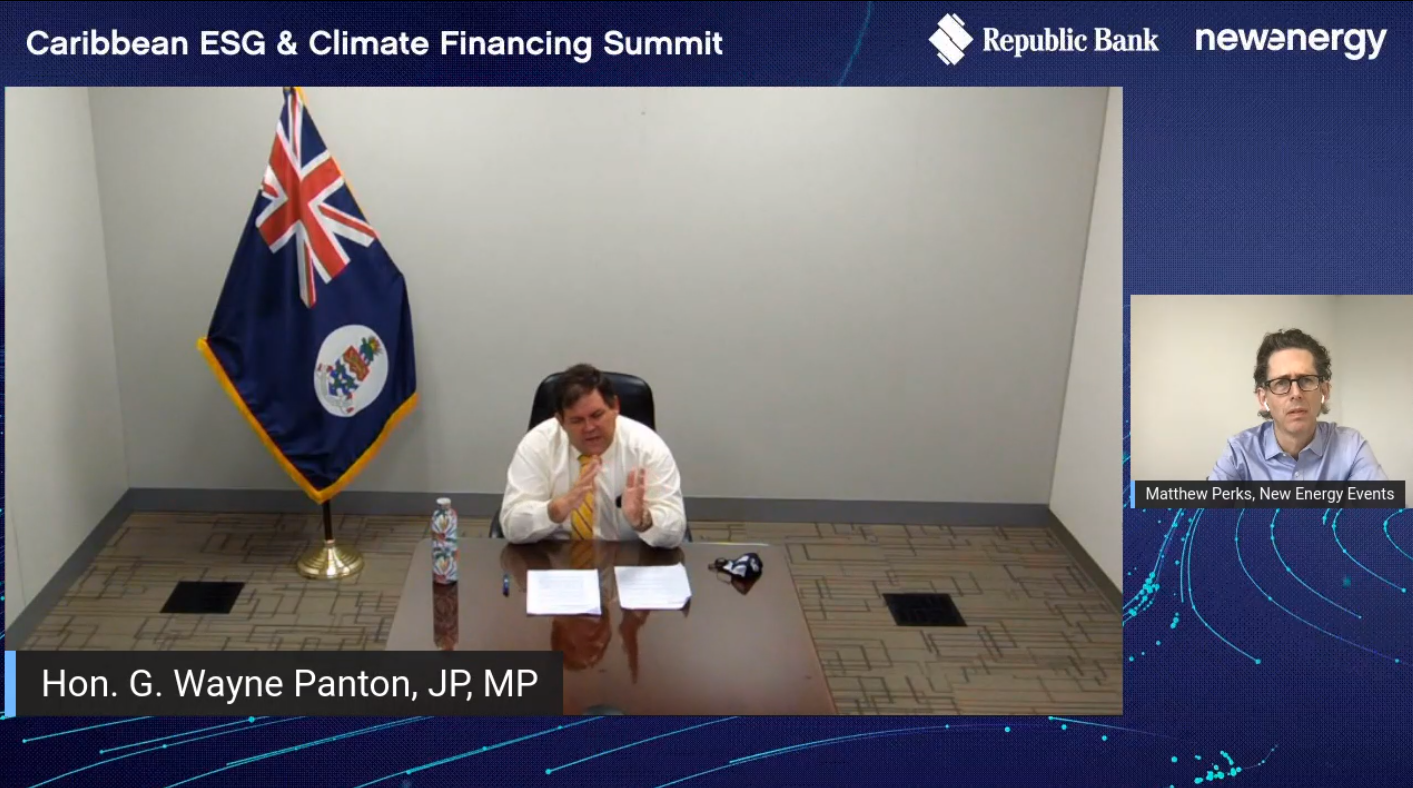
“I think there are lots of opportunities here for us. We just have to recognise what they are and and push very heavily.”
At the same time, the premier acknowledged, there are costs associated with shifting, which is causing most of the challenges. But the cost of doing nothing was much higher.
As many private sector organisations around the world are becoming more committed to environmental, social and governance (ESG) strategies, the potential for new, greener technology increases, he noted.
The Cayman Islands government recently provided $25 million in seed funding to the Commonwealth Climate Growth Fund.
The fund, which will invest up to US$50 million in private sector projects in Cayman, aims to drive private-sector investment across the Commonwealth to support green technology, help reduce greenhouse gas emissions, support adaptation, and build resilience to the adverse impacts of climate change.
“We see this as an opportunity for Cayman to be contributing in a very focussed way to the the development of ESG strategies,” Panton said, adding that the investment demonstrated his government’s commitment to sustainability and to being a part of the solution around the world.
The premier noted that governments alone cannot fund the energy transformation and need to work with the private sector organisations, not least because they have access to the financial markets.
“Sustainability is everybody’s business,” he said.
Related Videos