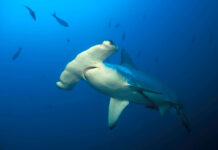
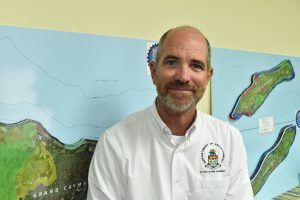
Department of Environment Deputy Director Tim Austin says sharks are likely to remain at Stingray City and the Sandbar which, he says, adds to the unique experience at the local Wildlife Interaction Zones.
However, he cautioned that sharks are protected in the Cayman Islands and is advising the public against approaching or engaging with the animals when encountered in local waters.
“Visiting the Sandbar is already a unique experience, cherished by many of our visitors, making it the number one visitor attraction in the Cayman Islands. The presence of uniquely rare and magnificent predators such as sharks should only add to the value of a visit,” he said on Thursday, as he responded to Cayman Compass queries about recent sightings.
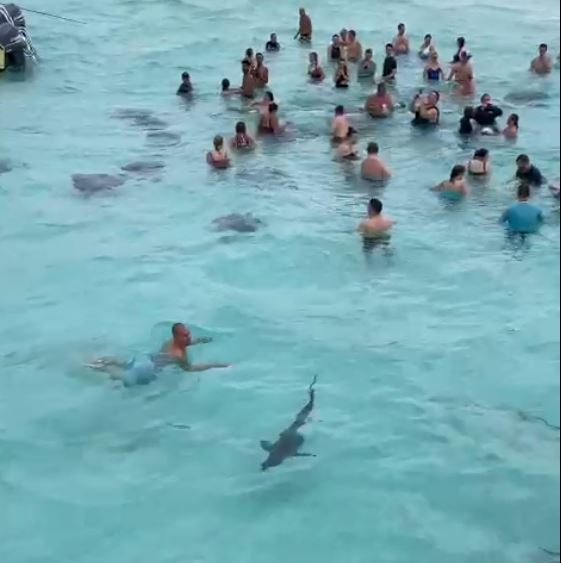
This past week a video showing sharks at the popular attraction has been making the rounds on social media. In it, the sharks can be seen circling close by boats, as well as swimming near the people in the water.
“The DoE holds firmly to the belief that local tour operators, visitors and residents should appreciate the incredible value of these species to our island ecosystem and tourism potential, and as such make every effort to enjoy the interaction in a sensible and controlled manner, by ceasing all Stingray feeding activities and calmly exiting the water,” he said.
Austin, commenting on the video, said while the efforts to shoo away the shark by slapping the water as well as the individuals seen trying to the approach the shark “are probably to be anticipated, it is worthwhile reiterating that sharks are a National Conservation Act (NCA) Schedule 1 listed species, meaning that they are totally protected at all times in Cayman waters. Efforts to harass or harm them are considered offences under the NCA.”
He noted that currently there is no legal mandate or NCA mechanism to evacuate the Sandbar should a shark appear.
“It remains at the discretion of the tour boat operators, who are best placed to manage their guests and each unique situation in the water referring to DoE recommendations, to cease all stingray feeding activity and calmly exit the water,” he added.
Sharks, Austin said, are a vitally important and totally natural part of Cayman’s marine ecosystem.
“Indeed, as the Cayman Islands continue to remain a leader in marine conservation around the globe, we can hopefully expect a recovering population of these, once deeply maligned and misunderstood, essential top predators of the ocean,” he said.
Austin added that through education and “with the use of common sense and some very simple adjustments in behaviour, it’s not difficult to adapt to the presence of sharks and capitalise on what they offer. This is their home, we are visiting.”
Sharks were expected to leave
Austin said initially the DoE anticipated that as more people returned to Stingray City and the Sandbar, the sharks would naturally exit the area.
“In the early stages, as the problem was identified, the DoE was quick to reiterate its stingray feeding guidelines that were already designed to reduce the potential for species other than stingrays to associate with fish feeding practices and become problematic. Within the DoE there was some initial expectation that as higher levels of visitor activity returned to the Sandbar the previously wary shark visitors would return to their more elusive behaviour. This is looking increasingly unlikely,” Austin added.
Only squid or ballyhoo are recommended to feed the rays at Stingray City or the Sandbar. “Any other forms of chum (fish bits) could be even more attractive to a curious shark and encourage them to associate people with food they really like,” the DoE has said.
During the previous two years of COVID-19 disruptions, visitor activity at the Sandbar declined considerably, he explained, and “coupled with local feeding efforts to alleviate concerns surrounding the long-term viability of the resident stingray population in the absence of regular feeding by visitors, potentially inappropriate food choices, outside of those specified in the DoE guidelines, were utilised”.
This resulted, he said, in a number of resident black tip sharks identifying the Sandbar as a good feeding spot.
Austin said that the DoE has always “remained concerned” about the practice of feeding wild animals in their natural environment and has consistently advocated against it.
“The Wildlife Interaction Zones (WIZ) were a compromise, within the wider Marine Protected Areas management system, recognising the need to incorporate the well-established practice of feeding stingrays as a local marine attraction, while preventing it from becoming problematic around the rest of the island,” he said.
He added that the regular marine patrols conducted by DoE conservation officers help to ensure compliance to guidelines and National Conservation Act requirements.
This, Austin said, now extends to advice regarding how local operators and Sandbar visitors should interact with both stingrays and the sharks, which remain protected at all times.
Operators are aware of protocols
He said the DoE has issued advisories for Wildlife Interaction Zone licence holders and water-sports companies throughout the last year on appropriate feeding practices at Stingray City and the Sandbar to mitigate attracting sharks as well as best practices if a shark is observed in the water.
In the Cayman Islands, sharks are protected and anyone found harming or illegally taking sharks from the water can face hefty fines and imprisonment.
Though the sharks in the video do not appear threatening, Austin advises the public to be alert and follow feeding guidelines.
“The video circulating on social media demonstrates many of the difficulties in managing encounters with wild animals. The two sharks obviously appear totally unannounced, meaning that many of the visitors in the water are not aware of their arrival,” he said, adding that while one of the sharks appears to depart immediately, the other shark seems intent on investigating the source of food in the water.
“What is evident, is that the remaining shark has no interest in the human visitors other than seeking the source of the food being offered to the stingrays,” he said.
It’s OK to take a picture but do not approach or engage the shark either trying to attract it or scare it away. Calmly exit the water and observe the shark from your boat.
– DoE
He said the shark sighting are “not totally unexpected” as the DoE has been aware of the animals in that area for several months and “remains vigilant to the potential risks to both shark and human visitors to the Sandbar”.
Austin added, “Indeed, DoE-led shark monitoring programmes have repeatedly tagged sharks in these locations, confirming their presence and use of the area. What is unusual is that, historically, sharks were not normally visible in the daylight hours when there were high levels of visitor activity at the Sandbar. Sharks have become a notoriously persecuted species with declines approaching 90% of their global populations, consequently they are wary of human activity.”
Have information on environmental offences?
Call a conservation officer:
Grand Cayman:
916-4271 or 916 5849Cayman Brac:
926-0136Little Cayman:
925-0185Or call 911
Anyone with questions about conservation issues or rules can email [email protected].
This video, which has been shared on social media, shows sharks in the water and individuals either trying to touch it or chase it.
Related Videos