Petrol prices are at an all-time high, electricity bills are through the roof, the national switch to solar power is barely gaining traction, and the telecoms industry is mired in a series of seemingly intractable disputes.
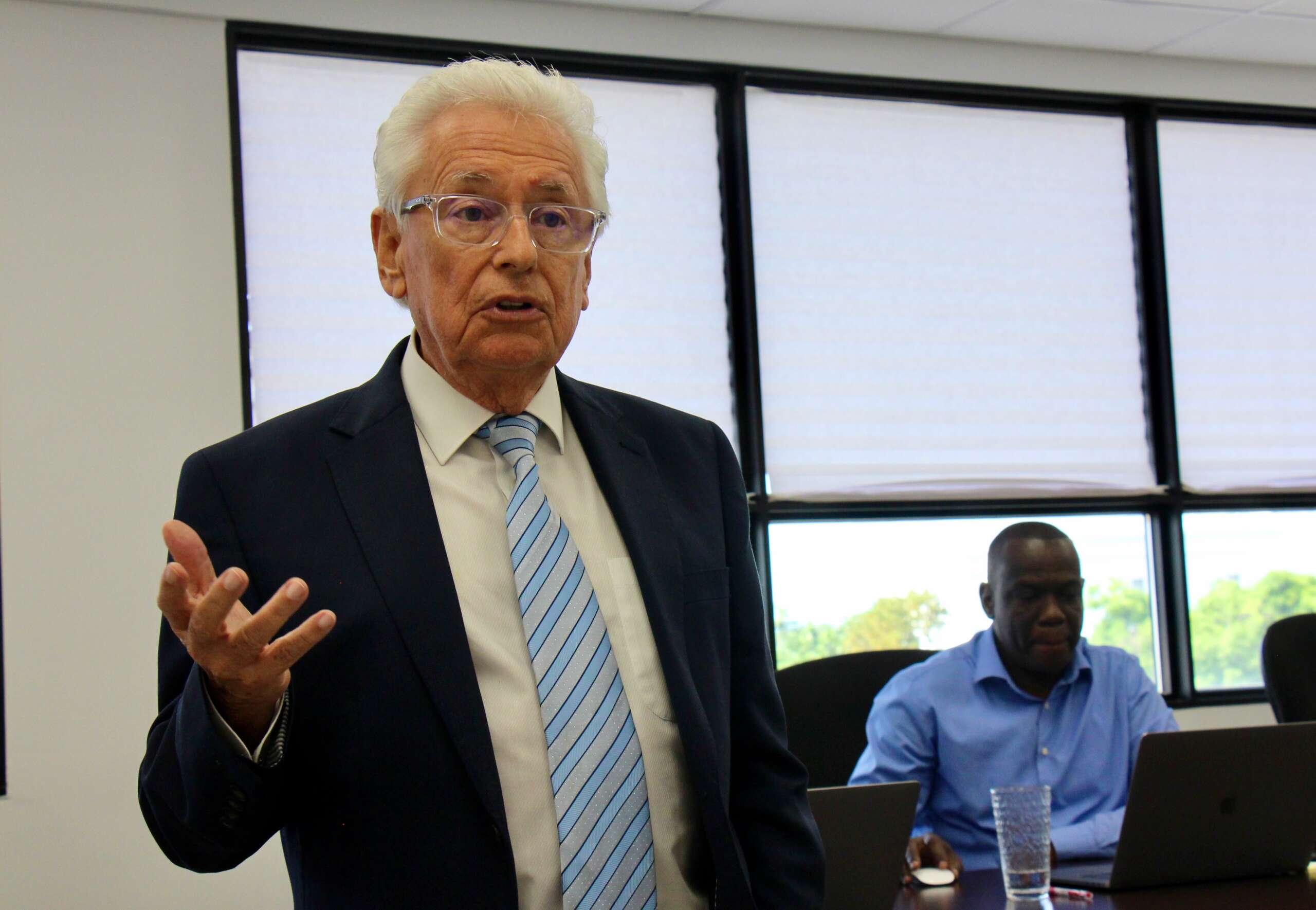
Peter Gough, interim CEO of OfReg – the regulator tasked with ensuring fair competition in the increasingly complex market place of Cayman’s critical utilities infrastructure – has a challenge on his hands.
“If we weren’t being criticised as a regulator, we wouldn’t be doing our job properly,” he said. “No one really wants to be regulated.”
Transforming the energy market, ensuring fairness in a growing phone and internet industry and keeping an eye on prices for consumers are just some of the items on his to-do list. Gough also wants to lift staff morale, fire up recruitment, improve training and transform the image of the regulator.
It’s true that OfReg has faced criticism from the companies it regulates. But the backlash has come from the public too, over prices, and from politicians and pressure groups, over the pace at which it has moved on transition to renewables or the roll-out of high-speed internet fibre.
Gough said his intention is to change the image of OfReg.
He doesn’t mind criticism, he insists. But he would like it to be fair and based on a true understanding of the agency’s role and what it is up against.
Fair market competition
OfReg doesn’t have the power to set prices, he says. Its role is to create an environment for fair market competition that ultimately drives down prices. In an island of Grand Cayman’s size, with a limited customer base, that is a significant challenge. But he points to telecoms, where multiple players jockey for position in an ever-evolving marketplace as evidence that it can be done.
“Where there is no competition, you tend to get higher prices,” he said. “Our major consideration is to encourage competition.”
The transition to renewable energy presents a similar opportunity for competition for power generation, an area that has been dominated by CUC since time immemorial.
Moving from a monopoly situation to a competitive market place is fraught with challenges, however.
In telecoms, the right of new players to access legacy infrastructure has been a source of conflict. Sonji Myles, OfReg’s executive director of Information and Communication Technology, said the regulator’s role was to ensure “the kids in the playground play fair”.
Establishing exactly what that involves can be complex. He cites a recent dispute resolution granting C3 access rights to the Maya-1 telecoms cable, which is part-owned by Cable and Wireless, as an important milestone that could mean lower costs for consumers.
Other debates – including over access to space off CUC’s poles to build out telecoms infrastructure island-wide – rumble on in the courts.
Lack of resources
Gough acknowledged that OfReg sometimes lacks the in-house technical expertise and the legal might to defend its decisions against global companies armed with a phalanx of expert in-house QCs.
The creation of OfReg – essentially a merger of the old Information and Communications Technology Authority, the Electricity Regulatory Authority and the fuels inspectorate, with additional responsibility for water – was one of the few cost-cutting measures from the 2014 EY Project Future Report that was followed through.
The changes, while increasing efficiency in some respects, have led to fewer people doing more varied and complex work.
“ICTA had 16 people to run just that one sector. We now have six people to do that job. The workload has increased but we have got less people,” Gough said.
It’s not just numbers. Expertise is a challenge.
Alongside a recruitment process, a skills and training exchange will take place with British regulators, who do similar work in a larger market. Leadership and management training is planned for OfReg’s senior staff. Gough describes this as a necessary “change management” process that will help fully realise the ambition behind the merger of the old authorities into one regulator.
Its ultimate goal and purpose, he said, is to protect and improve the national infrastructure of the Cayman Islands.
If there are frustrations around the pace at which it makes its decisions, he said the regulator is bound to follow the multiple steps set out in its originating legislation.
Free market
He believes OfReg needs to be more transparent about its role and its decisions.
That involves creating the environment for fair competition, achieving transparency on prices, and ensuring the islands’ utilities infrastructure is safe and resilient. It does not involve telling the businesses it regulates what they can charge.
“Cayman is a free market economy. We can’t tell gas stations what the price at the pump is,” he said. Work is taking place to ensure more transparency over costs from refinery to petrol station, he added.
“This is a worldwide problem. It is not something that is particular to Cayman,” he said.
“People misunderstand what our powers are – we regulate, but we don’t set prices.”
When oil prices spike, as they have done in recent months, Cayman’s response options are limited, he admits.
Consumer councils
One channel that Gough hopes to open up to ensure better dialogue between customers and the regulator is the creation of ‘consumer councils’.
“These will be community panels to give customer feedback and provide a two-way exchange between consumers and OfReg,” he said. “I am really conscious that we need to be transparent in what we do.”
“We don’t want to be hiding in the closet while people throw stones at us.”
Criticism comes with the turf, he acknowledged. But he wants people to appreciate the job OfReg’s staff are doing, and to be fair and balanced in their critique.
“We have good technical staff and they are working very hard under a lot of pressure,” he said. “It is a very dynamic market place and there is a lot of pressure on out staff. Negative comments lower morale.”
Related Videos