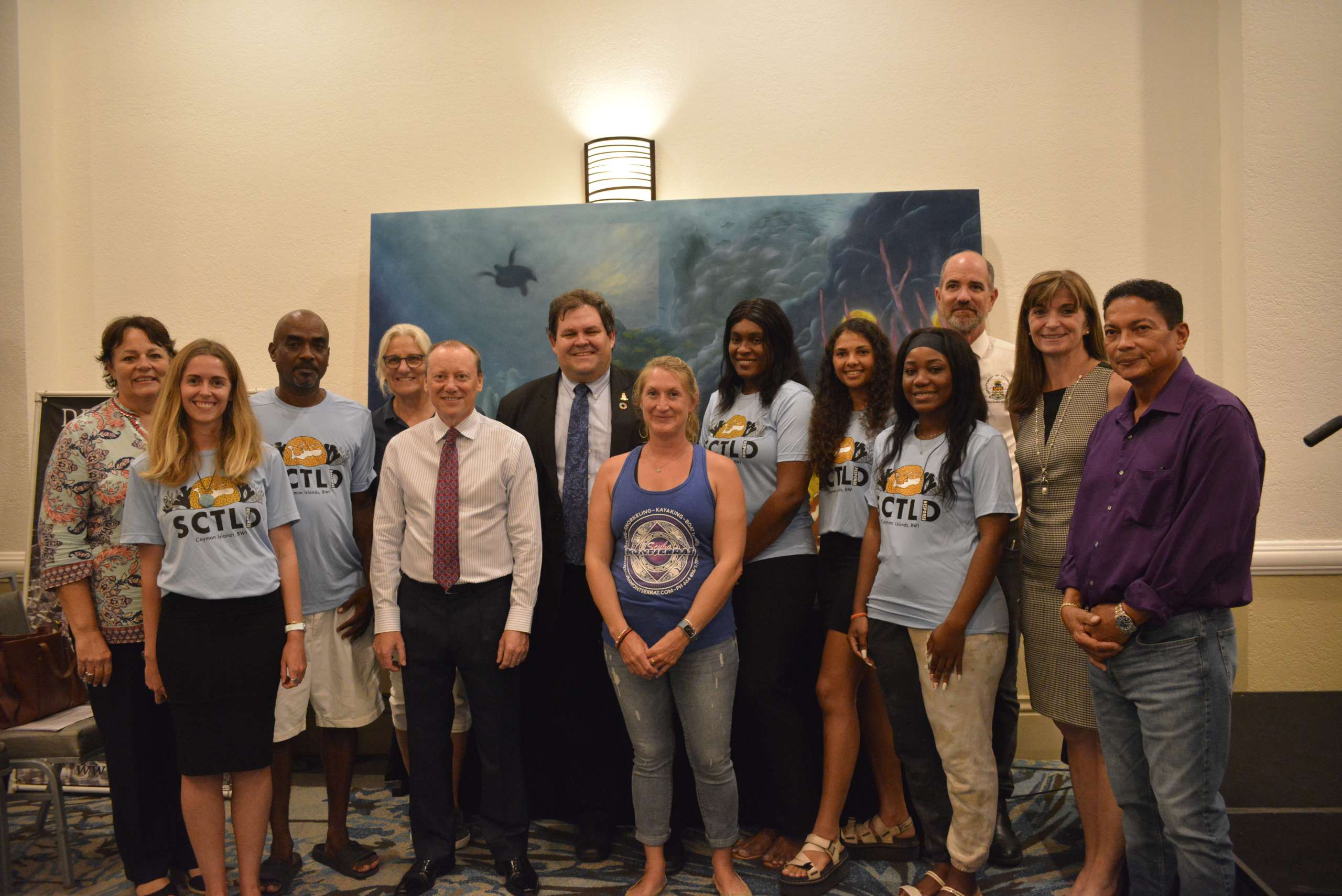
A new festival celebrating the beauty and importance of Cayman’s reefs, and also highlighting the many threats they face, finally went ahead on Wednesday after a number of COVID-related delays.
Coral Fest, organised by the Department of Environment, brought together vendors, environmentalists, marine experts and scientists, not just from Cayman, but from overseas territories throughout the region.
Held at The Westin, where a four-day regional conference is under way that is exploring the deadly stony coral tissue loss disease ravaging Florida and the Caribbean, Coral Fest was an opportunity to network, educate and entertain.

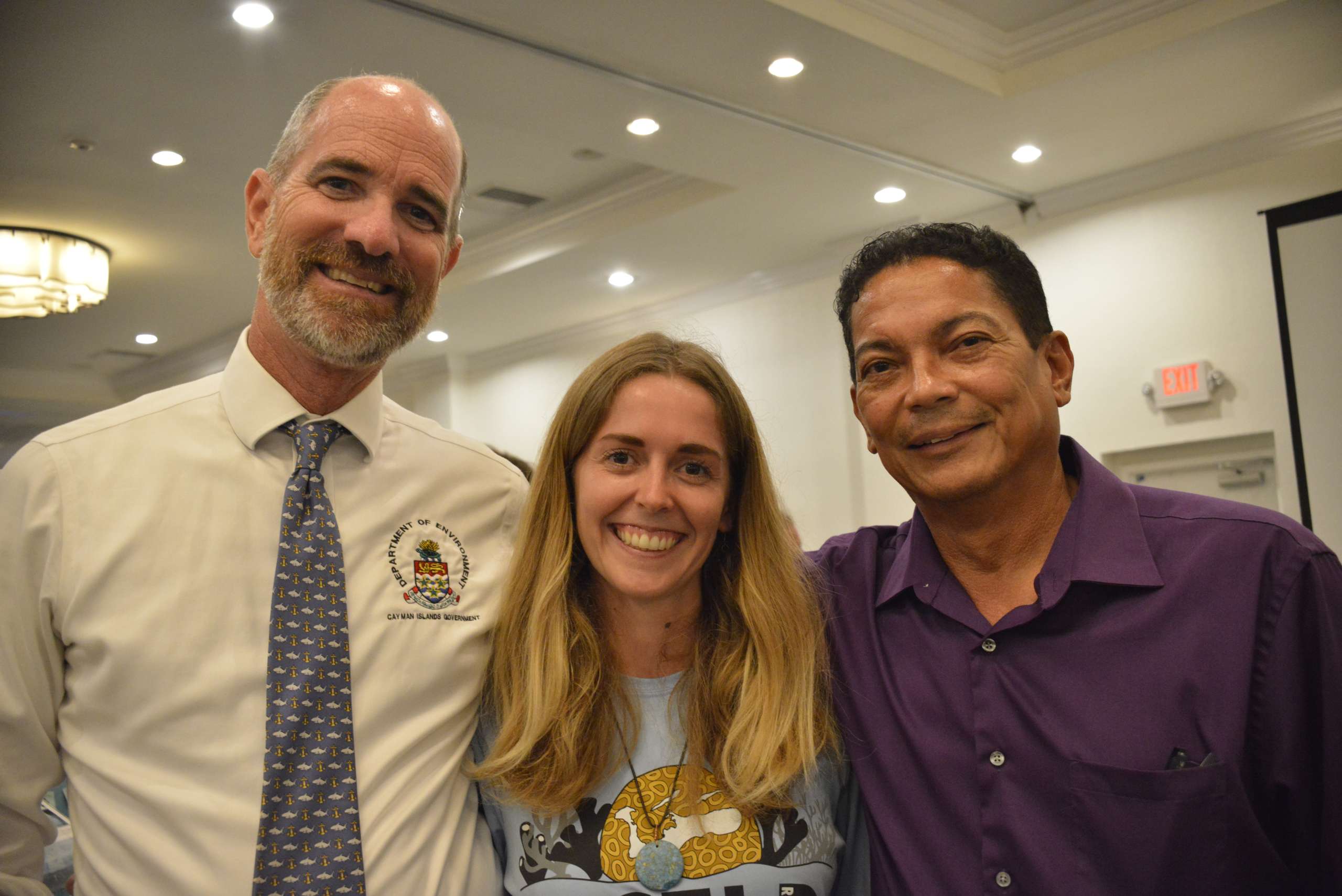
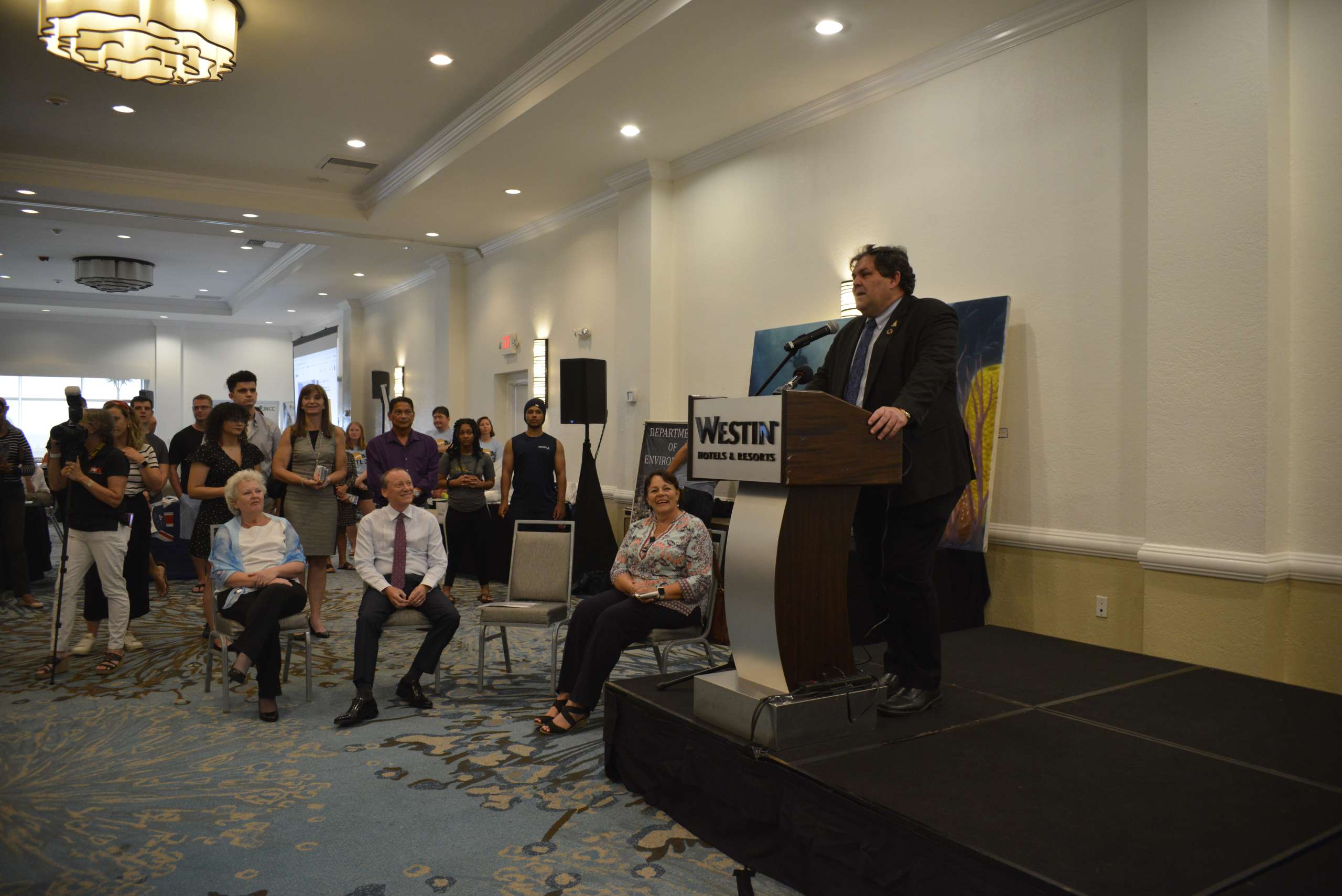
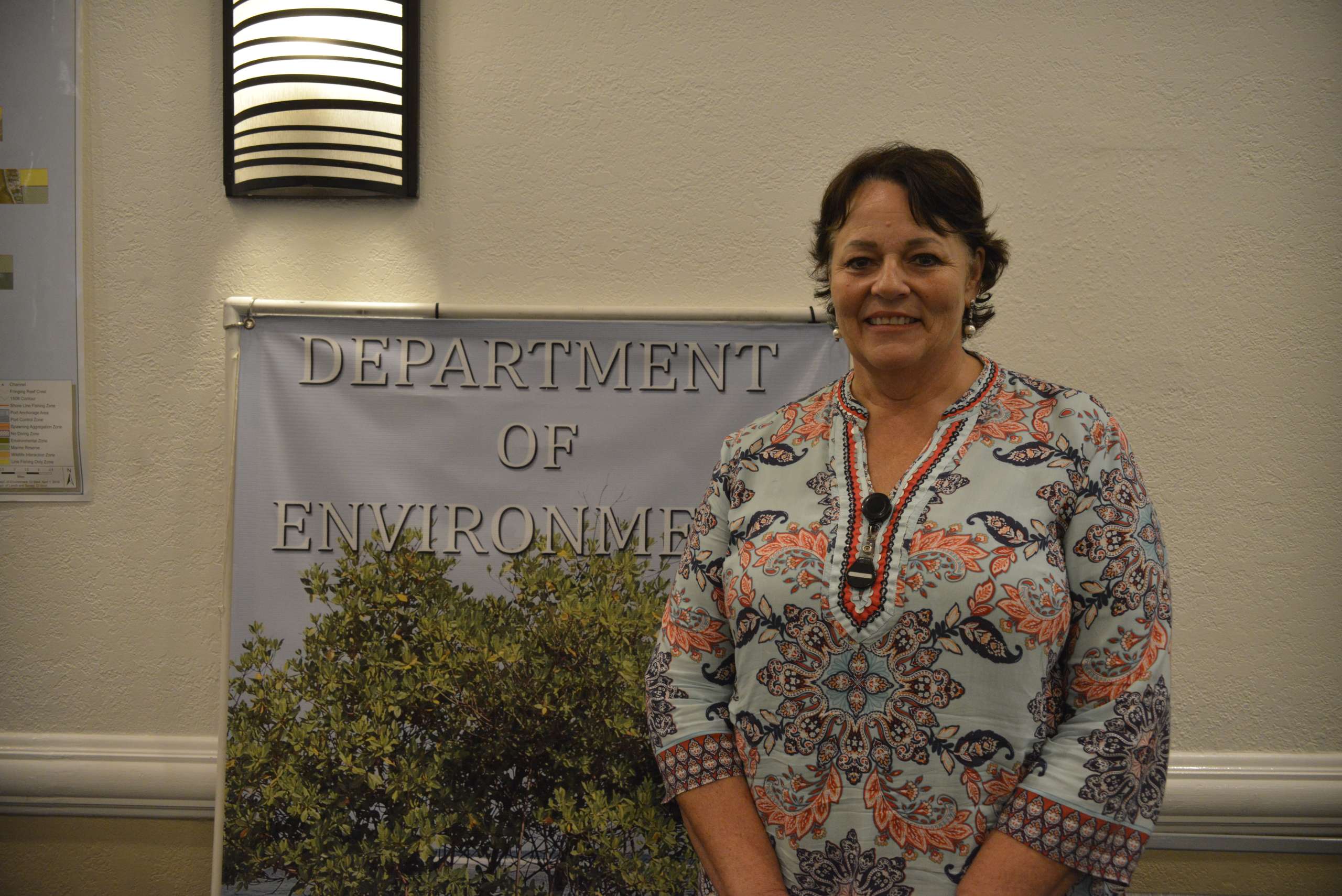
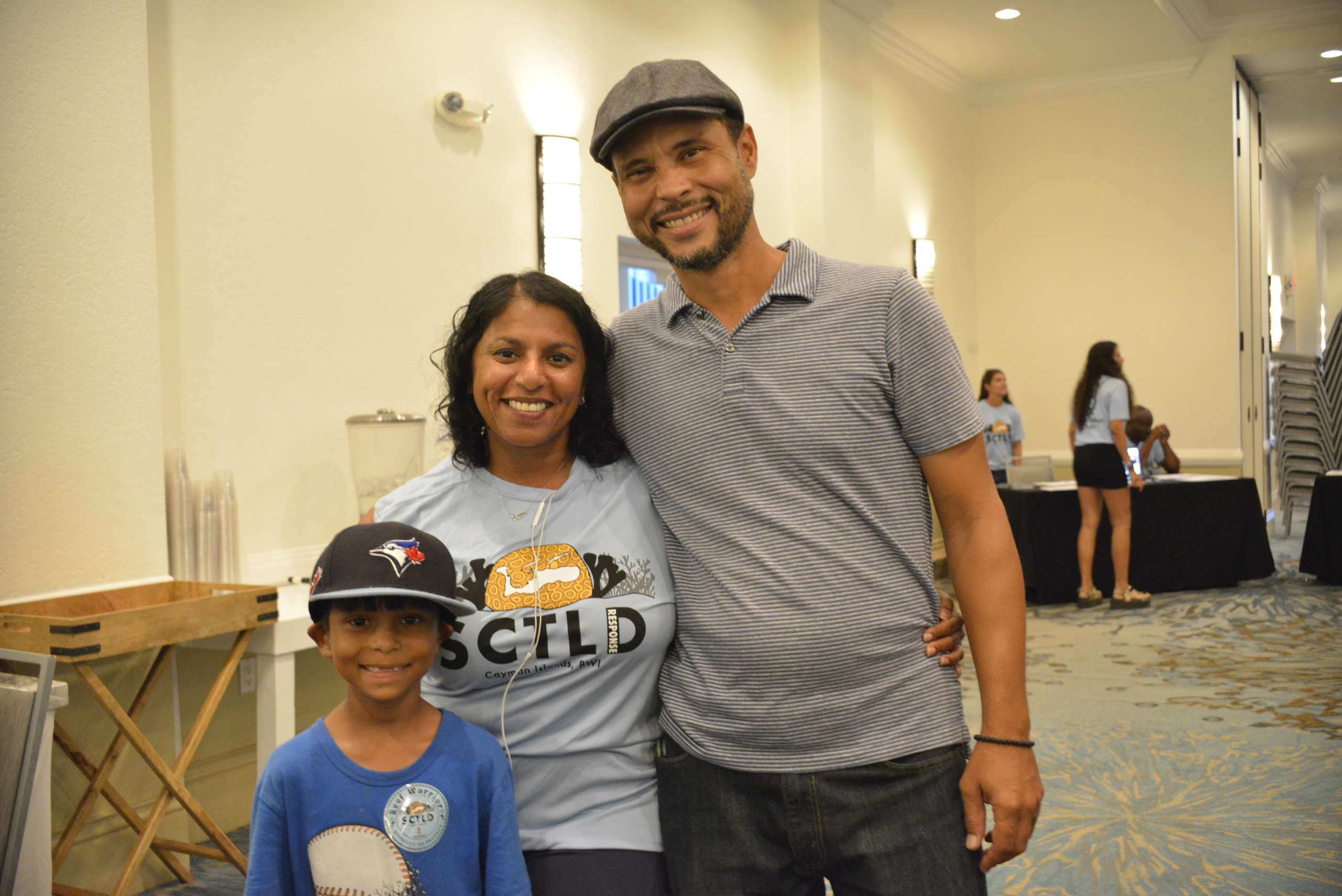
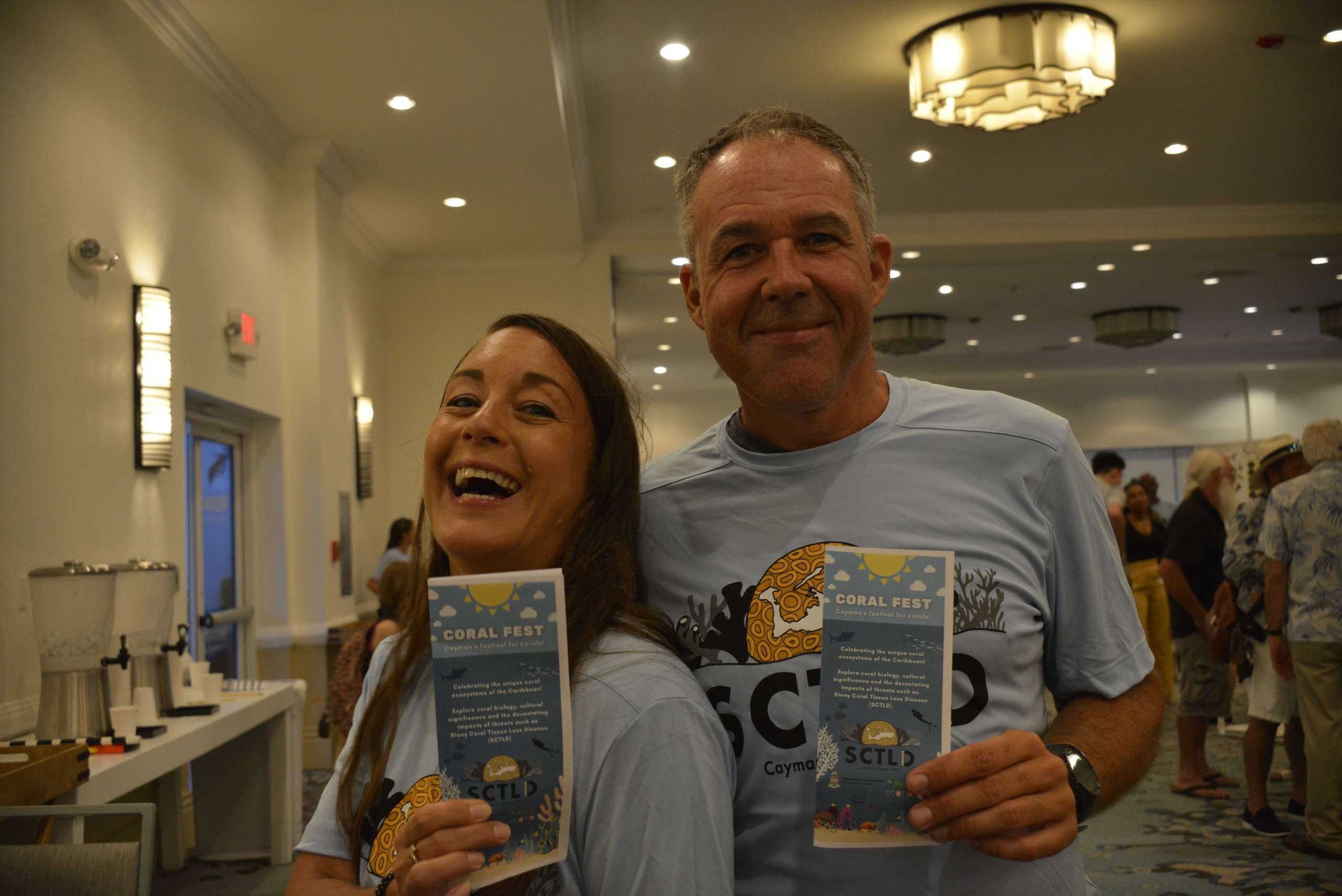
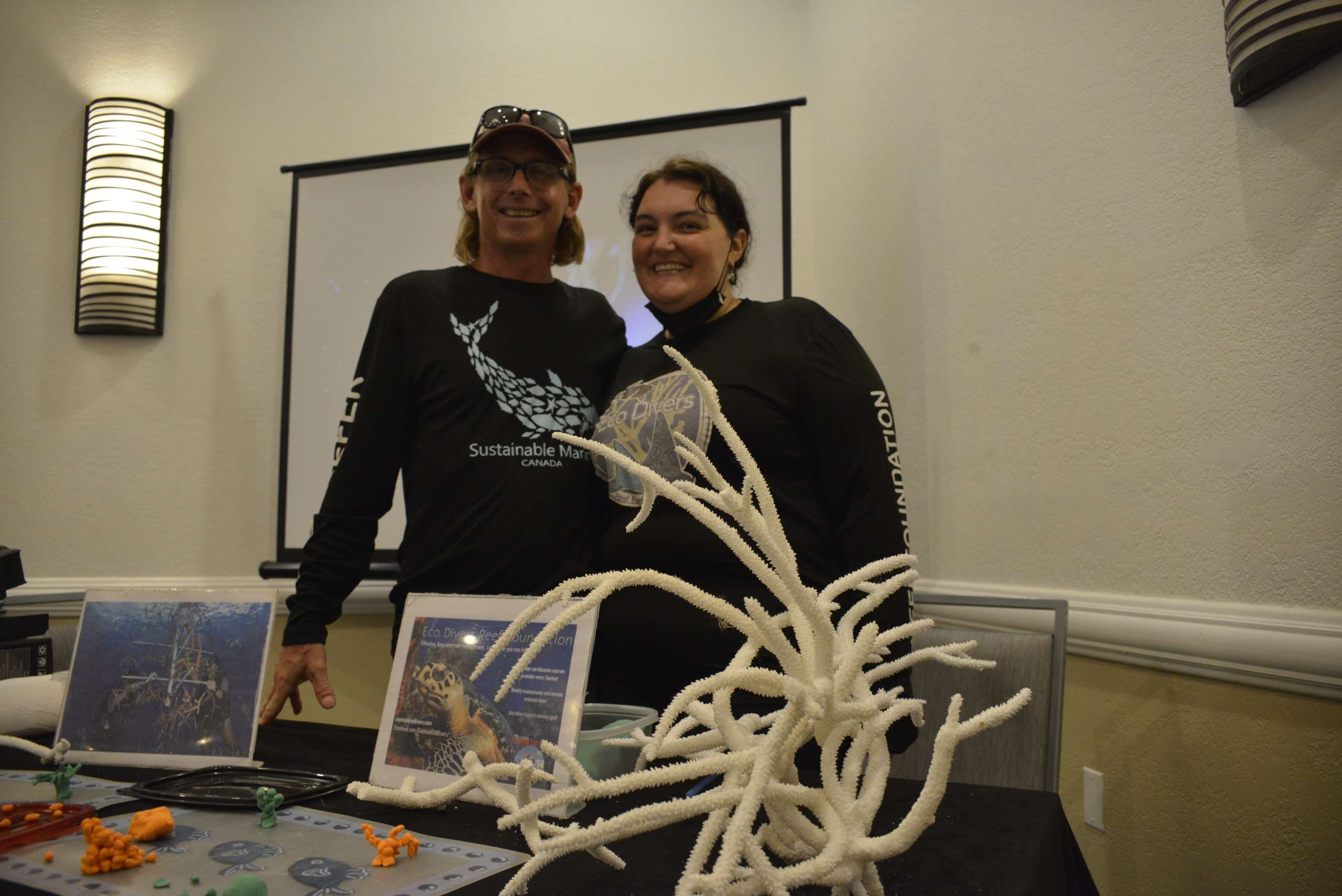
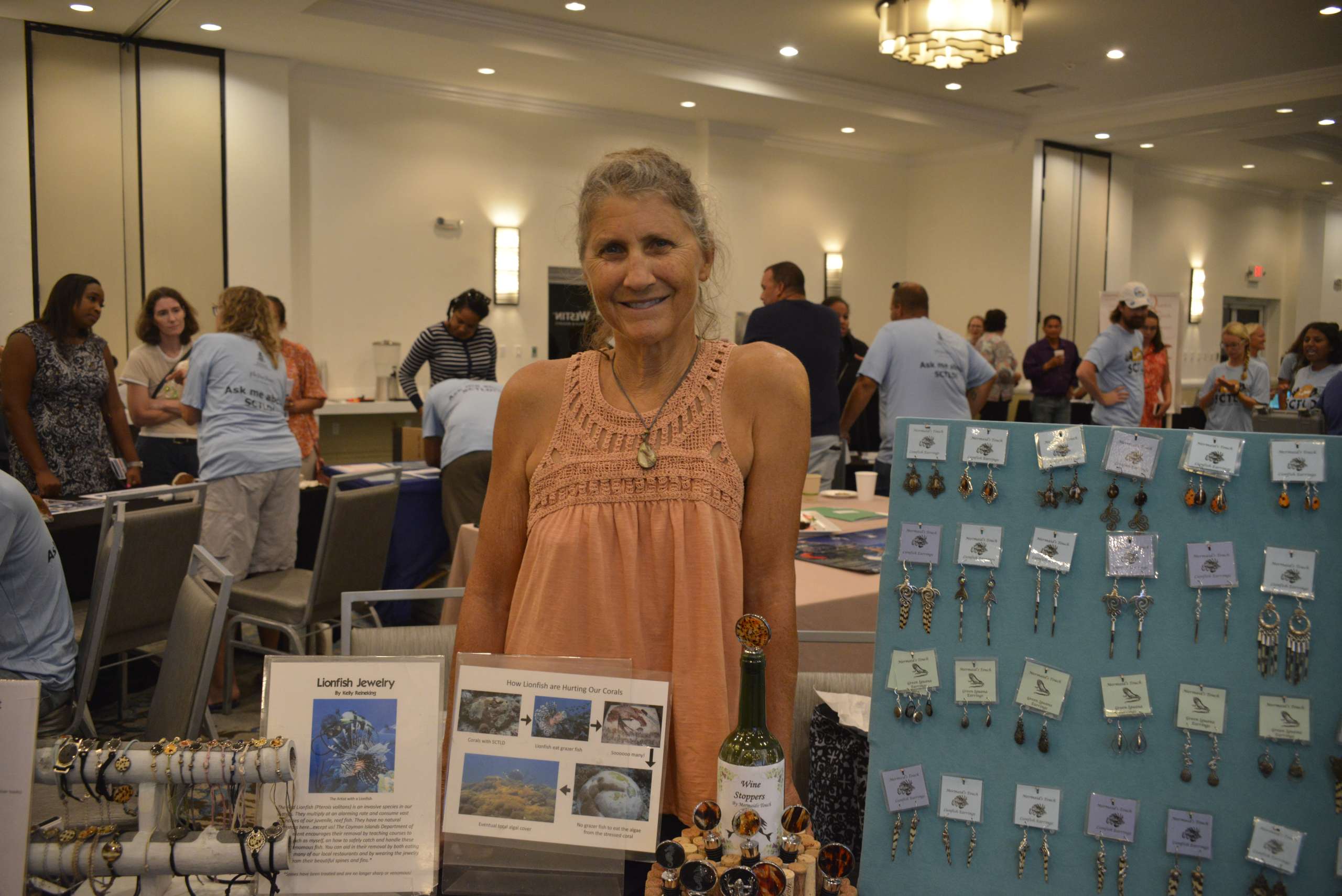
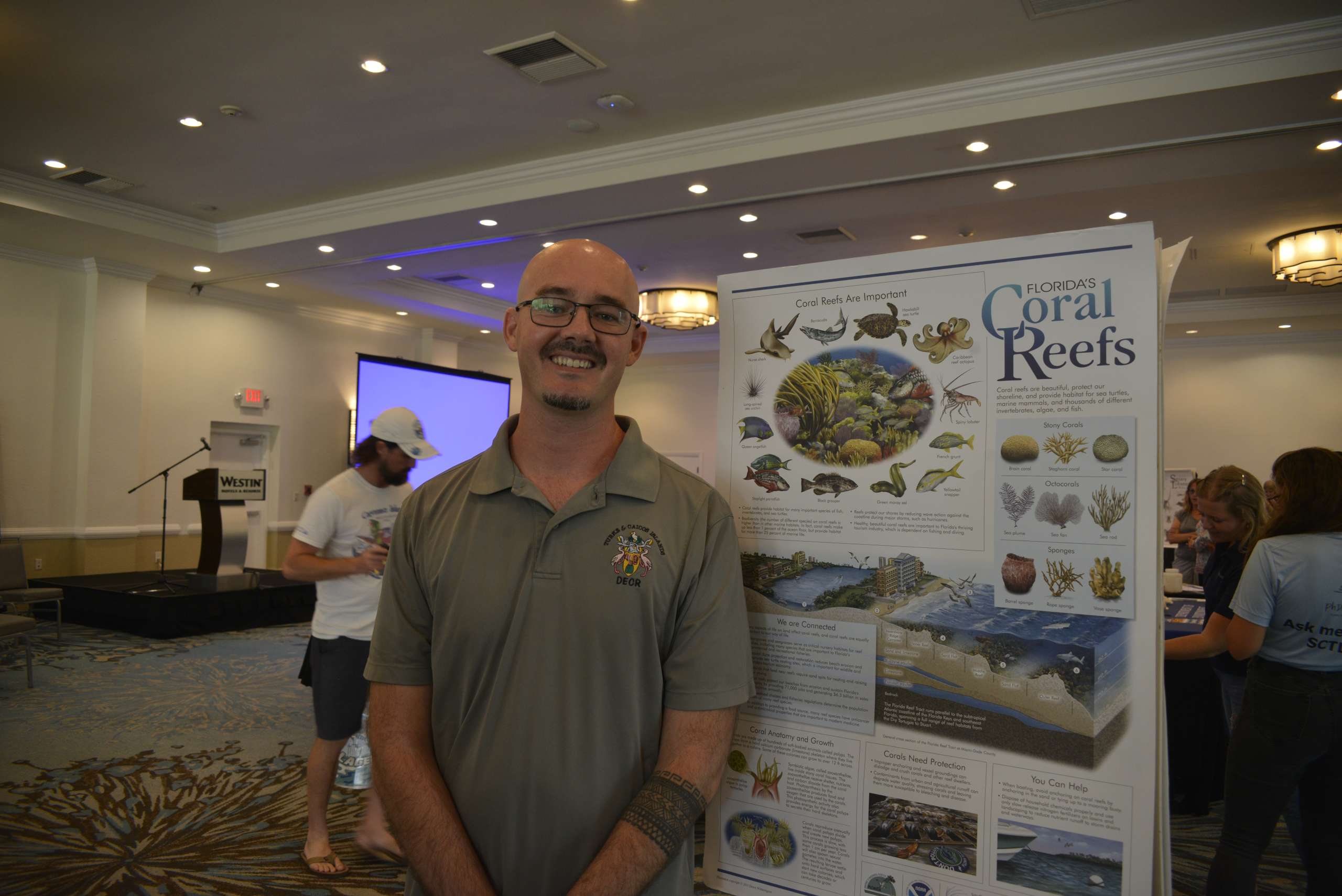
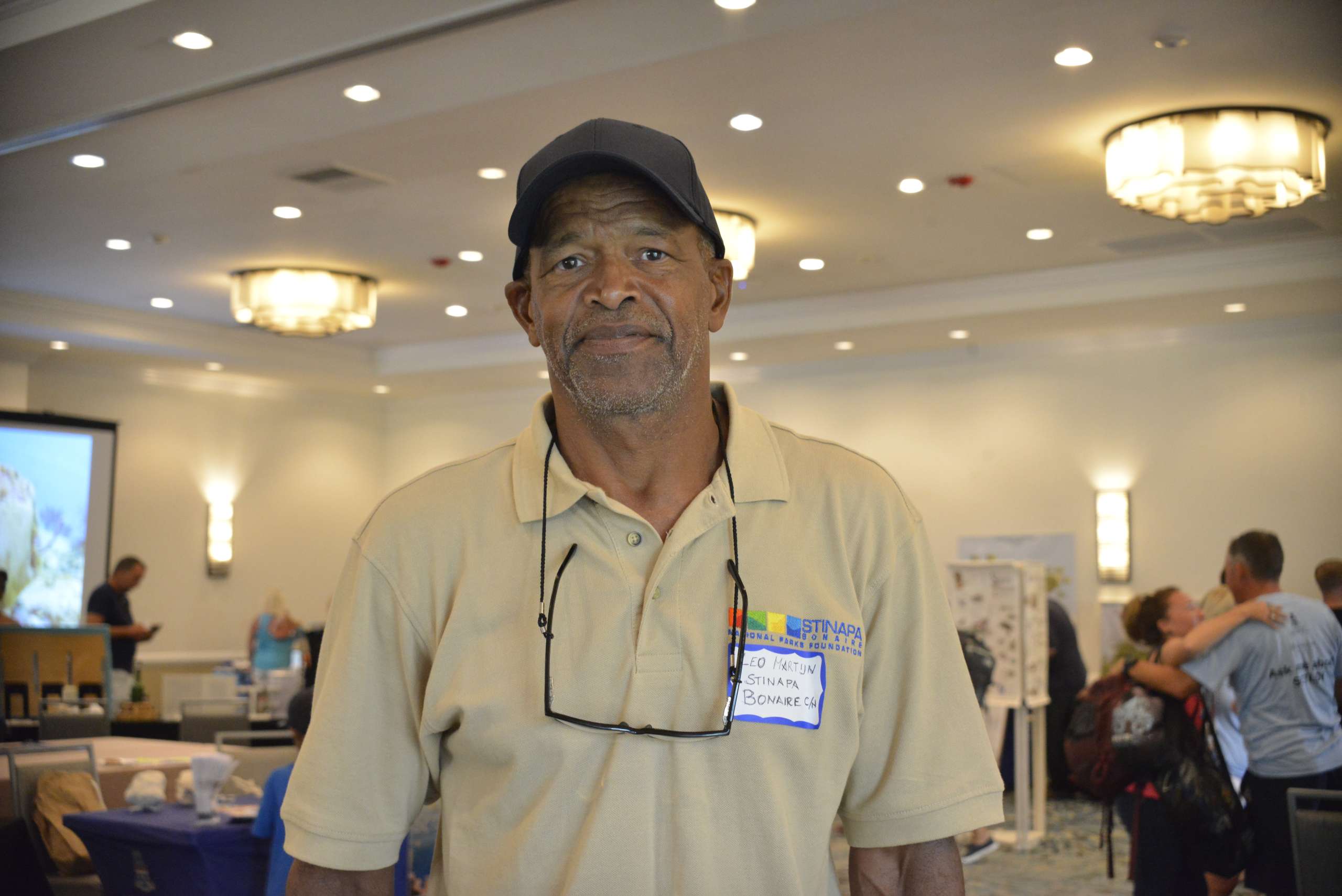
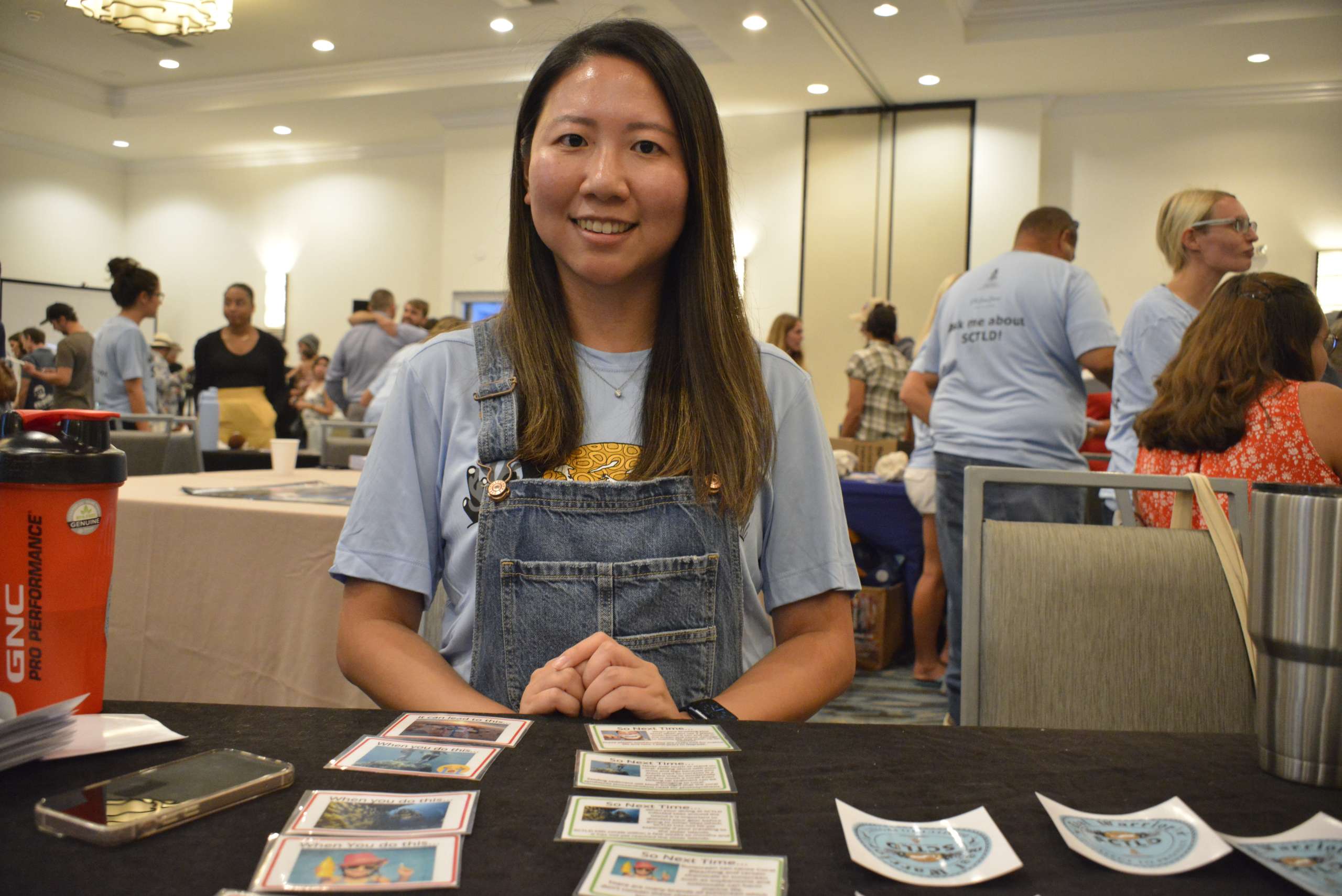
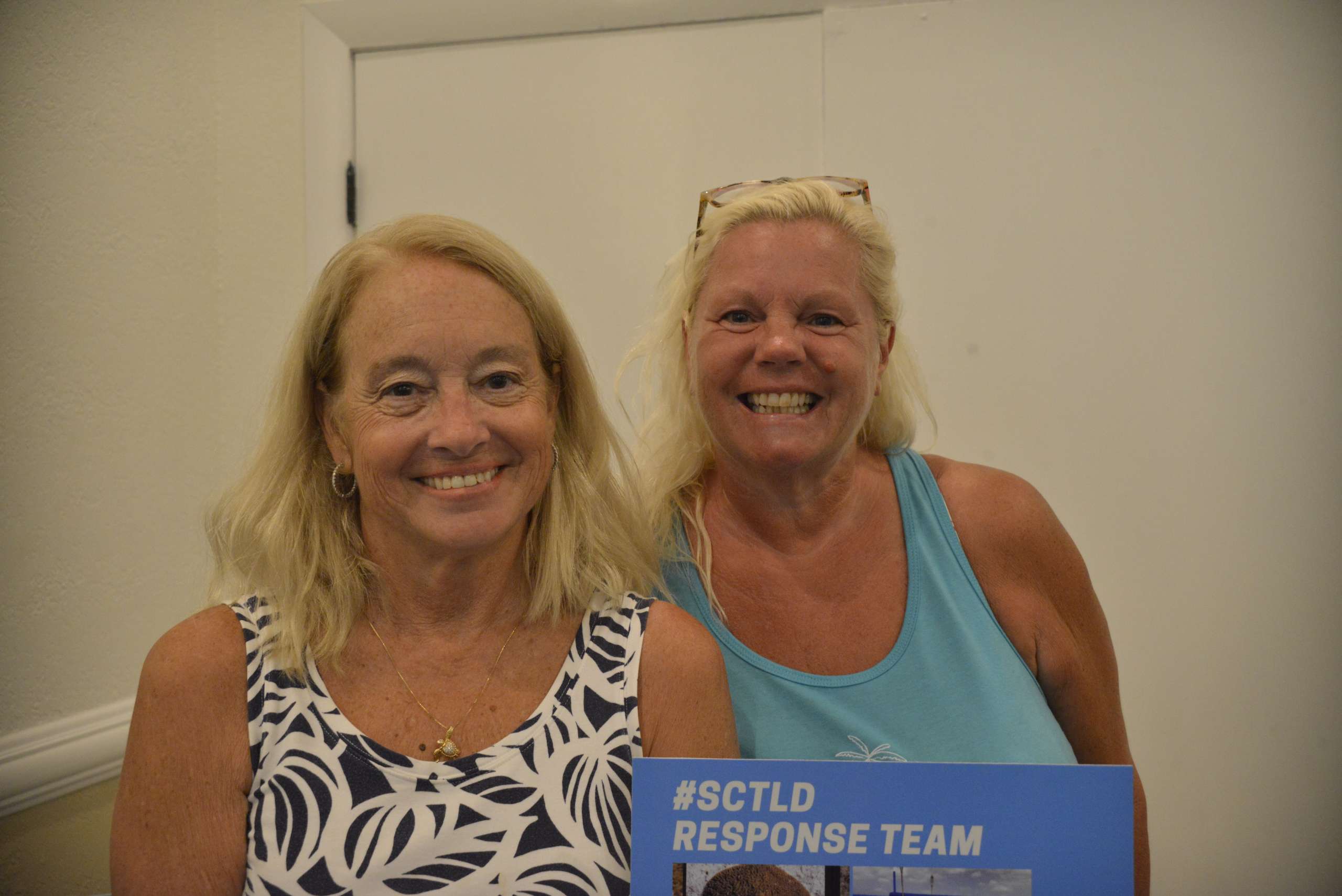
The festival, which had been postponed twice previously due to COVID restrictions, was attended by hundreds of children and adults.
Governor Martyn Roper and Premier Wayne Panton opened the festival, each giving speeches that outlined the importance of Cayman’s reefs to the islands’ economy, sustainability and survival, and the threat of stony coral tissue loss disease.
Attendees learned about the stony coral disease that is massively impacting the reefs in Cayman and across the region. A number of the conference delegates had their own stalls where people could learn about what work is going on in their island nations.
Probiotic protection for corals
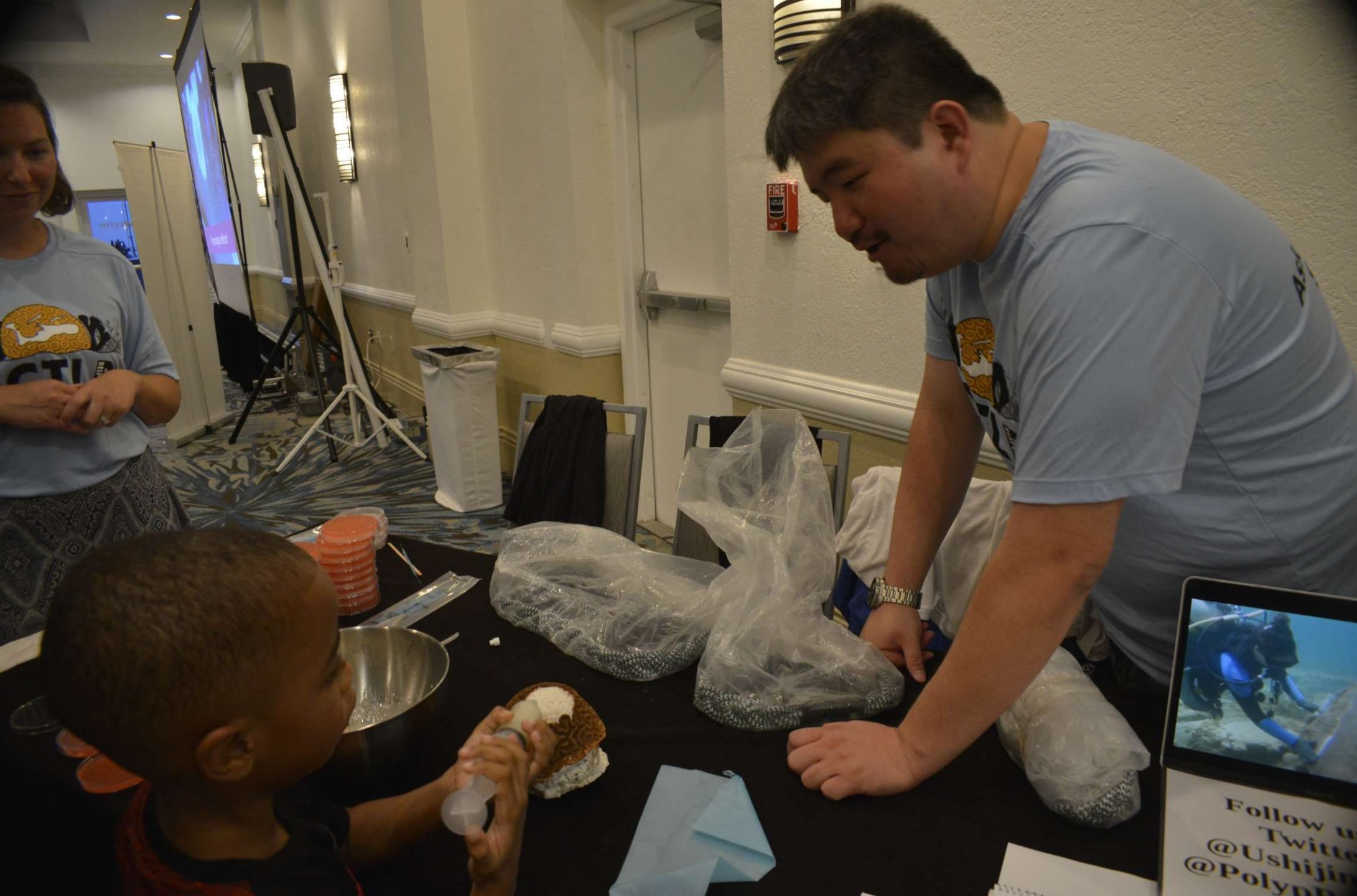
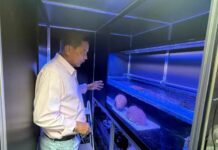
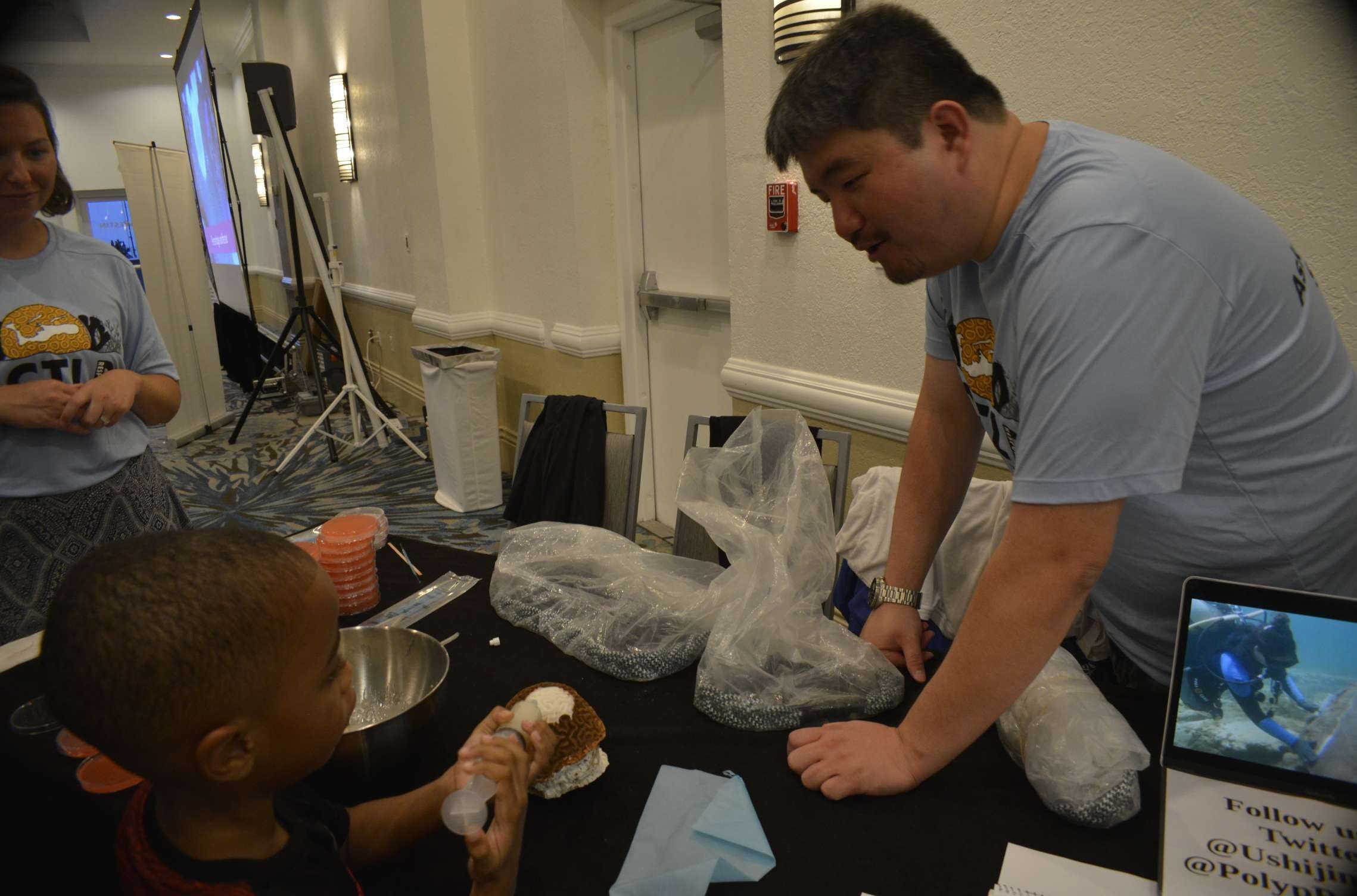
At one stall, Blake Ushijima and Erin Papke of the University of North Carolina Wilmington and Kelly Pitts of the Smithsonian Institution were demonstrating how probiotics they are developing can be applied to infected corals.
Keeping probiotic bacteria alive and viable in land-based conditions is one thing – bringing it on a dive and applying it 50 feet underwater presents an additional challenge, the scientists said.
“It is challenging when you’re trying to figure out how do you get bacteria onto a coral without killing the bacteria before you arrive in the field,” said Pitts. “And most of the places [where stony coral tissue loss disease is found] are high-temperature areas, so you have to have refrigeration sometimes or maybe we could figure out how to store or freeze-dry the bacteria. There’s a whole bunch of different ways to get it to the reef.
“Then the next challenge is applying that to the coral… [and] trying to figure out a paste that won’t kill the bacteria, that won’t kill the coral, but also keep the bacteria on the coral long enough for the bacteria to start growing on the coral.”
The answer to that, apparently, lies in weighted-down plastic bags that are placed over targeted corals. The probiotic is inserted inside the bag, which remains over the coral for about 20 minutes, during which the probiotic micro-organisms have a chance to penetrate the coral. After that, the bag is removed.
The probiotic can also be applied to corals in much the same way as an antibiotic is currently being applied – mixed with an epoxy to make a paste and applied to infected lesions on the coral using a large plastic syringe.
Fun and games amid serious subject
Many of the stalls offered the kids, and also plenty of the adults, a fun way to learn about corals, such as building out of plasticine the types of sponges and corals seen on tropical reefs.
Another stall gave everyone a chance to randomly choose a species of coral in a Plinko game (like a vertical pinball machine). Whichever coral name they landed on, they were given a quiz on that species, and were entered into a raffle draw.
Other stalls highlighted the work done by local organisations to help build back endangered corals on the reef, through coral trees and replanting.
The underlying message at many of the stalls was the serious threat stony coral tissue loss disease has on the reef ecosystems. The disease tackles the hard stony corals that are the foundations of many reefs.
Unlike earlier diseases, this one does not just infect one type of coral, but impacts at least 25 species of some of the most important and largest corals on the reef.
Coral disease ecologist Greta Aeby, who led technical sessions at the conference on how to survey, monitor and treat areas of infected coral, told the Compass, “In the history of knowledge of coral reefs, we have never had a disease outbreak at this spatial and temporal scale anywhere in the world. This is a completely new situation for all of us that have been working on coral reefs, so you have to take novel approaches and you have to try new things.”
Aeby has worked on the Florida outbreak – the first place in the world the disease was spotted, in 2014 – and has seen the impact the infections have had on many other reefs around the region. She is currently working in Hawaii, and while no sign of the disease has been seen there, Hawaiian authorities are already putting in place measures to deal with it if it shows up.
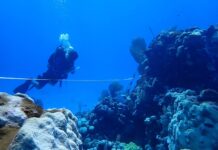
On a dive, she and other conference delegates took on Wednesday morning, in Grand Cayman, she said, even with many corals clearly being infected with the disease, she had encountered an encouraging amount of healthy corals.
“I saw more live coral there than I’ve seen in a long time in the Caribbean… and in Florida. So, that tells me that whatever environmental conditions you guys were creating for your corals here, it was working because they’re able to withstand this onslaught of disease outbreak in a much better condition. They’re more resilient compared to in other areas that haven’t been as proactive in thinking about what do our reefs need.”
Stony coral tissue loss disease was found in Cayman for the first time in June 2020, at Penny’s Arch, off Rum Point in North Side. By November 2021, it had encircled the entirety of Grand Cayman.
Related Videos