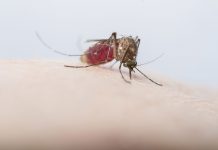
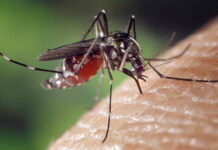
Hundreds of thousands of mosquito eggs that have lain dormant for years have hatched in recent weeks, causing a dramatic surge in the population of the biting insects.
Now the winged pests are sending Cayman’s residents flying for cover as the Mosquito Research and Control Unit grapples to get the problem under control.
The noticeable increase in Cayman’s mosquito population is obvious everywhere. At bus stops, children slap away swarms of mosquitos, restaurants serve repellent with the wine list and dog-walkers cover their skin from head-to-toe in spite of the heat.
Across social media, residents have expressed their frustrations, with some saying the mosquito levels are similar to that of the 1960s, when reports were published of mosquitoes swarming in such large masses that they smothered cows in sugarcane fields at night.
“The iguanas practically disappeared, and the mosquitoes reappeared with a vengeance!” wrote one user on Facebook. “Tonight, they swarmed inside when I opened the front door at 7pm! I chased them throughout the house and was killing them by the twos. I hope they get them under control soon otherwise we will have to bring out the smoke pots of yesteryear.”
The species of mosquito on the rise is called the Aedes taenorhynchus, or swamp mosquito.
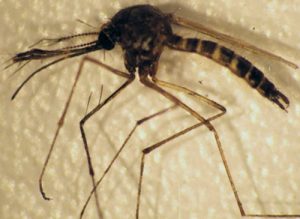
Unlike its smaller sister species, the Aedes egypti, which prefers to live in urban areas among humans, swamp mosquitoes live in Cayman’s central marshlands. They are larger, stronger and capable of flying great distances.
According to MRCU Director Alan Wheeler, the recent swarms of mosquitoes hatched from eggs that were laid several years ago during the passage of flood waters, probably linked to the severe weather events of 2020. The recent king tides caused them to finally hatch.
“These mosquitoes lay eggs in the warm soft soil where they can stay dormant for years,” said Wheeler. “The recent unseasonal flooding that was caused by the high tides resulted in flood levels that have far surpassed our own records. The excess water has allowed those dormant mosquito eggs which were laid out of the reach of normal water levels to now hatch.”
The problem has been made worse because just as mosquito numbers began to rise both of the MRCU’s mosquito-spraying aircraft were taken out of operation.
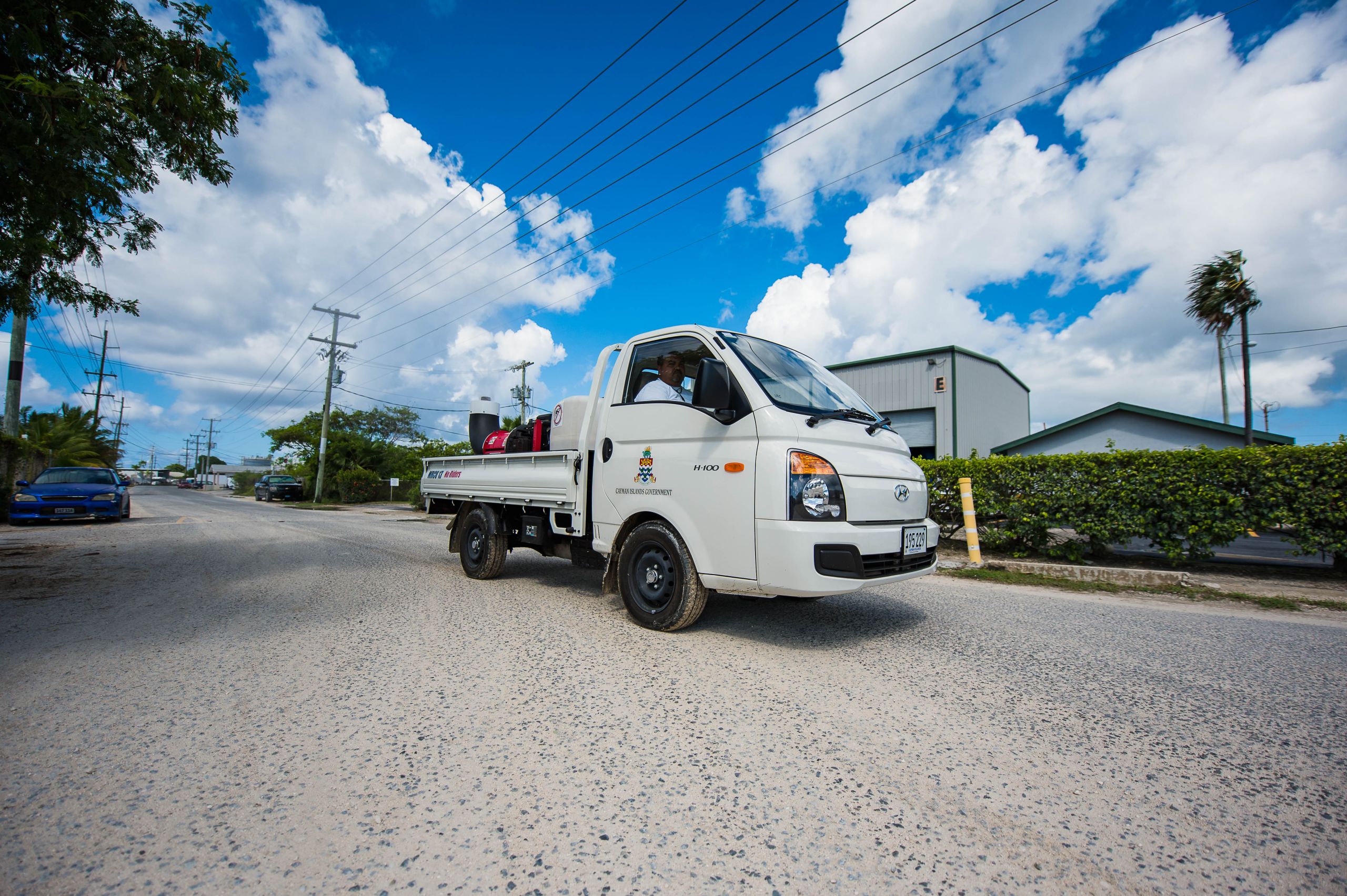
“One aircraft was out of operation for routine maintenance, and the other needed to be repaired,” said Wheeler. “We have nine trucks, each of which have been running non-stop, and our staff are working full days and then an extra four hours at nights.”
He added, “The problem, though, is that the trucks can only spray a narrow area.”
But despite these efforts, residents across the island say that has had little impact on the problem.
“The mosquito truck must be spraying sugar water,” wrote someone on Facebook.
Another posted a picture of a lint remover that was used to kill multiple mosquitoes on her pet.
“The problem will be brought back under control in the coming days,” said Wheeler. “We have all the resources, chemicals, equipment and funding that we need to get the job done. We just need a couple days to get the numbers under control.”
But Wheeler warns another outbreak of mosquitoes on a potentially larger scale is bound to occur but there is no way to know when.
“What has happened is that the mosquitoes from this batch will now have to lay their eggs, and when they do they will lay it near the water line,” he said. “But because the water line has risen due to the unseasonal flooding, these eggs will have to lay dormant [until] the next high flooding. We just don’t know when that will be.”
Related Videos