Dwayne McFarlane spent most of his childhood around his family’s livestock on Cayman Brac so it came as no surprise that he ended up rearing cattle himself.
Together with friend Felipe McField and landowner Pedro Lazzari, McFarlane formed Paradise Farms, which is based on the Bluff on the Brac.
Speaking with the Cayman Compass recently, he said entering into the livestock industry was destiny for him.
“My grandfather came from Jamaica many years ago. He died actually before I was born, and he started cattle farming [in the family]. My uncles and my cousins took it as far as they could and then I took it and elevated it to a level now where I well up with pride,” he said.
Family connection
McFarlane said that some of his fondest childhood memories are of his uncles tending their animals, adding this was where he found his love for farming and livestock rearing.
“I was always around animals. Anytime [my uncles and cousins] had to come up here to [the Bluff]… we had to walk up the side of the bluff and to the land here [where Paradise Farms is now],” he said.
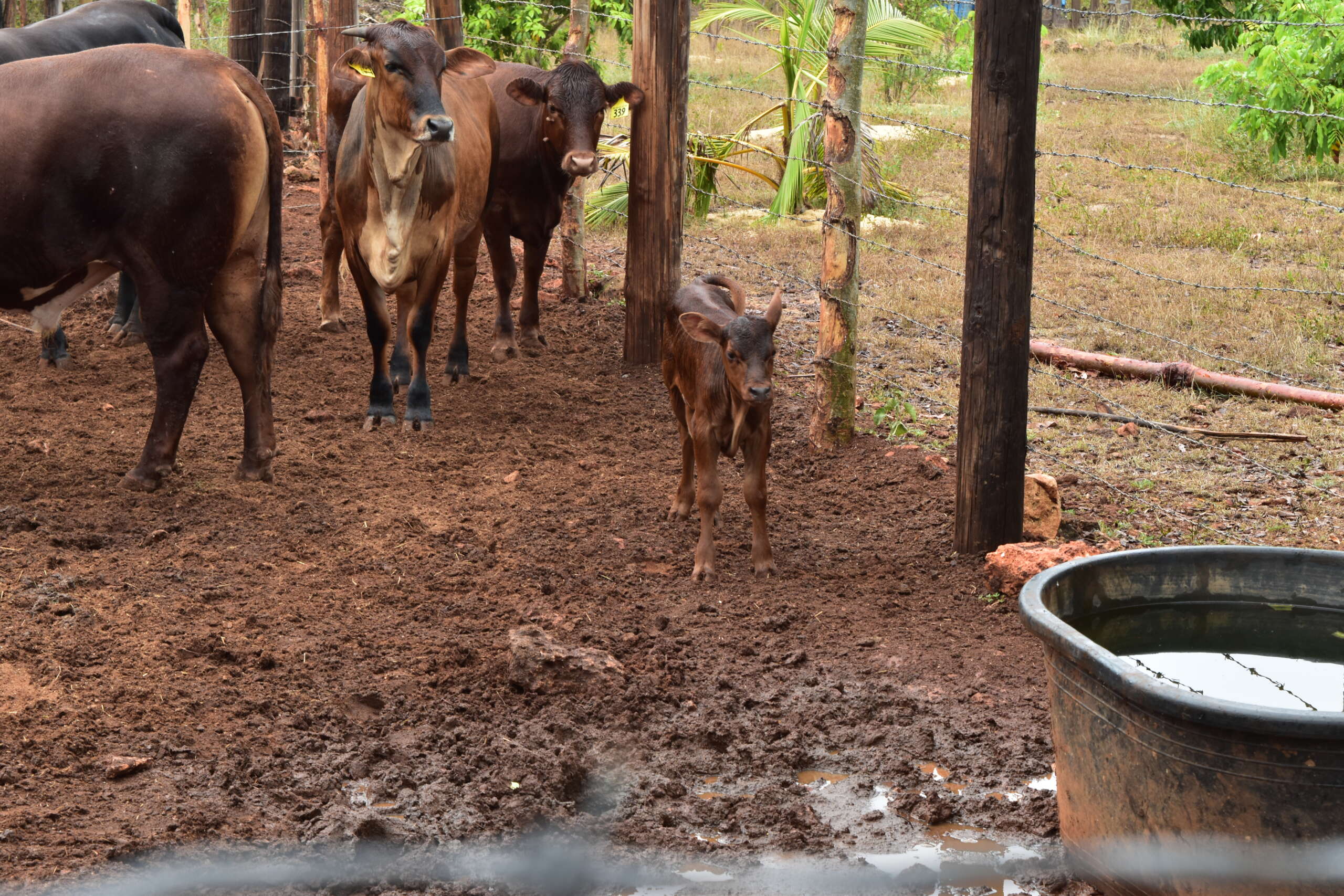
Though it was fun back then, McFarlane said, it was also hard work.
“[Y]ou got to have a passion for it,” he said, adding that he and McField share that feeling.
Competition champ
With 20 animals at the 44-acre Paradise Farms, there is also scope for more than just raising cows.
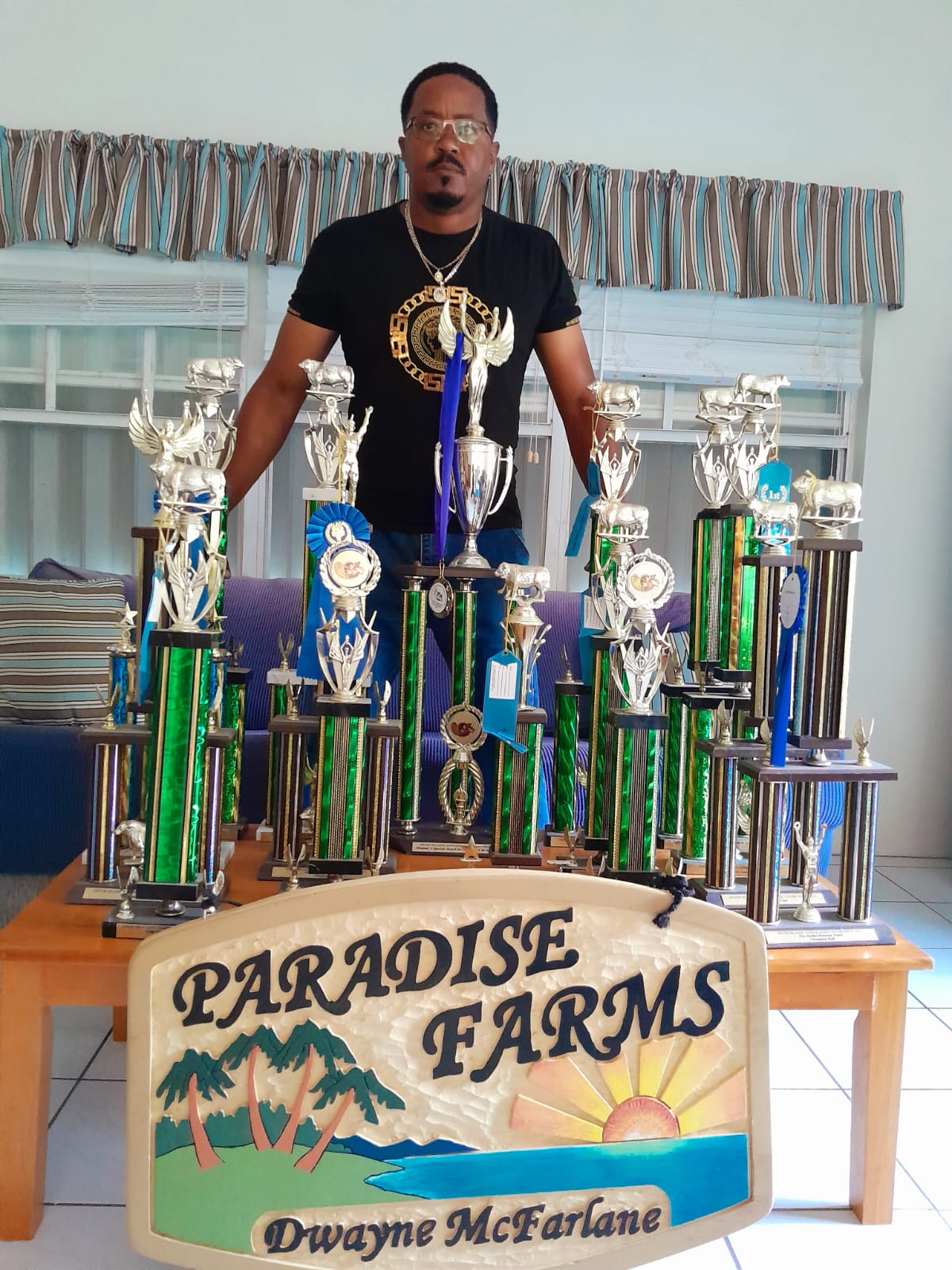
McFarlane also rears champion bulls, many of which have taken top prize at the Cayman Brac Agriculture show over the years, most recently last month.
It is a great source of pride for McFarlane, who is also a heavy equipment operator at Public Works.
“I have many trophies from winning… that’s nothing new to me,” he said, adding the formula to his success is the care he gives to the animals.
Feeding them well also helps.
“Through trial and error we have come to select the best of the best. Best cows to produce the best quality beef, and there’s a certain formula of feed that you give them… We don’t have any pure-bred animals here, everything is cross [bred],” he said.
The farm is home to various species of cows including Charlie, Black Angus, Belgium Blue and Singapore Cross.
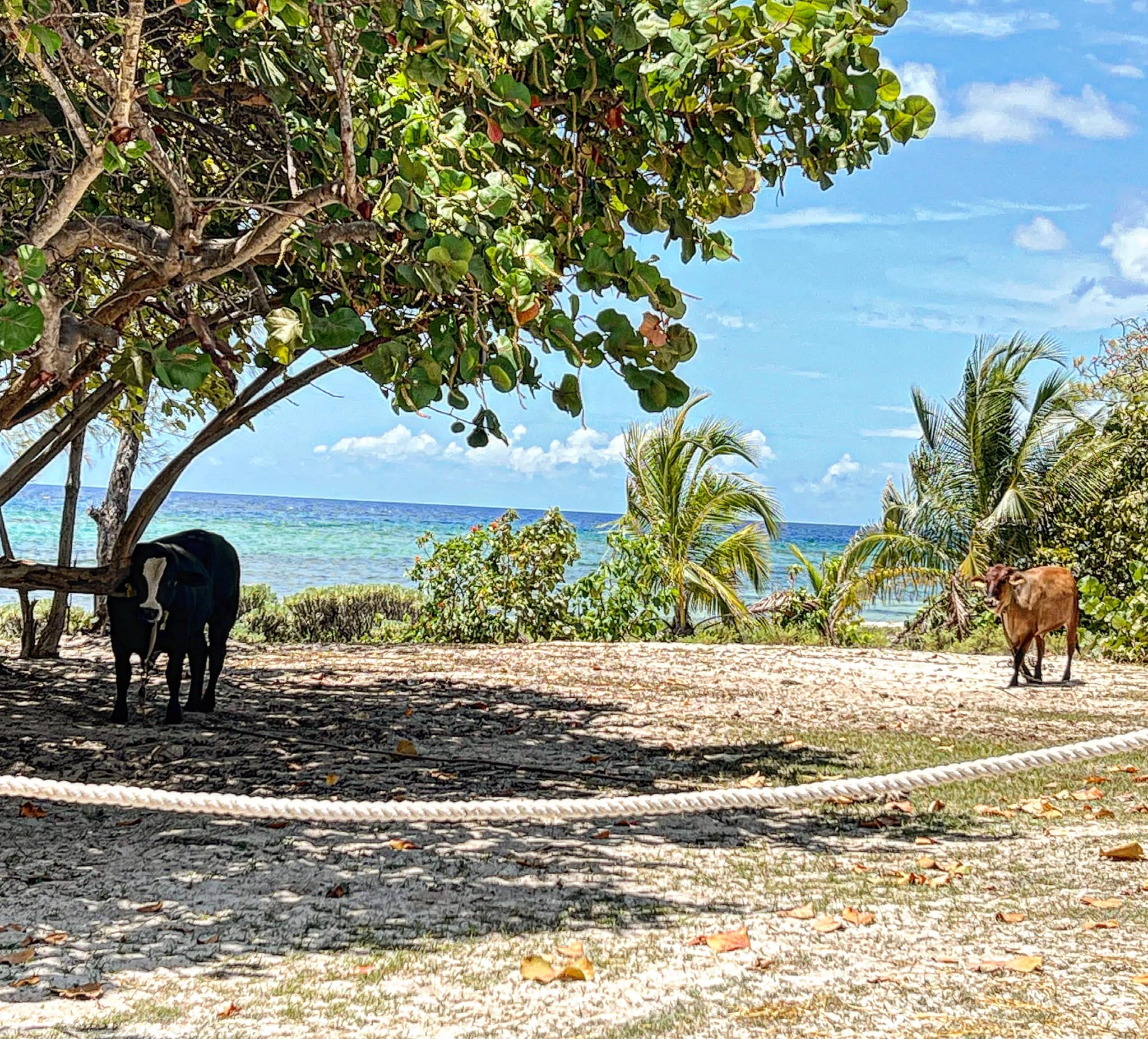
“This is a meat production and a breeding system we have here, but we always select some specifically for beef. So it works out both ways. We have champions for the show and we have top quality animals as beef,” he said.
McFarlane, who petted and talked to his animals during the interview as they came up to the fence at his farm, said though he loves all the animals and gives them special care, he does not lose sight of the fact that he will eventually have to sell them as meat.
Historic return to Little Cayman
Over the years there have been many moments of pride for him, but recently he was able to be part of history for Little Cayman when he took the farm’s champion cow and bull across for the Agriculture Show.
“My grandfather was a person who took the last cattle from Little Cayman and I took some back there… it made me feel really good,” he said, as he noted the excitement from the community seeing the animals there.
It was the first time in nearly 60 years that cattle were on Little Cayman as the Agriculture Show returned to Blossom Village Park on 29 April.
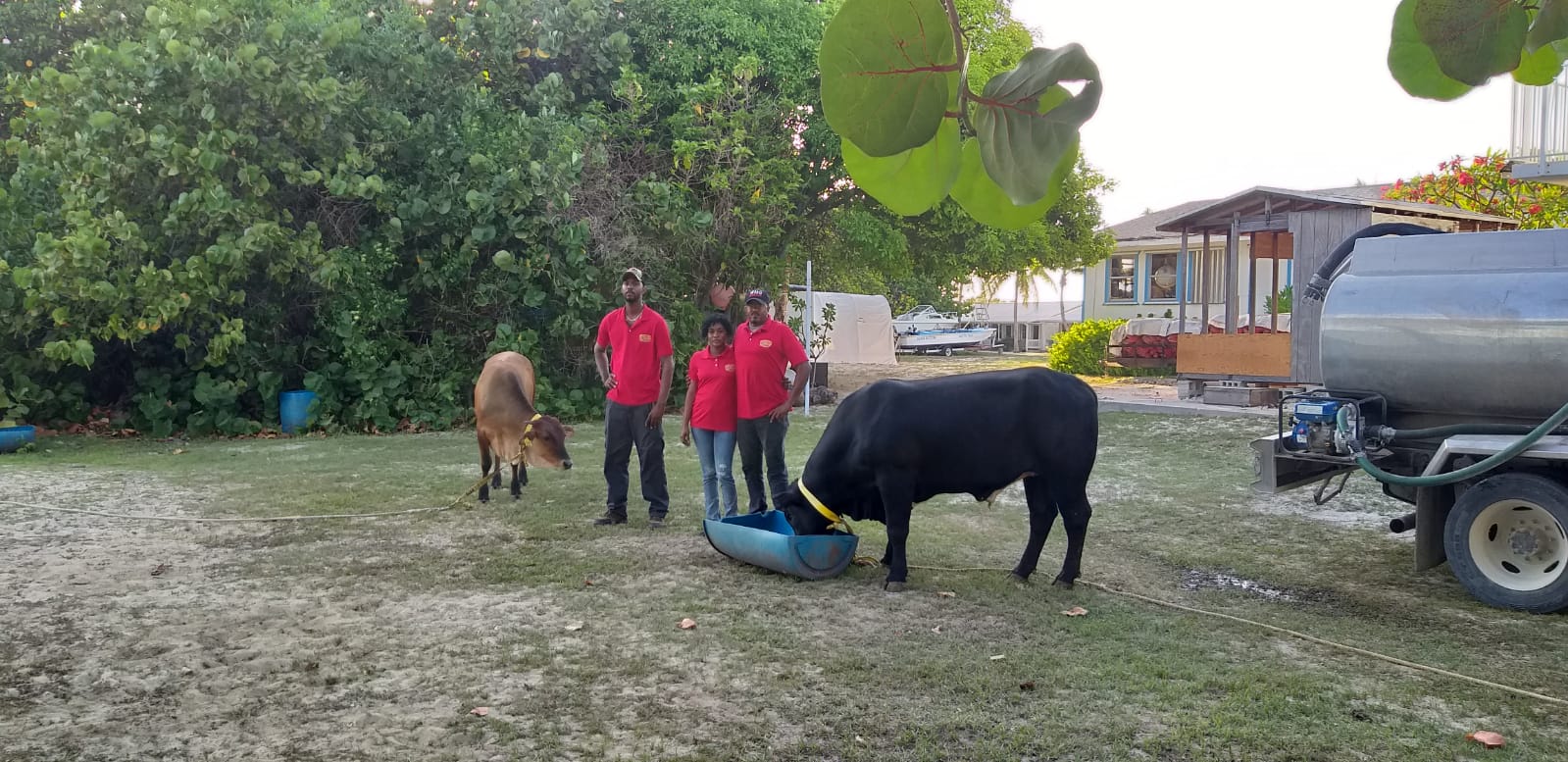
He said when he was asked if his champion animals could be taken over for the show, he had no idea about the history and how live cattle were removed from Little Cayman.
McFarlane said he received a call from an elderly person who told him about the background and his family’s connection.
“That just made it even more important”, for him to get the animals over to Little Cayman, he added.
The animals had to be loaded onto a barge for the trip, which was sponsored by Thompson Shipping.
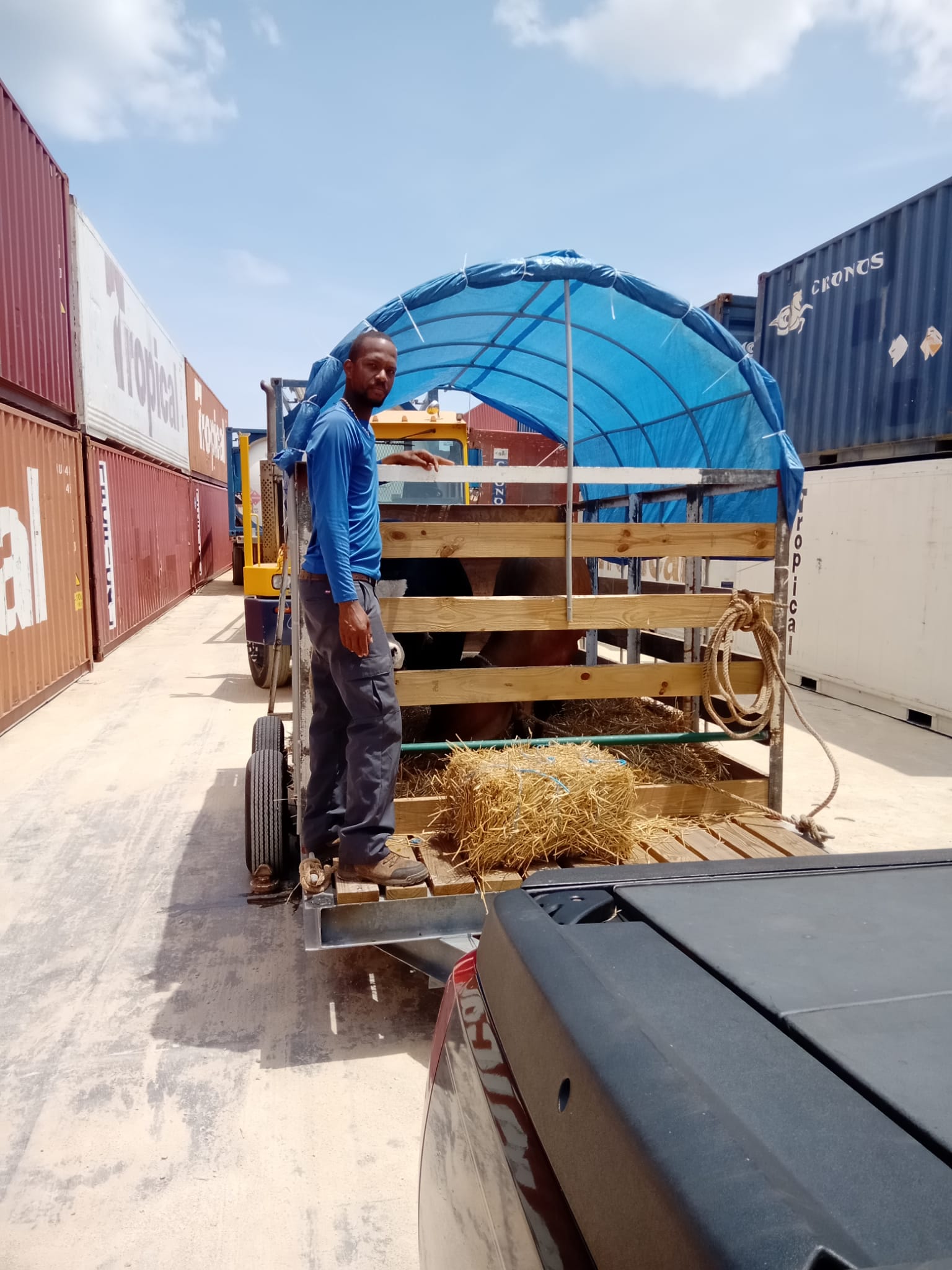
“No one wanted the cattle to leave Little Cayman. They all wanted them to stay over there,” he said.
He wants to expand Paradise Farms into growing produce and fruit trees, some of which have already been planted.
He is also looking to turn it into an attraction where families can come to feed and pet the animals.
McFarlane is encouraging those who may be thinking of getting into rearing livestock, but only if they are ready to work.
“Everything about raising cattle is hard. It’s back-breaking work, but it’s so rewarding,” he said.
Related Videos