

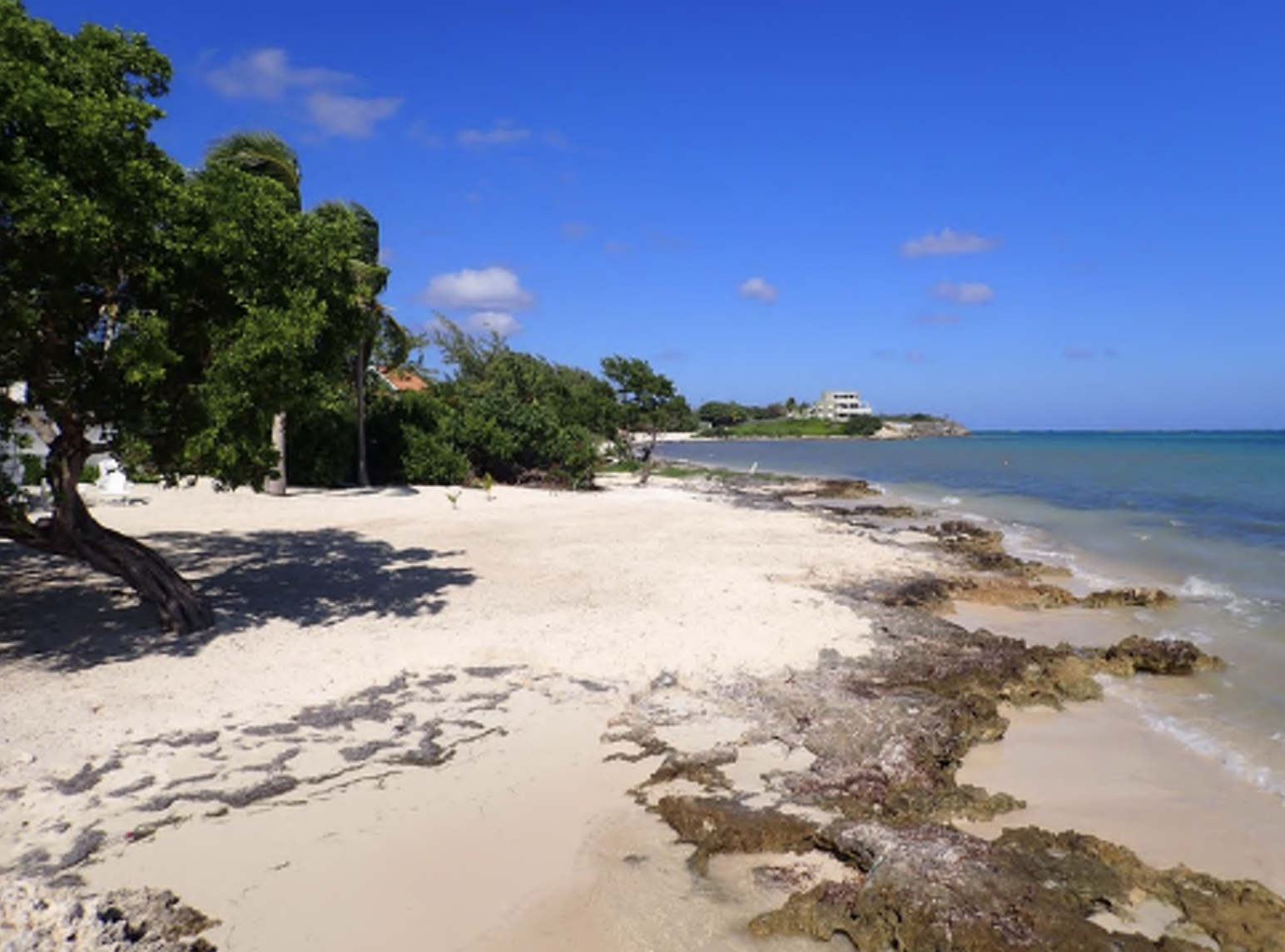
A beachfront property owner’s plan to build a seawall to prevent damage from storm waves has met with strong opposition from the head of the Department of Environment.
DoE Director Gina Ebanks-Petrie said it has been her long-standing recommendation that there should not be any hard structures on an active beach or close to the mean high water mark.
Seawalls lead to loss of sand, change the dynamic of beaches, disrupt the ecosystem, alter the aesthetic appeal of beaches and diminish their recreational value, she explained.
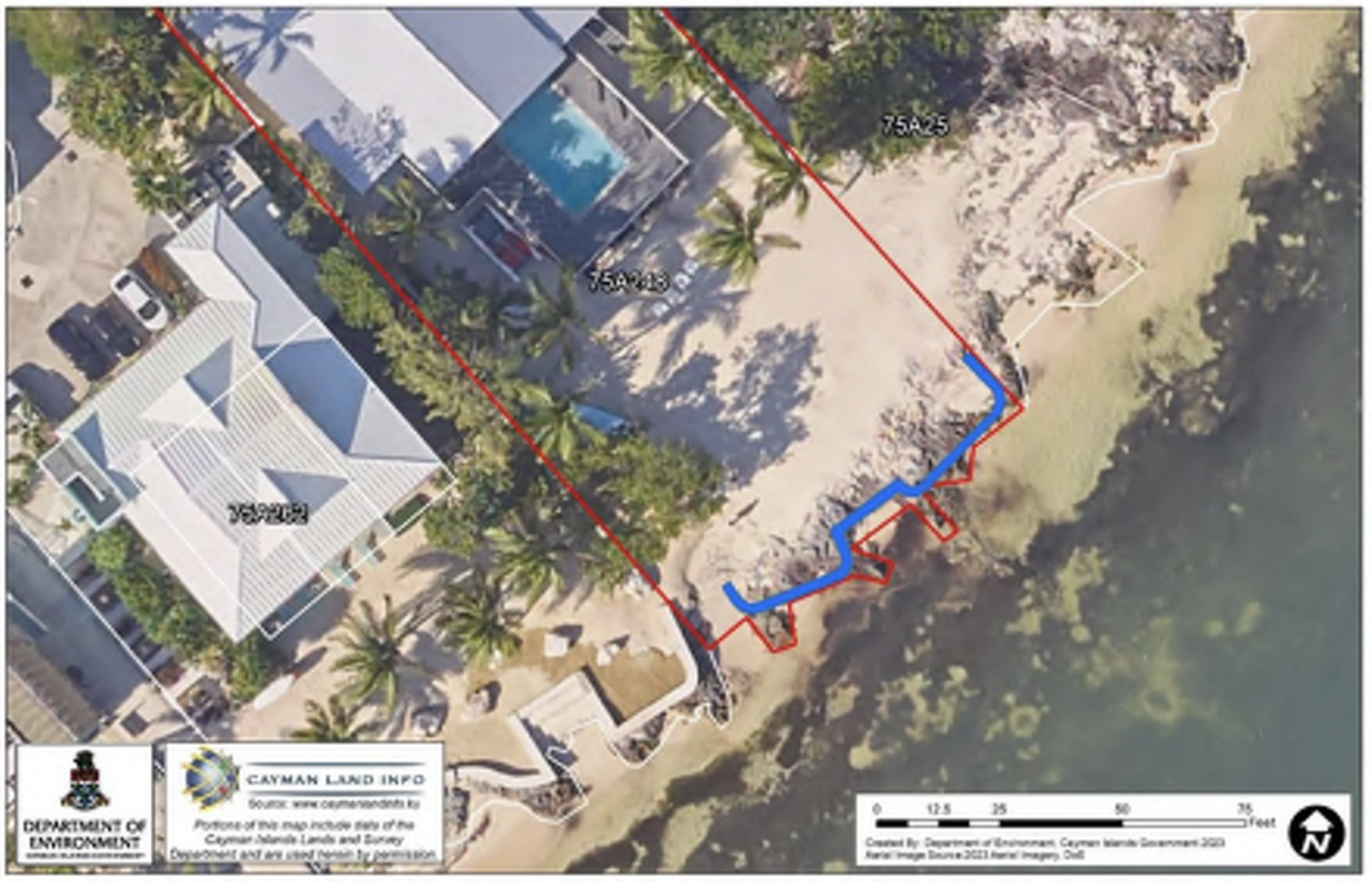
Patty Nugent has applied to the Central Planning Authority for permission to extend the existing stone wall from behind a dive resort in East End to her neighbouring plot.
If approved, the $10,000 wall will be built along the high water mark, despite the law maintaining that construction must begin 50 feet inland.
In the agenda for the 5 July meeting, when the proposal will be discussed, Ebanks-Petrie recommended the application be refused.
Storm protection
Nugent owns the property on Austin Conolly Drive with her husband Mo Fitzgerald, who also co-owns the Ocean Frontiers and Compass Point dive resort next door.
In a letter to the authority, published in the agenda, they said the proposed 2-3 foot high wall will be a continuation of the existing wall “in size, finish and look”.
The planning board gave permission for that wall on 25 Oct. 2017.
The letter said the new seawall will be constructed “properly, tastefully and out of Cayman stone on the existing ironshore rock to maintain the beauty of the East End shoreline”.
Its aim is to offer added protection to the residential property from storm waves, surge and northeasterly winds during inclement weather, Nugent and Fitzgerald added.
They said strong winds and high storm waves may displace the few inches of sand on the perched beach behind the ironshore, causing the need for constant replenishment.
“Underneath is solid rock which gets exposed after storm waves come over the ironshore,” the letter continued.
“The seawall will potentially and hopefully help protect the beach and the house from damaging surge and waves in the event of a storm.”
The applicants said they knew the former owners of their property and “know first-hand the damage that occurred to the house without a seawall”.
The property was previously surrounded by trees and plants to help prevent erosion but this did not protect their beach or home like a seawall might have, the applicants wrote.
No turtle nesting has taken place on the beach in the past 25 years, the letter continued, due to the ironshore water edge.
In a second letter, the applicants asked for a variation in building from the legal high water mark setback of 50 feet, to instead building along the high water mark.
They argued that the law allows setback variance when considering adjacent development.
Armouring the coastline
In her recommendation that the planning authority refuse the application, Ebanks-Petrie said the department does not support the “armouring” of the coastline, which “disrupts natural processes that shape and maintain beaches”.
She explained that seawalls can have several negative effects, including:
- They prevent the natural movement of sand along the coastline, leading to beach erosion. As waves crash against the seawall, the energy that would typically dissipate on the beach is reflected back into the water, causing increased erosion.
- Seawalls can also trap sand behind them, preventing it from replenishing the beach and resulting in a loss of sand and narrowing of the beach over time.
- Seawalls also alter the natural dynamics of beaches, including the movement of sediment. These changes can disrupt the beach ecosystem, affecting the habitat of various species and other marine life that rely on beaches for nesting, feeding or breeding.
- Seawalls can significantly alter the aesthetic appeal of the beach. They create a hard, artificial barrier that contrasts with the natural beauty of a sandy beach. The presence of a seawall will also diminish the recreational value of the beach due to a narrower shoreline and loss of public access along the shoreline.
Ebanks-Petrie said any benefit provided by the proposed seawall will be minimal.
“The two foot high wall will not prevent wind-borne erosion of the beach from occurring, and will disrupt natural deposition processes eventually resulting in a loss of sand behind the wall,” she said.
“Given that the site is a perched beach, the source of sand here is from larger waves, storms and tides.
“Therefore, the wall will likely cut off the source of sand for the beach, while the lack of vegetation, exposed sand and beach grooming practices are likely to exacerbate wind-borne erosion.”
The location of the proposed seawall falls far short of the minimum setback under the Development and Planning Regulations, the director added.
She said setbacks seek to reduce the impacts of storm-related damage on coastal infrastructure.
“It has always been the DoE’s preference and long-standing recommendation that there should not be any hard structures on an active beach or close to the mean high water mark.”
Ebanks-Petrie “strongly” recommends alternative options for beach armouring like planting coastal vegetation to help stabilise the sand and absorb both wave and wind energy.
There were no public objections to the seawall.
The plans will be considered in the 5 July meeting and the decision published in the Central Planning Authority minutes about three weeks later.
Related Videos













Planning Board, please listen to the experts. Please simply look at the negative impacts of existing seawalls in Cayman. The article said: “The applicants said they knew the former owners of their property and “know first-hand the damage that occurred to the house without a seawall”. ” So if they knew the damage that was occurring to the house, should they not have looked for a different house to buy?
Does the DOE like large jetty boulders which in fact are extremely effective and frequently used in the Texas gulf coast region to allow sand to move but also creates beaches by slowing the water surf and tide strength?
If the government is serious about fixing Seven Mile Beach erosion they need to move the older properties that are too close to the sea by using managed retreat. As long as any seawalls are allowed it will continue to impact other properties. The government needs to provide financial incentives, planning exceptions, and duty free development to encourage to redevelopment of existing older properties to meet current setback requirements. Spending millions bringing in new sand, only to be swept away is a big waste of money.