

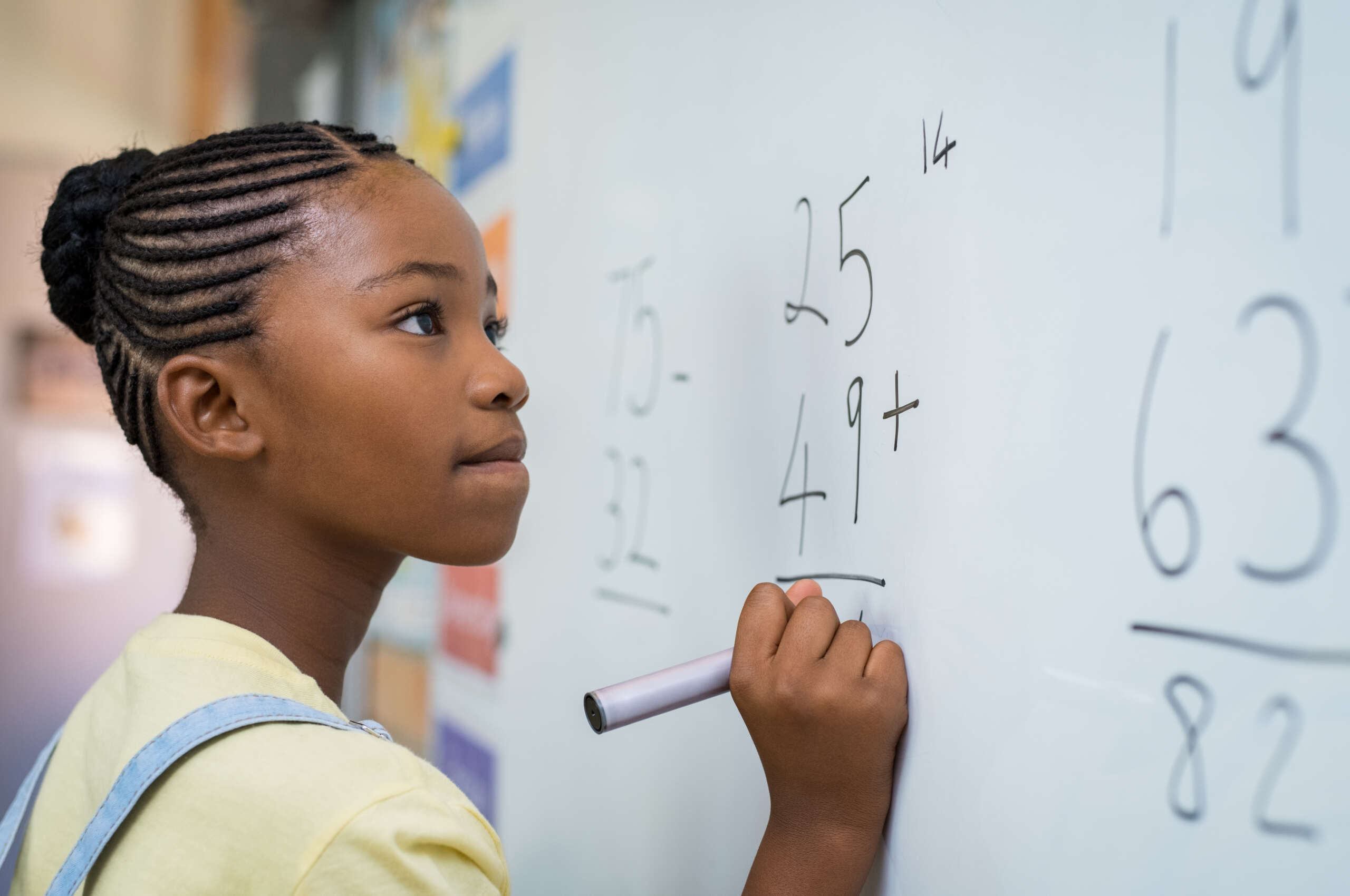
In response to years of weak mathematics results in local classrooms, 14 new specialist maths teachers are joining primary schools across the Cayman Islands in the upcoming school year, Education Minister Juliana O’Connor-Connolly has announced. They are among 137 new educators joining the government school system for the new term.
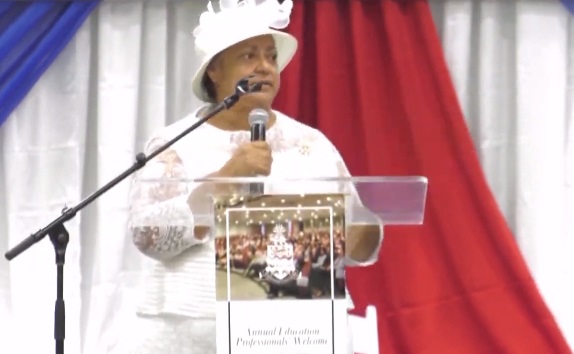
O’Connor-Connolly, speaking at the Annual Education Professionals Welcome event on Friday morning, acknowledged the long-standing underperformance of students in maths, saying the specialist teachers would be focusing on improving results in all government primary schools.
Specialist maths teachers were previously introduced to secondary schools, but education ministry officials felt intervention on the mathematics front was needed at a younger age.
A data report released in May showed that in the academic year 2021-2022, less than a half of Year 6, 11 and 12 pupils achieved the expected standard in mathematics. In the Key Stage 2 standard assessment tests, only 42% of pupils in Year 6 – the final year of primary school – reached the standard, while 39.7% of students in Year 11 and 48% in Year 12 attained level two mathematics.
O’Connor-Connolly said the new teachers “are going into each and every primary school class and they are going to be the ones who are going to be teaching math, because that’s their specialty, and I intend to see the next level of performance, the outputs, greatly increase”.
At Friday’s gathering, officials said there were over 900 education professionals teaching the more than 5,000 students in the islands’ public schools. For this upcoming school year, 137 new educators have joined, including 37 newly qualified Caymanians – and recruitment is continuing, Ministry of Education Chief Officer Lyneth Monteith said at the event. The majority of those are replacing departed staff, though there are some new positions, including the maths specialists.
O’Connor-Connolly said an increase in the number of new Caymanian teachers entering the schools was an indication that government education scholarships were working, with local students successfully studying and training to become educators.
Mark Ray, director of the Department of Education Services, welcomed “home” the new Caymanian teachers, some of whom would be returning to the classrooms they grew up in and where they would now go on to form “some of the most important bonds of your life”.
He said this year there would continue to be an emphasis on the mental and emotional wellbeing of both students and educators, and ensuring resources were available to support that.
Salary recommendations
At the event, O’Connor-Connolly gave Deputy Governor Franz Manderson, who is head of the civil service, what she described as “some unsolicited, broad-brush guidelines” on salary recommendations for educators.
Harking back to recommendations she had made in 2017 that teachers be paid a minimum of $5,000 a month, which was eventually implemented, she said she had hoped at the time that this would have had a “domino effect” on the salaries of other educators, like assistant teachers, deputy principals and principals, but this had not happened.
Based on recent calculations and salaries in other jurisdictions, as well as cost-of-living increases, she said she was recommending that assistant teachers, by 1 Jan. next year, be paid at least $3,500 a month; assistant teachers, who are also qualified teachers, make no less than $4,000 a month; primary school deputy principals a minimum of $7,400 a month; primary principals at least $8,900 a month; secondary school deputy principals no less than $8,400 a month; and secondary school principals at least $9,800 a month.
She noted these educators had been “waiting six years” for those increases.
Acknowledging that these were suggestions, she invited the deputy governor and the civil service team to consider those increases for the “superhero” school staffers who teach the nation’s children.
Tech advances
On the technological front, the minister said a new digital registration system was being implemented in local schools, and all teachers had been supplied with mobile phones.
Also, whiteboards were being replaced in all public school classrooms with Promethean boards, which connect to computer screens, she said. The old whiteboards are being given to other facilities, such as the Cayman Islands Further Education Centre, early learning centres and private schools.
The minister added that an issue with lag time in repairing or replacing laptops that each student is given had been dealt with and there was a sufficient number of those computers available to ensure that every child will have access to a laptop at all times.
During COVID, while children were being taught remotely, laptops were given to students, and that policy has continued.
Related Videos







One of the most important things we can do as a country is educate our young people to International standards.
So this is a good step in the right direction.