The death of a baby Caribbean reef shark, the second in recent weeks, has prompted a call from the Department of Environment for residents to exercise caution when fishing.
The young shark, which was found in early October next to the Lobster Pot boat ramp, died after being accidentally hooked and released, a DoE statement said.
The shark, according to DoE shark project officer Johanna Kohler, was approximately 3 months old.
Its belly button was nearly closed, indicating its tender age, she explained.
Just last month, a 1-month-old Caribbean reef shark was found dead after being stuck in a plastic slipper in South Sound. after being stuck in a plastic slipper.
“It is heart-breaking to see that these new-born sharks did not survive the first few months of their lives. In these first few months or even first year, these young sharks are just getting to know their environment and are trying to figure life out. When they are so small, they don’t know ‘how to shark’ yet,” she told the Cayman Compass in an emailed response Friday on the shark deaths.

This latest incident, she said, brings the total shark deaths recorded for the year to eight.
Kohler, who holds a PhD in marine biology and ecology, conducted a post-mortality exam on the shark found near Lobster Pot and confirmed that it was a male, 78cm / 2 ½ feet in length.
She said while these deaths “are terribly sad events”, the information from the post-mortality exams helps the DoE to better understand the shark’s biology, ecology and cause of death which helps to improve conservation efforts.
Kohler identified a hole and cut in the pectoral fin, which suggests the shark was hooked and then released.
“This particular death was very unfortunate, because the angler, who caught it unintentionally, did the right thing and released the animal. It just shows that nature is so fragile and these animals are very vulnerable to fishing activity,” she said, adding the shark most likely died from the immense stress of being unintentionally caught and then released, coupled with the possible lack of oxygen and internal injuries.
“The ordeal might have been just too much for the little shark to handle, causing it to die either during release or shortly after,” she said.
Everyone can help protect sharks
Though the shark pupping season, which runs from May – September each year, is over Kohler said the shallow environment provides food and shelter from bigger predators for the young sharks.
“The new-born sharks will remain in the shallow waters for the first few years of their lives until they are older and then move into deeper waters,” she said, highlighting the need for extra caution.
She said every shark death impacts Cayman’s shark population.
“While our surveys over the past 10 years show that our reef shark populations are relatively stable, our populations are much smaller than those elsewhere. Sharks are particularly vulnerable because of their life characteristics such as slow growth, long pregnancy durations, and only a few pups per litter,” she said.
This is compounded by the fact that baby sharks do not receive any parental care from their mothers and “therefore the first few years are incredibly tough”.
“Females can only get pregnant every other year and not every pup from each litter from a female will make it to adulthood. This means that we as humans have to do our best to not add any additional stress to these animals to improve their chance of survival to adulthood and a chance to reproduce themselves in order for our shark populations to remain stable,” she said.
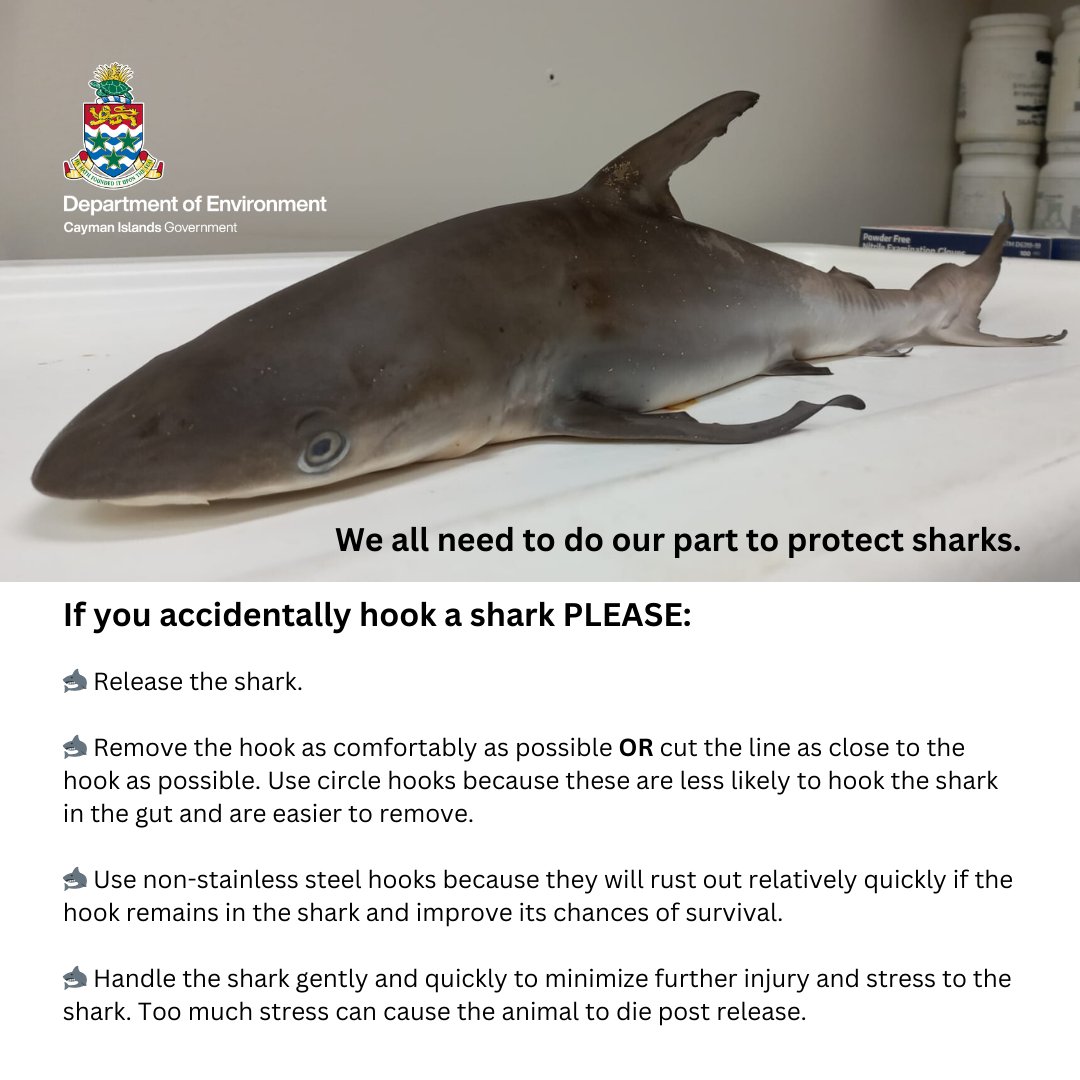 Kohler reminded anglers “to be extra careful in the shallow waters around the shore”.
It is there, she said, that “baby sharks born over the summer will shelter from predators and find small crustaceans, worms and fish to eat. Please stop fishing and remove the fishing tackle from the water when a (young) shark is around and continue fishing once the animal has moved on”.
She advised that if someone accidentally hooks a shark, remove the hook or “cut the line as close to the hook as you feel comfortable and release it as fast as possible to improve its chance of survival”.
To reduce the stress on the animal, she said, keep the shark in the water, if possible, so that it can continue to breathe, and keep the handling time to a minimum.
“Using non-stainless steel circle hooks helps ensure the safety of sharks who may be accidentally hooked,” she added.
To learn more about shark protection in the Cayman Islands click here.
Related Videos